
Even before its official opening, the 61st International Art Exhibition of La Biennale di Venezia revealed itself as a reflection of the cultural, social, and artistic transformations shaping the present moment. The Biennale has long since evolved beyond the boundaries of the lagoon city as a mere cultural event: it has become a global organism, a space where political visions, cultural identities, institutional strategies, and emerging artistic sensibilities converge.
During the Biennale, Venice almost ceases to exist solely as a city. It becomes an international platform for dialogue – a place where the language of art absorbs and reinterprets the complexity of the contemporary world.
The works on view – from painting to immersive installations, from performance to participatory projects – increasingly assume a collective dimension. The artist’s voice no longer appears purely individual, but instead becomes an interpreter of geopolitical, social, and identity-related issues that resonate across entire communities and territories. This dynamic unfolds not only within the national pavilions, but also throughout the collateral projects and the broader cultural ecosystem surrounding the exhibition.
Filippo Perissinotto, President of Art Events and Culture Studio, describes the Biennale as “a microcosm of the contemporary world”: a complex system capable of addressing the major questions of our time through the only truly universal language – that of art.
Alongside the debates and differing sensitivities that accompanied this edition, Venice continues to preserve its deepest essence: that of a plural city, capable of reconciling historical memory with critical reflection on the present, cultural continuity with openness to change.
“We collaborated with highly heterogeneous realities,” Perissinotto explains. “From international foundations such as the Anish Kapoor Foundation and the Starak Family Foundation to globally recognized galleries like Lisson Gallery and Pace Gallery, as well as independent organizations and institutional interlocutors. One of the most significant aspects of the Biennale is precisely the possibility of creating synergies between international entities and the Venetian cultural fabric. Venice continues to be a crossroads of cultures and languages: a city with an extraordinarily strong identity that is, at the same time, naturally inclined toward exchange and exploration.”
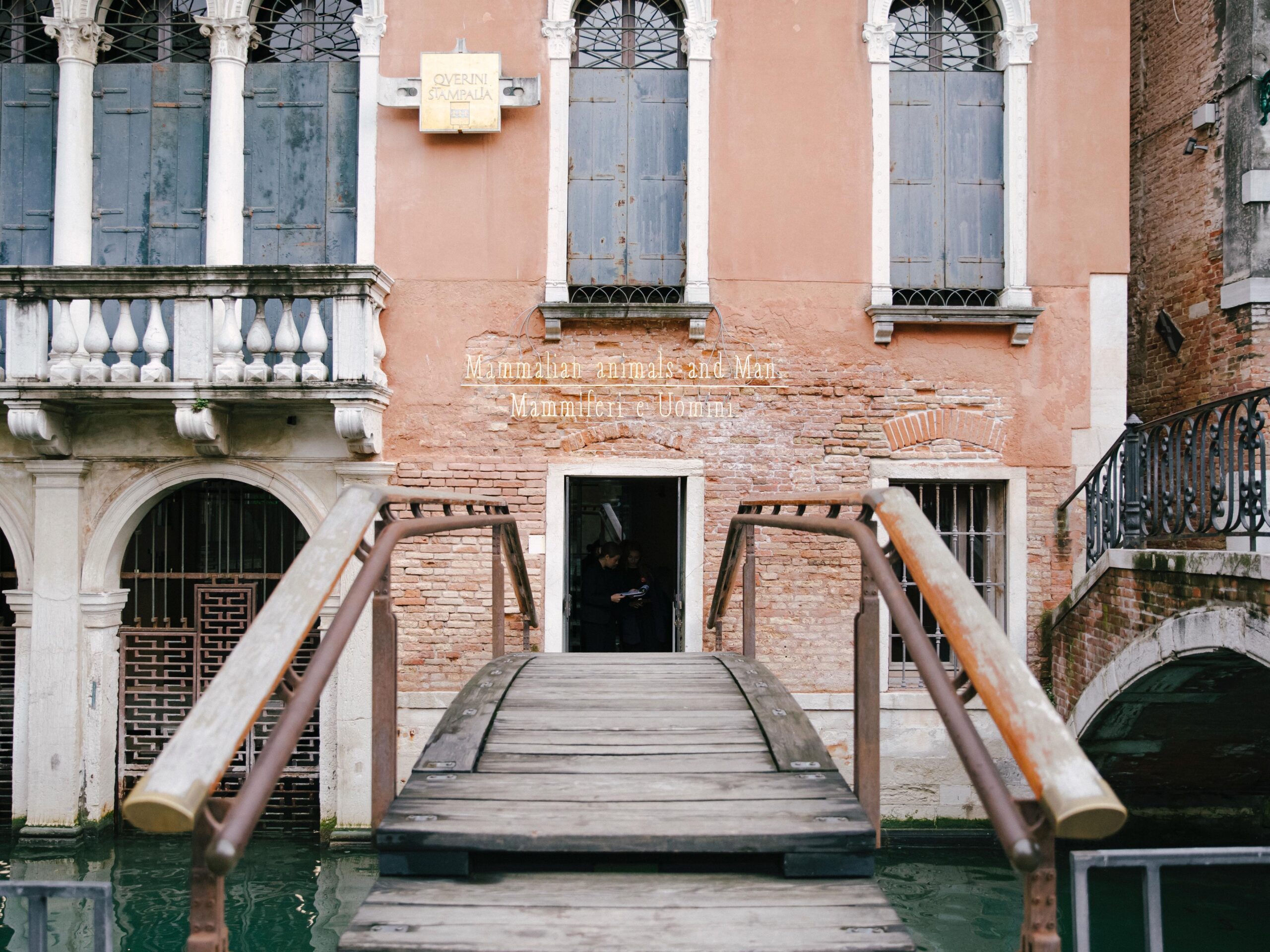
Among the most significant collaborations of this edition is the one established with Fondazione Querini Stampalia, one of Italy’s oldest cultural institutions, which this May celebrated the 150th anniversary of its foundation by Count Giovanni Querini Stampalia – a symbolic figure of enlightened Venetian entrepreneurship and a major patron of the arts.
“For us, it is an honor to collaborate with historic institutions such as Fondazione Querini Stampalia,” Perissinotto continues. “It means contributing to the continuity of a Venetian cultural tradition that, for centuries, has brought conservation, research, and experimentation into dialogue.”
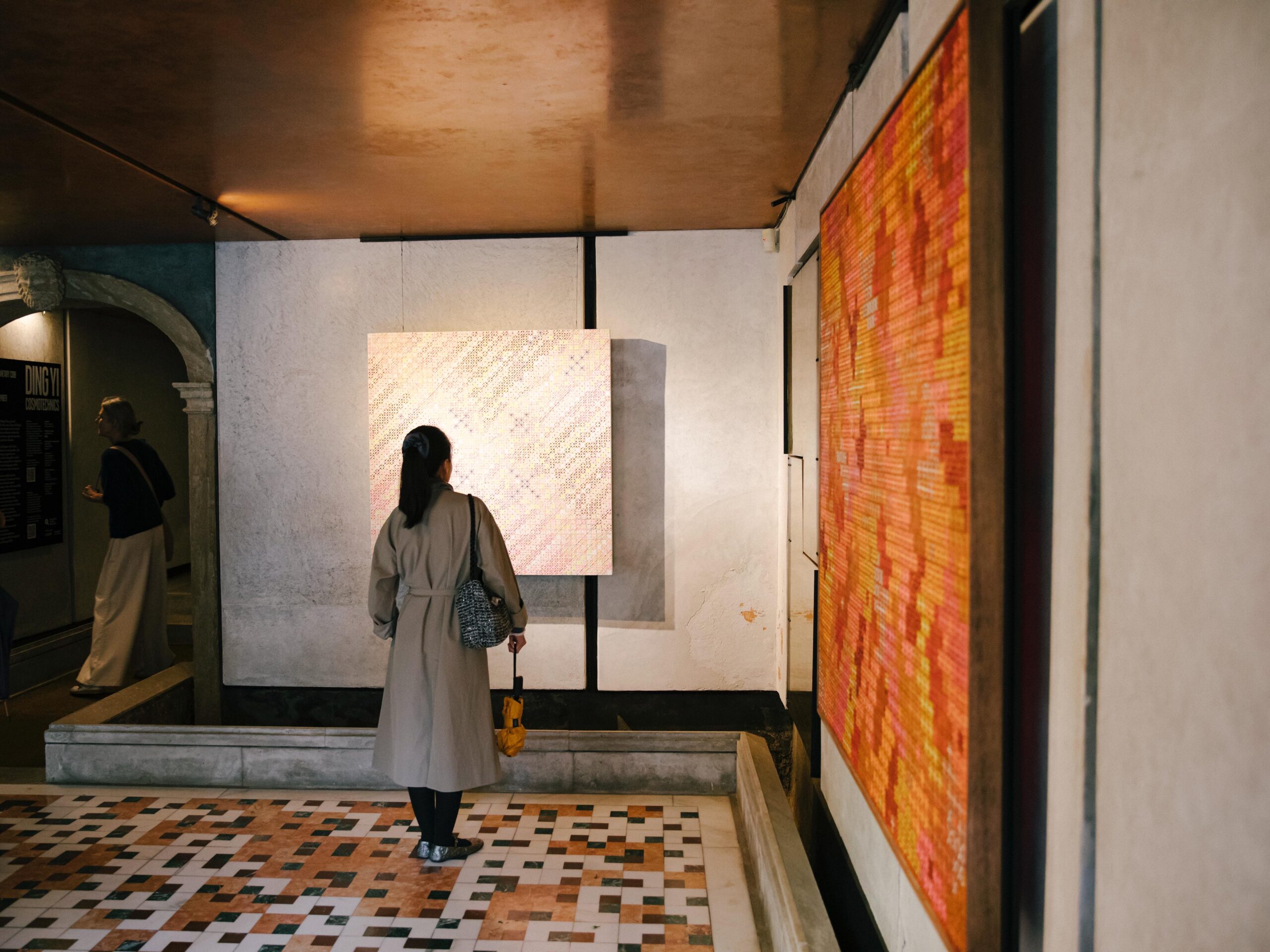
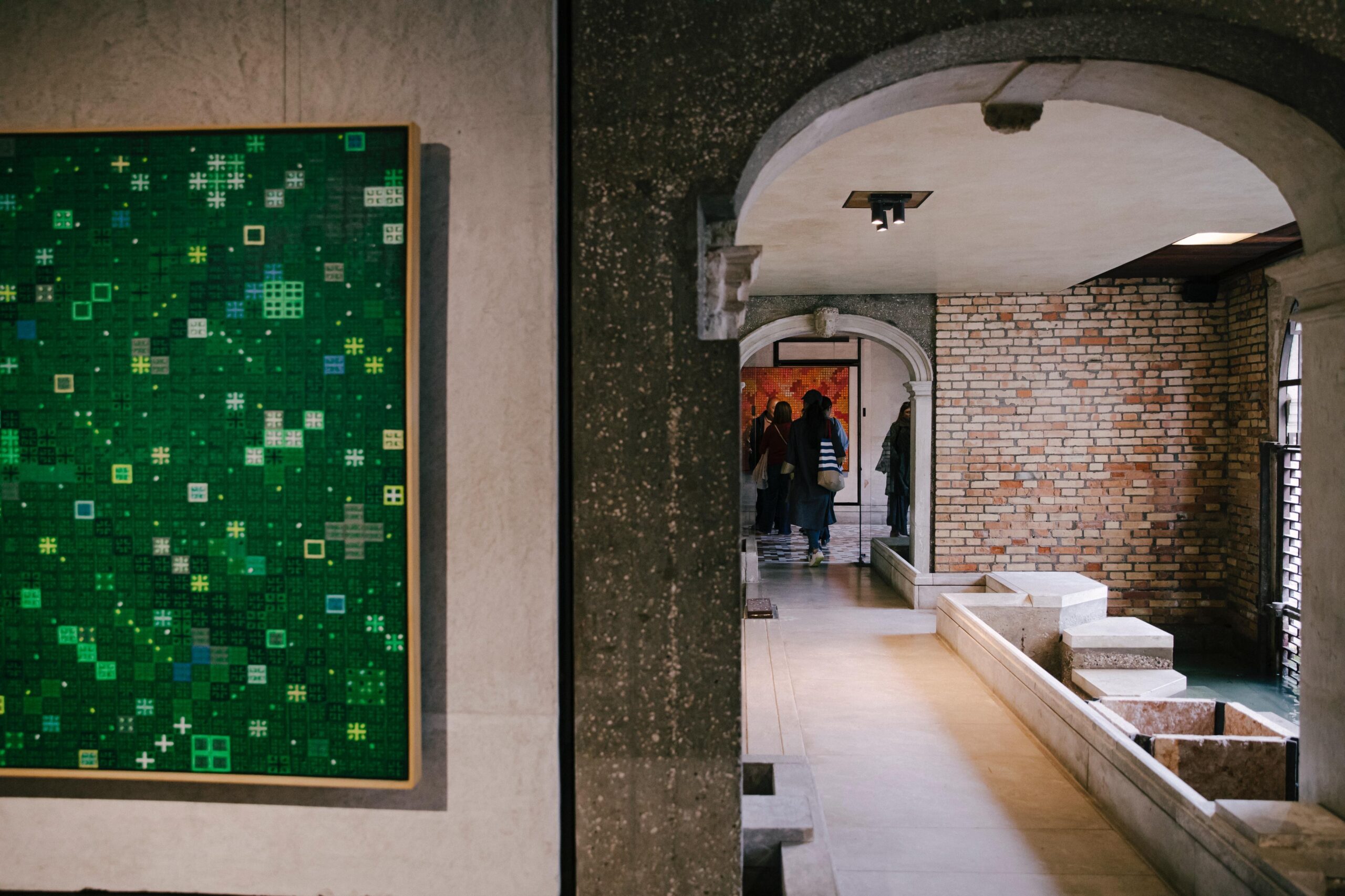
Alongside the new display of its permanent collection – which reinterprets the historic spacesthrough a visionary reading of the Founder’s universe – Fondazione Querini Stampalia is hosting three major contemporary art exhibitions organized in occasion of the Biennale:
Cosmotechnics: Ding Yi as a Planetary Code, presented by Lisson Gallery and ShanghART; Nigel Cooke: Bad Habits, promoted by Pace Gallery; and Hans Hartung: The Invisible Chord, organized by Perrotin and the Hartung-Bergman Foundation.
The latter stands out as one of the most compelling examples of interdisciplinary dialogue currently unfolding in the city. Curated by Thomas Schlesser, the exhibition explores the profound relationship between Hartung’s abstract painting and the dimension of music, suggesting how color, gesture, and composition can evoke rhythm, tension, and sound while remaining entirely within the visual realm.
The relationship between visual arts and other forms of expression also emerges in numerous independent projects organized concurrently on the occasion of the Biennale and dispersed throughout the city. Among them is Return | Ritorno by British artist and poet Arch Hades, supported by the Erarta Foundation and hosted at the Scoletta dei Battioro e Tiraoro from May 7 to October 30.
The exhibition revolves around Return, a monumental work composed of twenty-two panels whose arrangement recalls the structure of a triptych. Alongside it unfolds Sphinx, a site- specific installation that reinterprets the mythological figure of the sphinx, transforming it into an allegory of the existential questions the artist directs toward herself and the world.
Yet Arch Hades’ practice extends beyond painting alone. An internationally recognized poet, the artist inevitably brings a strong literary dimension into her visual research. The walls of the exhibition space are filled with works resembling pages torn from a notebook: written fragments, annotations, visual and verbal confessions suspended between personal diary and contemporary poetry. Confessions thus becomes a point of convergence between word and image, painting and writing, revealing how artistic practice can evolve into a unified process of self-narration and self-analysis.
The Biennale therefore continues to affirm its dual nature: on one hand, a major international cultural platform; on the other, a privileged observatory of the transformations shaping the present.
Venice, with its history as a commercial, artistic, and diplomatic crossroads, remains the ideal setting for this complexity. It is a city that does not merely absorb the languages of the contemporary world, but amplifies them, placing them in dialogue with the weight of historical memory. Here, art never appears detached from reality; rather, it becomes a sensitive surface capable of reflecting the sensibilities, desires, and perspectives of our time.