
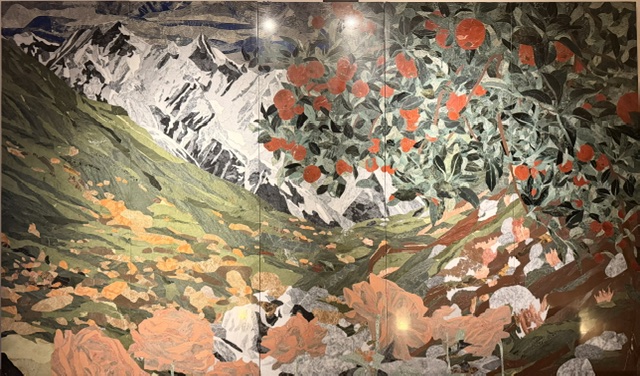
Summer arrives at Aliée Istanbul not through seasonal decoration but through a carefully constructed cycle of artistic interventions. Spanning through all spring and summer, the program unfolds across gardens, courtyards, interior spaces, creating a temporary route in which contemporary art serves as a vehicle for exploring memory, perception, rhythm, and transformation.
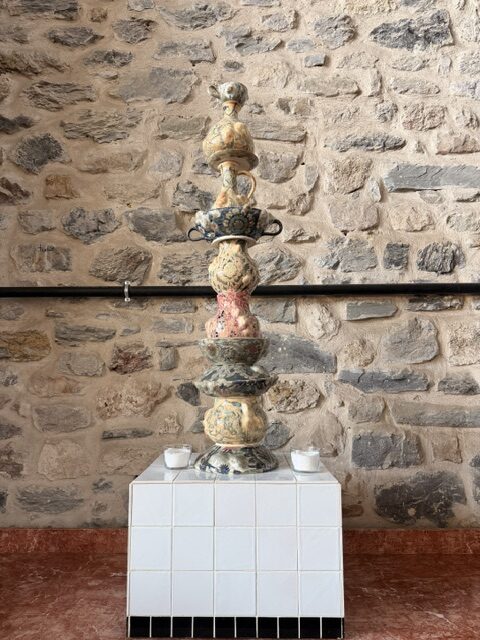
Located within the historic grounds of Tersane Istanbul, the Aliée’s art and design program moves between nature and sculpture, silence and visibility, and intimacy and public encounter. Rather than presenting artworks as isolated objects, the project allows them to inhabit specific environments, responding to the histories, atmospheres, and material qualities of each location. What emerges is less an exhibition than a sequence of experiences unfolding through time.
The notion of temporality sits at the heart of the program. As Tersane Istanbul Art and Culture Director Aslı Ünal notes, the works are present only for a specific period, yet their temporary coexistence makes them all the more valuable. The program proposes that art is not simply something to be viewed but something to be encountered, preserved, and carefully lived with.
This sensitivity becomes evident from the moment one enters the site. In Hasbahçe, Swiss artist Giulio Cabbana’s land art intervention appears to emerge from the landscape itself. Rather than imposing form onto nature, the work reveals the subtle transformations already taking place within it. The garden becomes a living surface where earth, season, and time converge.
Nearby, Gregor Hildebrandt introduces a different register. Long concerned with memory, music, and traces of recording, the German artist transforms the garden into a contemplative field where invisible histories seem to resonate beneath the visible world. His works possess a quiet intensity, inviting visitors to slow down and attend to what might otherwise remain unheard.
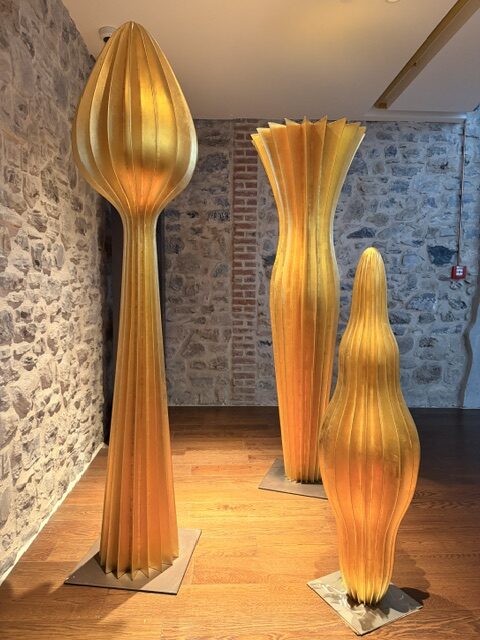
Movement becomes the defining element in the courtyard, where Tony Cragg’s sculptures engage in a dialogue with the surrounding architecture. Their flowing forms appear animated by an internal energy, continuously shifting perception and altering the rhythm of the space. The sculptures do not simply occupy the courtyard; they activate it.
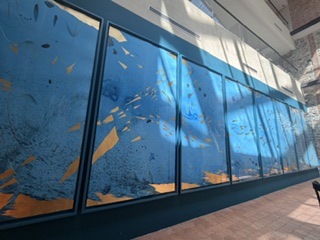
Inside the Living Room, Ghada Amer’s works bring questions of desire, femininity, and representation into focus. Her practice often navigates the tensions between beauty and power, ornament and resistance. Situated within a space that oscillates between domestic comfort and public visibility, the works acquire an additional layer of complexity, encouraging reflection on intimacy and the politics of looking.
Elsewhere, Papier Atelier introduces a lighter yet equally thoughtful intervention. Folded paper animals emerge among trees and pathways, creating moments of wonder and inviting a childlike curiosity. These delicate forms offer a reminder that imagination, too, can be a way of engaging with place.
The route ultimately extends beyond the site itself through Mantra’s mural intervention, which carries the program into the streets of Tersane Istanbul. Here, art enters the rhythms of everyday life, transforming a wall into a space of encounter, memory, and public visibility.
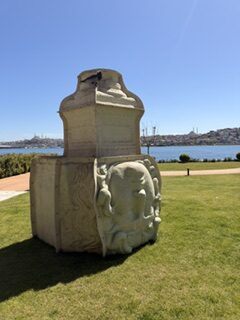
Taken together, these interventions construct a narrative that moves between landscape, sculpture, memory, playfulness, and poetry. More importantly, they demonstrate how contemporary art can transform the experience of a place without dominating it. At Aliée Istanbul, art is not positioned as an accessory to architecture or design. It becomes a living presence—one that shapes how a site is experienced, remembered, and understood.