

Description
A WORLD UPSIDE DOWN
While working on this issue, I found myself returning to the same question again and again:
Why is cultural publishing so difficult? More precisely, why is it so fragile?
In a geography where freedom of expression remains perpetually precarious, the survival and circulation of cultural production and ideas become matters of real urgency. Perhaps that is why I have always felt deeply committed to the idea of building an independent publication. Not out of romantic idealism, but because I believe art and culture are as essential to a society as bread and water. Culture is not merely about pleasure, distraction, or passing time. It remains one of the last spaces in which dialogue, criticism, memory, and the possibility of living together can still endure. A way of confronting existence itself.
And perhaps that is precisely why this field is subjected to such relentless pressure. In Turkey, independent cultural publishing rarely consists of simply producing content. It also means contending — constantly and simultaneously — with economic instability, invisible labour, endless bureaucracy, power struggles, and structures that fundamentally fail to comprehend the nature of cultural production; structures that reduce everything to efficiency, profit, and self-interest, as though culture were no different from any other commercial enterprise.
The past several years have taught me this with particular brutality. The recent experiences of ArtDog — and the events that, when the time comes, we will have to examine openly and honestly if we are to imagine more durable structures and genuine ways forward — have once again exposed how vulnerable cultural publishing truly is. Yet this is not simply the story of a single publication. It is a structural condition that demands collective reflection. How does one build a cultural publication upon solid foundations? What kinds of structures are actually capable of sustaining such a field? What does it cost to insist upon an independent cultural publication that is not governed by profit in a country like this? More importantly, is such a thing genuinely possible?
A cultural publication, first and foremost, should never become a mechanism governed by profit, nor should it be subjected to that kind of pressure. The cultural sphere does not survive through the logic of maximisation. It survives through editorial intuition, ethics, independence, and relationships of trust built gradually over time.
The role of an editor-in-chief is not merely to commission or select content. It is to shape the conscience of a publication: its tone, its direction, and the relationship it establishes with the world around it. Once this space becomes permanently vulnerable to intervention, all that remains is the hollow language of public relations. Cultural publishing ought to stand in opposition to precisely that. More than anything, a publication lives through instinct — through its own internal sense of rhythm and time — and that space must remain unequivocally protected from interference.
This process also reminded me how essential solidarity truly is. Over the years, this magazine was never simply a collection of names, shares, or companies. It was the sum of editors working through the night, writers, translators, designers, emerging critics, established voices, and countless forms of invisible labour. One of the principal reasons it remained sustainable was financial support offered without the expectation of profit. I feel an immense sense of gratitude towards everyone who has contributed to it over the years. Because independent cultural publishing is only possible through a collective form of insistence — even defiance.
Today, we need to rethink solidarity altogether. Not as a romantic call for togetherness, but as a new cultural ethic grounded in responsibility, boundaries, and editorial independence. Unless we create structures in which not everyone intervenes in everything, but instead assumes responsibility for their own field, independent cultural production cannot remain sustainable.
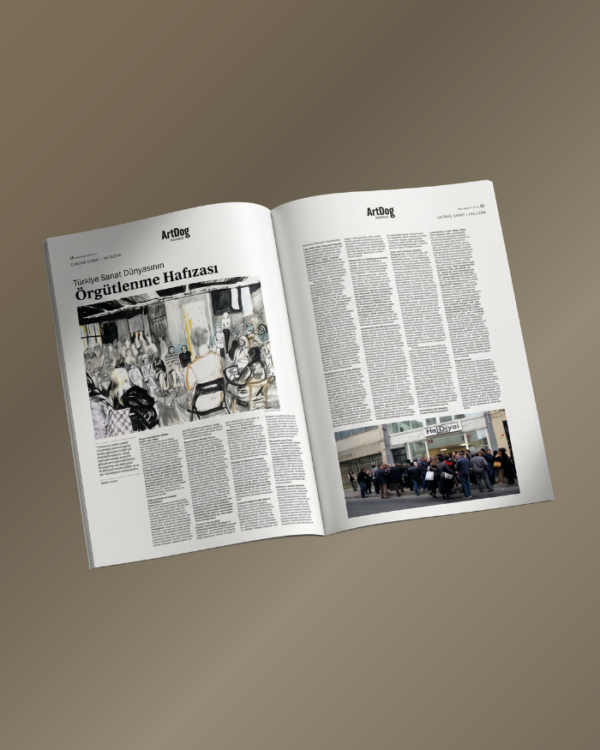
Throughout this issue, we find ourselves returning repeatedly to the same questions: How can the cultural sphere protect itself? Is collective organisation within the arts possible? How can independent spaces continue to survive? And perhaps most urgently: how can the intellectual and creative dimensions of cultural production be protected from market logic and from mentalities fundamentally alien to the nature of this field?
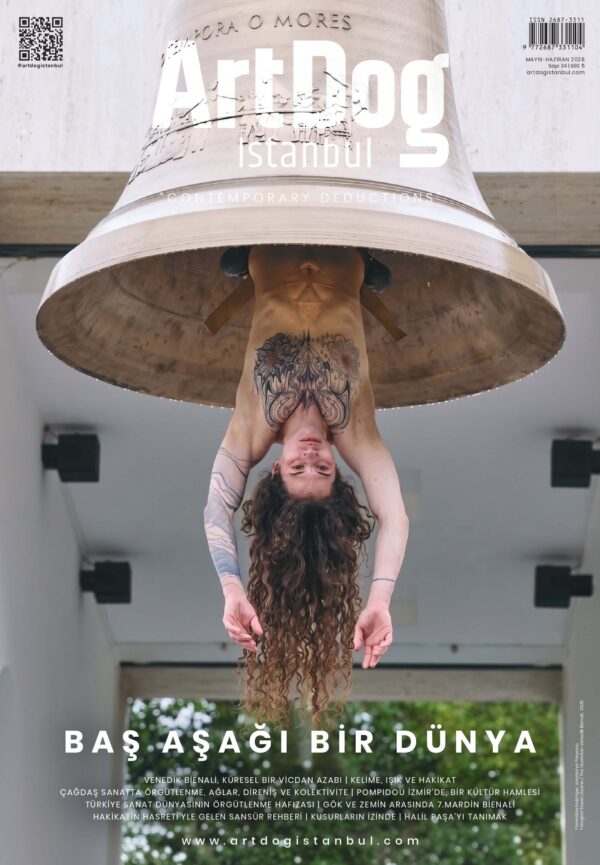
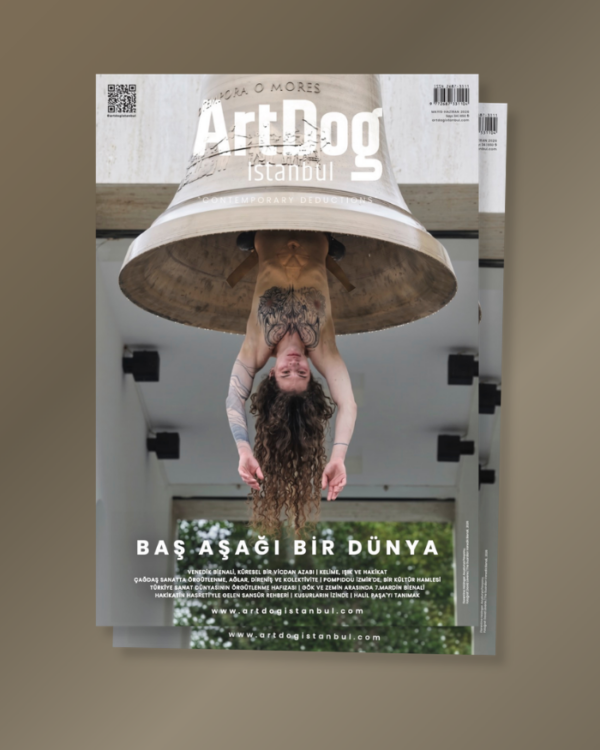
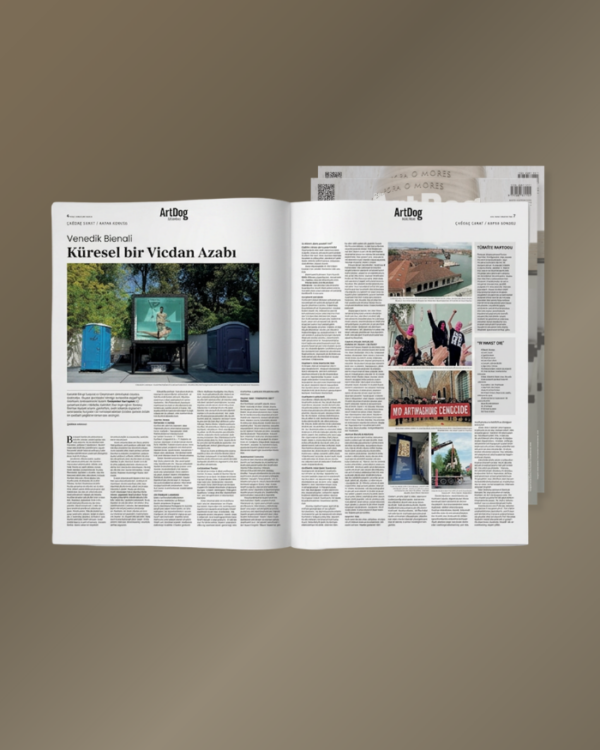
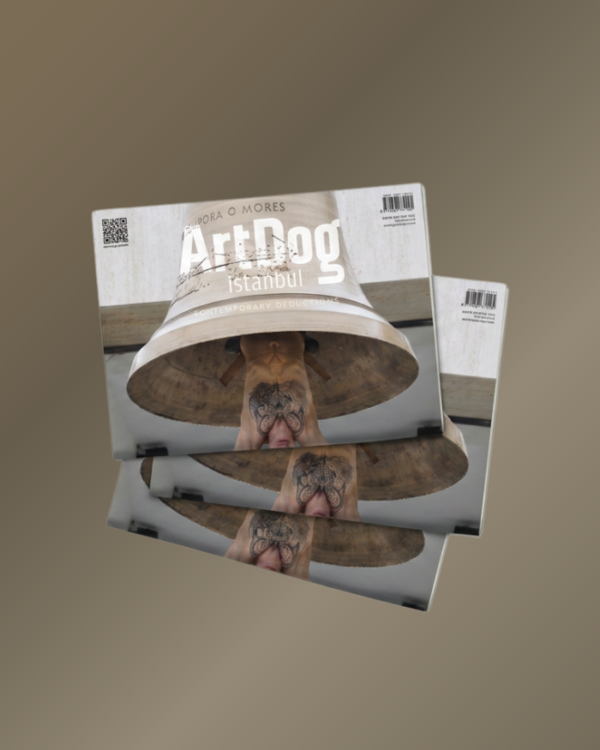
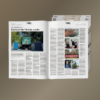
For this issue’s cover, we chose an image from Florentina Holzinger’s SEAWORLD VENICE, presented during the Venice Biennale. The uncanny sensation produced by the suspended upside-down body seems to capture, almost perfectly, the prevailing feeling of the present moment: a world turned upside down. We are living through a period in which not only politics or economies, but institutions, values, cultural structures, and the very conditions of coexistence themselves have begun to fracture.
Art and culture create a new language precisely where people cease listening to one another. They preserve memory. They render other possibilities imaginable. And sometimes, they simply create a small space in which breathing still feels possible.
At this point, I know one thing far more clearly than before:
Names may change. Structures may collapse. Companies may disappear. But cultural production sustained by genuine conviction does not vanish easily. The real question is whether that spirit can continue to be carried forward.
And we will continue.
Because despite all its fragility, we still believe this field remains indispensable. And perhaps now more than ever, we need to protect independent cultural spaces, strengthen solidarity, and remain capable of hearing one another.
Şebnem Kırmacı – Editor in Chief
Labels
Owner
Boğaçhan Buğra Kaya & Şebnem Kırmacı
(on behalf of ArtDog Istanbul Sanat Yatırımları Inc.)
Editor in Chief
Şebnem Kırmacı
Advertisement
İpek Peker
Accounting
Contributors
Hale Albayrak, Meltem Aksay, Evrim Altuğ, Fırat Arapoğlu, Murat Cem Baytok, Murat Daltaban, Semra Dursun, Sine Ergün, Büşra Kaplan, Ali Kavas, Merve Küçüksarp, Burcu Ocak, Sibel Oral, Timuçin Oral, Banu Öğüt, Hatice Utkan Özden, Tahir Özyurtseven, İdil Sancar, Selin Sehoğlu, Meltem Sevimli, Şeyma Üstün, Saliha Yavuz, Aylin Çaylak Yegül, Cem Yegül, Didem Çaylak van Zuijlen, Dick van Zuijlen
Management Address
ArtDog Istanbul Art Investments Inc.
Evliya Çelebi Neighborhood, Sadi Konuralp Avenue, No: 5/2, Nejat Eczacıbaşı Building, 34433, Beyoğlu / Istanbul, Türkiye
Printing House
Kültür Sanat Printing House and Advertising Organization Industry Trade Ltd. Co.
Litros Road, 2nd Printing Complex, ZB-7-9-11, Topkapı / Istanbul, Türkiye
Certificate Number
44153
Publication Type
Bimonthly periodical publication. All rights to the articles and photographs published in ArtDog Istanbul belong to their respective authors or to ArtDog Istanbul. No part may be reproduced without permission.