
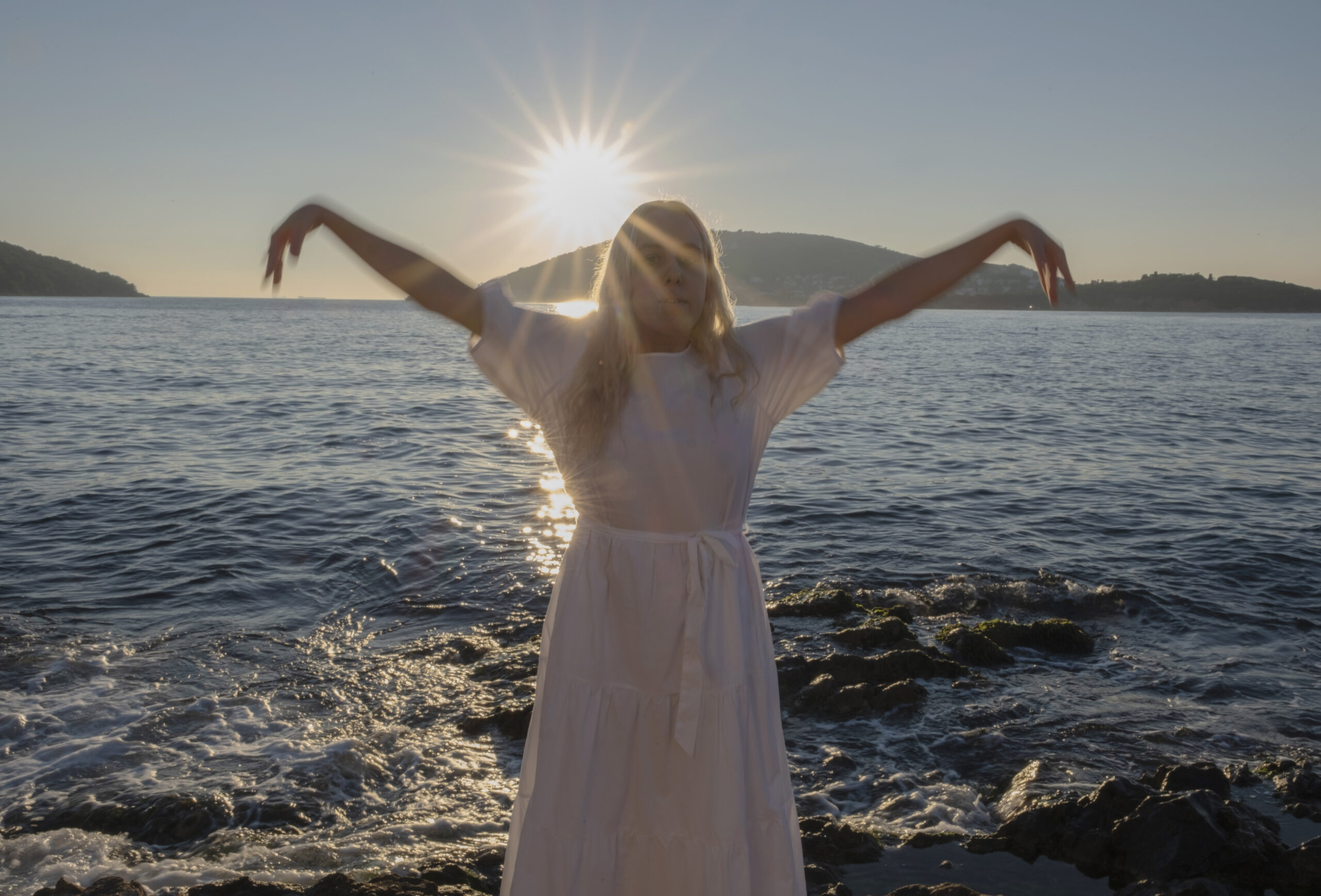
Eco-performance and new media artist Ayça Ceylan explores the intersections of nature, ritual, embodied memory, and emerging technologies. We spoke with the artist about ritual as a method of research, the body as a living archive, and how her practice reimagines our relationship with the more-than-human world.
You often work through ritual… your work may be seen as a living and evolving practice. What role does ritual play in helping us reconnect with forms of knowledge that contemporary life tends to overlook? And how this appears in your work? In your performances?
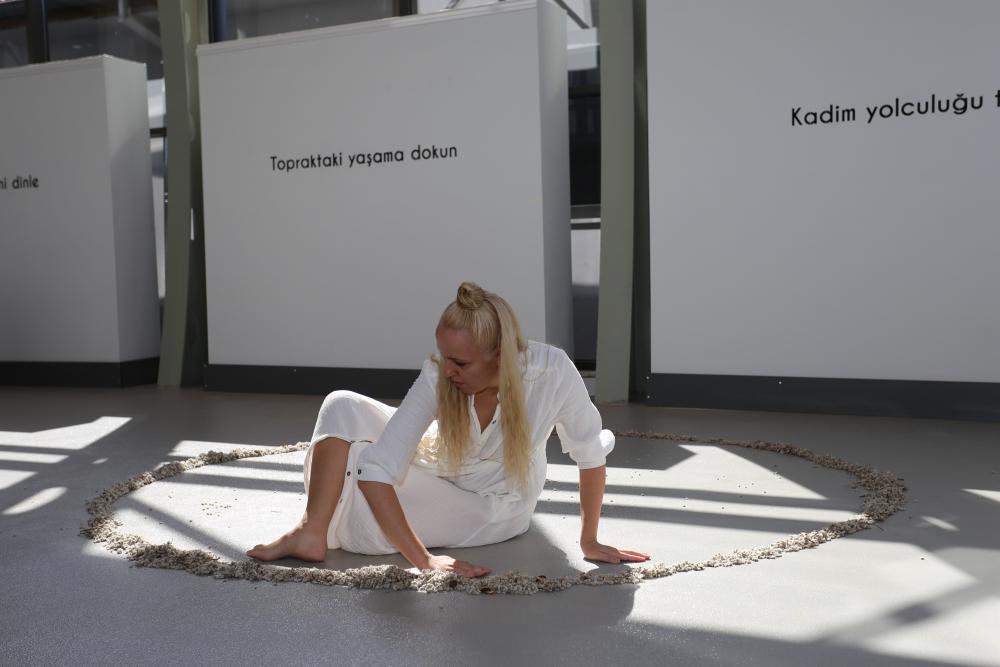
I don’t think of ritual as a return to the past or as the repetition of inherited traditions. For me, ritual is a practice of attention and care. It invites us to slow down, to listen differently, and to perceive forms of knowledge that often remain invisible within the speed and noise of contemporary life. Rather than producing symbolic meanings, I see ritual as a methodology for research—one that allows me to enter into dialogue with the body, landscapes, materials, memories, and more-than-human beings.
This understanding shapes my performances and performative installations. Whether I work with sand, water, plants, movement, or animal symbolism, these are never simply visual motifs but active presences that shape the work itself. Ritual creates a space where artist, audience, and environment can enter a shared process of attention rather than a fixed interpretation.
-Your work suggests that the body is not merely a subject but a site of memory and perception. What kinds of knowledge can the body access that language alone cannot?
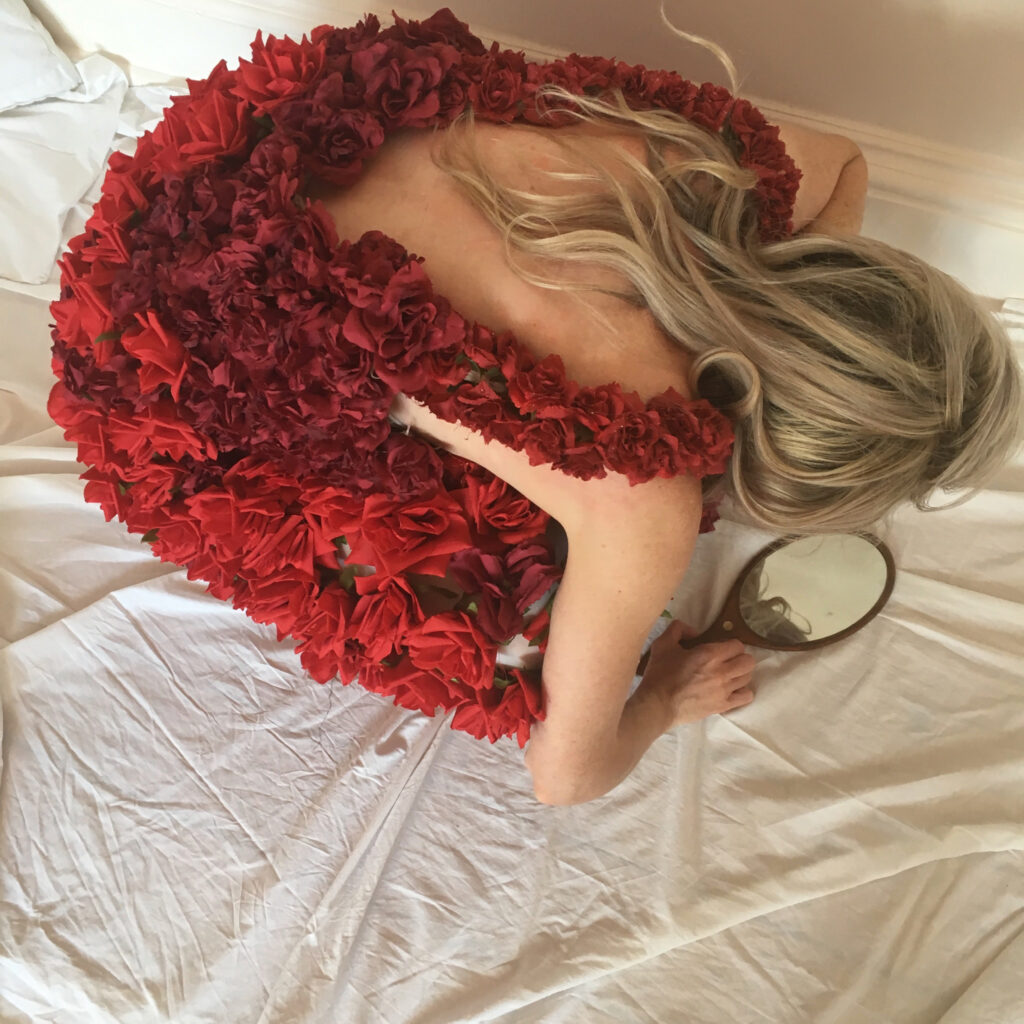
I have come to think of the body as carrying what I call an Invisible Library—a living archive of embodied, ecological, and ancestral knowledge that cannot be accessed through information alone, but through experience, presence, and relationship. Language is one of humanity’s greatest tools, yet it is not the only way we know the world.
Through movement, breath, intuition, and deep listening, the body can reveal ways of perceiving and relating that language alone cannot fully articulate. In this sense, I don’t believe we are discovering something entirely new; I believe we are remembering something we have forgotten. Many of the relationships we seek—with ourselves, with nature, and with more-than-human life—are already present within us, waiting to be sensed rather than defined.
-Nature in your practice appears not as a backdrop but as an active collaborator. How has working closely with nature transformed your understanding of authorship and artistic approach?
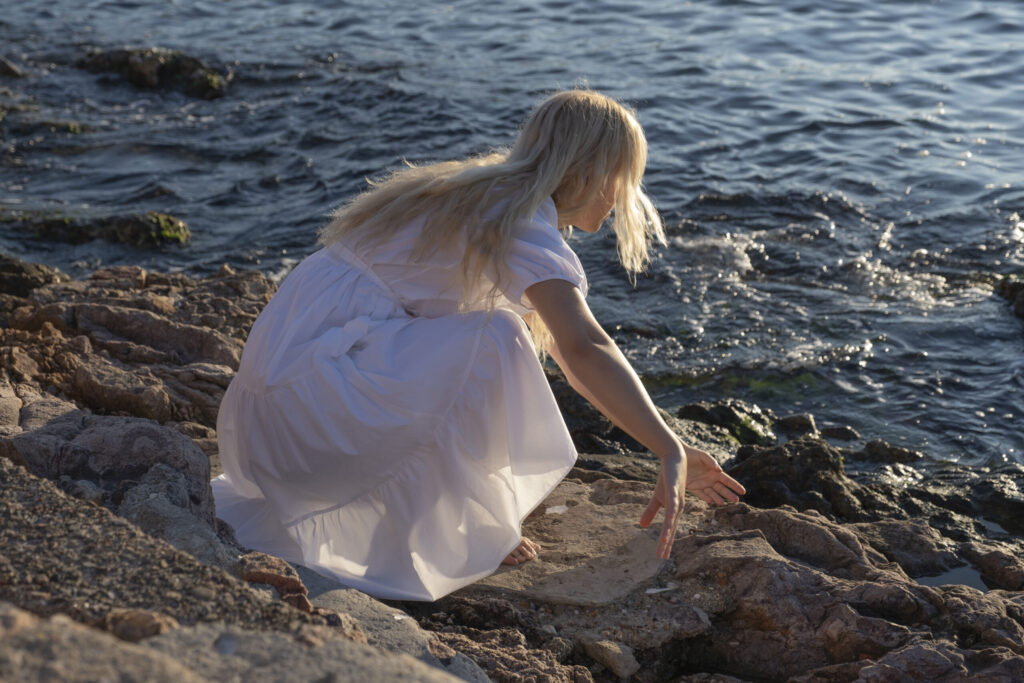
Working closely with nature has transformed my understanding of authorship. No matter how carefully we prepare, there comes a moment when we have to let go—to listen, to trust, and to allow nature to lead. Rather than seeing myself as the sole author of a work, I now understand artistic practice as a relationship based on collaboration rather than control.
I experienced this while preparing The Sandland Oracle: Codes of the Ancient Future during my residency at Misk Art Institute in Saudi Arabia. Before filming in the desert, I encountered a black scorpion while meditating. For a brief moment, we simply stood still, observing one another. Later, I learned that it was an endemic and highly venomous species. That encounter reminded me that nature is not only made of beautiful flowers and singing birds; it also asks us to respect what we cannot control or fully understand.
Nature has taught me to embrace both knowledge and uncertainty, to trust natural cycles, and to remain open to the unexpected—not as a disruption, but as an essential part of the creative process.
-In one of the podcasts, you have spoken about your daily mind-mapping ritual. How does this practice influence your creative process, and what has it taught you about the relationship between intuition, consciousness, and artistic creation?
I call this practice Memory Map. It is a daily awareness practice I have developed over the years by weaving together Eastern and Western teachings, meditation, field research in ancient sites and sacred landscapes, animal symbolism, my family’s herbal knowledge, handwriting, and methods that have emerged through my own artistic research. Every morning, it becomes a space where I bring my mind, heart, and body into dialogue before the day begins.
Memory Map has taught me that creativity rarely arrives as a sudden moment of inspiration. It grows through attention, consistency, and deep listening. I don’t use it to search for ideas; I use it to create the conditions in which ideas can reveal themselves. For me, intuition is not the opposite of consciousness—it is another way of paying attention.
-Today we see that many contemporary artists are revisiting spirituality, ancestral knowledge, and embodied practices. Why do you think these themes are resurfacing so strongly today, and what do they offer in a world increasingly shaped by technology and acceleration?
Many artists have been working with spirituality, ancestral knowledge, and embodied practices for decades. What has changed is not their presence, but the context in which we encounter them today. Climate crisis, ecological loss, and the accelerating pace of technology have made us more aware of our interconnectedness and of the limitations of seeing ourselves as separate from the living world.
In my practice, mythology, ecology, and emerging technologies are not opposing forces but different languages for asking the same questions about memory, relationships, and possible futures. I believe more sustainable futures will emerge not only through technological innovation, but also through remembering different ways of relating to the Earth and to one another.
Perhaps every idea has its own season. Some ways of thinking become visible only when the world is ready to ask the questions they have been holding all along. For me, embodied practices are not about returning to the past, but about cultivating presence, attention, and care—qualities that feel increasingly essential for imagining the future.
-Nature, the body, and ritual are recurring elements throughout your practice. How do these three dimensions communicate with one another, and what kinds of transformations emerge when they converge within a work?
Nature, the body, and ritual are not separate elements in my practice; they are different ways of understanding our place within the living world. The body is how we perceive, ritual is how we cultivate attention and care, and nature is the space where these experiences unfold. Together, they continually reshape the way I think, create, and relate to the world around me.
Across my performances and performative installations, I create conditions where people can experience a different way of perceiving rather than encounter a fixed message. When body, nature, and ritual converge, transformation does not come from explanation, but from direct experience—from slowing down, listening deeply, and becoming more aware of our interconnectedness.
I believe transformation begins with a change in perception. If a work can invite someone to slow down, to listen more deeply, and to feel—even for a brief moment—that they are part of a larger living ecology rather than separate from it, then something meaningful has already taken place. Such a shift in perception is one of the essential foundations for imagining more sustainable futures in the face of climate crisis.
About
Ayça Ceylan is an eco-performance and new media artist. Her practice explores the intersections of comparative mythology, ecology, embodied memory, and emerging technologies. Through performance, moving image, installation, and artistic research, she creates immersive experiences that investigate relationships between human and more-than-human worlds, collective memory, and speculative futures. She has presented exhibitions, performances, and workshops across Türkiye, Japan, India, Bolivia, USA, UK and the Kingdom of Saudi Arabia. Alongside her artistic practice, she is an environmental columnist for the Cumhuriyet. Her works are included in private art collections.