

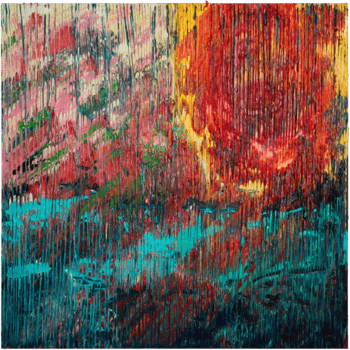
Artist Burcu Ünlü will take part in Personal Structures, the official parallel exhibition of the 61st La Biennale di Venezia, organised by ACT Contemporary in collaboration with the European Cultural Centre Italy. Held from May 9 to November 22, 2026, the exhibition brings together international artists around the axes of time, space, and existence, with Ünlü’s work exploring the city as a shifting field of memory, perception, and inner experience.
Moving through layers of trace, erasure, and reconstruction, her practice resists fixed geographies, instead constructing an internal map where the seen and the remembered continuously reshape one another—positioning the city not as a place, but as a lived and transforming condition.
Burcu Ünlü approaches the city not as a fixed geography but as a shifting field of memory and perception. Moving through layers of time, trace, and transformation, her works construct an internal map where what is seen and what is remembered continuously reshape one another—revealing the city as a state of mind rather than a place.
What does your participation in the Personal Structures exhibition, held parallel to the Venice Biennale, mean for your practice? How do you position your work within this context?
I see this participation as a certain turning point in my practice. Beyond providing international visibility, it is also significant in that it allows my work to be reconsidered within different conceptual frameworks. The relationship I establish with memory, time, and space progresses through a layered and at times fragmented structure. In this sense, I find a natural intersection with the framework offered by the Personal Structures exhibition.
I approach memory as a set of traces that overlap, are erased, and are reconstructed each time. Time finds its place in my practice as a layered structure experienced through returns and simultaneities. When considered together with space, these two axes create a field of encounter in my production where different flows of emotion and meaning intersect.
How do you establish a relationship between your practice and the conceptual framework of Personal Structures, centered on “time, space, and existence”?
This axis corresponds to a line of thought that has long manifested in different forms within my practice. My engagement with the framework that Personal Structures constructs around time, space, and existence relates to the increasing clarity of the direction my work is taking.
Time and memory in my works do not operate through what is directly visible; rather, they are felt through layers that accumulate beneath the surface, intensify, and gradually emerge. The meaning carried by the image does not fix itself to a single moment; instead, it expands through traces and accumulations. This approach also shapes how I look at a city or a person; what draws my attention is not a static image but a structure that accumulates and transforms within. For this reason, I see my relationship with the exhibition as an intersection of a shared ground of thought. Being part of a space where the same questions circulate in different forms creates an encounter that expands the context of my production.
In your “Istanbul” series, you approach neighborhoods not as geography but as a mental and emotional map. How did this perspective emerge for you?
My relationship with Istanbul has never been based on a measurable urban experience. Rather, it is a structure felt through flow, intensity, and contradictions. For this reason, in the “Istanbul” series, neighborhoods emerge as areas shaped by experience, independent of their positions on a map.
Balat, the Islands, Beyoğlu; for me, are not places defined by clear boundaries but fields where different moods, encounters, and transitions accumulate. Each carries its own tempo and atmosphere. My perception of the city is shaped through this fragmented structure, like layers that come together yet never fully merge. Over time, this approach led me to read Istanbul as an internal map. What I encounter outside and what accumulates within constantly shift places. This state of movement is also decisive in my work; the city appears as a field that transforms through experience and is reconstructed each time.
When dealing with the layered structure of the city, which is more dominant for you: memory, transformation, or belonging?
Memory holds a determining place for me. Transformation and belonging take shape within the space it opens. When I look at the city, what interests me is how what belongs to the past continues to exist in different forms within the present without being erased. There is a constant movement of change on the surface of the city; however, beneath this movement lies a sense of continuity that is not easily visible. This continuity deepens the relationship with space and nourishes the sense of belonging. For this reason, I think of memory as a ground that carries and connects all these layers. In my works, this ground exists as a structure that makes itself felt through traces and accumulations beyond what is visible.
When does a space become “internal”?
A space becomes internal at the moment when the experience no longer remains at a purely visual level. As perception begins to deepen through the relationship established with the space, the state of being there gives way to feeling and internalization. In this process, the space moves away from being a structure that exists externally and transforms into an experience shaped together with one’s perception. In such an encounter, what becomes decisive is not the physical properties of the space but the effect it creates. Light, sound, scale, or a sense of emptiness; all these elements gain new meaning through the relationship established with the body. As the experience unfolds, the space is reconstructed through this relationship. This is precisely the point that interests me: the moment when space transforms through perception and experience, and the work itself becomes a surface that carries this transformation.
How do you think about the relationship between memory and space? Does a city exist as we remember it, or as we see it?
Most of the time, the city continues to exist in the way we remember it. Memory does not preserve what is seen as it is; it transforms and reconstructs it. The traces that remain reshape perception each time from a different point. Sometimes this process reopens unexpectedly. A piece of music heard after returning home, a memory that comes to mind, or a small detail can suddenly bring that city back. At that moment, even if the city is physically distant, the experience is revived and felt with a different intensity. For this reason, the city becomes a structure that constantly shifts with experience. Each act of remembering reconstructs it; each encounter adds another layer. Therefore, the same city carries a different meaning for everyone.
In a city like Istanbul, which is constantly transforming, can artistic production function as a form of memory recording?
Absolutely. However, what is at stake here is not documentation, but an approach based on leaving traces. Artistic production circulates elements that are disappearing or becoming invisible within another plane. This becomes even more evident in a constantly changing city like Istanbul. Layers that are physically erased or transformed gain a different continuity through production. This continuity progresses through emotion, association, and perception. This approach also holds an important place in my own practice. The works create a space for traces spread over time to continue their existence on another surface.
How did the visual language you use in this series emerge? Is it based more on observation or on an internal construction?
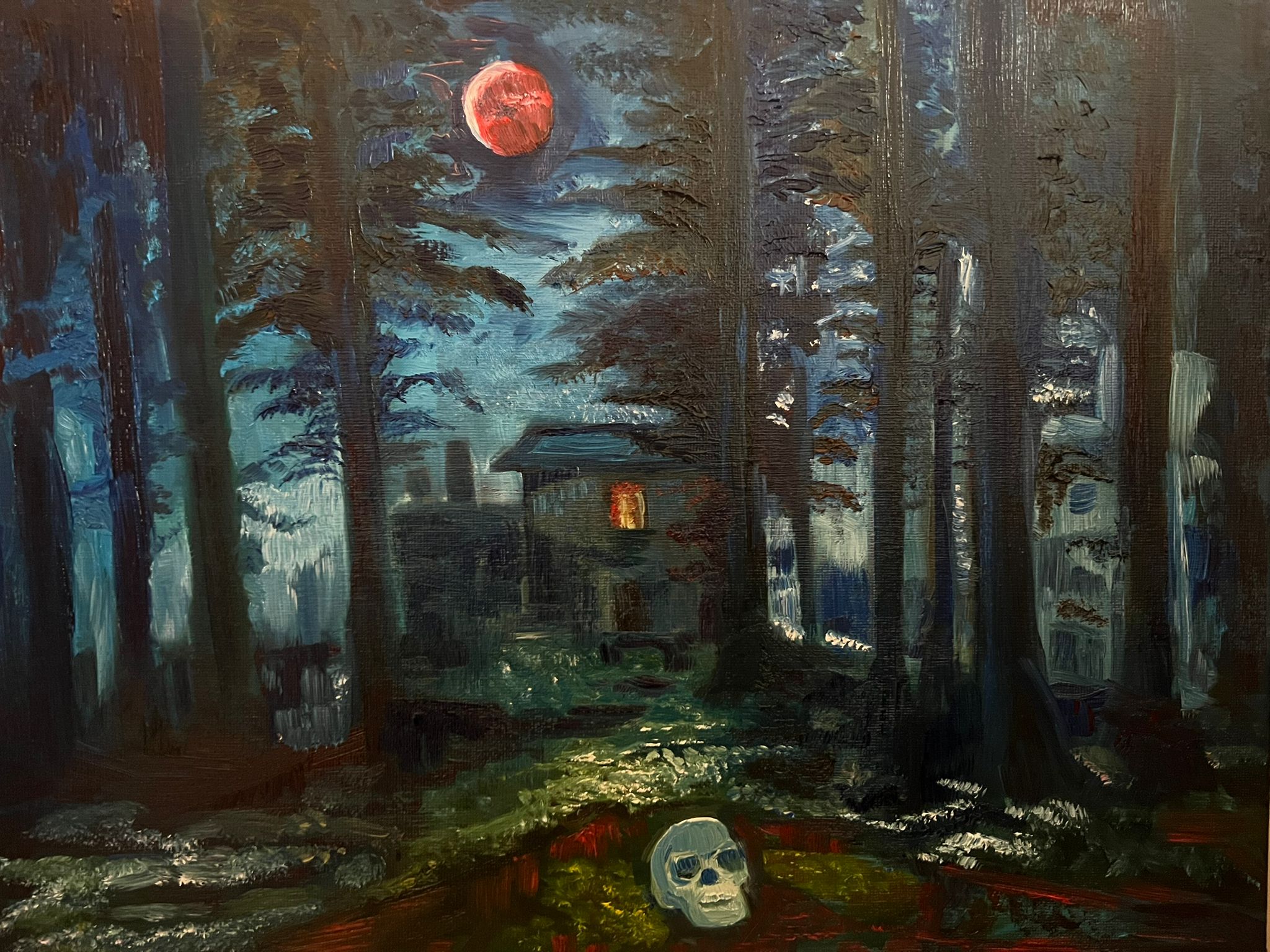
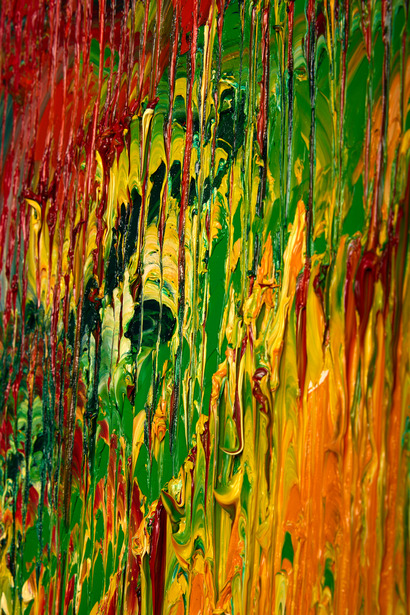
The visual language is nourished by a process that begins with observation; however, this starting point gradually gives way to a more complex internal construction. Initial encounters do not remain as they are in the mind; they fragment, reorganize, and return with different intensities. This process of transformation opens up the distance between what is seen and what is felt, while also constructing a new visual structure. This approach also aligns with the idea that seeing is not a passive act of recording. Perception is reshaped with each encounter; elements such as space, light, and surface do not remain fixed but change with the gaze. Color, layering, and surface are the fundamental carriers of this process. Color, beyond being a visual element, functions as a structure that carries emotion. Layers make visible the traces that accumulate and overlap over time. The surface becomes a field that both carries and transforms this accumulation. When all these elements come together, the painting turns into a structure that establishes its own internal rhythm. For this reason, the resulting visual language is directed not toward narrating a specific scene but toward constructing an atmosphere. The viewer encounters not a defined image but a field into which they are drawn.
Is Istanbul, for you, a city or a condition?
A condition. In fact, a shifting state of mind. A structure that does not fix itself and constantly relocates. Istanbul is one of the rare cities capable of carrying multiple emotions at once.
Contradiction, melancholy, movement; all coexist without suppressing one another. This simultaneity makes it difficult to place the city within a single definition. Each encounter reveals a different face. For this reason, my relationship with Istanbul is based on remaining within a state rather than being tied to a specific place. At times intense, at times fragile, at times fluid. This variability also finds its reflection in my production; instead of a fixed narrative, a structure emerges where different emotional states can coexist. In this sense, Istanbul functions as an atmosphere that one inhabits and that is constantly changing.
If you had to express this series in a single sentence, what would it be?
The Istanbul series is an attempt to make visible the traces that a city leaves in memory.
Burcu Ünlü approaches the city not as a fixed geography but as a shifting field of memory and perception. Moving through layers of time, trace, and transformation, her works construct an internal map where what is seen and what is remembered continuously reshape one another—revealing the city as a state of mind rather than a place.
What does your participation in the Personal Structures exhibition, held parallel to the Venice Biennale, mean for your practice? How do you position your work within this context?
I see this participation as a certain turning point in my practice. Beyond providing international visibility, it is also significant in that it allows my work to be reconsidered within different conceptual frameworks. The relationship I establish with memory, time, and space progresses through a layered and at times fragmented structure. In this sense, I find a natural intersection with the framework offered by the Personal Structures exhibition.
I approach memory as a set of traces that overlap, are erased, and are reconstructed each time. Time finds its place in my practice as a layered structure experienced through returns and simultaneities. When considered together with space, these two axes create a field of encounter in my production where different flows of emotion and meaning intersect.
How do you establish a relationship between your practice and the conceptual framework of Personal Structures, centered on “time, space, and existence”?
This axis corresponds to a line of thought that has long manifested in different forms within my practice. My engagement with the framework that Personal Structures constructs around time, space, and existence relates to the increasing clarity of the direction my work is taking.
Time and memory in my works do not operate through what is directly visible; rather, they are felt through layers that accumulate beneath the surface, intensify, and gradually emerge. The meaning carried by the image does not fix itself to a single moment; instead, it expands through traces and accumulations. This approach also shapes how I look at a city or a person; what draws my attention is not a static image but a structure that accumulates and transforms within. For this reason, I see my relationship with the exhibition as an intersection of a shared ground of thought. Being part of a space where the same questions circulate in different forms creates an encounter that expands the context of my production.
In your “Istanbul” series, you approach neighborhoods not as geography but as a mental and emotional map. How did this perspective emerge for you?
My relationship with Istanbul has never been based on a measurable urban experience. Rather, it is a structure felt through flow, intensity, and contradictions. For this reason, in the “Istanbul” series, neighborhoods emerge as areas shaped by experience, independent of their positions on a map.
Balat, the Islands, Beyoğlu; for me, are not places defined by clear boundaries but fields where different moods, encounters, and transitions accumulate. Each carries its own tempo and atmosphere. My perception of the city is shaped through this fragmented structure, like layers that come together yet never fully merge. Over time, this approach led me to read Istanbul as an internal map. What I encounter outside and what accumulates within constantly shift places. This state of movement is also decisive in my work; the city appears as a field that transforms through experience and is reconstructed each time.
When dealing with the layered structure of the city, which is more dominant for you: memory, transformation, or belonging?
Memory holds a determining place for me. Transformation and belonging take shape within the space it opens. When I look at the city, what interests me is how what belongs to the past continues to exist in different forms within the present without being erased. There is a constant movement of change on the surface of the city; however, beneath this movement lies a sense of continuity that is not easily visible. This continuity deepens the relationship with space and nourishes the sense of belonging. For this reason, I think of memory as a ground that carries and connects all these layers. In my works, this ground exists as a structure that makes itself felt through traces and accumulations beyond what is visible.
When does a space become “internal”?
A space becomes internal at the moment when the experience no longer remains at a purely visual level. As perception begins to deepen through the relationship established with the space, the state of being there gives way to feeling and internalization. In this process, the space moves away from being a structure that exists externally and transforms into an experience shaped together with one’s perception. In such an encounter, what becomes decisive is not the physical properties of the space but the effect it creates. Light, sound, scale, or a sense of emptiness; all these elements gain new meaning through the relationship established with the body. As the experience unfolds, the space is reconstructed through this relationship. This is precisely the point that interests me: the moment when space transforms through perception and experience, and the work itself becomes a surface that carries this transformation.
How do you think about the relationship between memory and space? Does a city exist as we remember it, or as we see it?
Most of the time, the city continues to exist in the way we remember it. Memory does not preserve what is seen as it is; it transforms and reconstructs it. The traces that remain reshape perception each time from a different point. Sometimes this process reopens unexpectedly. A piece of music heard after returning home, a memory that comes to mind, or a small detail can suddenly bring that city back. At that moment, even if the city is physically distant, the experience is revived and felt with a different intensity. For this reason, the city becomes a structure that constantly shifts with experience. Each act of remembering reconstructs it; each encounter adds another layer. Therefore, the same city carries a different meaning for everyone.
In a city like Istanbul, which is constantly transforming, can artistic production function as a form of memory recording?
Absolutely. However, what is at stake here is not documentation, but an approach based on leaving traces. Artistic production circulates elements that are disappearing or becoming invisible within another plane. This becomes even more evident in a constantly changing city like Istanbul. Layers that are physically erased or transformed gain a different continuity through production. This continuity progresses through emotion, association, and perception. This approach also holds an important place in my own practice. The works create a space for traces spread over time to continue their existence on another surface.
How did the visual language you use in this series emerge? Is it based more on observation or on an internal construction?
The visual language is nourished by a process that begins with observation; however, this starting point gradually gives way to a more complex internal construction. Initial encounters do not remain as they are in the mind; they fragment, reorganize, and return with different intensities. This process of transformation opens up the distance between what is seen and what is felt, while also constructing a new visual structure. This approach also aligns with the idea that seeing is not a passive act of recording. Perception is reshaped with each encounter; elements such as space, light, and surface do not remain fixed but change with the gaze. Color, layering, and surface are the fundamental carriers of this process. Color, beyond being a visual element, functions as a structure that carries emotion. Layers make visible the traces that accumulate and overlap over time. The surface becomes a field that both carries and transforms this accumulation. When all these elements come together, the painting turns into a structure that establishes its own internal rhythm. For this reason, the resulting visual language is directed not toward narrating a specific scene but toward constructing an atmosphere. The viewer encounters not a defined image but a field into which they are drawn.
Is Istanbul, for you, a city or a condition?
A condition. In fact, a shifting state of mind. A structure that does not fix itself and constantly relocates. Istanbul is one of the rare cities capable of carrying multiple emotions at once.
Contradiction, melancholy, movement; all coexist without suppressing one another. This simultaneity makes it difficult to place the city within a single definition. Each encounter reveals a different face. For this reason, my relationship with Istanbul is based on remaining within a state rather than being tied to a specific place. At times intense, at times fragile, at times fluid. This variability also finds its reflection in my production; instead of a fixed narrative, a structure emerges where different emotional states can coexist. In this sense, Istanbul functions as an atmosphere that one inhabits and that is constantly changing.
If you had to express this series in a single sentence, what would it be?
The Istanbul series is an attempt to make visible the traces that a city leaves in memory.
What does your participation in the Personal Structures exhibition, held parallel to the Venice Biennale, mean for your practice? How do you position your work within this context?
I see this participation as a certain turning point in my practice. Beyond providing international visibility, it is also significant in that it allows my work to be reconsidered within different conceptual frameworks. The relationship I establish with memory, time, and space progresses through a layered and at times fragmented structure. In this sense, I find a natural intersection with the framework offered by the Personal Structures exhibition.
I approach memory as a set of traces that overlap, are erased, and are reconstructed each time. Time finds its place in my practice as a layered structure experienced through returns and simultaneities. When considered together with space, these two axes create a field of encounter in my production where different flows of emotion and meaning intersect.
How do you establish a relationship between your practice and the conceptual framework of Personal Structures, centered on “time, space, and existence”?
This axis corresponds to a line of thought that has long manifested in different forms within my practice. My engagement with the framework that Personal Structures constructs around time, space, and existence relates to the increasing clarity of the direction my work is taking.
Time and memory in my works do not operate through what is directly visible; rather, they are felt through layers that accumulate beneath the surface, intensify, and gradually emerge. The meaning carried by the image does not fix itself to a single moment; instead, it expands through traces and accumulations. This approach also shapes how I look at a city or a person; what draws my attention is not a static image but a structure that accumulates and transforms within. For this reason, I see my relationship with the exhibition as an intersection of a shared ground of thought. Being part of a space where the same questions circulate in different forms creates an encounter that expands the context of my production.
In your “Istanbul” series, you approach neighborhoods not as geography but as a mental and emotional map. How did this perspective emerge for you?
My relationship with Istanbul has never been based on a measurable urban experience. Rather, it is a structure felt through flow, intensity, and contradictions. For this reason, in the “Istanbul” series, neighborhoods emerge as areas shaped by experience, independent of their positions on a map.
Balat, the Islands, Beyoğlu; for me, are not places defined by clear boundaries but fields where different moods, encounters, and transitions accumulate. Each carries its own tempo and atmosphere. My perception of the city is shaped through this fragmented structure, like layers that come together yet never fully merge. Over time, this approach led me to read Istanbul as an internal map. What I encounter outside and what accumulates within constantly shift places. This state of movement is also decisive in my work; the city appears as a field that transforms through experience and is reconstructed each time.
When dealing with the layered structure of the city, which is more dominant for you: memory, transformation, or belonging?
Memory holds a determining place for me. Transformation and belonging take shape within the space it opens. When I look at the city, what interests me is how what belongs to the past continues to exist in different forms within the present without being erased. There is a constant movement of change on the surface of the city; however, beneath this movement lies a sense of continuity that is not easily visible. This continuity deepens the relationship with space and nourishes the sense of belonging. For this reason, I think of memory as a ground that carries and connects all these layers. In my works, this ground exists as a structure that makes itself felt through traces and accumulations beyond what is visible.
When does a space become “internal”?
A space becomes internal at the moment when the experience no longer remains at a purely visual level. As perception begins to deepen through the relationship established with the space, the state of being there gives way to feeling and internalization. In this process, the space moves away from being a structure that exists externally and transforms into an experience shaped together with one’s perception. In such an encounter, what becomes decisive is not the physical properties of the space but the effect it creates. Light, sound, scale, or a sense of emptiness; all these elements gain new meaning through the relationship established with the body. As the experience unfolds, the space is reconstructed through this relationship. This is precisely the point that interests me: the moment when space transforms through perception and experience, and the work itself becomes a surface that carries this transformation.
How do you think about the relationship between memory and space? Does a city exist as we remember it, or as we see it?
Most of the time, the city continues to exist in the way we remember it. Memory does not preserve what is seen as it is; it transforms and reconstructs it. The traces that remain reshape perception each time from a different point. Sometimes this process reopens unexpectedly. A piece of music heard after returning home, a memory that comes to mind, or a small detail can suddenly bring that city back. At that moment, even if the city is physically distant, the experience is revived and felt with a different intensity. For this reason, the city becomes a structure that constantly shifts with experience. Each act of remembering reconstructs it; each encounter adds another layer. Therefore, the same city carries a different meaning for everyone.
In a city like Istanbul, which is constantly transforming, can artistic production function as a form of memory recording?
Absolutely. However, what is at stake here is not documentation, but an approach based on leaving traces. Artistic production circulates elements that are disappearing or becoming invisible within another plane. This becomes even more evident in a constantly changing city like Istanbul. Layers that are physically erased or transformed gain a different continuity through production. This continuity progresses through emotion, association, and perception. This approach also holds an important place in my own practice. The works create a space for traces spread over time to continue their existence on another surface.
How did the visual language you use in this series emerge? Is it based more on observation or on an internal construction?
The visual language is nourished by a process that begins with observation; however, this starting point gradually gives way to a more complex internal construction. Initial encounters do not remain as they are in the mind; they fragment, reorganize, and return with different intensities. This process of transformation opens up the distance between what is seen and what is felt, while also constructing a new visual structure. This approach also aligns with the idea that seeing is not a passive act of recording. Perception is reshaped with each encounter; elements such as space, light, and surface do not remain fixed but change with the gaze. Color, layering, and surface are the fundamental carriers of this process. Color, beyond being a visual element, functions as a structure that carries emotion. Layers make visible the traces that accumulate and overlap over time. The surface becomes a field that both carries and transforms this accumulation. When all these elements come together, the painting turns into a structure that establishes its own internal rhythm. For this reason, the resulting visual language is directed not toward narrating a specific scene but toward constructing an atmosphere. The viewer encounters not a defined image but a field into which they are drawn.
Is Istanbul, for you, a city or a condition?
A condition. In fact, a shifting state of mind. A structure that does not fix itself and constantly relocates. Istanbul is one of the rare cities capable of carrying multiple emotions at once.
Contradiction, melancholy, movement; all coexist without suppressing one another. This simultaneity makes it difficult to place the city within a single definition. Each encounter reveals a different face. For this reason, my relationship with Istanbul is based on remaining within a state rather than being tied to a specific place. At times intense, at times fragile, at times fluid. This variability also finds its reflection in my production; instead of a fixed narrative, a structure emerges where different emotional states can coexist. In this sense, Istanbul functions as an atmosphere that one inhabits and that is constantly changing.
If you had to express this series in a single sentence, what would it be?
The Istanbul series is an attempt to make visible the traces that a city leaves in memory.