
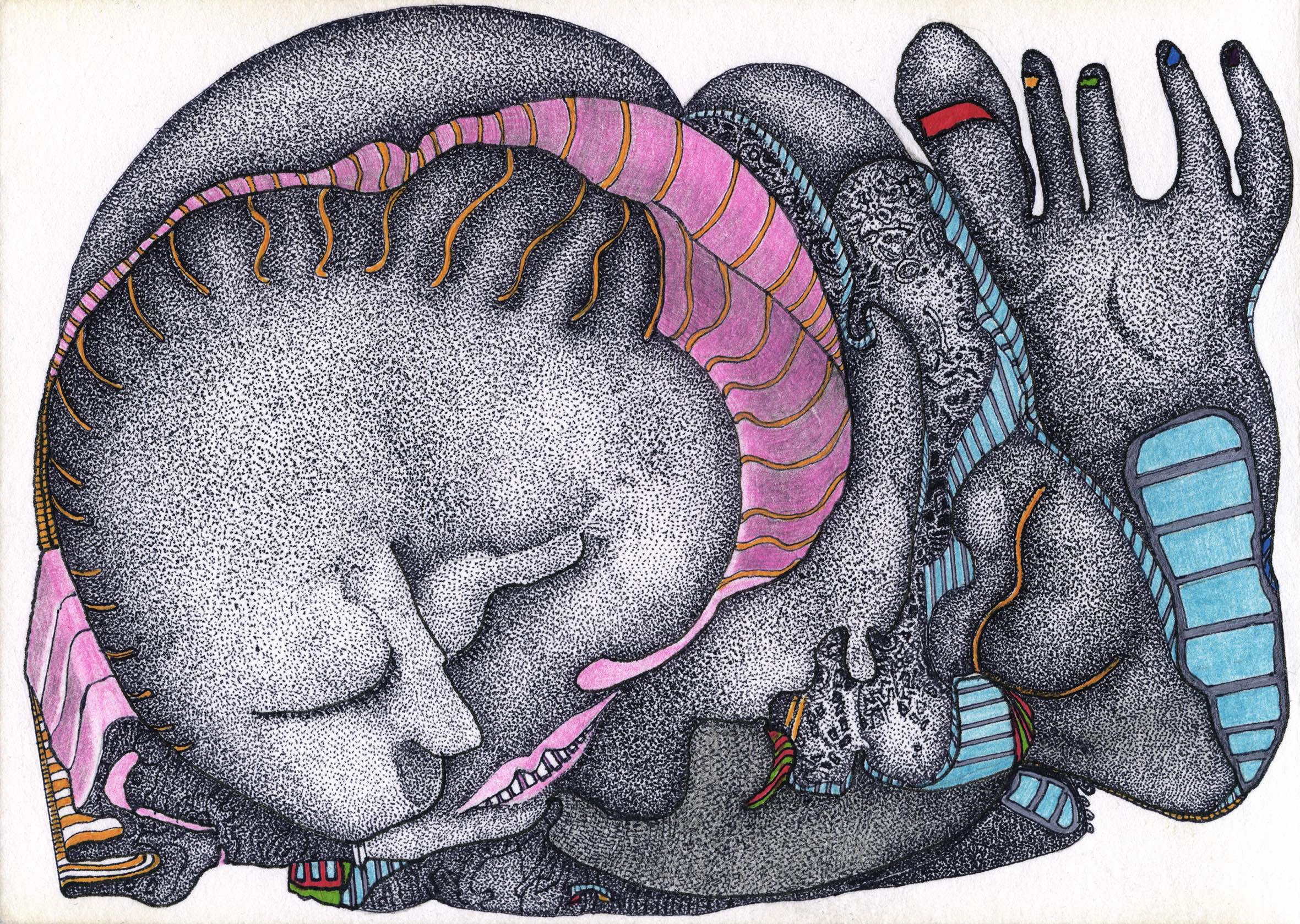
In April, Istanbul is hosting an intense exhibition program that brings together different facets of contemporary art. Ranging from solo exhibitions to comprehensive selections, this program is shaped around themes such as disaster, memory, surveillance, identity, and transformation, offering viewers both current debates and a layered perspective extending into art history. April stands out on Istanbul’s art calendar with notable exhibitions. This month’s shows, on the one hand, make room for current discussions such as disaster, surveillance, transformation, identity, and fragility, while on the other, establish new ties with the past through archives, history, and cultural heritage. In this selection compiled by the editors of ArtDog Istanbul, alongside solo exhibitions by artists such as Ece Ağırtmış, Johan Creten, Ghada Amer, Berke Yazıcıoğlu, and Defne Tesal, there are also comprehensive projects focusing on Hüsamettin Koçan, Ani Çelik Arevyan, and Halil Paşa. Spanning Arter, Salt Galata, Pera Museum, CerModern, Meşher, and independent galleries, these exhibitions offer art audiences in April a strong route that is both dense and brings together different modes of thinking.
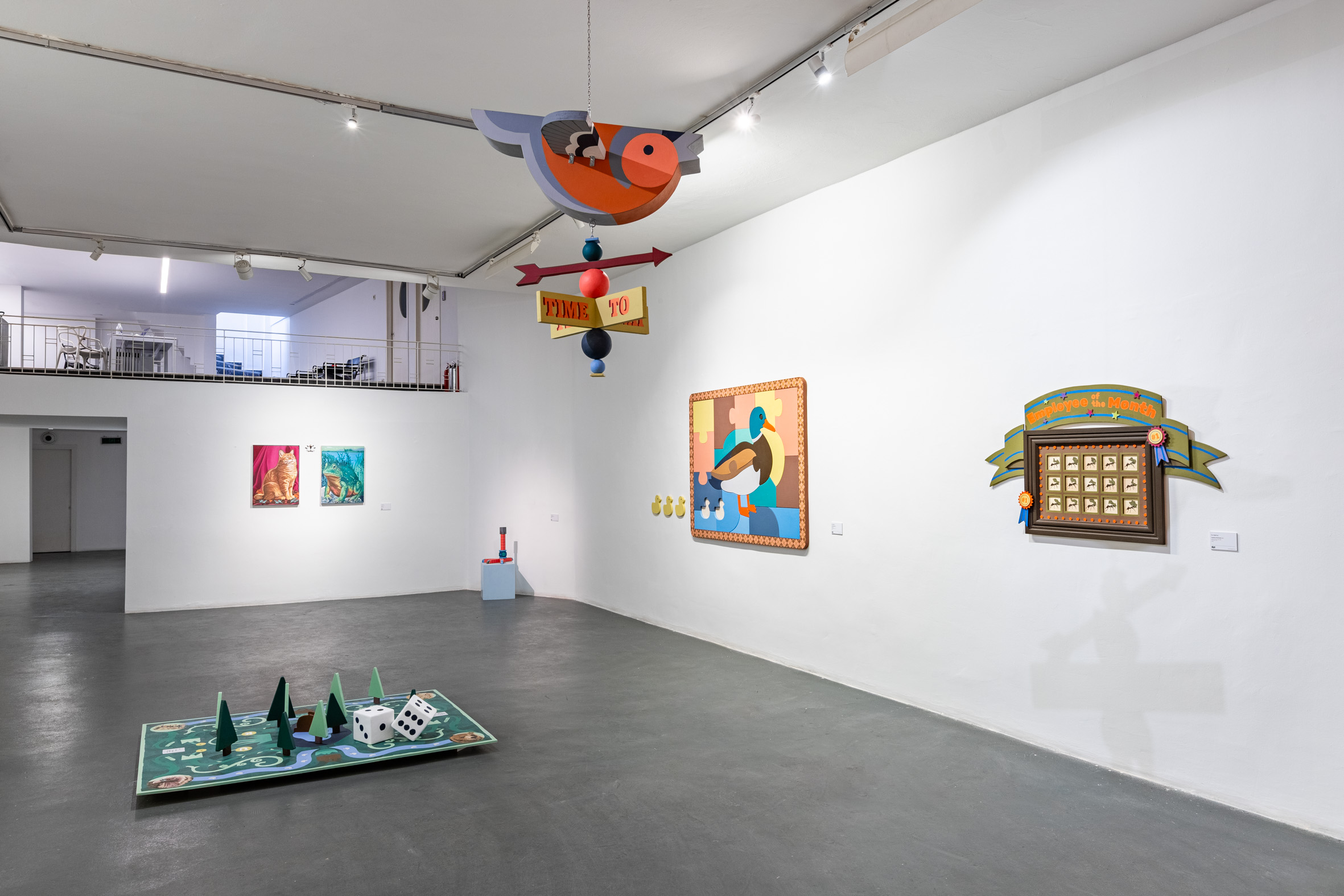
From Ece Ağırtmış, Wild Tales for ‘Life’s Jungle’
Ece Ağırtmış’s exhibition Wild Tales, opened at Pilot in Sıraselviler, Istanbul, leans on the metaphor of the “Jungle of Life” to open up for discussion the process of “growing up,” the contested connection humans establish with this realm, and the unseen traps of adulthood.
In her exhibition, the artist, who lives and works between İzmir and Berlin, promises a narrative through animal representations without addressing the human figure directly, much like the “fables” in which tales and creatures take the leading role.
These animals, in the exhibition, are more than mere beings of nature; they symbolize what a person experiences while growing up, entering working life, or building relationships with society and colliding with their own boundaries.
As these narratives acquire harsher, more complex meanings as one grows older, they also bring with them the traps set by life; while the world constructed by the artist also renders visible elements such as competition, performance, survival, and belonging hidden beneath a fairy-tale-like surface. In her statement on the exhibition, Ağırtmış says, “This exhibition was like building an ecosystem that slowly grew as I produced the works. I now feel happy to have left this world to the viewer. It became a combination of many subjects in my mind and a kind of healing.”
According to information provided by the gallery, when visitors interact with the artist’s works, an inexplicable “familiarity” emerges through the feeling of “reminding” created by the works, and this universe becomes a shared memory between visitor and artist. In Ağırtmış’s works, where she resorts to irony, even negatively chosen memories make the viewer smile through irony. They promise alternative perspectives.
Details for visiting the exhibition:
Date: March 3 – April 18
Venue: Pilot Gallery
Admission Information: Pilot Gallery
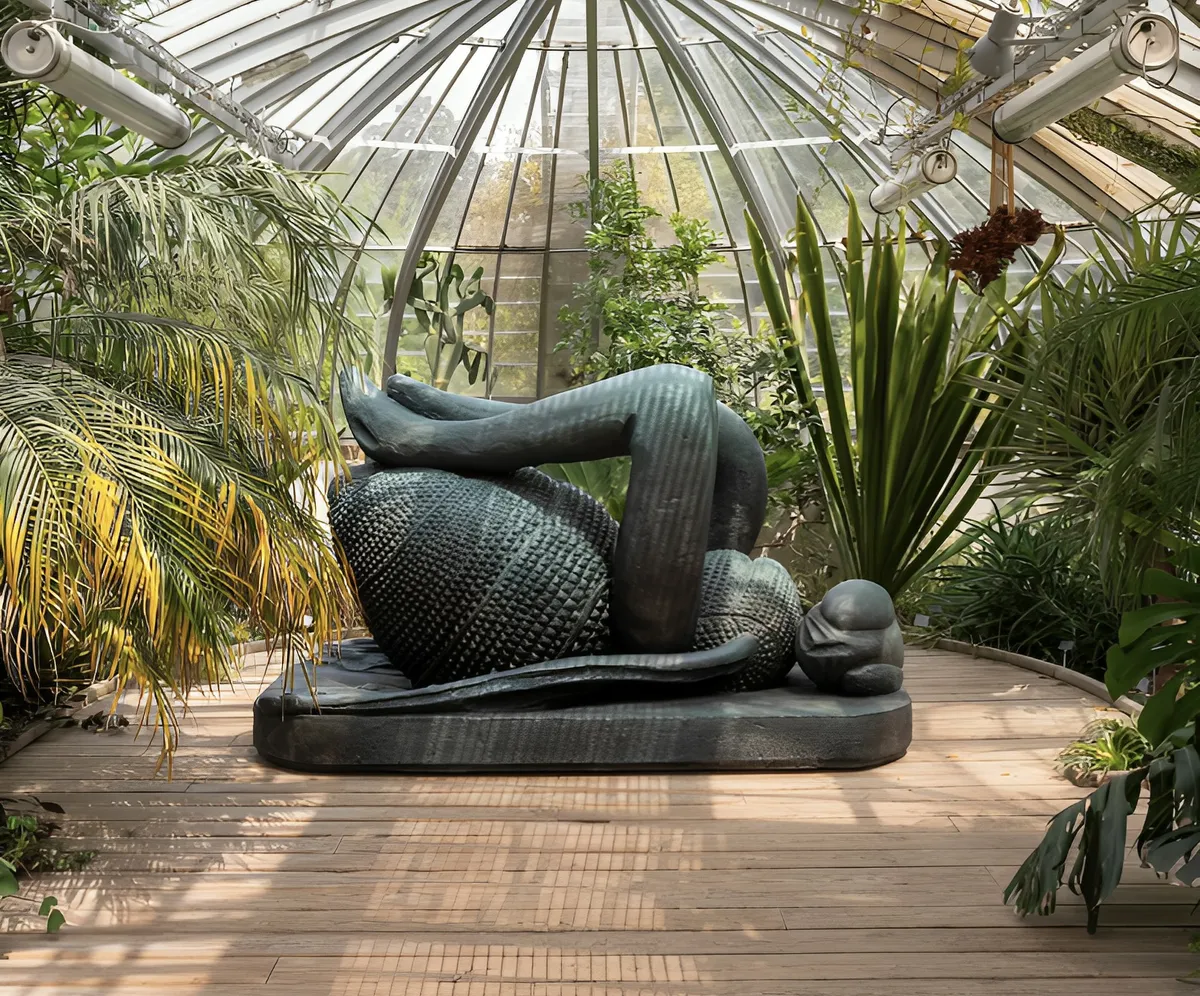
Johan Creten Returns to Pilevneli
Pilevneli, operating in Bodrum and Istanbul, has opened The Dead Fly, Johan Creten’s first exhibition in Istanbul after eight years. The exhibition, which is also Creten’s second collaboration with Pilevneli, brings together works reflecting the artist’s ongoing engagement with themes of power, transformation, and fragility, and with the enduring tension between the intimate and the monumental.
According to information provided by the gallery, at the center of the event stands a “monumental model” prepared for the abstract bronze sculpture bearing the same title as the exhibition. Through the “fly,” traditionally associated with both decay and renewal, the work assumes the form of a complex “mortal reminder” (Memento Mori / Latin: Remember that you are mortal). In the artist’s interpretation, the relevant form is enriched with details that also evoke historical domes and vaults. While the work in question stands out through its form, which gradually transforms into an abstract reclining female figure, it promises a field of reflection on metamorphosis and the permeable nature of existence. In the exhibition, works from the Glory series surrounding this piece examine representations of power suspended between secularity and sanctity, and this conceptual axis also rests on the foundations of the artist’s understanding of production.
In the exhibition, the viewer also encounters the latest female torso sculpture from Creten’s Odore di Femina series. Enriched with gold and platinum lustre and covered with a glossy red glaze, the sculpture makes visible the untouchability of the “other,” one of the most enduring themes of the artist’s production. By evoking the mystery of scent, the fragility of nature, and the delicate distance between being and desire, the work stands out as one of the most elegant and striking pieces in the exhibition.
The exhibition also includes more intimate works described as Library Sculptures, designed for private spaces but monumental in quality through their effect and presence. These models refer to major works in Creten’s recent public sculptures and institutional installations. Today, Creten’s works are also found in the collections of institutions such as the Museum of Modern Art of the City of Paris (Musee d’art Moderne de la Ville de Paris) and the Museum of Fine Arts of Orleans. The Creten exhibition at Pilevneli is complemented by three films documenting the artist’s practice.
Details for visiting the exhibition:
Date: April 2 – May 9
Venue: Pilevneli
Admission Information: Pilevneli
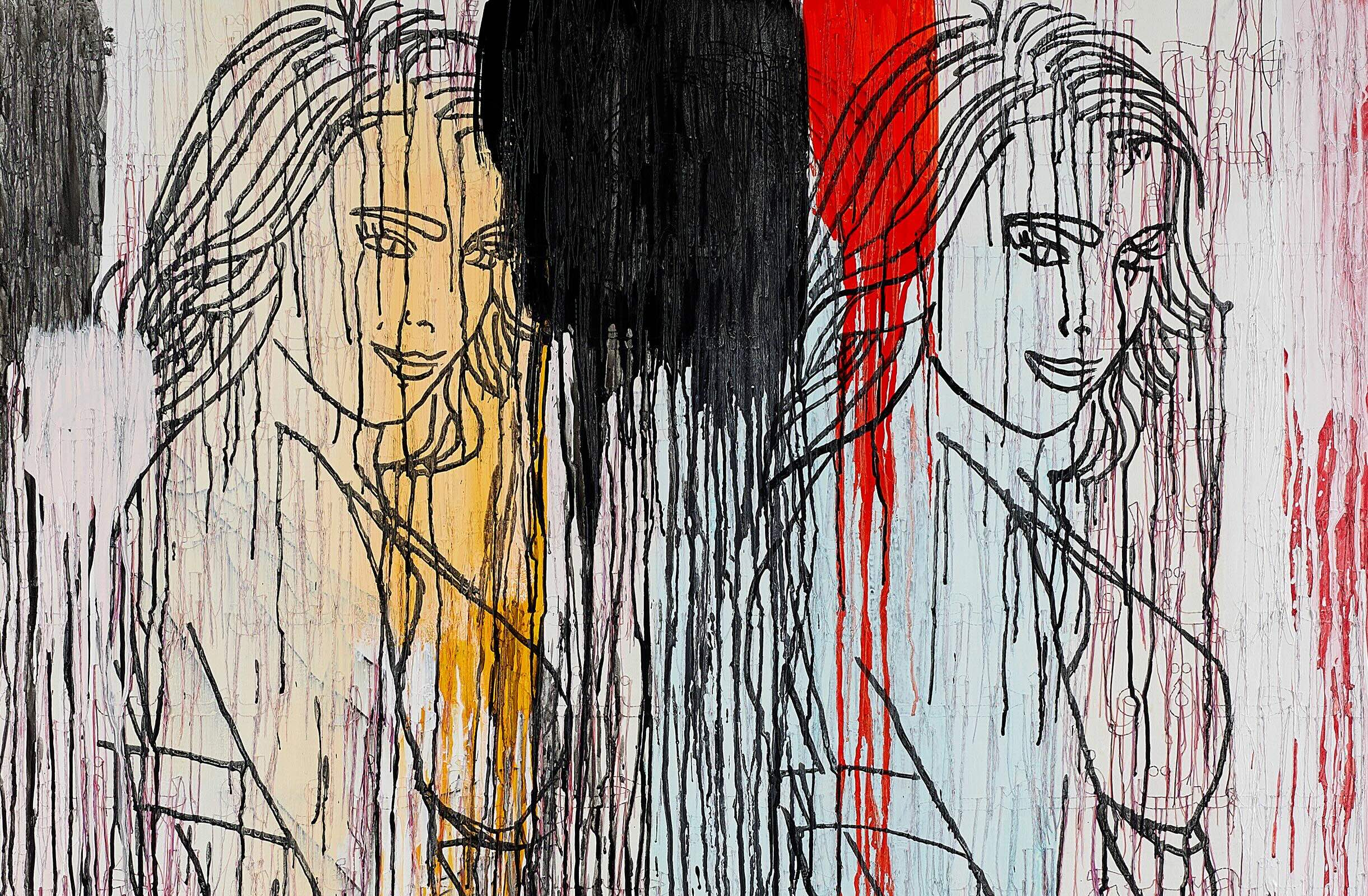
The Middle East’s “Purple Star” Amer in Istanbul After 17 Years
At its Dolapdere venue, Dirimart presents Aurora, the second solo exhibition by contemporary female artist Ghada Amer to take place 17 years after her first exhibition with the gallery. The exhibition brings together selected bronze sculptures from Amer’s recent production, her iconic embroidered paintings, a new canvas series foregrounding the appliqué technique, and her paintings on wood.
Repositioning traditional techniques such as sewing and embroidery, historically regarded as “women’s work,” within the language of contemporary art, Amer’s practice promises a powerful visual field by moving the female body and sexuality outside social norms and forms of representation. Through artistic labor, she opens up discussions on gender politics, desire, representation, and the visibility of the female subject in art history.
Amer’s practice is largely based on reinterpreting sexualized images borrowed from pornographic magazines. Undermining the patterns imposed by the male gaze, Amer describes women as strong, autonomous, and never submissive figures in moments of joy, pleasure, and tenderness.
These figures, existing alone or in interaction with one another, are often mischievous and provocative, yet remain partly concealed beneath layers of thread, embroidered surfaces, and bronze forms; to decipher these images, the viewer must exert visual attention and sensory effort. This layered structure makes visible the multilayered nature of power, freedom, and women’s experience.
The exhibition takes its title from the Latin word aurora, meaning “dawn” and “sunrise.” Also referring to the “northern lights,” the word points to metaphors of beginning and transformation. Just as dawn marks the gradual passage from darkness to light, Amer’s works oscillate between visibility and concealment, control and chance; they create a singular space in which images emerge, dissolve, and are reborn. In the Aurora exhibition, the hanging threads evoke the vertical appearances of the northern lights, creating a sense of atmospheric depth and pointing to the moment when a feminine image emerges from beneath layers of social restriction.
The Paravent Girls series in the exhibition consists of monumental sculptures in which Amer depicts female figures and transfers them into bronze. Images borrowed from pornographic magazines are transformed in the artist’s hands into autonomous, joyful, and free female figures; the figures bring together both the intimacy of everyday life and themes of power, freedom, and visibility.
In Amer’s Drawing in Space series, developed in 2021 and which she prefers to describe as sculptural silhouettes, silhouettes derived from pornographic magazines emerge from anonymity and transform into figures that have long occupied the artist’s imagination. Offering the viewer a female identity that is both familiar and rediscovered, these sculptures create rhythm and volume in space by playing with light and shadow.
Displaying a minimalist and abstract approach, the figures appear as temporary and fluid presences in space; just as aurora moves from darkness to light in dawn’s glow, they appear or disappear depending on the viewer’s gaze. These bronze figures, recalling the way threads hang on canvas, establish a rhythmic balance between visibility and secrecy, control and randomness. Each silhouette makes visible the multilayered and shifting nature of women’s experience through the relationship it establishes with the viewer.
Details for visiting the exhibition:
Date: April 9 – May 10
Venue: Dirimart Dolapdere
Admission Information: Dirimart Dolapdere
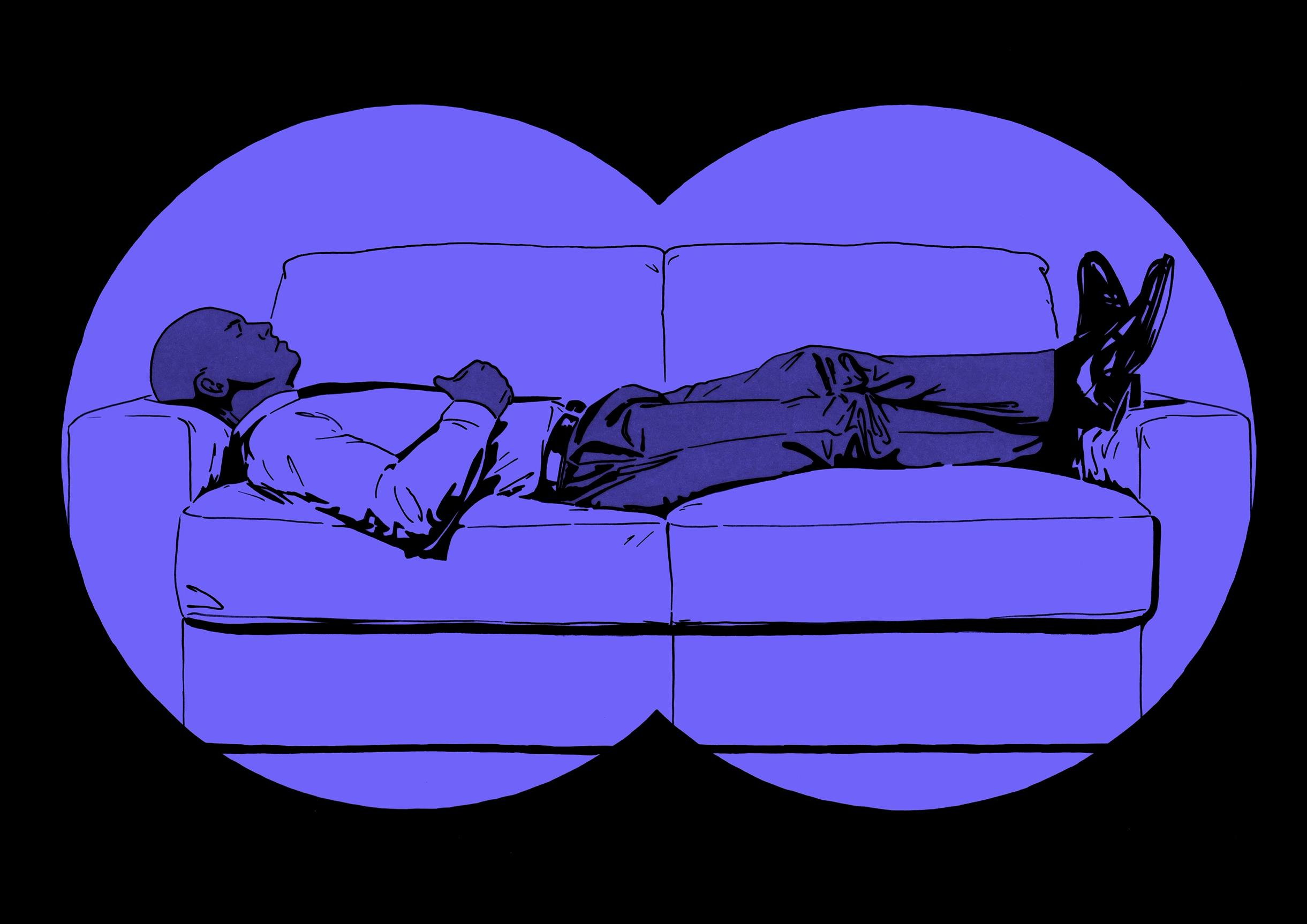
What If the Viewer Is Both the Observed and the Observer: Helix
Berke Yazıcıoğlu’s second solo exhibition at Dirimart Pera, Helix, contains wall-spanning animations at its center. The works intertwine many concepts, from cycles in nature to planetary motions, from digital surveillance systems to the limits of privacy. Positioning the viewer as both observer and observed, the installation questions the uninterrupted state of control created by contemporary technologies. Helix defines modern human experience under the control of time and technology through the power of music and drawing.
In the Helix installation, Yazıcıoğlu analytically examines the “Lever du Jour” (Daybreak) theme in Maurice Ravel’s Daphnis et Chloé, mapping the melody on the Z axis of the trigonometric plane to create a mechanical spine and a rotating clock. The sketches, diagrams, and circular music staff displayed at the center of the space document the analytical process of cyclical patterns encountered everywhere from harmonic sequences to planetary orbits, such as the wave sin (x) = cos (x). Music functions like a clock-motor in the space, determining rhythm through circular, spiral motion. Shades of blue dominate the dark works, supporting themes such as mystery, abstraction, and distance.
The animations in the exhibition and the paintings on the surrounding walls address themes of privacy and control, placing the viewer in the intimate gap between voyeur and observed. Thanks to CCTV images and binocular-bearing figures in the hand-drawn scenes, the viewer can observe both the surveilled subjects and those carrying out the act of surveillance simultaneously from the outside.
The all-seeing eyes created by technologies such as big data and social media offer a collective practice of self-spying that leads to homogenization in human experience. The parallel arrangement formed by the opposing walls forces the viewer into a linear movement, turning the space itself into a physical part of the uninterrupted flow and technological cycle of control present in the animations.
Details for visiting the exhibition:
Date: March 12 – April 26
Venue: Dirimart Pera
Admission Information: Dirimart Pera
“Painful but Free” Stories Told by Movement
Defne Tesal’s solo exhibition at Galerist, titled I Don’t Know Where I Will Fall, is shaped around concepts of change, transitional states, uncertainty, the search for control, and surrender.
Focusing on the concept of “rooting oneself,” the exhibition constantly transforms through ties with the world, the body, relationships, time, space, and connections. In her exhibition, the artist invites the viewer to look from within movement instead of searching for fixed points. In Tesal’s work, rhythm, movement, and repetition are decisive and find correspondences in different surfaces and materials throughout the exhibition. The artist brings together elements of a successive composition through canvas paintings, jute sculptures, works on cardboard, and a site-specific rope arrangement.
Shaped at the thresholds where “the familiar” and the unknown intersect, the exhibition foregrounds the state between safe zones and uncontrollable situations, the impulse to redraw the boundaries of the self, and the visibility of “surrender” as, at certain moments, the only movement coming from within.
Enriched by Eda Berkmen’s catalogue text, the exhibition leans on the idea that transformation, with its transitions in which control is lost and the old and the new intermingle, can be painful yet liberating. Having completed her undergraduate degree in 2010 at the Stage Design and Costume Department of the Faculty of Fine Arts at Mimar Sinan Fine Arts University, and her master’s degree in 2019 at St. Joost School of Art & Design in the Netherlands, Tesal has previously participated in artist residency programs at the School of Visual Arts in New York and KulttuuriKauppila Cultural Center in Finland. The artist, born in 1985, will also be at the Delfina Foundation in London this year.
Details for visiting the exhibition:
Date: March 10 – April 18
Venue: Galerist
Admission Information: Galerist
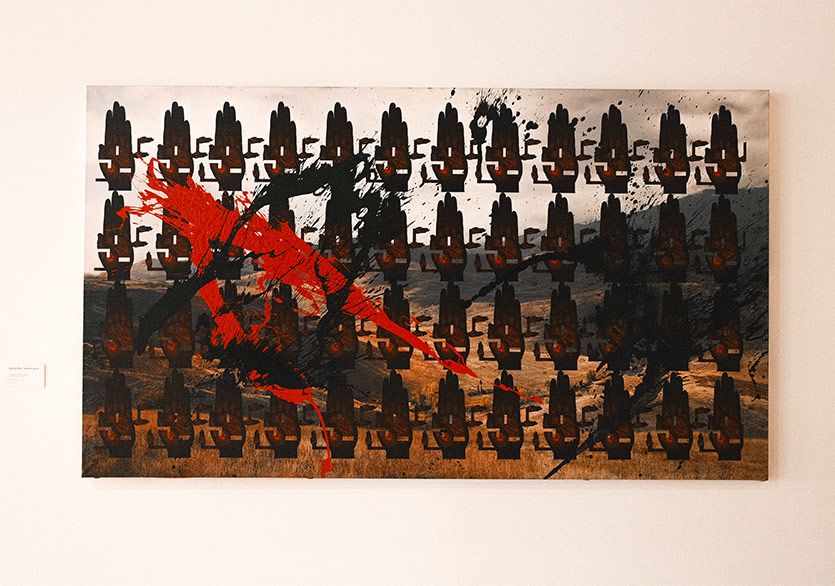
CerModern Ankara
Hüsamettin Koçan’s exhibition Ben Bu invites the viewer to witness the artist’s inner dialogue. Described as the exhibition form of Koçan’s reckoning with himself and questioning of his own existence, the exhibition invites the viewer to witness the inner dialogue of an artist, while also calling them to rethink the relationship that art establishes with space, history, and forms of production. To understand Koçan’s art, one needs to look at Baksı Museum. Why on top of a mountain, why far from the center, why outside established examples, and why without conventional architectural approaches? These questions point not only to a museum building but to a mode of thinking. The initiative is also regarded as Koçan’s greatest work.
A portion of the works in the ongoing exhibition at CerModern comes from Baksı, while another portion comes from his studio in Istanbul. In this respect, the exhibition extends beyond the date of birth and touches on different cultural layers, from Shamanism to the Seljuk and Ottoman periods. As times and techniques come together, a multilayered language is established between past and present.
In Koçan’s art, technique changes form according to the subject and the period in question. While earth combines with paint, it confronts the canvas. The fragility in reverse-glass paintings turns into an unbreakable permeability in silicone material. Digital prints, kitsch elements, and flat paper surfaces gain new meaning through the colors of the Anatolian steppe. In the sculptures, ceramics and metal become bodies for “demons” and Şahmaran figures. Mythological and cultural images find new existence in a contemporary field of representation. At the touchstone of a multiple language, in different cultural times, the exhibition offers the representation of the human. As the artist speaks from the dusty pages of history to the present, he directs the following question to the viewer: “Is this you?”
Details for visiting the exhibition:
Date: March 10 – April 29
Venue: CerModern
Admission Information: CerModern
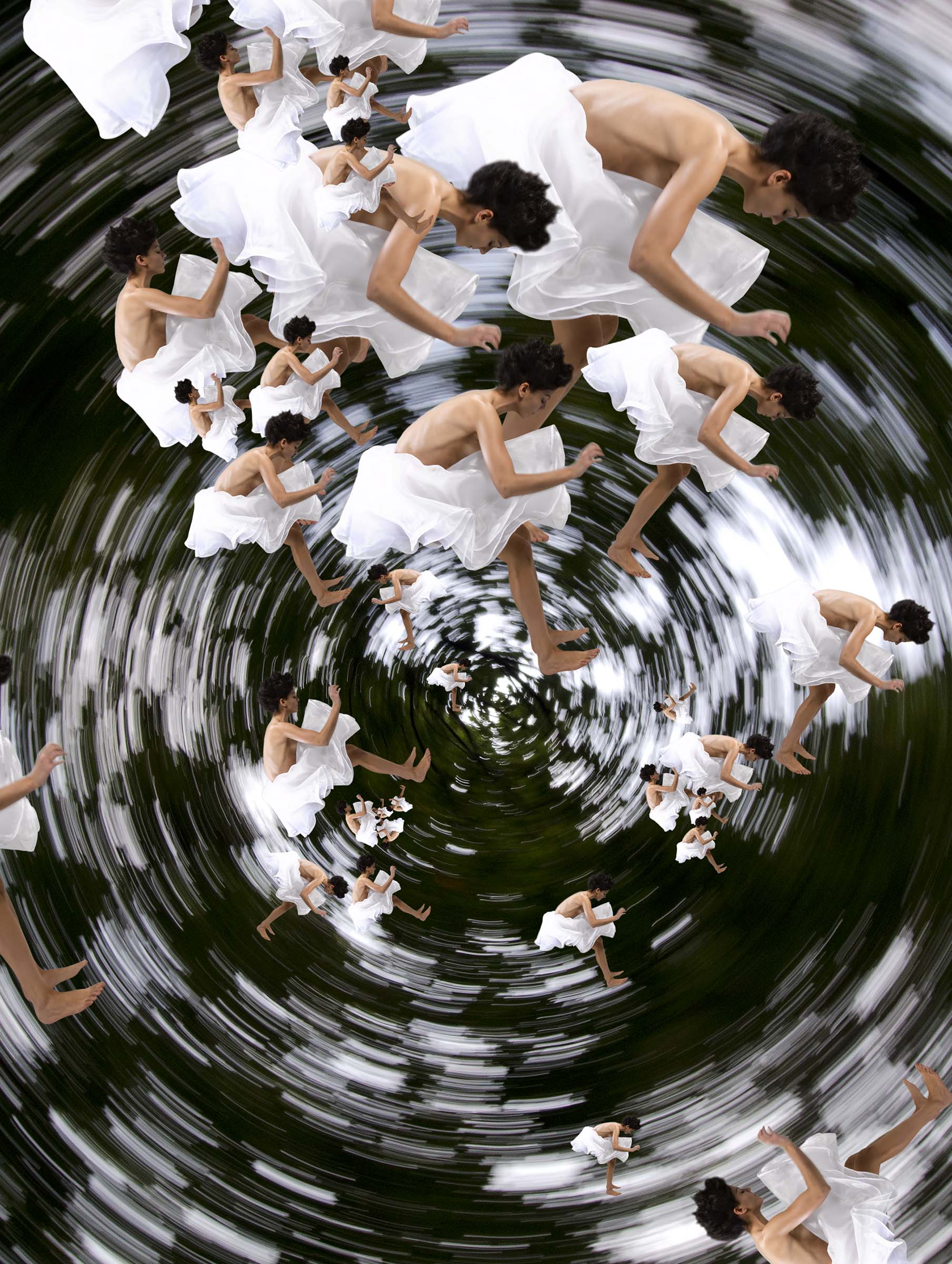
“The Sound of Light” from Arevyan
Ani Çelik Arevyan’s retrospective exhibition titled The Sound of Light, encompassing all periods of the artist’s production from the 1980s to the present, offers viewers at CerModern a documentation loaded with the codes of the artist’s personal journey. Drawing on her personal history, Arevyan transforms the cities she has lived in, ordinary everyday objects, and the act of remembering into a field of thought through “photography.”
While tracing the relationship that individual memory establishes with the material world, the selection The Sound of Light attempts to make visible the non-linear structure of time and the multilayered memory of space.
The exhibition includes a chronology of the artist’s production extending from her early works to the present, along with period works titled As It Is, Inside a Dream, Traces Belonging to This World, Between Life and Death, among others. Prepared under the curatorship of Erkan Doğanay and presenting a broad overview of Arevyan’s photographic practice, the exhibition invites the viewer to question the artist’s own experience of time and space.
Arevyan also records her artistic practice on her official website in the following way: “I prefer to define the process of creating my works as making photographs rather than taking photographs. By positioning photography as a tool of aesthetic reflection, I want to offer the viewer possibilities to rethink the dispersal of visual perception among lost references to physical reality and imagination. Producing my photographs usually in series allows me to explore the visual possibilities I need to express my aesthetic choices.
When creating my photographs, the idea always comes before composition. The timeless frame I create by interpreting figure, object, and light fills with tense, jarring, distorted forms. I prefer to construct my photographs on a fine line where time has been erased, yet change stands before the eyes in all its richness. My photographs are filled with my own experiences, and the visual language around which they are built develops and evolves together with me.”
Details for visiting the exhibition:
Date: March 7 – April 26
Venue: CerModern
Admission Information: CerModern
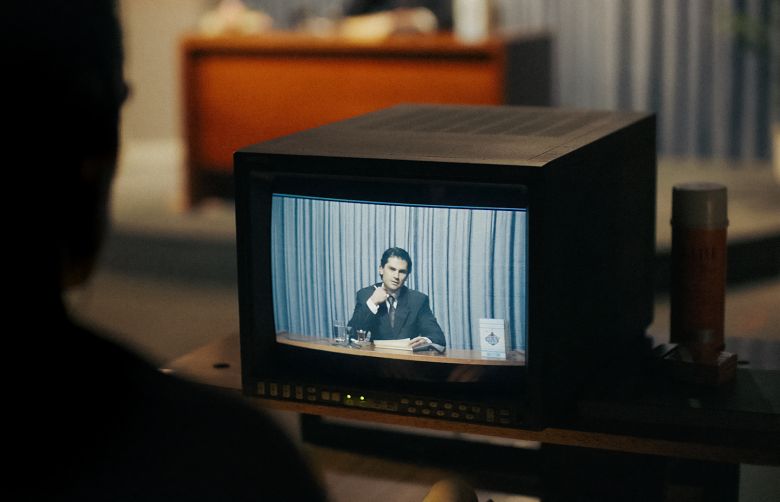
The Human and Ecological Memory of Chernobyl at Salt Galata
Toprakaltı focuses on an event largely overlooked in Turkey’s environmental and institutional history in the exhibition space on the minus first floor of Salt Galata. The event, signed by Onur Gökmen, focuses on the detection of radioactive contamination in tea grown in the Black Sea region after the 1986 Chernobyl disaster.
Following the explosion at the Chernobyl Nuclear Power Plant, a group of scientists working at Middle East Technical University (METU), including the artist’s parents İnci and Ali Gökmen, carried out research to measure the effects of radioactive fallout on tea in the Black Sea region. The findings were compiled in a report and submitted to the relevant authorities. However, official statements tended to underestimate the extent of the contamination and its harm to health, partly due to concerns about economic and social stability. While public health and accountability debates continued, the METU report was eventually leaked to the press. News reports that handled the issue through media images and headlines created a degree of public awareness, yet institutional responses remained largely unchanged and contaminated tea continued to circulate. Sensational statements missing the effects of the nuclear disaster, such as “Radioactive tea is tastier” and “A little radiation is good for the bones,” along with images of state officials drinking tea, became lodged in collective memory. Tea thus became the material witness of radiation—unseen and untouchable—and a carrier of nuclear anxiety.
Staging three sections from this case, which holds an important place in Turkey’s nuclear history, the exhibition combines fictional and documentary elements to establish a dialogue between narrative and evidence. In the first section, there is a spatial cross-section from METU, where the contamination in tea was discovered, and a documentary based on the account of İnci and Ali Gökmen. The second section, set in a television studio, reflects the intertwinement of the media with state apparatuses and bureaucracy. At the center of the installation is a short film based on news reports that denied the amount of radioactive material in tea while also constructing an imaginary Black Sea image. The third section behind the sets consists of photographs that seep through these two narratives and stand as traces of the Chernobyl disaster in Turkey. The exhibition is presented within the scope of the Salt Artistic Research and Production Support Program organized in cooperation with the BBVA Foundation.
Details for visiting the exhibition:
Date: April 2 – May 3
Venue: Salt Galata
Admission Information: Salt Galata
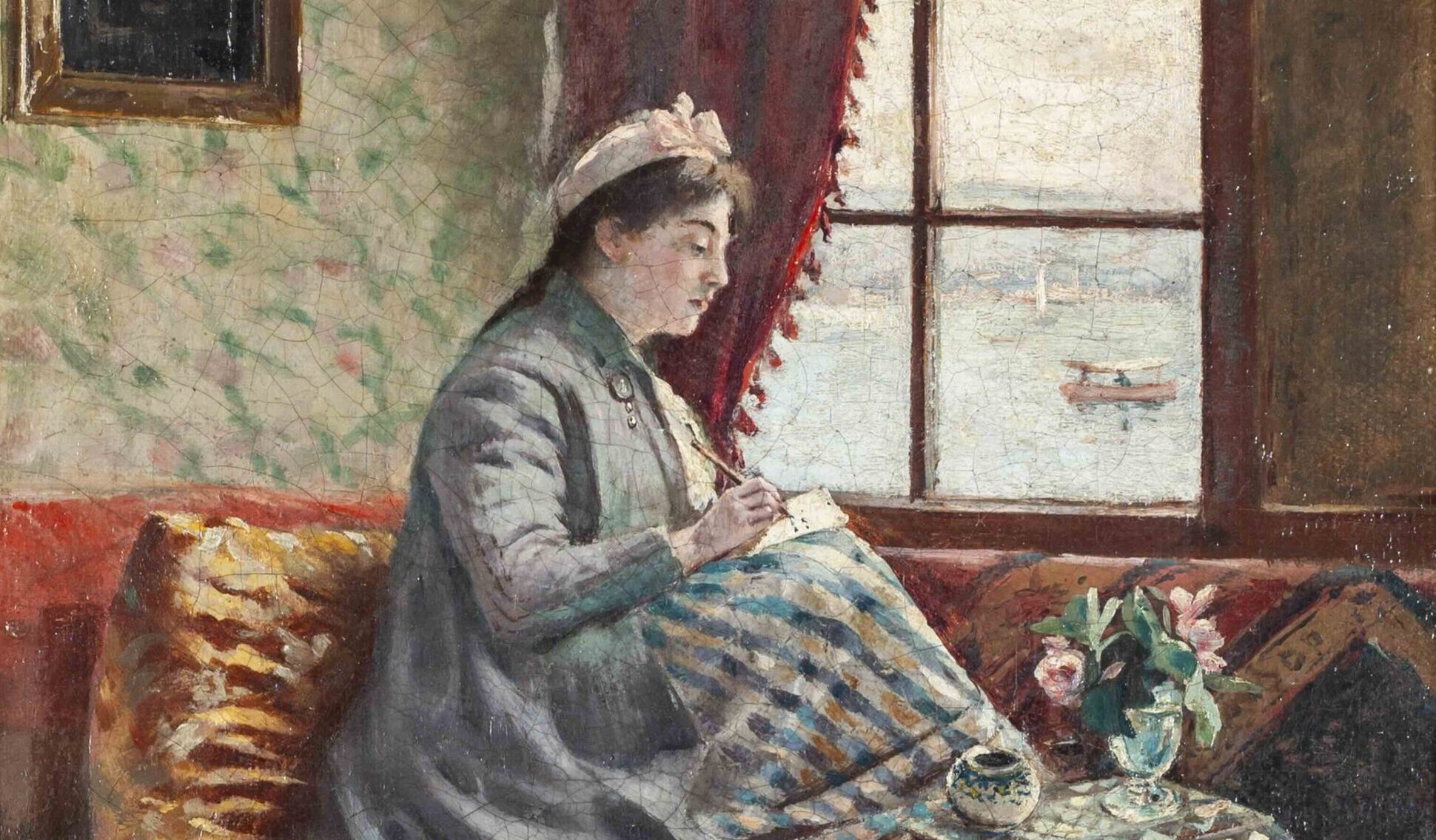
The Life and Art of Halil Paşa at Pera Museum
Pera Museum brings viewers together with a comprehensive visual and historical narrative through At the Water’s Edge: The Life and Art of Halil Paşa, an exhibition focusing on the life and production of Halil Paşa, who played a decisive role in the transformation of painting in Turkey. Curated by Dr. Özlem İnay Erten, the exhibition addresses the artist’s practice, shaped across different geographies, together with archival documents and works from private collections, offering a multifaceted framework. While sections from the artist’s private life and travels are supported by original documents and information, the social, political, and geographical changes experienced during the Ottoman period and the young Turkish Republic are also examined through the works. Accompanied by rare letters, photographs, and original objects, the exhibition spreads across two floors of the museum and also includes a workshop for children.
Details for visiting the exhibition
Date: March 5 – August 23
Venue: Suna and İnan Kıraç Foundation Pera Museum
Admission Information: Pera Museum
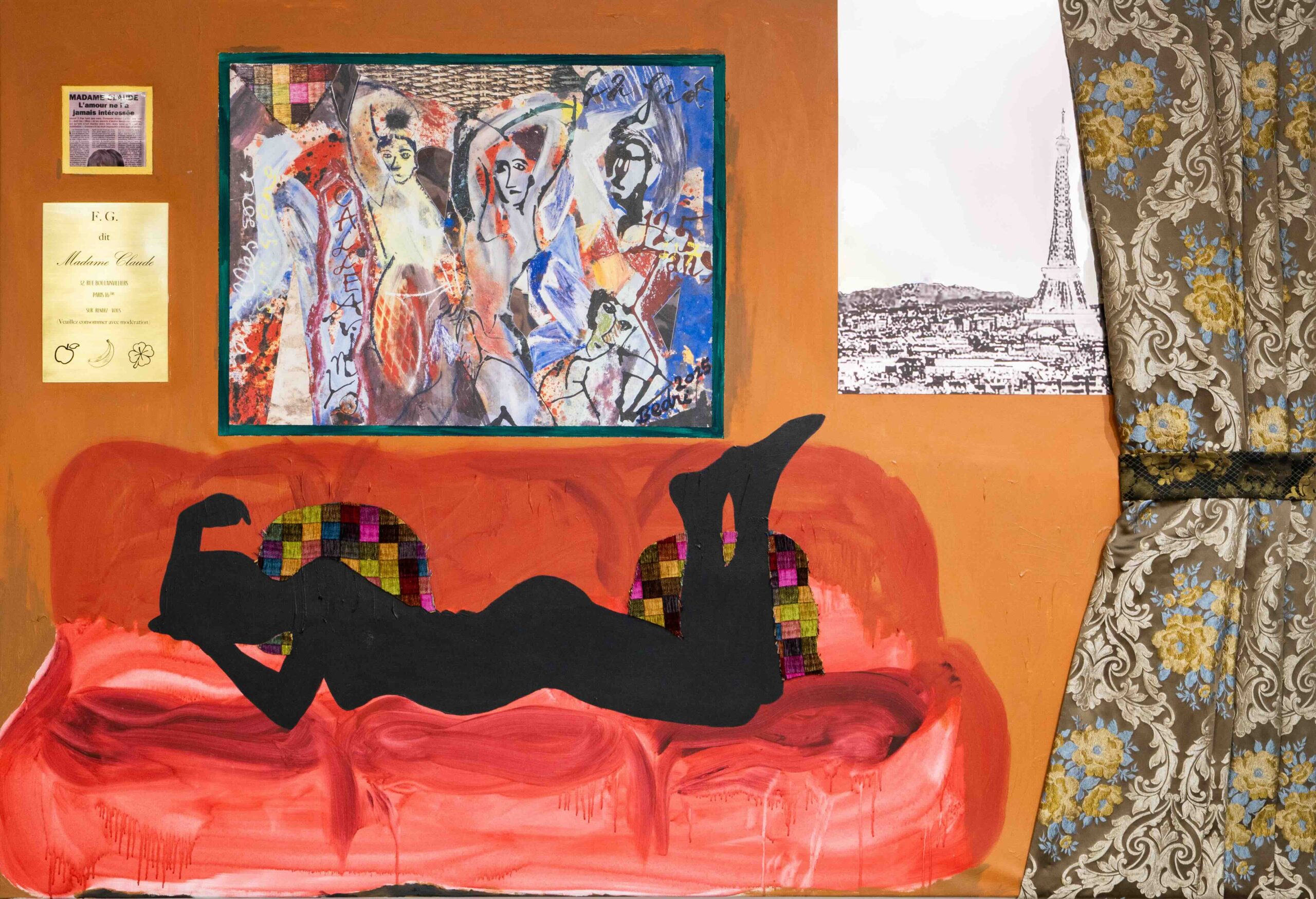
“Baykam on Picasso: ‘Les Demoiselles Revisited’” at Piramid Sanat
Baykam on Picasso: ‘Les Demoiselles Revisited’ establishes an artistic dialogue that began in Paris and enters a new phase in Istanbul. The exhibition focuses on a multilayered relationship between past and present, historical reference and contemporary production. Picasso’s approach, considered one of the breaking points in modern art history, is reconsidered through Bedri Baykam’s interpretation. Through this series, the artist proposes alternative readings that bring together different cultural and historical references. The exhibition invites the viewer not only to an exhibition experience but also to a field of intellectual discussion. The approximately 250-page publication accompanying the exhibition also includes a foreword by Prof. Dr. Hasan Bülent Kahraman, Rector of Işık University, critic, and writer. In his text, in which he praises his more than 50-year-long togetherness with Baykam, Kahraman underlines the artist’s early works and the manifesto and related performances he created in the US, noting that the debate on “the right of monkeys to paint” today points in an even more pronounced and justified direction than before. Baykam is presenting this exhibition to art lovers in Turkey for the first time after recently opening it in Paris. While the exhibition gains weight through Baykam’s references and collages made toward Picasso classics, the artist’s gesture toward Picasso’s Les Demoiselles d’Avignon is also brought to the fore with a collage.
Details for visiting the exhibition
Date: March 26 – September 5
Venue: Piramid Sanat, Beyoğlu
Admission Information: Piramid Sanat
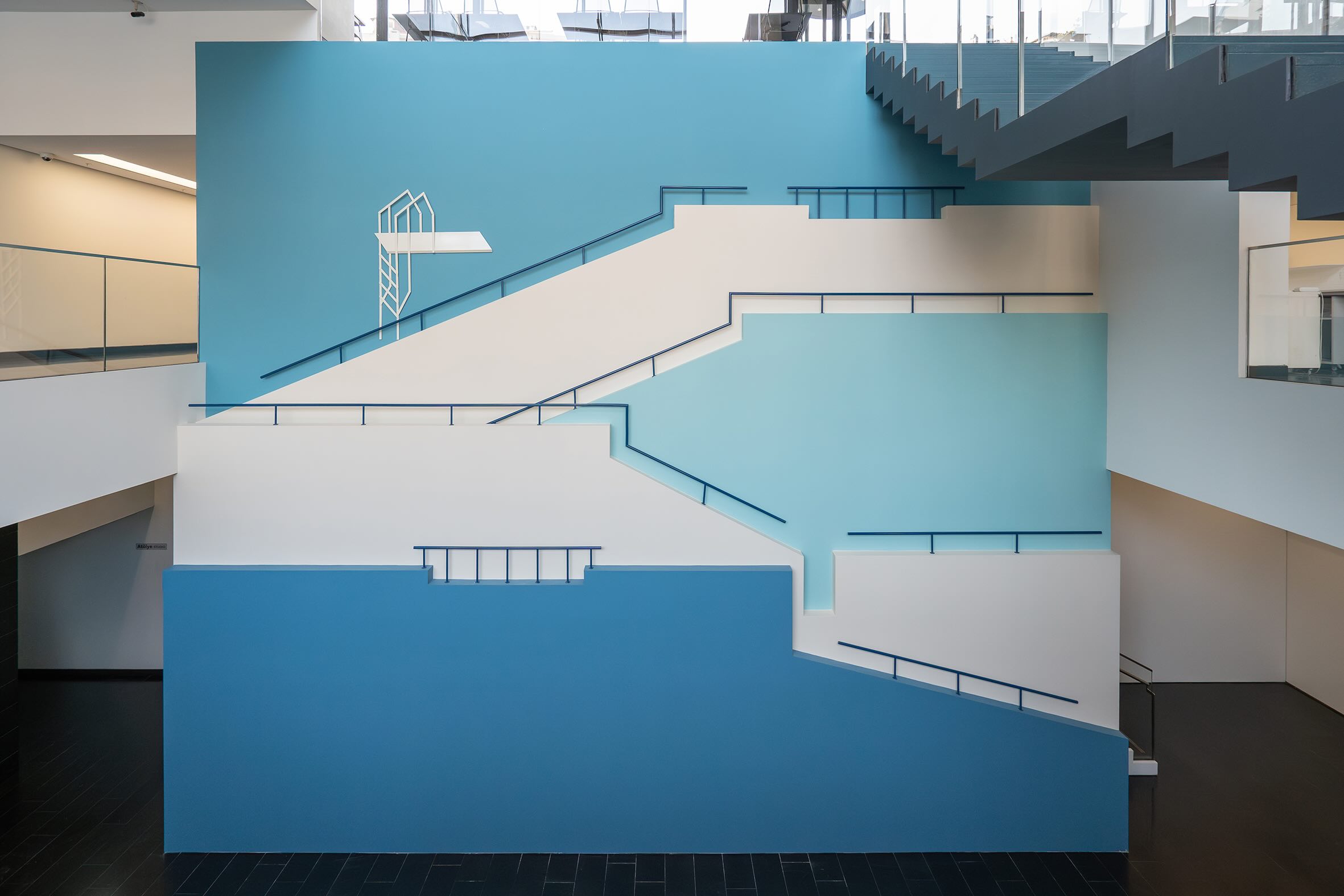
A Trial Like an “Illustrated History” from Arter: Under Construction
Arter’s new group exhibition brings together works selected from more than three hundred pieces that the institution has supported and, in part, added to its collection within the scope of exhibitions held over the past 15 years, along with new productions created specifically for this exhibition. In the first section of the exhibition, organized at Arter with the contributions of Koç Holding in the 100th year of the Koç Community, 39 works by 27 artists are presented. In the second section of the exhibition, to be opened to visitors in October 2026, many of the works in the first section will be replaced by different works, and new works to be realized in this context will also be included.
Curated by Emre Baykal, the exhibition also makes visible Arter’s history of production that opens space for creative processes. Spread across Arter’s entrance and -1 floor galleries as well as various public spaces of the building serving different functions, Under Construction also bears the quality, according to specialists, of an “illustrated history” experiment through its accompanying book.
The artists participating in the exhibition are listed as follows: Murat Akagündüz, Volkan Aslan, Can Aytekin, Fatma Bucak, Aslı Çavuşoğlu, Nermin Er, Cevdet Erek, Ayşe Erkmen, İnci Furni, Babak Golkar, Deniz Gül, Eric Hattan, Emre Hüner, Gözde İlkin, Ahmet Doğu İpek, Šejla Kamerić, Esen Karol, Ali Kazma, Lucia Koch, Hans Peter Kuhn, Nuri Kuzucan, Füsun Onur, Yasemin Özcan, Sarkis, Serkan Taycan, Canan Tolon, VOID
Details for visiting the exhibition
Date: April 1, 2026 – March 14, 2027
Venue: Arter
Admission Information: Arter
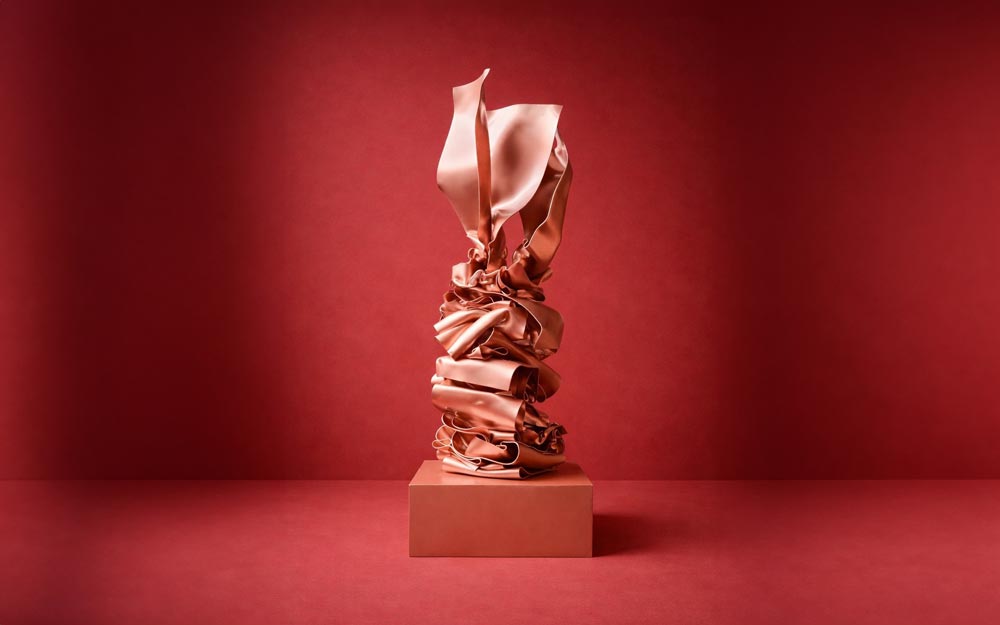
The Contemporary Legacy of the Portuguese Sculptor in Istanbul for the First Time
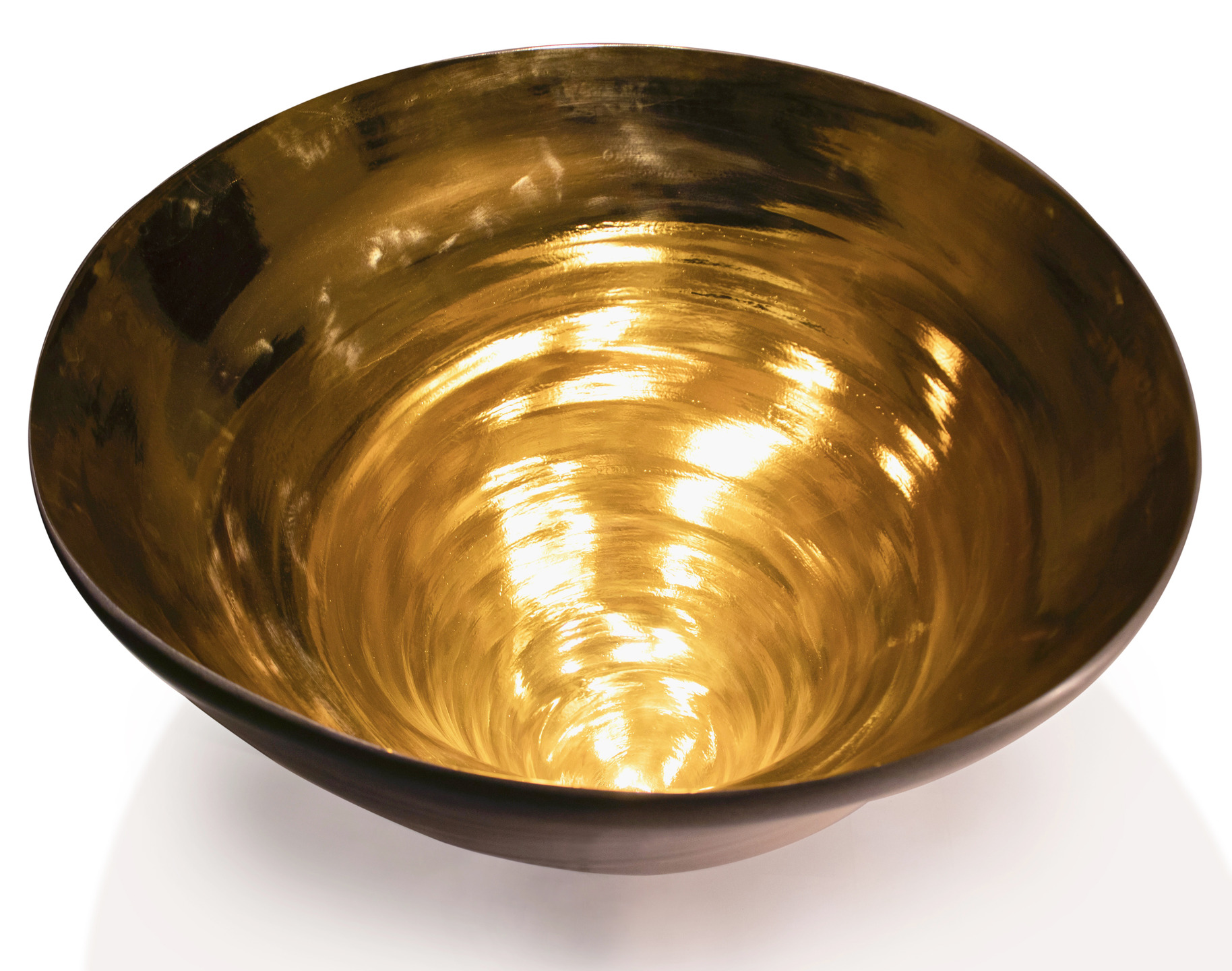
Miguel A. Rodrigues’s first solo exhibition in Turkey can be seen at Merkür under the title Heritage. The exhibition opens through the spatial fiction of Portuguese Baroque, reflecting a baroque world shaped by the splendor of gold and carved wood, where power and spectacle are intertwined. It offers the viewer an aesthetic order in which architecture and ornamentation work together to invite the viewer into a universe charged with religious and imperial symbolism.
Having collaborated with addresses such as Catherine Palace in St. Petersburg, Sakıp Sabancı Museum in Istanbul, and the Mayer van den Bergh Museum in Antwerp, the artist has conceived the gallery as a fully enveloping sculptural environment, while golden-toned forms fill the space like fragments of an imaginary sacred site. The exhibition recalls the distinctive characteristics of the baroque tradition: theatrical density and ornamental excess. Rather than reproducing historical forms, the artist translates the fundamental principles of baroque—movement, rhythm, accumulation, and symbolic presence—into a contemporary sculptural language. Thus, the exhibition becomes a spatial experience in which the viewer moves through an atmosphere laden with references to ritual, authority, and cultural memory.
Details for visiting the exhibition
Date: March 28 – May 2
Venue: Merkür
Admission Information: Merkür
Another First Solo Exhibition in Karaköy: Like It’s Going to Rain
With its new exhibition, SANATORIUM hosts Like It’s Going to Rain, the first solo exhibition in Turkey by Agnes Waruguru, a 1994 Nairobi, Kenya citizen. The exhibition brings together works produced on fabric and paper with a site-specific sound installation exploring the emotional landscapes of rain, memory, and past experiences. Taking water as a unifying element, the event draws an abstract line between Nairobi and Istanbul through Waruguru’s recurring motifs. Along this line, rain stands out as a symbol that both gives life and sweeps life away, nourishes and washes clean.
Waruguru’s practice carries a post-media approach in which painting, drawing, sculpture, installation, and local techniques coexist in a natural way. By bringing her works into dialogue with space and sound, the artist invites the viewer to think and remember within a multisensory field of experience.
While continuing Waruguru’s research into identity, gender, and relational ecosystems, the exhibition blends the personal and the universal through metaphorical and allegorical strategies. The artist’s works trace the connections between the organic and the industrial, the visible and the invisible, and the temporal cycles of nature and human life. Working with mixed techniques on fabric, weaving, and paper, Waruguru transforms traditional materials into carriers of memory, ritual, and collective knowledge. Each work contains gestures passed down from generation to generation; domestic and familial practices expand into symbolic worlds.
Waruguru’s Istanbul exhibition creates a holistic space in which the viewer actively engages with space, movement, and perception. The sound installation produced in collaboration with Rumina and composed of field recordings establishes a physical and poetic atmosphere that envelops the viewer; spreading throughout the exhibition, it carries the works on fabric and paper into a sensory and contemplative environment. The exhibition invites viewers into a world where the rhythms of nature, echoes from childhood, and traces of ecological life intersect.
Details for visiting the exhibition
Date: April 8 – May 16
Venue: Sanatorium
Admission Information: Sanatorium
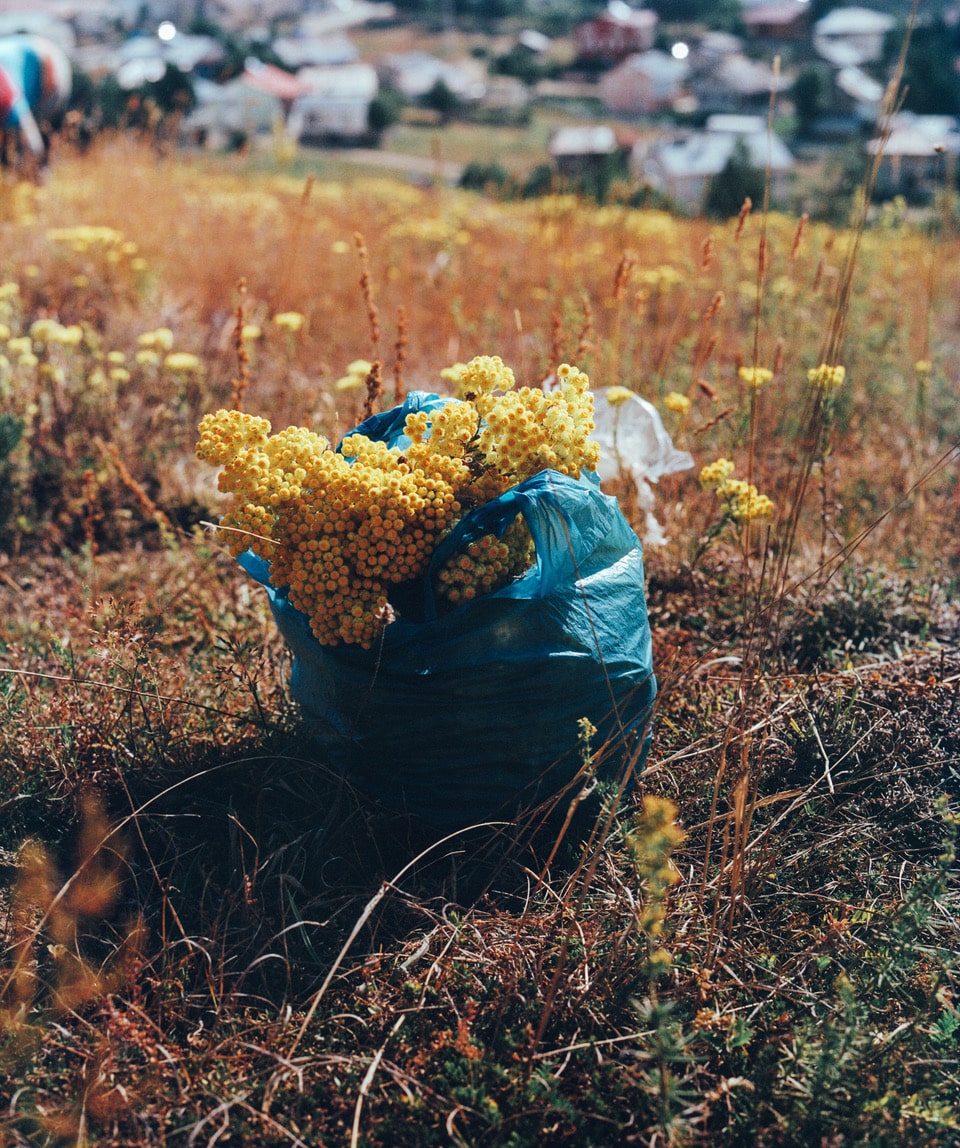
Two New Exhibitions at Anna Laudel Istanbul
The international institution Anna Laudel, presenting contemporary art to visitors in Bodrum, Düsseldorf, and Istanbul, continues to show works signed by Cansu Yıldıran at its Tophane venue in Istanbul until April 19. However, in the institution’s new projects, German contemporary artist Mathias Hornung and Oğulcan Kuş will be featured with their abstract works through the end of May. Of these two names, Hornung’s works display an experimental, colorist, graphic, and critical attitude toward digital culture and modern art and the scope of symbolism.
After graduating from high school and completing apprenticeship training in machine mechanics, Hornung studied stage and costume design with Peter Grau and Jürgen Rose between 1988 and 1993 at the State Academy of Fine Arts in Stuttgart-Weissenhof. The artist has been living and working in Berlin since 1992. Between 2004 and 2007, the painter worked in Canada, Costa Rica, Elba/Italy, and Indonesia, and has held exhibitions in France, the US, Canada, Belgium, Austria, and South Africa.
Born in Istanbul in 1993, Oğulcan Kuş has also been living and working in the same city since 2017. Having graduated in 2015 from Marymount Manhattan College in Studio Arts and Communications, Kuş’s solo exhibitions include The American Daydream (Art at Viacom Residency, New York, 2017), Gel Gör (Antonina Art Gallery, Istanbul, 2018), and Of Gestures and Shadows (Black Diamond Gallery, New York, 2020). Kuş’s works are presented to the viewer as a field of inquiry into a colorist, geometric, symmetrical, mathematical, and at the same time contemporary yet folkloric attitude.
Details for visiting the exhibition
Date: April 10 – May 31
Venue: Anna Laudel Istanbul
Admission Information: Anna Laudel Istanbul
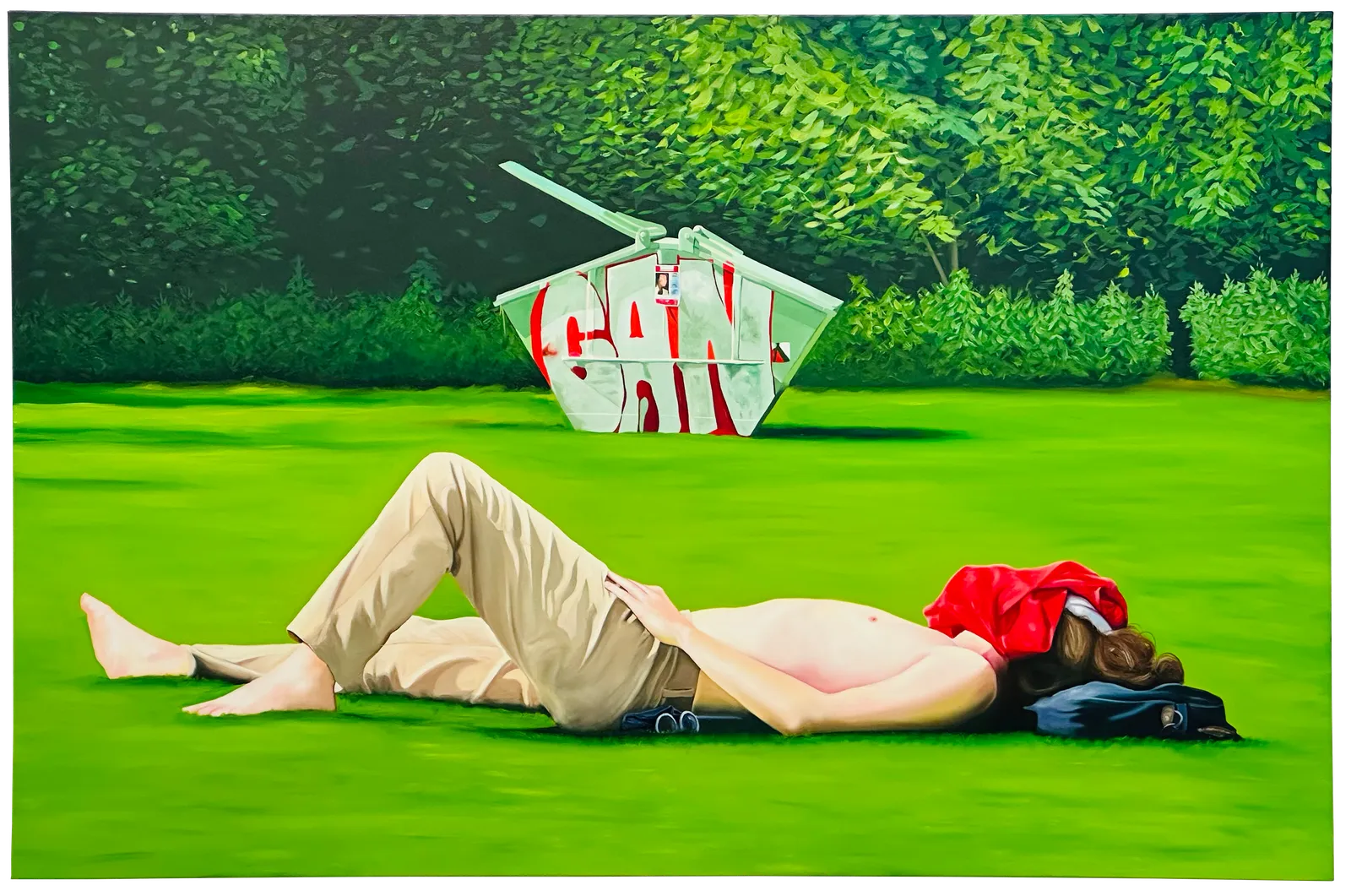
The Still and Quiet Moments of Daily Life at Pi Artworks
In Özer Toraman’s solo exhibition Silent Dialogue, Pi Artworks Istanbul presents not only new works but also, for the first time, an installation. The exhibition focuses on still and quiet moments that generally go unnoticed within the noise of everyday life. Through light, color, and spatial structures, the event addresses the wordless relationship people establish with nature and their inner worlds. The paintings continue Toraman’s meticulously constructed, almost photographic compositional approach and the strong use of color that stands out in his practice. Light, a decisive element in the artist’s production, comes to the fore in this exhibition as a fundamental structure forming both the space and the figure. Intense blue skies and sun reflections create a sense of temporal suspension in the compositions, making visible the relationship between the figure and the surrounding emptiness.
The installation at the center of the exhibition represents an important expansion in the artist’s practice. Two chairs placed opposite each other on a green ground appear as if they have stepped out of the paintings and entered the gallery’s physical space. While this arrangement suggests a transition from the two-dimensional world of painting into the space occupied by the viewer, it also invites the viewer to become part of this silent encounter. The empty chairs point both to the possibility of a meeting and to a shared silence.
The artist expresses his approach to the exhibition in the following words:
“Silent Dialogue does not offer a narrative trying to produce meaning; instead, it proposes a space in which the search for meaning is suspended. Here, looking and pausing are enough. Rather than giving answers, the paintings wait; rather than trying to explain, they remain silent. They invite us to walk a fine line between looking and seeing, hearing and feeling, and remind us that the deepest dialogues begin where words completely withdraw.”
Details for visiting the exhibition
Date: March 5 – May 2
Venue: Pi Artworks Istanbul
Admission Information: Pi Artworks Istanbul
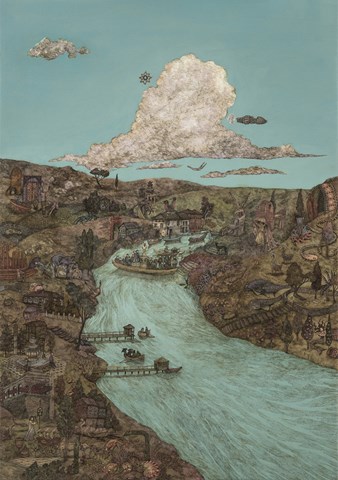
Urgut’s Exhibition at the Intersection of Sound, Image, and Culture
x-ist, operating in the Istanbul Taksim Square area under the direction of Daryo Beskinazi, is keeping its doors open to Khet, the exhibition of Burcu Urgut, the versatile contemporary artist many of whose works have attracted great interest. While sharing the artist’s works with the public, the institution uses the following expressions:
Khet emerges in order to think about the form a sound belonging to before writing takes in the present. This sound, which diminishes the moment it is pronounced and leaves behind only its residue once recorded, turns in Burcu Urgut’s practice not into an image but into a threshold. The artist constructs painting not as a represented scene, but as the surface of a tension between being and non-being, movement and stillness, sound and trace.
Urgut’s production is based on a unique understanding of time that she establishes together with cinema, animation, and line. In this production, a single story does not flow; time is cut, divided into layers, and different moments meet on the same surface. The linear language recalling 19th-century engravings is used not to refer to the past but to slow down and suspend time. Thus, images belonging to different periods come side by side, and instead of a chronological order, a feeling of memory accumulating in layers emerges.
The architectural elements, rituals, and scenes from daily life seen in the works do not carry fixed meanings. Cultural traces extending from Anatolia to Mesopotamia, from the Levant to Egypt, meet on a common threshold rather than constructing a story. The word “Khet” also describes this threshold; the meanings of stopping, interruption, and sealing found in the Turkish “ket” and the Semitic “khet” find a visual counterpart on the artist’s surface. These works are not progressing scenes, but spaces that invite the viewer to slow down and stop.
Urgut’s works do not offer images to be glanced at and passed over; they propose surfaces that must be watched attentively, that make one feel the layers of time. Khet occupies the center of the exhibition as a metaphor recalling the state of sound before it transforms into image and the trace it leaves in memory.
Details for visiting the exhibition
Date: March 5 – April 11
Venue: x-ist
Admission Information: x-ist
A Fresh Collaboration Between Painting and Photography from Ankara
Ka and Gallery Siyah Beyaz are hosting the exhibition The Sun Never Saw Shadow, opened simultaneously across two venues. Conceived under the joint curatorship of Oğuz Karakütük and Umut Sur, the exhibition aims to establish a dialogue between photography and painting.
With its structure spread across two venues yet conceived as a single narrative, the exhibition seeks to make visible the boundaries, transitions, and blind spots between the two media through the production and reading of the image. Inviting viewers to rethink the tension arising where photography is coded as “record” and painting as “interpretation” through imitation, borrowing, intervention, and hybridization, the exhibition is concerned less with the opposition of the media than with the field in which they seep into and transform one another.
The names participating in the exhibition with their works are listed as follows: Deniz Aktaş, Ayşe Aydoğan, Yoann Bac, Mustafa Boğa, Burçak Bingöl, Rachelle Bussières, Erdem Çolak, Máté Dobokay, Ece Erbil, Görkem Ergün, Ahmet Elhan, Vittoria Gerardi, Yusuf Günler, Mehmet İçöz, Rebuar Rezzak İlge, Gülnihal Kalfa, Murat Kahya, Onur Kaymak, Kayahan Kaya, Sıtkı Kösemen, Ali Kotan, Doruk Kumkumoğlu, Alix Marie, Murathan Özbek, Metehan Özcan, Ardan Özmenoğlu, Argun Okumuşoğlu, Ayline Olukman, Thomas Paquet, Alina Saranti, Anıl Saldıran, Kaan Sezgin, Yusuf Murat Şen, Esat Tekand, Erdem Varol, Begüm Yamanlar, Pınar Yolaçan, Tereza Zelenková.
Details for visiting the exhibition
Date: April 3 – May 2
Venue: Siyah Beyaz + Ka
Admission Information: Siyah Beyaz + Ka
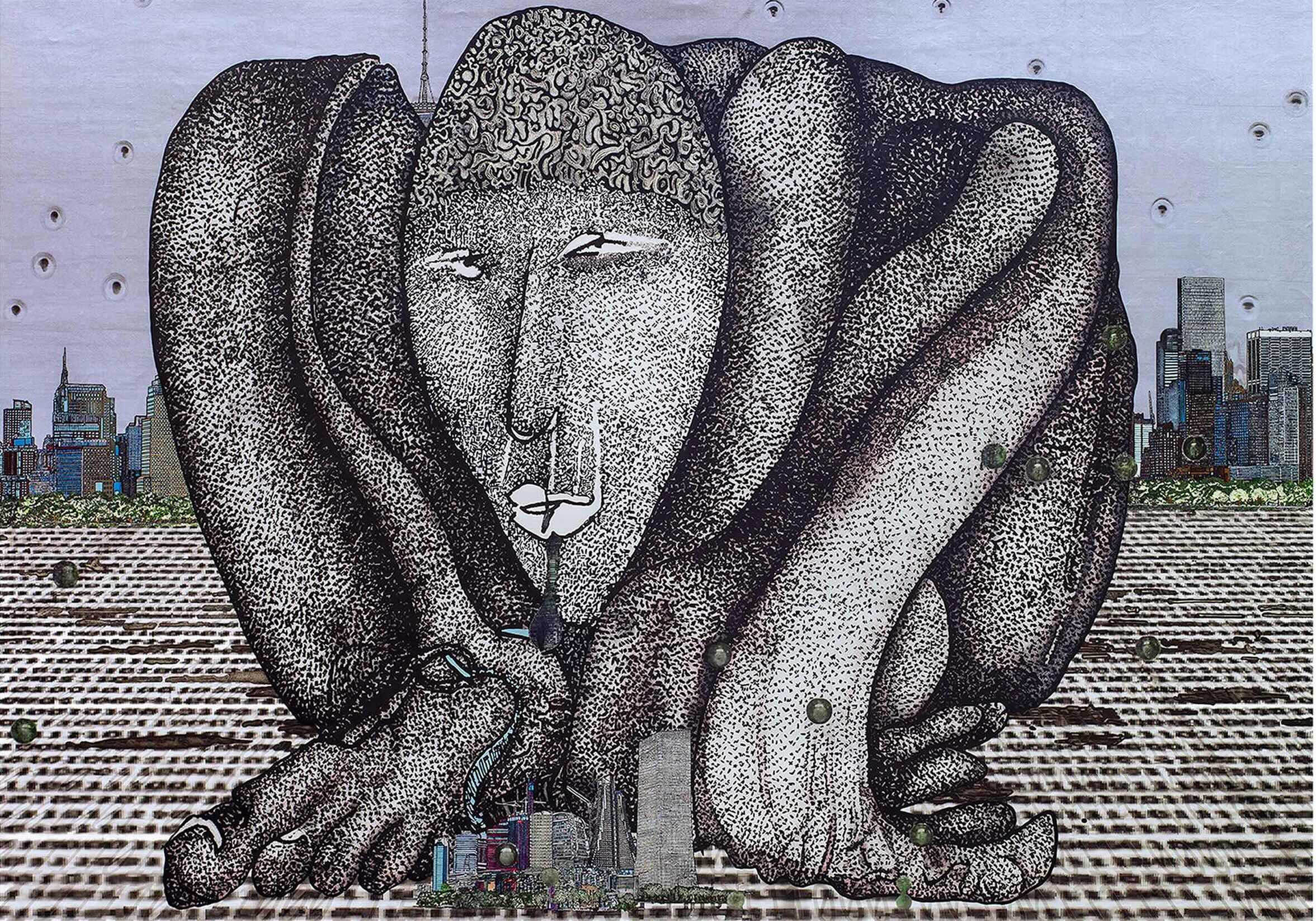
Images That Make Visible the City’s Genes
Fahrettin Örenli’s exhibition The City’s Genes is on view at artSümer. About the exhibition, curated by South Korea-based art historian and critic Ji Yoon Yang, curator Yang wrote the following text:
“Örenli’s exhibition examines, from an ecological perspective, the organism of the city and the mechanism of capital flowing through its veins. His journey moving back and forth between Amsterdam, Istanbul, and Seoul sharply captures, beyond individual economic crises such as the collapse of the Turkish lira, the plundering of the resources of the Global South and its ecological suffocation caused by the colonial expansion of capital.
However, these three cities do not occupy the same position within this story. Seoul holds a complex ecological position in which it both absorbs and emits resources, and when Örenli’s gaze descends there, what emerges is not a narrative of solidarity, but the more disturbing question of complicity.”
In the exhibition, along with Örenli’s series of videos and paintings titled Particles, works such as Last Signal, City Tree, Lost Spirit Collector, and The Man Carrying the Knowledge of the Tree can also be seen.
Enriched through the contribution of Yang, who is the director of the alternative contemporary art space Loop in Seoul, the exhibition also includes different works by the artist such as Particles and Bubbles of the Mind.
Details for visiting the exhibition
Date: March 28 – April 30
Venue: artSümer
Admission Information: artSümer
An Interdisciplinary Festival at ÖktemAykut
Öktem Aykut, one of the fresh and familiar addresses of contemporary art, has chosen to devote April and May to different live and public projects. In this context, throughout April at the institution—mostly beginning at 20:00 and in chronological order—viewers will be able to watch Dolapdere Noise Orchestra (04.04), Çıplak Ayaklar Kumpanyası with the project You Are Not a Fish (11.04), Ozan Karagöz with the project From Tristan to Âşık Veysel (14.04), followed by Koray Kantarcıoğlu and the Age Reform project (16.04), then Grup Ses and Gökalp Kanatsız (17.04), followed by Craft Tiyatro with the work Breakwater (17.04). Looking further at the schedule, on April 25 viewers will host Berke Can Özcan’s Solo project, and later, on April 29, Tiyatro Nok’s The Loneliness of the Long-Distance Runnerwill be the guest of ÖktemAykut. This will be followed on April 30 by Artalan Collective’s Star project, while on the evening of May 2, Ahmet Ali Arslan will take the stage at the institution.
Details for visiting
Date: April 4 – May 2
Venue: ÖktemAykut
Admission Information: ÖktemAykut