

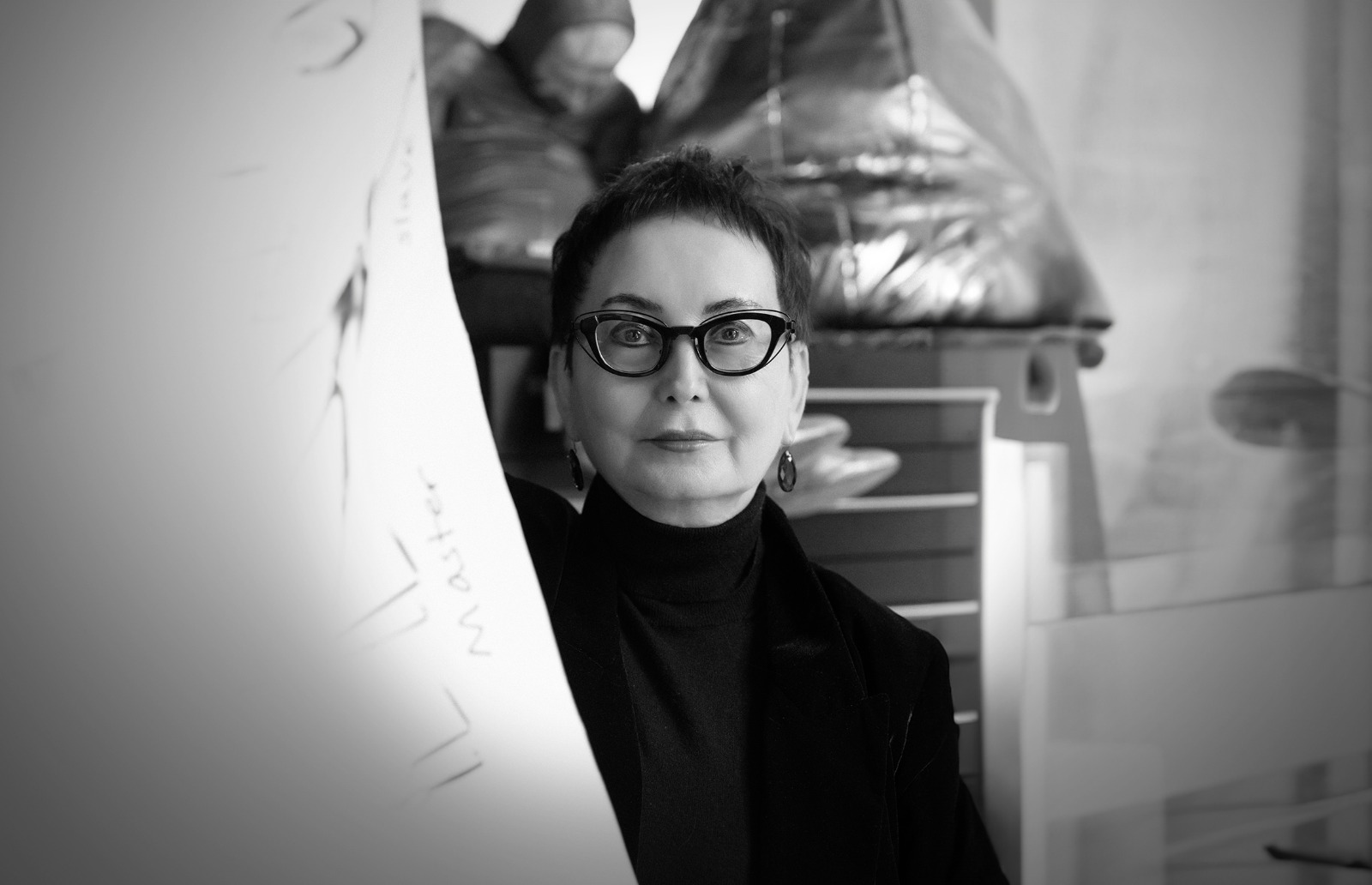
“Drawing is the disappearance of one’s face.” At the launch of her new monograph On and Beyond the Line: Movement, İnci Eviner spoke about the place of the line in her life, the importance of writing, and how art can liberate a person from their own weight.
Some artists, when they speak, do not merely describe their work. Over the course of a conversation, they open the doors to their inner world of thought. İnci Eviner’s talk at Yapı Kredi Culture and Arts was one such evening.
At one point, while discussing her practice, the artist articulated an unexpected sentence:
“Drawing is the disappearance of one’s face.”
With this, Eviner perhaps expressed most clearly how she conceives of her artistic practice. For her, drawing is not about producing an image; it is a space where one can free oneself from the self.
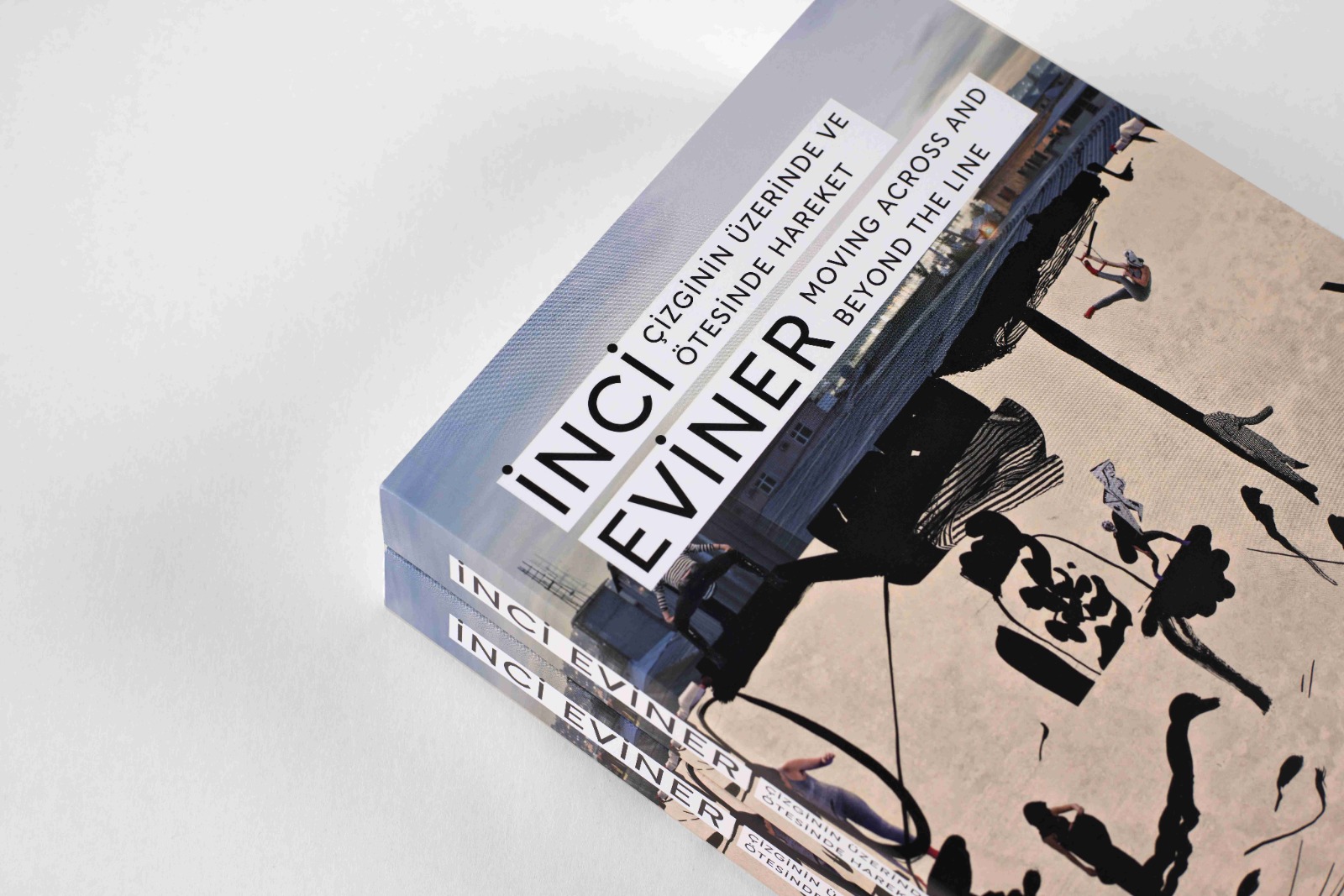
Held on the occasion of the launch of her monograph On and Beyond the Line: Movement, published by Dirimart, the talk traced Eviner’s long-standing practice while also unfolding the role of the line in her life. Moderated by Merve Çağlar, the event quickly transformed from a conventional artist talk into a journey into Eviner’s intellectual world.
Early in the conversation, the artist noted that her relationship with drawing dates back to childhood.
Drawing Since the Age of Six
She does not describe it as a talent or a discipline, but rather as an extension of herself.
“Drawing is like a continuation of me,” she says.
For this reason, in Eviner’s practice, the line is not merely a technique. It is a way of thinking—at times even a force that guides the artist herself.
“Sometimes drawing controls me,” she adds.
For Eviner, drawing is also a form of escape—but not a romantic one. It is an attempt to break free from the banality of everyday life.
At one point, she states this with striking clarity:
“I draw to free myself from the vulgarity of everyday life.”
This sentence may be one of the most powerful keys to understanding Eviner’s work. Her lines are never concerned solely with constructing an aesthetic form; instead, they become a way of rethinking the human relationship with the world.
For this reason, her practice does not remain confined to drawing. Over time, the line expands into video, performance, and moving image. One of her early video works, Harem, stands as one of the first examples in which the line merges with movement
But there was another striking aspect of Eviner’s talk.
Writing.
While discussing the monograph, the artist repeatedly emphasized the same point:
the texts in this book are crucial.
For an artist primarily known for drawing, this emphasis is particularly notable. For Eviner, writing is not separate from her visual practice; on the contrary, it is a complementary mode of thinking.
She speaks about her habit, in her youth, of reading Russian classics every summer, and adds that she constantly reads poetry. These readings, she explains, have shaped her intellectual world and deepened her relationship with writing. For this reason, in Eviner’s practice, text and line are not two separate domains. They are, perhaps, two different forms of thinking.
Later in the talk, as she reflects on what it means for her to make art, she formulates another sentence:
“To free myself from my own face, from my own weight…”
In this sense, art for Eviner is not a space where individual identity is polished or affirmed. On the contrary, it is a space where one can shed one’s own weight.
In the later part of the conversation, Eviner also spoke about her studio in Hasköy. For her, the studio is not merely a site of production, but a space where thought evolves. Describing her practice as a long-term process, she says:
“I go there every day; the idea of taking a break and going to Bodrum for a holiday has never really occurred to me.”
Continuity and Endurance
Eviner notes that these two concepts lie at the core of her artistic production.
The section titled “Common Action Device” in the book extends this line of thought. Documenting the collective processes she has developed within academia, this part reveals that art is not only an individual mode of expression but also a way of generating shared forms of thinking.
Toward the end of the talk, Eviner returns to the relationship between art and the world. For her, making art is a way of understanding the world.
The monograph On and Beyond the Line: Movement makes precisely this relationship visible. Rather than fixing Eviner’s practice within a single narrative, the book approaches it as a constantly shifting field of thought.
What remains after the talk is a simple yet resonant idea:
Sometimes the line draws a figure.
Sometimes it tells a story.
But above all, it opens up a space in which the artist can free herself from her own weight.