
The Anı/Bellek exhibitions, which left their mark on Türkiye’s recent art history, are unique curatorial traces left in two biennials in the history of the Istanbul Foundation for Culture and Arts Biennial. The founding directorship of the Center for Curatorial Studies Museum at Bard College; the Istanbul Contemporary Art Project and the journal Resmi Görüş (RG). Then, in the early 2000s, Proje4L Contemporary Art Center and Platform Garanti Contemporary Art Center, leading to a process spanning more than thirty years that reached the existence of SALT in 2011, when Platform, Garanti Gallery and the Ottoman Bank Archive and Research Centre were brought together.
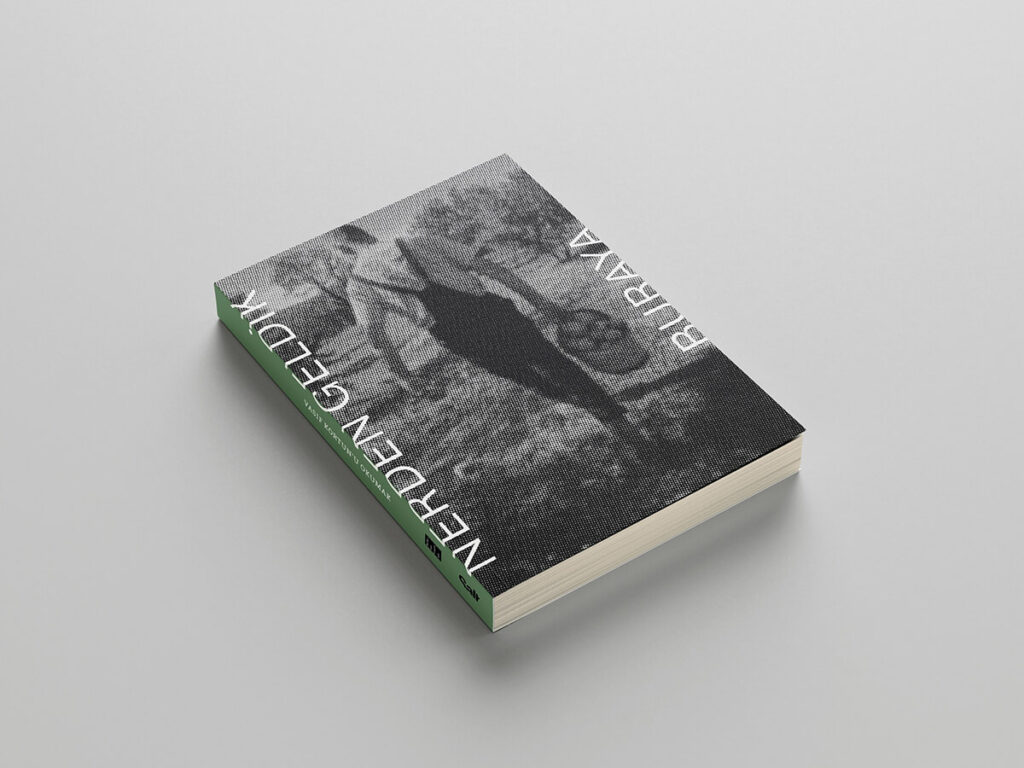
Vasıf Kortun presents his nearly forty years of experience encompassing all these various stages in the book How Did We Get Here: Reading Vasıf Kortun, composed of a river conversation conducted by Sezin Romi, Library and Archive Manager of SALT. Prepared for publication by Romi and published by SALT and Robinson Crusoe 389, the book is presented to readers with a design by Esen Karol. The copy-editing of the book belongs to SALT editor Ezgi Yurteri. The publication has been made available to readers with the support of Hakan Çarmıklı, Saruhan Doğan, Erinç Özada, Leyla Tara, Agâh Uğur and Ayşe Umur.
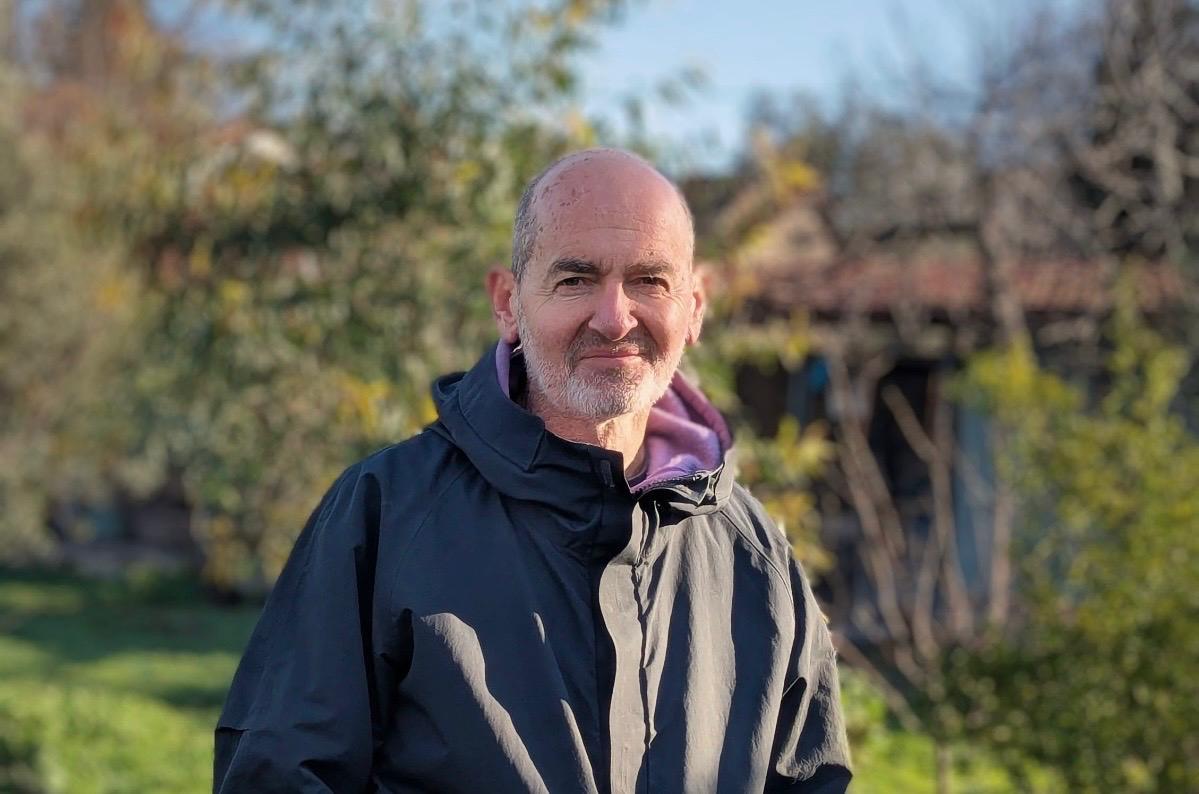
The approximately 300-page book expands the scope of intimacy through the readings on Kortun by his companions—especially his wife Defne Koryürek—as well as November Paynter, Charles Esche, Prem Krishnamurthy, Joshua Decter and Céline Condorelli, together with those of Kathy Halbreich and Manuel Borja-Villel. Kortun currently continues his life and work with his family in Mutluköy, Ayvalık, where he now lives closer to nature.
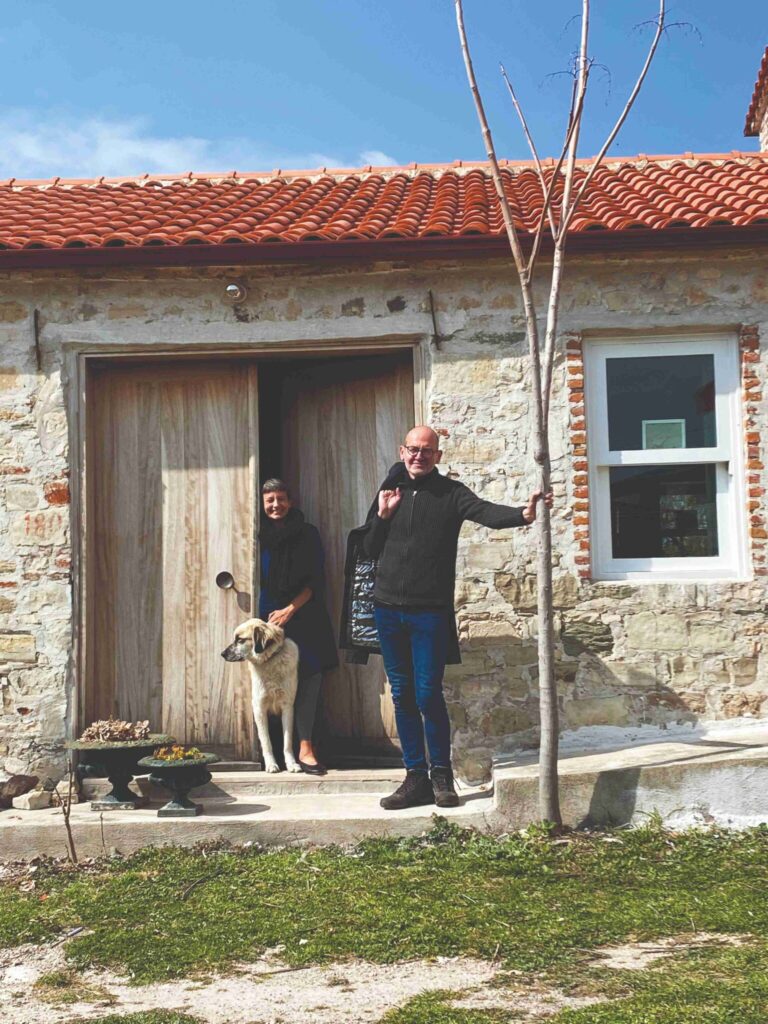
We came together on a written ground with Vasıf Kortun—who currently continues to advise Mathaf: Arab Museum of Modern Art in Doha—and with Sezin Romi, who conducted the conversation; and we asked, we inquired through the bookmarks attached to the book: how did we get here?
In the book’s foreword, we read that Kortun references the writer Lewis Carroll: “A memory that works only backwards is an insufficient memory.” Since the Anı/Bellek exhibitions, regarded as Turkey’s first curated exhibitions, could it be said that the struggle you have carried out has been to shape the history of the future?
Vasıf Kortun: What we do is to offer a different possibility, an idea of a possible future—neither a threat nor an opportunity. This is also part of a broader imagination of a shared future. What is the past for?
Sezin Romi: While having the conversation in the book, we opened a door to a certain period of the past by starting from our experiences and shared testimonies. As I also mentioned in my foreword, although this is a reflection and confrontation with the past, it also includes expectations about the future. In that sense, it relates to the connection between building the past and the future that you mentioned in your question.
Sezin Romi: The Process Itself Developed Spontaneously
How did the advantages and difficulties of creating a “document” through the interview and oral conversation that formed the basis between the two of you in the making of the book manifest themselves in this project?
S.R.: The process itself developed entirely spontaneously. Honestly, when I started this conversation, I hadn’t expected it to become so comprehensive or turn into a book; we hadn’t planned for that. However, what wasn’t spontaneous was that before beginning the interview, I created a roadmap for myself and worked out its details in sections. I don’t recall discussing this with Vasıf Kortun beforehand or holding any meetings about it. After some individual preparation, I started the written conversation in the shared document by directly asking the first question. We reviewed everything we wrote immediately. This process served both as preparation for the next question or answer and as a way to revisit the text, clarify expressions, expand on details, and fill in gaps. Sometimes a response led to new questions; other times, a question or a past quote sparked other topics. Even after we thought we had finished the conversation, ideas still came to mind, and we made additions. By then, the challenge of maintaining the flow and bringing the discussion to a close became quite difficult.
V.K.: I think we tried to explain matters with elegance; Sezin certainly has no deficiency in that regard, whereas I am not exactly someone who behaves like a very mature person and I can give strong reactions. Perhaps we might put it this way: we did not enter into matters that would require censorship but that were ultimately of no importance. We did not do this deliberately.
“For whom are we doing this work?”—into what has this question transformed over time, and how were the “feedback data” of the X, Y, Z generations used for SALT?
V.K.: “Feedback data”? If you treat a person as a person, you do not reduce people to data; we do not value those fabricated data studies or the X, Y, Z segmentations. You must remain open to situations where people can speak and feel that you are willing to listen to them. You listen when they want to speak—one by one or as a group. If there is a process, you provide the opportunity, the conditions and the space for them to participate. They learn, and so do you.
S.R.: Building on Vasıf Bey’s answer, I would like to mention some of the concepts and anecdotes discussed in the book. The first is a quotation that Vasıf Bey cites from Kathy Halbreich, one of the book’s contributors: “Being able to bring people together is far more valuable than separating them.” This directly overlaps with the principle of “inclusivity” that institutions should have, which is included in the book’s selected index of concepts. On the other hand, when we consider the young people whose lives we have “touched” through the experience of SALT—individuals who transform from visitors into users, or from users into components of the institution—we see that the question of “for whom” points to the fact that institutions are meant for everyone, regardless of analyses based on generations or other criteria.
The Istanbul New Art Museum, mentioned by Romi and supported by important figures such as Serkan Özkaya and Erden Kosova, revealed the unease of a kind of experimental and “guerrilla” stance in the cultural industry—one directed toward an anti-bourgeois position and already uninterested in the market; could it be said that it overlapped truth and simulation? The art-historical references of this anarchic model—which makes one use a microscope as if it were a telescope and debate through it—are already a given… Let us listen.
V.K.: The İYSM was answering a very clear question. First of all, there was the issue of lagging behind: the sense of being behind the West and seeing the lack of a museum as a weakness. Serkan Özkaya’s attempt to wrap the Reichstag again, the inevitable disappointment of encountering the original, and the general stigma that a non-Western artist cannot be original because of belatedness were also part of this. It was a wound one inflicted upon oneself. In short, at the same time there were individual museum dreams and projects such as the exhibition of the portrait of Fatih Sultan Mehmet organized by Yapı Kredi. Again, in the same institution’s display window, Serkan Özkaya’s exhibition of 30,000 slides, titled “the world’s largest image exhibition,” was actually a project that needed to be done in terms of its position. I won’t ramble further. We wrote about it at the time.
In the river conversation with Romi, you refer to a passage from your 2013 blog post “Kütüphane Çocuğu” (Library Child): “Research is never linear, and while browsing the shelves unexpected publications and strange books suddenly open your horizon; this is one of the greatest pleasures in the world. Even if the shelves of some libraries are closed to the public, there is another pleasure—sharing the same space with others while reading different things.” Another maxim is: “The real resource is knowledge, and as knowledge is shared and circulates freely, power disperses.” In socio-political terms, what kind of capital is meant here?
V.K.: I left SALT in 2017, so I can only speak about my own period. I do not think you can show me another institution that has opened access to more than two million documents through web browsers for fifteen years. That is the document-sharing part of the work. But a document is not knowledge itself. On the other hand, remember the phrase written in gold Latin letters on the wall of SALT Galata during the exhibition of the late Elio Montanari: “What is knowledge without documents?” Turning knowledge into power, hiding it from society or locking it away in vaults is not a good approach. Think of ancient knowledge and oral cultures; they survive by sharing and transmitting. I once discussed the final scene of Fahrenheit 451 with Lara Fresko. There, the way to protect the library was to give everyone a book and have them memorize it. In a centralized model the risks increase; in a distributed model they spread and diminish. Also, Fahrenheit 451 is a Western concept. The history of humanity, however, consists of stories passed from ear to ear and from tongue to tongue, changing and renewing as they are transmitted. A world in which knowledge and culture are confined only to books would be a very incomplete world. The effort that power and capital spend on controlling knowledge is not insignificant.
Could increasing “private histories” be considered the strongest defense against the obstacle of writing a single history?
S.R.: I think the critical issue here is discussing what the ways of going beyond a “single history” might be and how these can be put into practice. This issue also comes to the fore in Vasıf Bey’s text “Institution Questions,” which guided the formation of the book, and it underlines the reality that there are multiple stories rather than a single dominant narrative. In this context, it is important to give space to oral histories while the subjects of history are still around, or—as in this book—to convey history as it is remembered.
At the same time, it is necessary to act according to existing conditions. Ideally, archives should be brought together as primary evidence and opened to public access, but this process varies depending on the conditions of the archives themselves. If we look through institutions such as SALT or research centers, I believe we should also discuss methods that approach issues from multiple perspectives and open the way for different narratives.
V.K.: Sezin is right. Let me add this: we all know the problems of the dominant narrative. But the issue is not to relativize history by multiplying private histories. What we tried to do was to speak as it is—respecting traces and facts, even if it remains subjective—while also confronting the disinformation about me (which also arises because I do not hold back my words). In that sense, we leave a note in history.
The institutions led by Kortun—such as SALT—which we witness through the memories in the book: how did they absorb or transform the press, criticism, and publishing within the cultural industry?
S.R.: In the context of institutions, it is necessary to address press and criticism separately from publishing and access to knowledge. I am not sure how direct a role institutions have in the field of press and criticism; I think it functions through different dynamics. Indeed, we addressed this topic extensively in the book through the magazine Resmi Görüş (RG).
Publishing, on the other hand, varies according to the functioning and areas of interest of institutions, but it is critical in expanding the existing literature. At this point, SALT distinguishes itself with its online e-publications, which— as Vasıf Bey often states—make it a “post-paper era institution.” In printed publications, the main principle is to produce original studies that focus on topics previously unpublished, that extend long-term research, and that can serve as reference sources.
Whether e-publication or archive—whatever the format—open access is directly related to the public’s right to access knowledge, and therefore to democracy. I believe the issue should be approached not through anxiety but through the responsibility institutions have—or should have—toward the public.
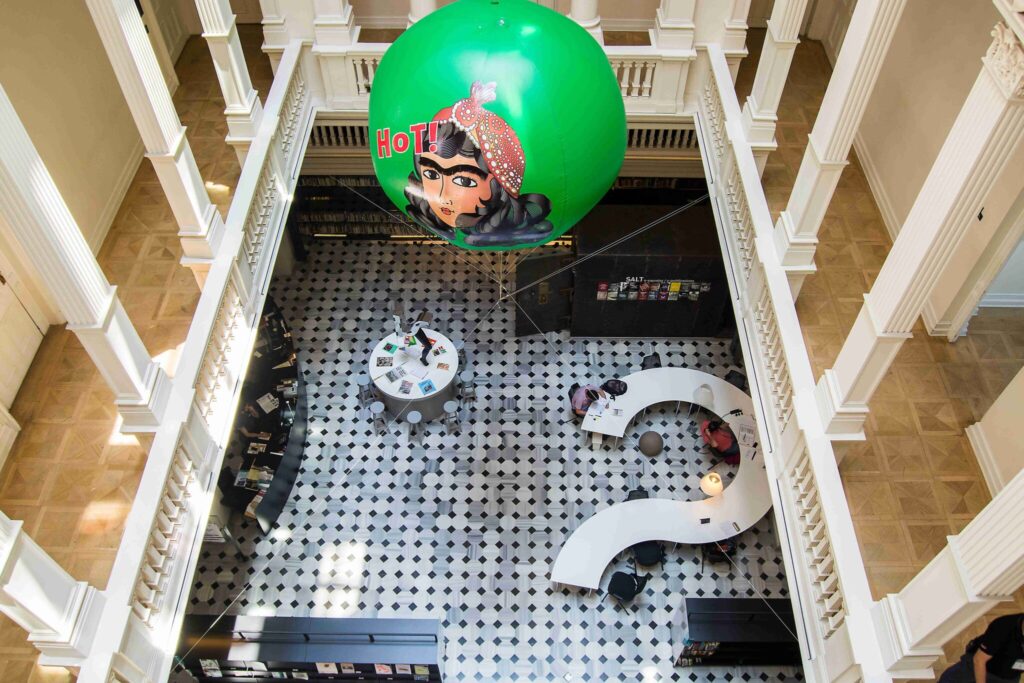
View from the exhibition Ağızdan Ağıza (From Mouth to Mouth) by Slavs and Tatars, SALT Research, 2017. Photo: Mustafa Hazneci.
On the second page of Sezin Romi’s river conversation Where Did We Come Here From, you recall the student atmosphere of Boğaziçi University in the 1980s: “Bülent Somay, Nurdan Gürbilek, Meltem Ahıska, Ali Erdemci, Ece Acarlar, Müge Gürsoy, Semih Sökmen, Ayşe Tütüncü, Timuçin Gürer, Ziya Derlen, Barika Göncü…” Did you experience such a social adjacency later, either today or during your career?
V.K.: In the early 1990s I experienced such an environment around Ankara with names such as Hüseyin Bahri Alptekin and Ünal Nalbantoğlu; and in Istanbul with Deniz Şengel, Ali Akay and Özgür Uçkan. Yes, at the end of the 1990s I experienced a similar intellectual closeness in an environment beginning with Serkan Özkaya and Erden Kosova, and including participants around Aydan Murtezaoğlu, Oda Projesi, and Halil Altındere. I also established similar closeness with friends abroad. The most productive moments of this social proximity usually occur during travels. In Turkey such situations are fewer, but there has always been a kind of social adjacency both at home and in my working environments. The period after 1989 and the end of the 1990s were historically critical. You try to make sense of the time you pass through together with others. Today, however, the time we live in is globally so brutal that one sometimes escapes the everyday and takes refuge in the past. Some friends have already left the country, some are silent, some are inside. Proximity—protecting, caring, healing, embracing, and perhaps even collective cursing—may be beneficial.
One of your analyses mentioned in the conversation with Romi: “…an unshakable worship of the West and the effort to use Western institutions as leverage to raise market value and fame locally, a desire to differentiate oneself from peers…” Do the institutions and individuals that maintain this still exist today, either across borders or within them?
V.K.: Of course they exist. I have used this somewhere before; let us repeat it. “The rulers and citizens of the Republic of Turkey have never stopped performing for an imaginary audience that constantly evaluates how civilized and modern Turkey is… Turks dislike this unsettling gaze but need its approval, and when that approval is given they doubt it, yet when it is not given they feel discriminated against.”
Ayşe Zarakol wrote these lines in 2011. What I want to emphasize is how important the inward manifestation of this imaginary relationship is.
Vasıf Kortun: We Are Not at the Beginning of Something, but at Its End
In the book we encounter a remark by Manuel Borja-Villel: (In L’Internationale, of which SALT is a part) concepts such as common ownership, decolonization and solidarity—together with tools such as archives—guided our collective efforts. Are you worried about this freedom for 2026 and beyond?
V.K.: personally, I am not worried. I try not to be swept away by the immediate and the everyday; I am certain that today, as temporary as it is, is also filled with major transformations. We are not at the beginning of something — we are at the end.
S.R.: I think that the current global conditions are opening more space for concepts such as decolonization and solidarity. Rather than freedom, these seem as methods of refuge and survival. Therefore, regardless of how conditions evolve, I believe these efforts will persist.
At one point in the conversation, you say that if you had remained in the United States, “This would have been a career, not my life.” Could you elaborate?
V.K.: It is clearly written in the book. In that cramped and stifling environment, I would have climbed to higher positions by managing institutions; but to get there, I would have had to satisfy the board of trustees and compromise my ethical principles and priorities. In that process, I would have become someone I didn’t want to be, silently despising myself—a shiny cog in the machine. I wouldn’t have failed—but it would have been a wasted life. Unlike today, my pockets would be full, I would wear Armani suits, and I wouldn’t have any worries about the future.
Your remarks in the book about your advisory experience at Mathaf: Arab Museum of Modern Art in Doha reminded me of a famous line by Jean Baudrillard: “When the whole world becomes Western, where will the sun rise?” When the (Middle) East models the West, does it not produce the ultimate example of error, simulation, and franchising?
V.K.: Baudrillard did not turn out to be right. Completely different models are emerging powerfully from the East and the South. You must know where to look. And be sure that the overwhelming majority of institutions in the East and South are now placing at the center the abandonment of Western models. They are beginning to stop taking the West as their reference—this is a process. We talk about this constantly. If you ask where this debate does not take place, the answer is: Turkey.
At SALT, functioning almost like Noah’s Ark—through the PGGSM Istanbul Guests Program, Open Studio days, and the Archive and Research Center—what kinds of “disasters” were this staff and archive preparing for at a local or national level?
V.K.: One must be prepared even on the most beautiful day.
Many institutions and individuals donating their existence or archives to SALT seems decisive to me. When placed alongside academic, public, and private library initiatives in Turkey, how collaborative or alternative a stance does SALT take?
V.K.: Limiting SALT’s research capacity to Turkey and comparing it in that way would not be objectively correct. Our research resources address the late Ottoman geography, and our book collection supports this geography in its contemporary form as well. We have local partners, we developed our own software nearly 13 years ago, 100% of our resources are accessible, and many institutions around the world learn from and follow us. We have been discussed repeatedly in international academic publications. We constantly follow developments. Publicness has always been the main priority. If we are being used, we exist.
As information and content increase quantitatively over time, might tolerance and patience toward history also grow, moving away from the spirit of blind judgment? I think we see this through the many personal archives and publication catalogues accepted by SALT.
V.K.: That is a very good observation.
Against the warning in the conversation about “bookish art design and production,” what precautions or methods did you adopt within your shared career with Romi and within SALT’s institutional memory?
V.K.: This is less a precaution or method than an internal condition, an internalized state of being. Let us say that this is simply how we are.
From an investment and design perspective, SALT functions almost like a “flagless consulate,” behaving almost like a cultural UN humanitarian organization. Was its existence along the Galata–İstiklal Avenue axis a coincidence, a test, or a goal?
V.K.: It was the foresight of Ergun Özen, then general manager of Garanti Bank. In his own words, he said: “I do not want an institution for the bank’s advertising, but one that serves the public.” İstiklal would be a faster place with more circulation, while Galata would become a slowed-down space for research and knowledge production.
A remark by Charles Esche in the book states: “Now we need to rethink how we will proceed as useful elders who support the struggles of the next generation to create possibilities, advance social justice, and unite their strength against patriarchy, white supremacy and neo-colonialism.” What kind of path is this?
V.K.: I hope it will be my own path.
You are now on the Board of Directors of SALT, while Sezin Romi experiences the quiet, almost mystical madness of documenting history. As an institution that has witnessed from İstiklal Avenue so many social tremors—from the last thirty years of autocracy, the 2003 bombings, ISIS attacks, the Hrant Dink assassination, Gezi, the Saturday Mothers, 15 July, and the pandemic—how does SALT experience the future in such a tectonic geography? What kind of model of thinking and acting should it adopt?
V.K.: I am only on the board; I do not run the institution, so it is not for me to answer.
In your 2022 presentation with Merve Elveren titled “Şimdi Ne Yapacağız?” (What Will We Do Now?), the topic of self-censorship and positioning within institutions is very valuable. What does self-censorship mean in 2026—on both sides of the boundary (employee and institution/artist and audience/reader and editor)? For example, could choosing not to archive a book—whether deserved or not—be considered an act of self-censorship?
V.K.: This is a complex issue, and as you’re well aware, it has been debated in the art world for a long time. It needs to be voiced by more active participants. Naturally, you would take the book into the archive, but perhaps not place it on the shelf. You might also bring it in to preserve it for history. I keep emphasizing: let’s avoid getting stuck in a sequence.
That courage and ability to take risks appear to be two qualities attributed to you by those around you, both throughout the book and throughout your life. Your changing academic departments when you first arrived in the US is very symbolic. Could it be said that today this kind of fearlessness has, among the X, Y, Z generations, been replaced by things like excessive (rapid) careerism and a passion for sterile leadership?
V.K.: You must be completely right in your observations. Mine was a choice, no one objected, the conditions were favorable. Of course, many doors also closed—so be it. Having a career is one thing, careerism is another. I cannot warm to hiding behind a title, to know-it-all attitudes, or to a superiority complex. In the end, these are colonial approaches.
With Anı/Bellek 2, the multidisciplinary “preview” need and attitude you presented together with Aydın Uğur, Nilüfer Göle, Orhan Pamuk, Alev Alatlı—what has that evolved into in today’s cultural and art environment?
V.K.: Without going into details, if we speak generally: opening art to separate sets of knowledge, learning from those sets of knowledge, and the fact that art itself has an ontological status are critical issues. This is, for example, a doctoral study that should historically be examined in art in Turkey. This relationality also had social and spatial characteristics in the past. It is very valuable that a poet can write about a structure, that a social scientist can write on a work from within their own knowledge and limits; that an artist—like Cihat Burak or İpek Duben, for example—can be at once a writer, an architect, and a social scientist. As long as this approach does not turn into a superficial, one-off “exchange.” Both the “preview” and the “critical exhibition tours” arose from this need for learning and for different kinds of meaning-making. There were also subjects who did this spontaneously; for example, Baron von Plastik’s interventions were quite stimulating, and this too connects to the category of “component.” In presentations during SALT’s preparation process, I always used the principle: “the aim of the work is to be the mediator of discussion.”
While you were serving as coordinator during the 2nd Istanbul Biennial, you also wrote texts for Argos, Güneş, Hürriyet Gösteri, and Arredamento. If we wanted to place this on the shelves of art criticism, journalism, or art history, where would the right place be, and where would the wrong place be?
V.K.: Some were written as criticism, some as promotion, and some under the guise of the art historian. It was a process of existing, of reminding others of oneself.
At what intervals and for what reasons can an institution be obliged to organize the future?
V.K.: This is one of the book’s main subjects; I do not want to write it again and again. Also, rather than being a general question, this must have an answer with positional, temporal, and geographical brackets. Otherwise, we would produce a model and attempt to apply the same model everywhere. There is a quotation you also know very well and that I repeat from time to time. When Thomas Krens was asked, he gave the following answer: “The museum is an idea from the 18th century, stuffed into a box from the 19th century, and it completed its function in the middle of the 20th century. The idea of the museum based on the concept of the encyclopedia and resembling a house full of treasure has come to an end.” He is very right and draws attention to a dominant model, but there should not be another model that we want to put in its place, because we are not the same; we are not even similar, and we do not need to have the same imagination of the future.
Now, when we look at the notable number of private and state museums, and the inflation of local biennials, what are your appreciations or warnings?
V.K.: I have no warning. Even if I did, who would pay attention?
An important place in your career, Feshane—what does it tell you today in the name of our history of Local Governments and Cultural Management? What are your concerns?
V.K.: “Cultural management” is a neoliberal, Eurocratic, “institutional,” imported term invented in the 1980s. It brings to mind Carl Andre’s concise statement, almost like an inscription: “art is what we do; culture is what is done to us.”
Both the state and local administrations keep the ball circulating with their own teams; the priority is asphalt-concrete, tender contracts. In this landscape, seeking publicness is futile. What I say is this: let them not cast a shadow, I ask no other favor.
Again from the book, with reference to Marco Baravalle’s call to “settle into” the museum, we would like to ask: could this not be taken as an injection of public space, voluntary nomadism, even permission for squatting? Do the efforts to sever museums from trusts, their being chosen as focal points for ecological actions, and indeed the ongoing looting still, describe the museum sufficiently as the people’s “capital”? Or are today’s museums and cultural centers still platforms of “supervised release” for the system?
V.K.: This is a process; it has been going on for a long time and it will continue. We need to continue the debate without losing the position of “loyal opposition” as expressed by Adrian Piper. I feel that you are asking two different questions at the same time. “Supervised release” is a separate matter.