


Cansu Yıldıran makes photographs that refuse to stay flat. They cut them, folds them, and lets them stand upright in space.
Their work returns again and again to home, dispossession, and the body — asking what it means to belong when you own nothing. Their practice is slow and tactile. They do not chase clarity or resolution. Instead, they leave fractures visible — cuts, folds, tears, blurs — as evidence of labor and memory. For Yıldıran, an image is never finished. It remains open, unfinished, capable of being returned to and reworked years later. Memory, in their work, is never whole. It breaks apart. It repeats. It refuses to stay flat. This is why their photographs rise from the page into space — becoming sculptures you can walk around, not just look at. Home, for them, is no different: fragile, provisional, assembled rather than given.
On core series and themes
How did your Black Sea roots shape The Dispossessed, especially women’s dispossession from property as resistance, and how has it evolved by 2026?
My Black Sea background forms both the emotional and political ground of The Dispossessed. I grew up in Çaykara, a small town in Trabzon, until I was eight. Afterward, as the child of a civil servant, we moved frequently between cities—but every summer we returned to my mother’s highland. These repeated departures and returns created a feeling of rootlessness long before I could name it.


When I began The Dispossessed, I didn’t define what I was searching for in theoretical terms. I didn’t know what the photographs would become. But there was always a certain atmosphere: transience, displacement, and the sense of never fully belonging to a place. I was working through photography, and I still do. Over more than a decade of returning to the same questions, though, my relationship to the image shifted.
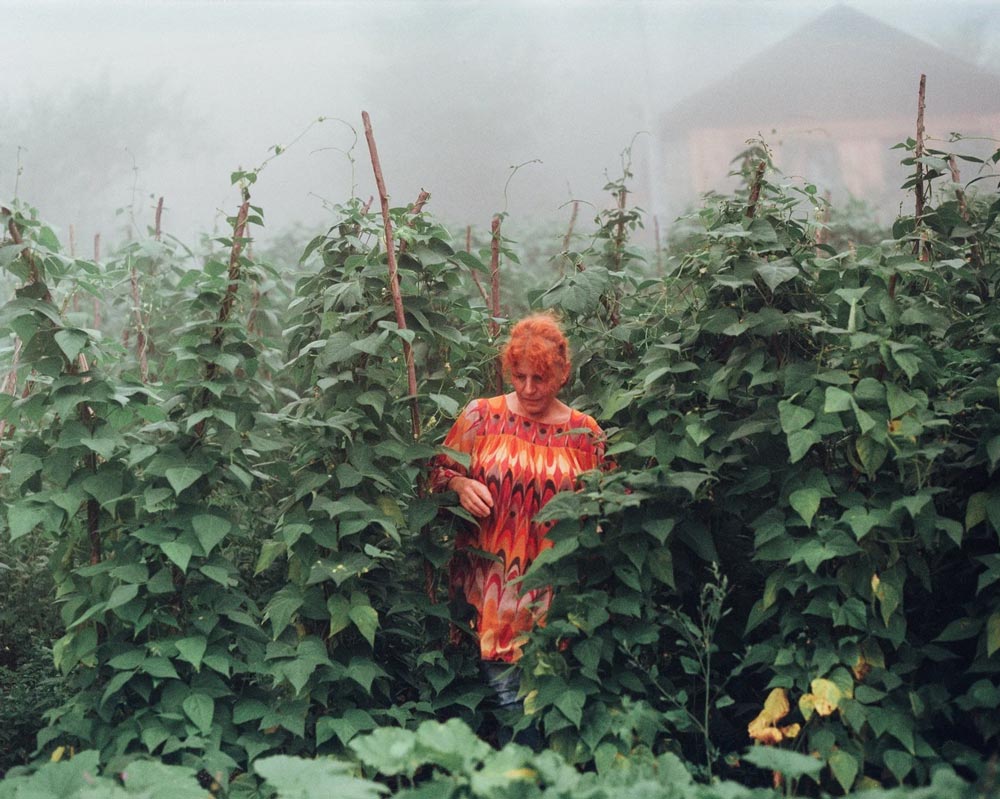
At first, my approach was intuitive. Only later did I realize that women’s exclusion from property ownership in the highland wasn’t just local custom—but part of a broader gendered legal structure embedded in everyday life. The series moved from personal observation toward a deeper reflection on dispossession as both violence and a condition of existence.
Since 2019, this research has expanded into Lost Homeland: Pontos, where I began reflecting on historical violence and forced displacement in the Eastern Black Sea region. From the start, I wasn’t interested in directly narrating historical pain. What compelled me was transforming that weight through allegory and fairy tale.
I wanted the work to unfold like a pop-up book—a staged world that opens when you turn the page. The theatricality was intentional. Rather than presenting trauma as documentary evidence, I approached it through myth, ritual, and constructed scenes. The folkloric figure of Karakoncolos became an allegorical embodiment of power and fear. In Greece, I collaborated with a theatre and folklore group, staging scenes that translated migration and violence into symbolic gestures.
I knew allegory can’t replace history; it can only open another way of approaching it. For me, the fairy tale wasn’t escape—but method. It allowed the work to move from accusation toward transformation. The images became less about illustrating events and more about creating space where memory could be reimagined.
Gradually, photographs ceased to be flat surfaces. They unfolded into three-dimensional, pop-up-like structures that rise into space. This was something I’d desired from the beginning: to give the image a body, to let memory stand upright before us. My practice expanded beyond the photographic surface toward a spatial field where narrative, sculpture, and image coexist.
In Var Git Çiçekleri (Blossoms of Farewell), what rituals or non-normative tales emerge, and how do they redefine femininity?
Var Git Çiçekleri (Blossoms of Farewell) was my first solo exhibition, bringing together more than a decade of work on The Dispossessed and my ongoing Lost Homeland: Pontos project. It took place at Hara in Istanbul, curated by Onur Karaoğlu and Serkan Kaptan.
I lived and worked at Hara for three months while preparing it—not just production, but a process of thinking with the space. The trust and openness from Hara’s founder, Canan Bozbağ, let me take risks and engage materially with my work.
Serkan Kaptan’s contribution was significant too. Beyond curating, he stayed and worked alongside me those three months. His companionship, physical support, and ongoing dialogue made it possible to realize material experiments I’d long wanted. Yet this direction emerged from my personal investigation. For me, collective production is sharing and solidarity, while the conceptual trajectory stays rooted in my long-term inquiry.
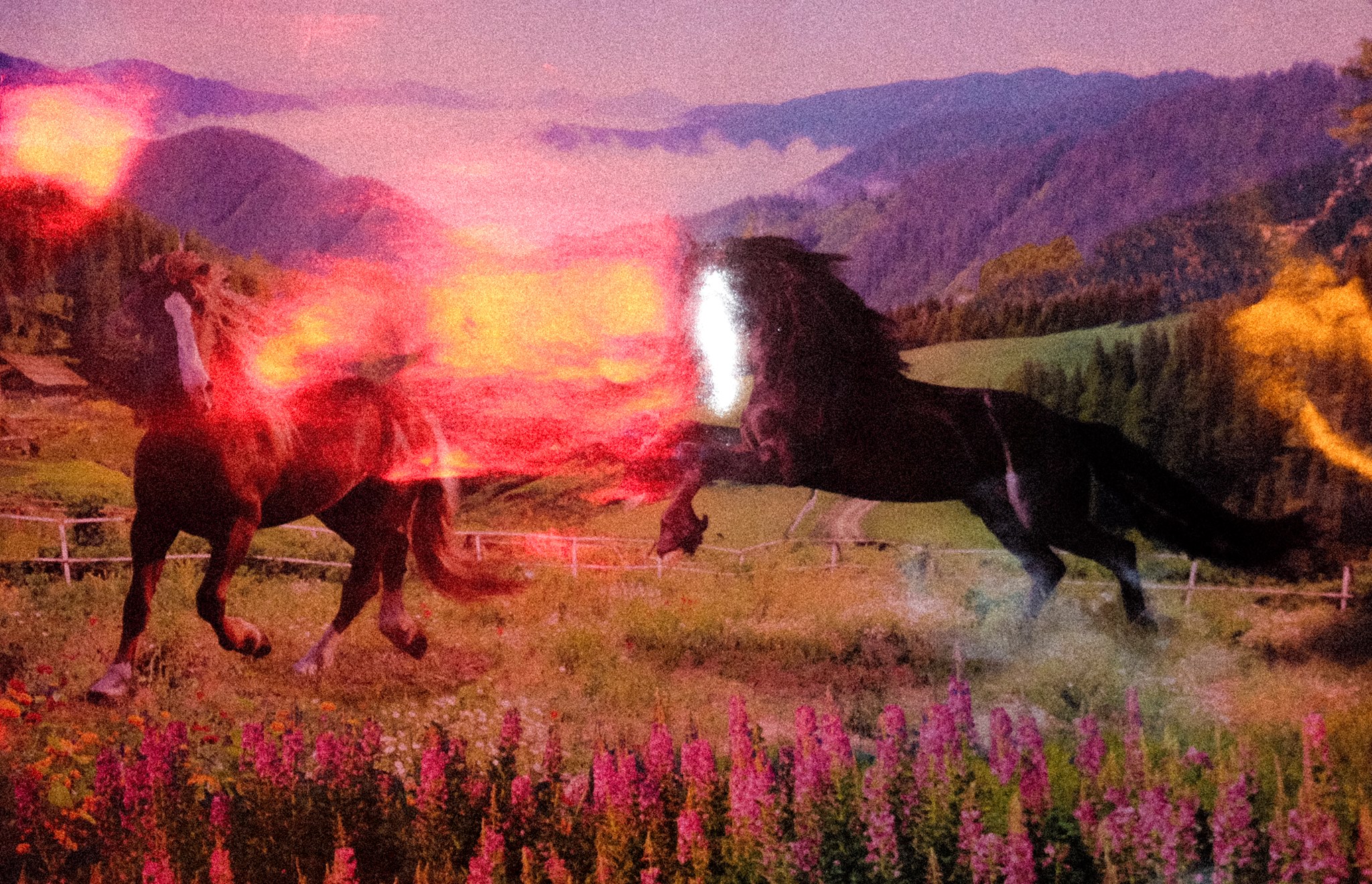
Rather than just exhibiting printed photographs, I revisited my archive and established a material relationship with images from many years. I cut them, displaced them, and reassembled them.
This gesture was more than formal intervention—it was a method of working with fragmented memory. Just as a dispossessed geography is divided into parcels, I dispersed the image and reconstructed it within my own imagined spatial logic. I approached my archive not as a fixed record, but as a transformable field.
Photography shifted from flat image to sculptural presence—torn from the wall, folded, occupying space. This fragmented, jointed aesthetic is deliberate. History and memory aren’t seamless; they’re broken and continually reconstructed.
How does the search for “home” manifest in your practice?
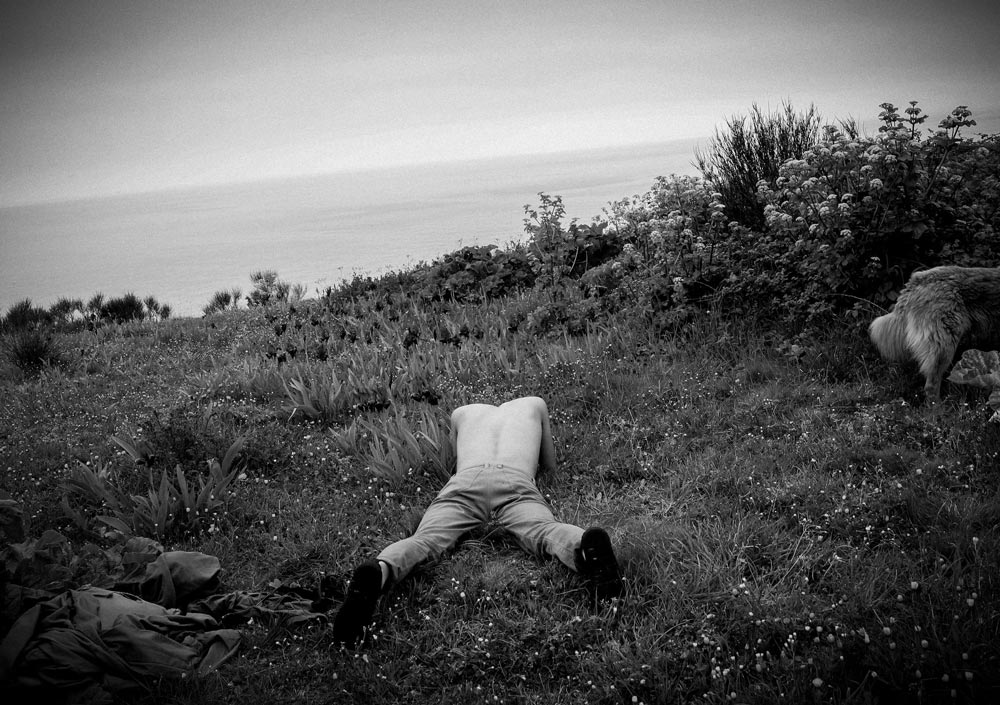
For me, home isn’t a place secured by property, but a condition formed through experience. Belonging is rarely a legal certainty; it’s fragile and negotiated—especially for women and queer bodies.
The Dispossessed isn’t merely observed story; it’s personal. I am one of its dispossessed subjects. I don’t have a planted tree in this world, yet I try to regard the life I live as home.
Home isn’t an address, but a continuity formed through memory, relation, and repetition. In this sense, the projects I create open temporary yet intense spaces. Each series becomes a structure where I dwell intellectually. I may not possess land, but through images I construct provisional spaces of belonging.
On femininity, resistance, and home
How does womanhood intersect with resistance in your work?
In my work, womanhood isn’t a slogan, but a mode of continuity. Care, healing knowledge, and sustaining life are often rendered invisible—yet they’re fundamental forces.
Resistance doesn’t always appear as a visible confrontation. Sometimes it lies in ensuring life continues uninterrupted: sustaining existence without denying vulnerability.
How do your works challenge norms of property?
For me, this isn’t abstract. My mother returned to the highland every year despite not owning a single tree there. Her insistence on maintaining memory across generations was powerful resistance—continuing to build relations in a place from which she was legally excluded.
Dispossession isn’t confined to rural contexts. In urban spaces, queer individuals, migrants, and women also inhabit fragile forms of belonging. Evictability and precarity are part of contemporary life.
For this reason, queer forms of commoning—chosen families, shared homes, networks of solidarity—propose alternative ways of dwelling. These are grounded less in legal ownership than in collective care.
On PPSD Weeks and exhibitions
How do craft, experiential production, and your imperfect aesthetic intersect?
Time is central to my production. Analog processes and physical interventions propose a conscious slowing down against cultures of speed. I approach photography not only as image-making, but as a surface to be touched.
Cutting, folding, bending, and reconstructing the image transforms production into an experiential process. Marks, ruptures, and imperfections don’t signify error—but the trace of labor. In an era of seamless images, leaving fractures visible is deliberate.
Photography shifts into sculptural and spatial forms. This transformation isn’t merely aesthetic, but conceptual. Memory itself is layered, incomplete, and open to reconstruction.
How does your use of blur and archival strategies respond to debates on originality?
Blur resonates with the nature of memory. In an age of hyperclarity, I choose to preserve ambiguity. Memory is never fully sharp; it’s layered and unstable.
Blur in my work may be less of an aesthetic decision and more of an attempt to stay close to how memory functions. Not everything needs to become sharp. Some images resist full clarity, and I often choose not to intervene.
A similar tension appears when I work with my archive. It can seem stable and closed—almost authoritative. Yet when I return to my own photographs years later, they generate different meanings. They detach from the moment they were produced.
Discussions around originality often emphasize clarity and singularity. But I wonder if originality might also exist in repetition—in returning, reworking, and re-seeing what already exists. Blur, in that sense, is less about concealment and more about allowing something to remain unfinished.
How do you approach emotional narrative in your work?
Emotion, for me, is political. When suppressed stories become visible, it transforms into critical potential.
Emotion in my work doesn’t function as ornament. It appears more like residue.
Stories unspoken for long periods accumulate density—that can be emotional, but also political. At times, the two become almost inseparable.
Rather than amplifying emotion, I keep it at a lower frequency. A slight hesitation in a gaze, subtle tension in a body, a movement that doesn’t fully complete itself—these small shifts can carry more weight than overt expression. It may be in those quieter zones that something becomes perceptible.
How does the search for home transform spatially in your installations?
By folding and expanding photographs into three dimensions, I translate memory into space. Home becomes not something represented, but experienced.
As my work opened into space, the notion of home shifted too. Looking at a photograph from a distance isn’t the same as moving around it.
When I cut and fold images into three-dimensional forms, the viewer no longer stands outside; they move around it, negotiating proximity. In some ways, this feels close to how I think about home. Perhaps home isn’t a fixed address, but something produced through encounter and closeness.
Detaching photographs from the wall feels less like illustrating home and more like testing a sensation. Home might be fragile, provisional, assembled rather than given.
How does your queer-feminist perspective inform your practice?
Refusing a fixed identity is a political stance. Fluidity and vulnerability aren’t conditions to conceal—but states to be examined and inhabited.
A queer-feminist perspective in my work isn’t something I explicitly declare. It appears as an undercurrent: hesitation toward stabilizing identity, discomfort with fixed roles.
In politically tense times, there’s often pressure to clarify who we are. Yet I’m not convinced clarity is always liberating. Being defined can mean being contained.
Allowing identity to remain porous—to shift, contradict itself, stay slightly unresolved—feels more honest. Vulnerability may not be something to overcome, but to inhabit.
How does time operate in your practice?
My work is shaped not by speed, but by duration. Returning to the same questions over years isn’t obsession—but deepening.
Photography is often seen as freezing a moment. I approach it as a process unfolding over time. The same series changes when reinstalled in different spaces. Memory, too, isn’t static. Time is the invisible material of my practice.
How does your queer-feminist lens in Shelter and Fathom embody 2026’s “unfiltered authenticity” amid conservative pressures?
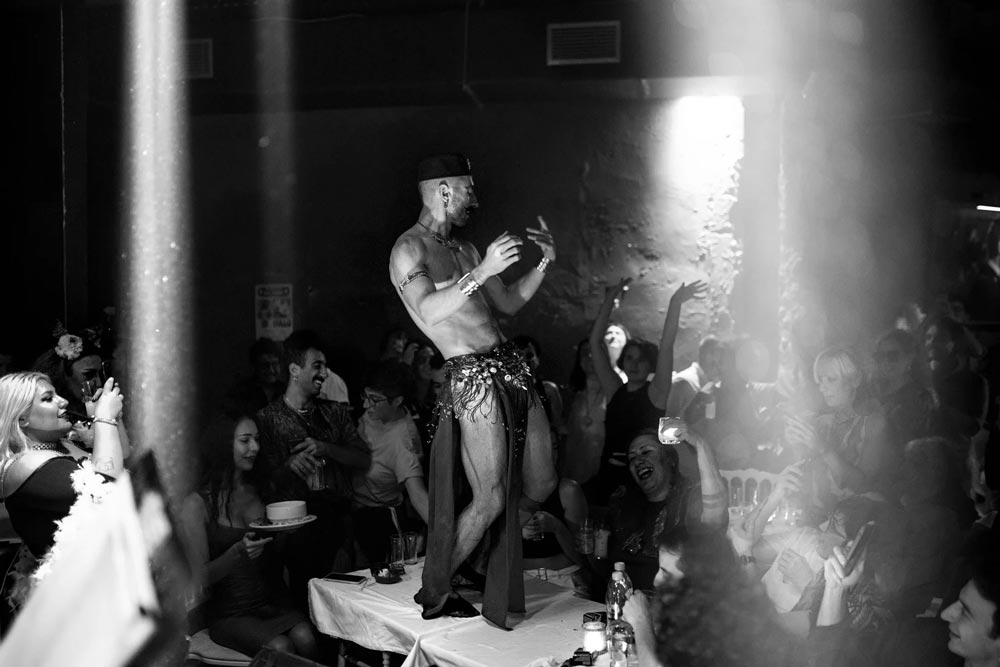
For me, a queer-feminist lens isn’t a declaration of identity, but a way of existing. In moments when conservative pressures intensify, the rhetoric of “having the courage to be yourself” becomes common. Yet sometimes what’s truly difficult is stopping the performance of expected identity.
Shelter emerged from this fracture. The people in it aren’t posing to fit a category. They’re my chosen family—the people I live and breathe with. Photography here isn’t representation, but preserving intimacy: recording a shared space of trust. Home isn’t a wall or a deed; it’s something we build together.
For this reason, I don’t stabilize identity in my work. Queer existence is less about clarity and more about transitions, vulnerability, fluidity. I’m interested not in defining it, but in letting it loosen, transform, and remain unresolved.
Today, “unfiltered authenticity” often means radical transparency. But not having to explain everything is also a form of freedom. Opacity can be protection. Remaining incomplete can be more truthful than appearing whole.
In Fathom, this unfolds through depth. The desire to move beneath the surface acknowledges that identity is never single-layered. Refusing to clarify everything—refusing to turn queer existence into performance—is conscious. Depth here isn’t only aesthetic; it’s existential.
The dreamlike space in Fathom isn’t an escape, but imagining absent safety. Working analog, without knowing outcomes, lets us move intuitively. This uncertainty allowed identity to emerge as lived and shifting—not fixed.
For me, the issue isn’t being unfiltered. It’s refusing the norm. It’s opening the body, home, and city to other uses—letting identity dissolve rather than harden.
Upcoming exhibition in Germany
Could you share details on your upcoming exhibition in Germany? Which works were selected, and why?
My upcoming solo at Anna Laudel Düsseldorf, Always Returning Home: Wild Ducks Flying Against the Current, continues my long-term inquiry into belonging, memory, and dispossession.
I’m developing a new installation of fragmented photographic structures, expanding the spatial language I’ve been working with. Photographs aren’t flat images anymore—they’re cut, displaced, and reconstructed into three-dimensional forms that occupy space. The installation invites viewers to navigate memory physically, not just observe it.
Alongside this, I’ve selected 30 photographs from The Dispossessed, taken over a decade. Seen together in Düsseldorf, they form a sustained investigation into how dispossession shapes personal and collective histories.
This spatial approach appears too in my current group show Panoroma: Hayaller ve Yerler at Istanbul Modern (curated by Demet Yıldız and Çelenk Bafra), where I present Crimson Riders, a fragmented photographic installation. The dialogue between these reflects an ongoing shift: photography expanding into sculptural presence.
The title evokes a recurring movement in my practice. Returning isn’t nostalgia—it’s navigating memory, even when it resists stability.
Presenting in Germany carries personal and historical resonance. Its post-war growth relied on Turkish labor migration in the 1960s–70s—”Gastarbeiter” like my grandfather, who worked under tough conditions. Migration isn’t abstract politics; it’s family history.
Conditional belonging, labor hierarchies, body invisibility persist today. Bringing this to Germany traces a generational route—not return to fixed homeland, but encounter with geography shaped by movement and exclusion.
At a time of global displacement and dispossession, the work resonates beyond context. Dispossession recurs, connecting past and present across borders.