
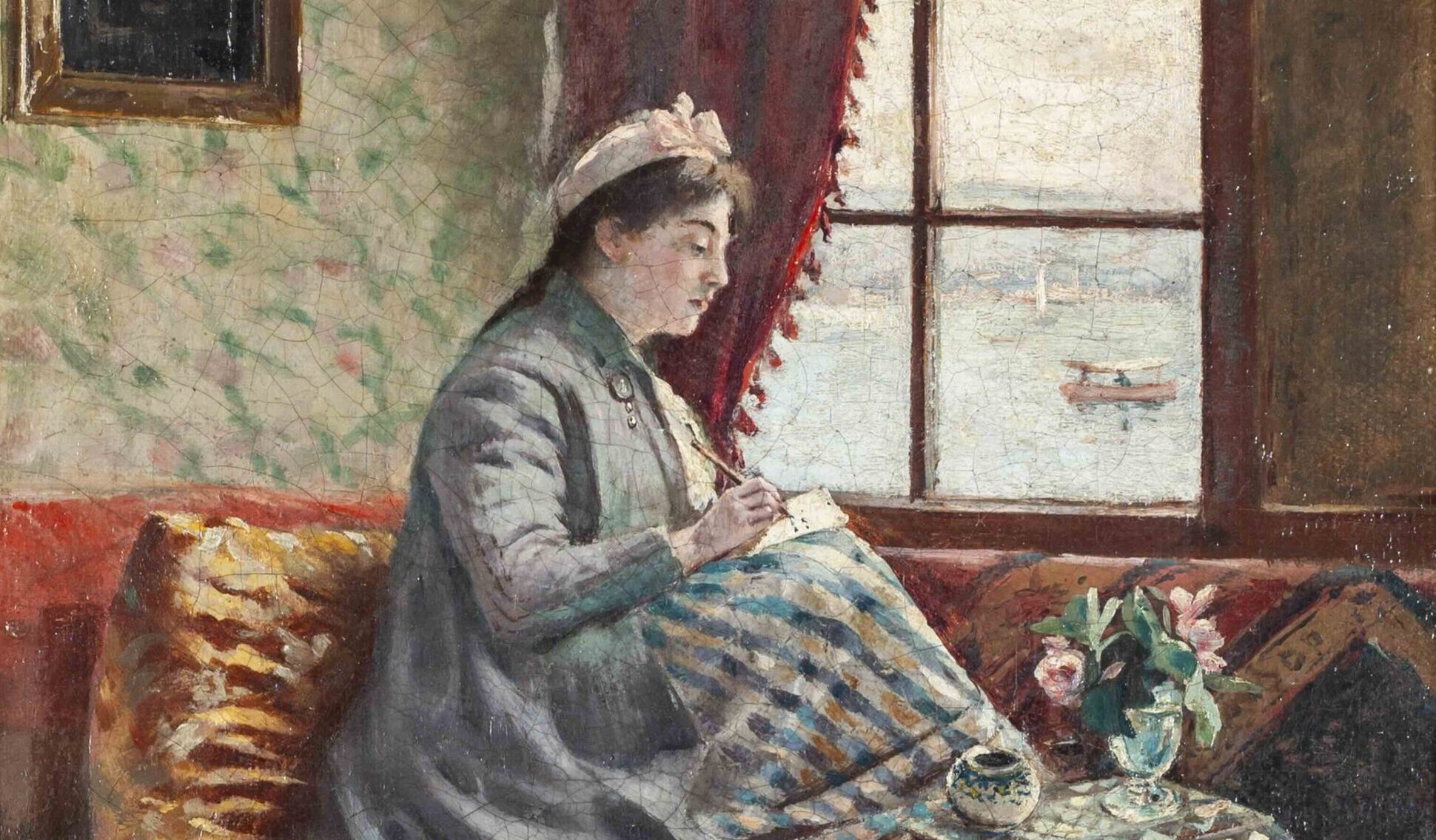
The new exhibition at Pera Museum, signed by the Suna and İnan Kıraç Foundation, invites Turkey—“standing on the edge of war”—to reflect on and observe By the Water’s Edge: The Life and Art of Halil Paşa.
Curated by Özlem İnay Erten, the exhibition deserves in advance a salute to the collective body formed by Turkey’s cultural and artistic community—both personal and institutional—before even addressing the legacy of Halil Paşa, described as “the most senior of our painters (General).”
Within this commendable spirit of collectivity—one that effectively turns Pera Museum into a Halil Paşa Museum until 23 August—a significant role also belongs to Erten’s life partner and colleague, the curator, art historian and academic Oğuz Erten, particularly through the relationships he established with collectors.
In this context, the institutions and collectors lending works to the exhibition include the Beşiktaş Naval Museum, the Beyoğlu District Governorship, the Conrad Istanbul Bosphorus Collection, the Demsa Collection, the Istanbul Modern Collection, the Türkiye İş Bankası Collection, the Sabancı University Sakıp Sabancı Collection, and the Yapı Kredi Collection, along with collectors such as Erol Abiral, S. Batu Aksoy, Vedat Aloğlu, Cemal Batur, Bozluolcay, Alp Gürbüz, Halil İbrahim İper, Şevket Keçeci, Köksal Kızılca, Çetin Nuhoğlu, Fahri Özdemir, Mine and Güven Persentili, Recep Tanrıverdi, Lucette and Mustafa Taviloğlu, as well as many generous contributors whose names have not been mentioned at their own request.
The Halil Paşa exhibition project, brought to the agenda upon the suggestion of the publisher, curator and collector Fahri Özdemir, also stands out through the creative designs of Nisa Üner and Agit Altun from the Tetrazon team led by Burçak Madran.
The exhibition promises a surprising experience that finds its identity in a turquoise, elegant logo, bringing together transparency and sincerity while making Halil Paşa’s perception of the inner and outer world visibly legible and leaving the viewer open to sensory surprises.
Fahri Özdemir explains the process that brought the exhibition project to Pera Museum as follows: “This exhibition project began for me about three and a half years ago. I shared the project with my dear brother Oğuz Erten. At that time, I even suggested that we work not only on Halil Paşa but on three or four different names. When he directly suggested Halil Paşa, I took the proposal to his dear wife Özlem İnay Erten to write and curate this exhibition, and we began.
In fact, we were going to take this project to the institution where I had previously worked, but unfortunately, my relationship with that institution ended about a year and a half ago. I thought about continuing the exhibition with that same institution, but it did not happen. Of course I had also promised many collector friends that such an exhibition would be opened. Around that time my meetings with Pera Museum were continuing. And of course, thanks to Özalp Birol, who said, ‘Let us undertake this and do it.’ Naturally, they carried the process forward with Pera Museum.
Of course I was there at the beginning, but Özalp Birol, with his usual generosity and elder-brotherly attitude, truly embraced the project. He took firm ownership of it and together with the Pera team they realized the project. Even though it may appear as if Pera Museum constructed the project, I feel as if I carried it forward myself as well. Because I have never left any project I started unfinished. For that reason I am grateful to Pera Museum.
In my opinion, Pera Museum’s Halil Paşa exhibition is one of the best projects of recent years. Because Halil Paşa is the legendary name of classical painting. I think this exhibition will also further increase the interest in classical painting. I thank everyone who supported this project.”
A Halil Paşa Universe Spreading Across Three Floors
The event spreads from the upper floors downward across the museum’s three floors. While doing so, the exhibition team also invites younger visitors to the Pera Learning workshop, offering vital opportunities for the future’s creators to experience painting, the role of the painter, and the studio and exhibition space.
In this part of the project, Selma Hekim, Barış Bilgen and Müge Işıgöllü Sedola have made a significant contribution.
If we repeat the technical information here, this learning space—prepared with reference to the artist’s production practice in his drawing studies and equipped with easels and objects that can be modeled—allows visitors to transform the inspiration they take from the exhibition into creative productions by using colored pencils, pastel paint, graphite, charcoal and various types of paper.
The Open Studio will be open from Tuesday to Saturday between 10:00–13:00 and 14:00–18:00, and on Sundays between 12:00–17:00; within the scope of the Long Friday program, it will also host visitors between 19:00–21:00.
Pera Museum itself can be visited from Tuesday to Saturday between 10:00–19:00 and on Sundays between 12:00–18:00. On Fridays, within the scope of “Long Friday,” all visitors will be able to visit the museum free of charge between 18:00–22:00, and on Wednesdays, within the scope of “Young Wednesday,” all students will be able to visit the museum free of charge.
Returning to the exhibition: beginning on the fifth floor with a chronological introduction to Halil Paşa and ending on the third floor, the exhibition approaches Halil Paşa—one of the important names of Turkish painting in the process extending from the Ottoman Empire to the Republic—through the relationship between his life and his production.
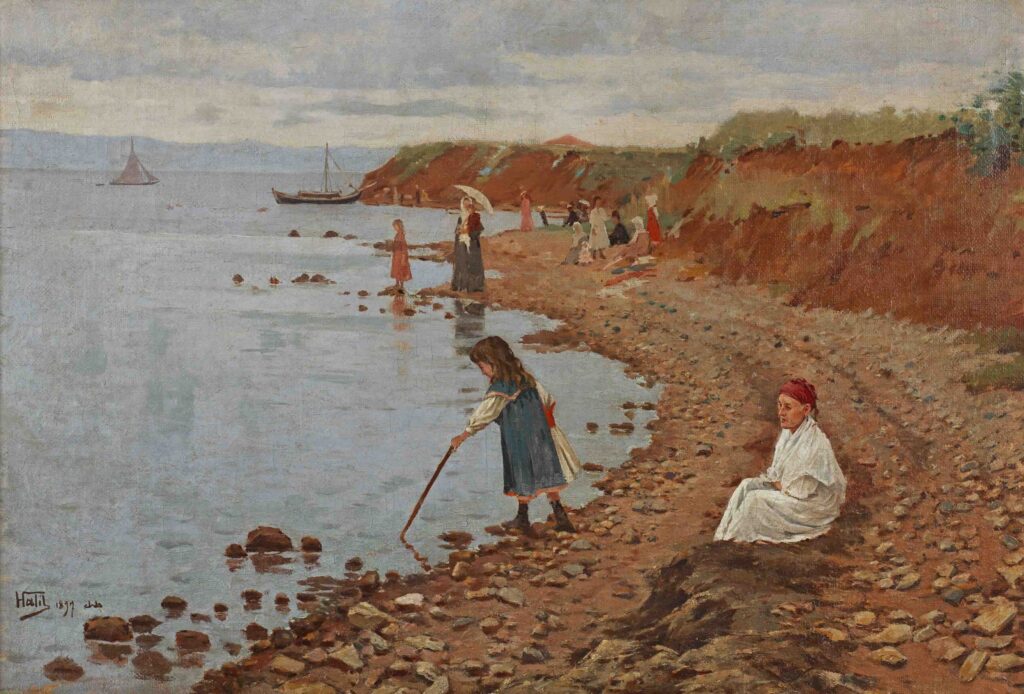
Characterized by the triangle of Istanbul, Paris and Cairo, the exhibition brings together the artist’s portraits, still lifes and landscapes with archival documents, photographs and sketchbooks, offering a comprehensive reading connected to his life, surroundings and the period in which he lived.
In this sense, within the chronological section of the exhibition, for instance, it becomes quite possible to see Halil Paşa and his student Hasan Vecih Bereketoğlu working on a landscape painting in Fenerbahçe under umbrellas.
Or in another frame, within this overall exhibition experience in which we see Halil Paşa smiling alongside his painter friends from the 1920s—Şevket Dağ, Feyhaman Duran, Hale Asaf and Hikmet Onat—the invitation to the artist’s final painting exhibition, opened in July 1939 at the Ankara Halkevi in Ankara, reads with the same Turkish of the period, under the call of the Minister of Education of the time, Hasan Âli Yücel:
“You are respectfully invited, together with your esteemed spouse, to honor the opening ceremony of the painting exhibition to be opened by the most senior of our painters, General Halil, at the Ankara People’s House on Saturday, 1 July 1939, at 16:00.”
A Painter Extending from the Ottoman Empire to the Republic
Among the exhibition details—found in various private archives and perhaps brought together for the first time—it is also possible to encounter a photograph taken in the last years of Halil Paşa’s life, or even his glasses and binoculars. Of course, just as the Ankara People’s House exhibition took place on the eve of the Second World War (which would begin on 1 September), it appears quite meaningful that this exhibition too opens at a moment when the world once again stands “on the edge of war.”
The exhibition surrounds the viewer with the painter’s coastal, urban and rural landscapes—scenes in which he immortalized light, shadow and cultural texture through a diligent palette—as well as large-scale interpretations of memories from his Egyptian campaign and his exhibitions in Cairo. At the same time, the exhibition intertwines the master’s portraits, drawings, still lifes and landscapes through the relationships he establishes between them.
In this commendable exhibition—where the works do not monotonously crowd over one another and whose design respects the viewer’s right to curiosity and concentration—short accompanying texts that do not exhaust the visitor also bring thematic sections such as “Halil Paşa and the Bosphorus” into dialogue with the audience.
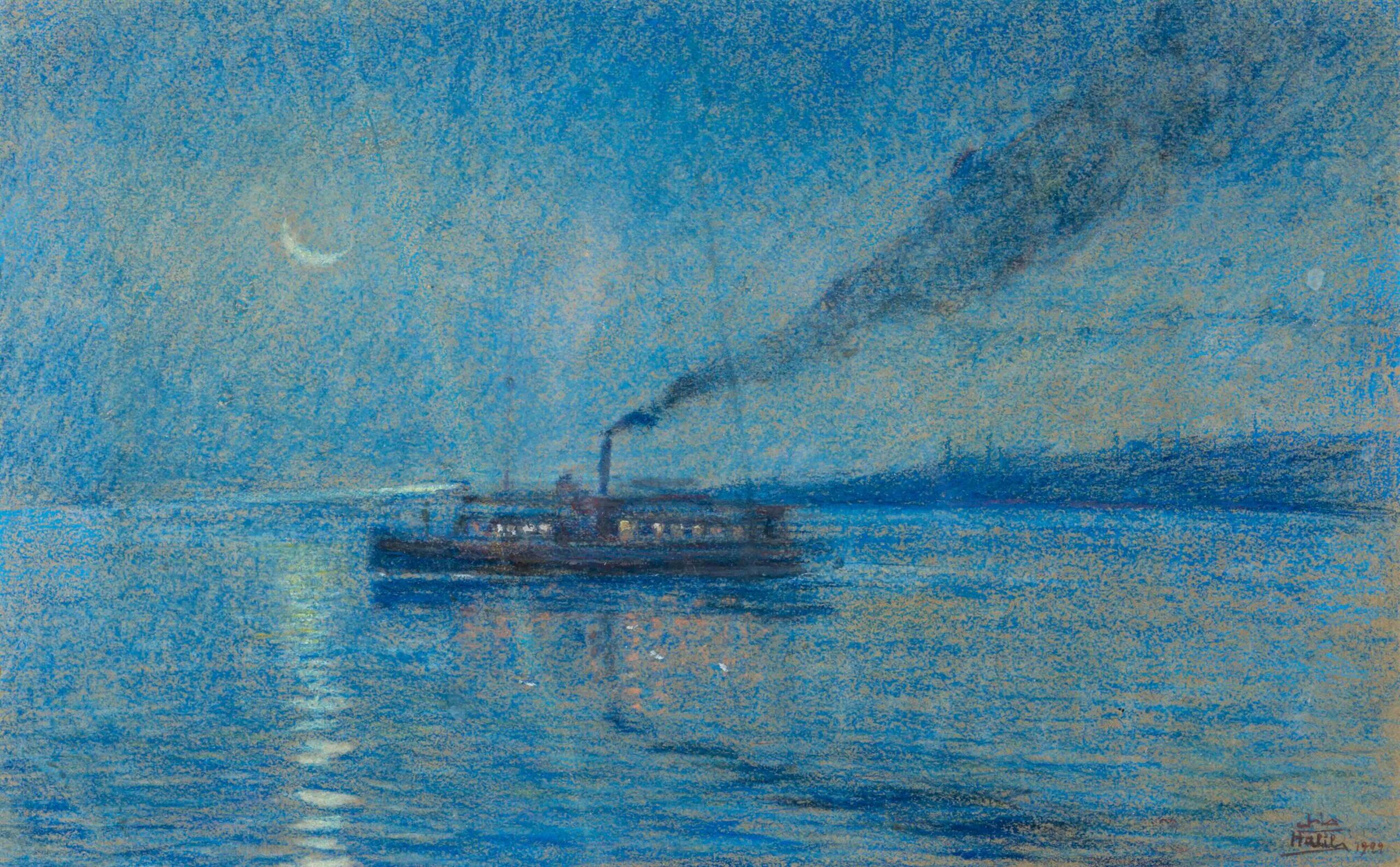
Because of the ugly landscape created by crooked, greedy urbanization that has reached the very throat of the Bosphorus, the exhibition—filled with silent, untouched views beautiful enough to shame today’s Istanbul—offers, for example, scenes where viewers boarding at the Çengelköy ferry pier painted in 1890 by the Beylerbeyi-born artist, a native of the Bosphorus, find themselves suddenly in the historical peninsula view of another coal-fired night passenger ferry from 1909, perhaps departing on some voyage under that dreamy crescent-blue evening. His colleague and companion Nurullah Berk commemorates the master in this spirit in his book İstanbul in Turkish and Foreign Painting, writing:
“The Bostancı beach, morning in Çengelköy, the red waterfront mansions, seagulls, and many other paintings—within a color system close to the impressionist palette—Halil Paşa laid the shores of Istanbul before our eyes. Halil Paşa reconciles the shore with the sea, sending greetings from the sea to the coasts.”
At the same time, one of the most admired works in this profound exhibition—whose project assistant is Zeynep Sarı—is the impression of the four seasons, composed by the artist in a vertical composition and dated between 1901 and 1903. As a manifesto of the master’s comprehensive view of life, this work, by joining rationality and romanticism, carries the quality of a genuine lesson in life.
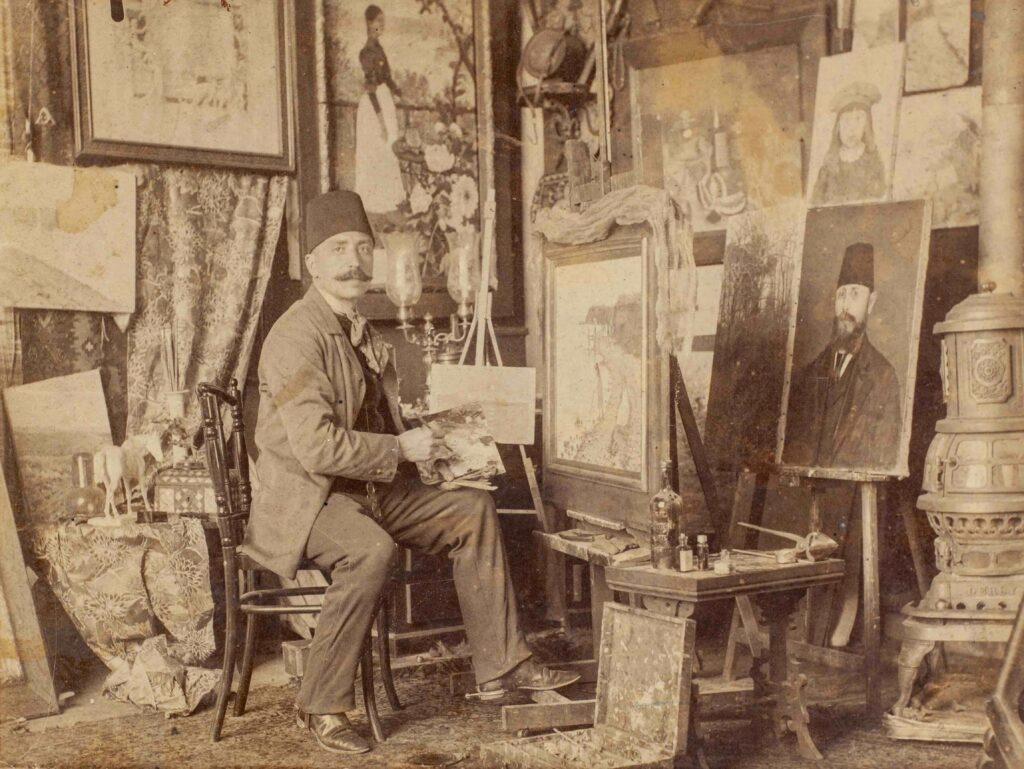
As seen in the exhibition, the event emphasizes that the education received by Halil Paşa at the École des Beaux-Arts in Paris—where his work was awarded a bronze medal at the 1889 Exposition Universelle (1889)—was based on the fundamental principles of 19th-century French academic art. In this section, the exhibition also underlines the master’s solid training in drawing and the meticulous care he devoted to this process. In this approximately twenty-piece section of the exhibition, the painter’s deeply rendered nudes of children, women, and men, almost winking at photorealism, appear in succession together with studies from sculptures and interpretations of busts.
In this context, his teacher, the French Orientalist painter and sculptor Jean‑Léon Gérôme, writes in a letter dated 2 December 1900, addressed to the Ottoman Ambassador to Paris, Münir Bey:
“Your Excellency,
I have the honor of recommending to you my student from the military school, Colonel Halil Bey, and I particularly request that His Majesty do everything possible so that he may advance. Halil Bey has exhibited for many years and received an award at the 1889 Universal Exposition; he was the only Muslim to be awarded, and this year he is again the only Muslim admitted to the 1900 Universal Exposition.
Please accept, Your Excellency, the assurance of my deepest respect.”
Halil Paşa also documents the modernizing tendency emerging among Ottoman women of the period through his 1889 portrait of Âliye Hanım. In the exhibition—where unexpected works parade before the viewer—the artist is remembered as well through melancholic female portraits or through the attentive, almost graphic gaze he directs toward the back of his own studio.
From there, Halil Paşa carries us back to the calm of 1889, to Göksu, to the distant sound of stones ringing under horseshoes, to the love encounters where water lilies open to the gentle splash of boats, or to the Bostancı shore, where young men wearing fezzes cool themselves by the water’s edge. And while guiding us through these scenes, he does not leave without sharing with us the Portrait of his wife, Âliye Hanım.
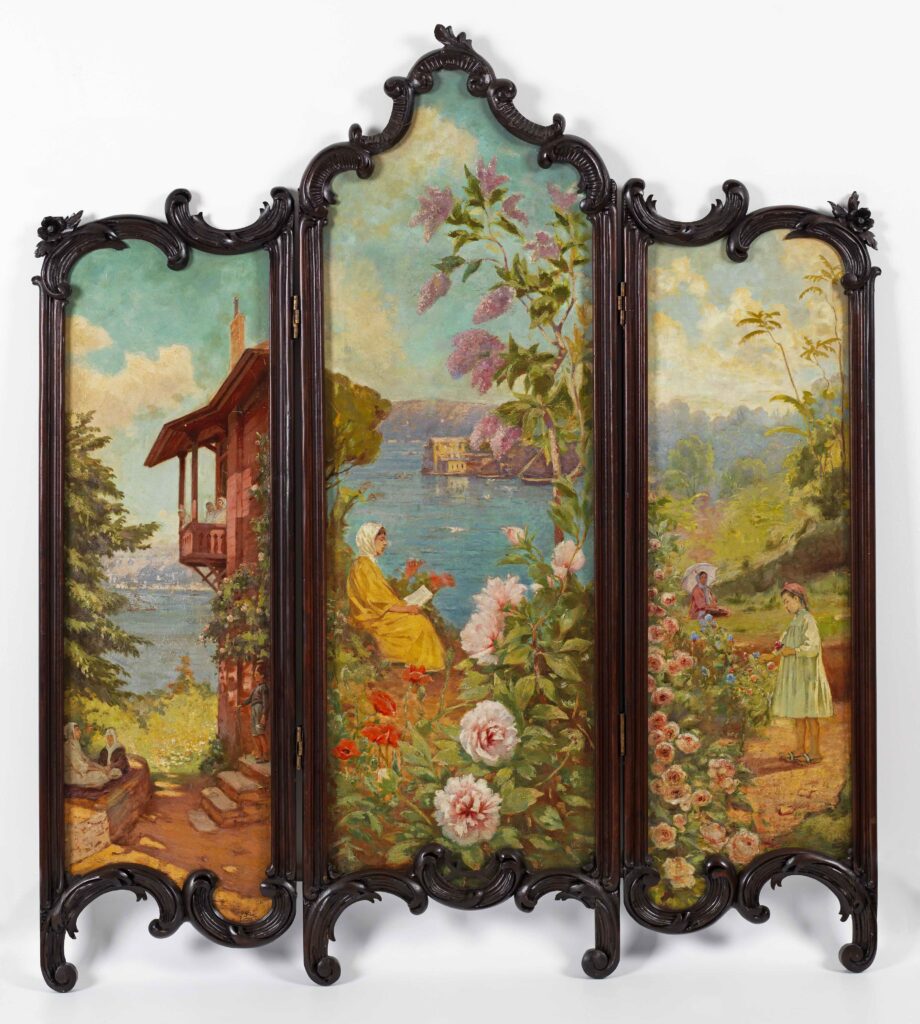
Meanwhile in the exhibition, the meticulous surprise prepared by Burçak Madran and the Tetrazon team makes it almost impossible not to linger for a long time before the Halil Paşa Studio section. This sense of surprise deepens further in the artist’s impressions of Bosphorus–Istanbul (1915), where the mirror he used while painting himself, or the spring branches embroidered onto a screen—woven with peonies, lilacs and poppies—appear alongside women, waterfront mansions and scenes filled with tranquility.
Without diminishing its effect, this sense of surprise also brings us face to face once again with the first illustrated novel in the history of Turkish literature, Araba Sevdası. The work, written by Recaizade Mahmud Ekrem—the brother of Halil Paşa’s wife Âliye Hanım—and accepted as the first realist and illustrated novel in Turkish literature, began to be serialized with illustrations in the magazine Servet‑i Fünun in 1896, and was published as a book a year later. In this section, it is emphasized that seven of the twelve illustrations in the novel bear Halil Paşa’s signature, while three were produced by D. Çırakyan; the exhibition accordingly presents the artist’s drawings and the sketchbooks that have survived to the present day.
Elsewhere, Halil Paşa does not neglect to take us to the busy boat days of Karaköy in 1906, offering us the catalogue of the 1928 Salon exhibition, while also transporting us to Egypt, where he held exhibitions—to its bazaars, to the banks of the Nile, or to Ankara. Indeed, in a letter written in March 1915, the Paşa expresses the following complaint from Cairo:
“…One should see the painters here; a local and foreign exposition has been organized. We Turks are three in number; so that we would not attract attention they have hung our paintings in separate sections, yet the works of the three of us appear superior to all the others. But they do not wish to let us earn our bread; although I asked them to change the places of the paintings, I received the answer that it could not be done…”
With the contributions of the SALT Research Art Archive, the exhibition also makes us witness the 1933 Galatasaray Exhibition, while recording as well the residents of the Kandilli shore in 1926 who enter the water and fish along the ruins of the coast. A striking detail in the painting is formed by the first wooden reddish-brown buildings settling on the slopes of the Bosphorus.
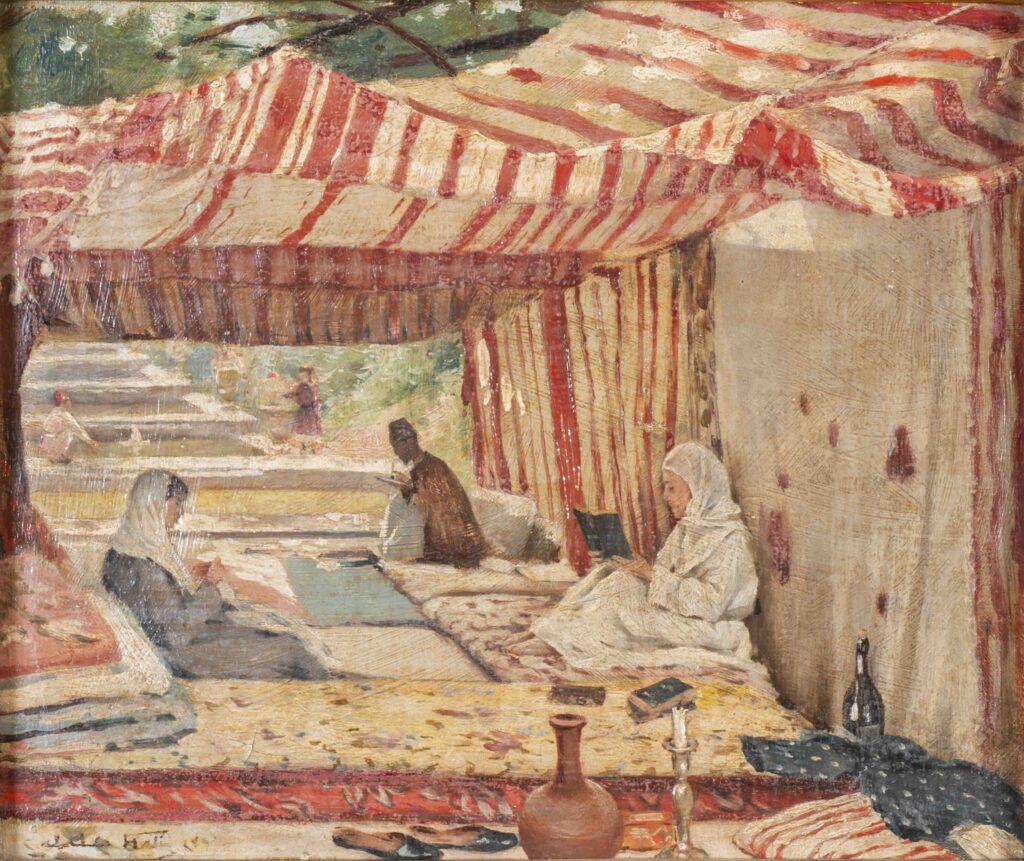
Another surprise of the exhibition—where we encounter Halil Paşa as a thrifty hand who, due to the financial difficulties of the period, worked on his canvases on both sides—is the self-portrait that the painter “transformed” after the proclamation of the Republic. Halil Paşa produced this painting from a self-portrait photograph he took using a mirror, and in the exhibition both images can be compared. When looked at closely, it can be seen that the “halo of the fez” above Halil Paşa’s head still remains.
In this context, the curator Özlem İnay Erten, in her presentation and question-and-answer session at the opening of the exhibition, summarized the importance of Halil Paşa as follows: “We speak of the 1914 Generation, we also say the Çallı Generation; before them, the importance of Halil Paşa lies in the fact that he carried an impressionist sensibility into his painting, contributed to the tradition of plein-air painting, and with his competence in landscape and portrait painting enabled our country to cross an important threshold in figurative painting, while also achieving a synthesis by adapting the academic knowledge he acquired in the West to his own geography.
When we look at his art and life, spanning nearly ninety years, we see that he produced continuously. This makes visible for us the aesthetic measure of the modernization process from the Ottoman Empire to the Republic, and at the same time reveals the continuity of his production.
The fact that he produced nearly a thousand works is not merely a quantitative assessment. It shows that art and painting are pursuits that demand continuity, dedication, and—within the conservative artistic environment of the period—an act that also required courage. In this respect, the life of Halil Paşa tells us a great deal today. (…)”
“In my opinion, the importance of Halil Paşa lies in the fact that he did not remain closed to the innovations of his time. From his letters and correspondence we see that he visited museums—especially the Louvre Museum—and studied the paintings there. In fact, in his art we can perceive not only the influence of his teachers Jean-Léon Gérôme and Gustave Boulanger Courtois, but also the influence of many painters he saw in Paris and perhaps examined for hours.
Another element we can see for the first time in the exhibition is the Brittany diary from his trip in 1887 with a friend. It is being exhibited for the first time and is very valuable. I believe his academy friend Thibodeau turned this journey into a kind of visual journal. Here we read certain things about the nature of Brittany, its historical places, folkloric costumes, what they did there, and how they worked in the open air. This journey allows us to see how his tradition of plein-air painting—his practice of painting outdoors—took shape. Even though they initially set out for a month, the trip eventually lasts six months. (…)
He has a statement that, in my opinion, represents a turning point in his art: ‘Thinking that portrait paintings would not find buyers, I turned toward landscape painting.’ Why portrait paintings? Because at that time there was a certain distance within Ottoman society toward figurative painting. Therefore Halil Paşa turns toward landscape painting, and we come to know him especially through his open-air landscapes. Yet he never completely abandons the figure; at the beginning he even uses it on a monumental scale, like Osman Hamdi Bey, which is actually a feature not very common among his contemporaries. But over time we see him move toward Impressionism. (…)
With the proclamation of the Republic, a nation is born, and with Ankara becoming the capital the city turns into a symbol of modernization in art. Artistic activity shifts toward Ankara. We see that Halil Paşa participated in the Türk Ocağı exhibitions at the Ankara Halkevi and took a very active role. He participates in almost all the artistic events of the period. He establishes connections both with the Military Painters generation and with the Çallı generation. For a period he also teaches and serves as director at the Sanayi-i Nefise Mektebi, and the painters of that generation respect and love him very much. In my view, Halil Paşa is like a bridge. (…)
Halil Paşa’s life always stands at a threshold between the Ottoman Empire and the Republic, between Impressionism and Academic Art. Because both a local sensibility and the influence of academic art coexist in his paintings, we particularly wanted to emphasize the notion of the ‘shore’ in the exhibition.”
In the question-and-answer session following the exhibition presentation, the curator Özlem İnay Erten commented on our threefold question—regarding Halil Paşa’s contribution to the cultural policy of the Republic, whether he had collectors in Europe, and his relationship with the critical institutions of the period—with the following words:
“As you know, in the early years when the Republic was first established, the Çallı generation was more in the foreground, and Halil Paşa, both because of his age and because of his distance from modern art movements, did not feel very comfortable within those circles. We understand this from the letters he wrote. In the early years of the Republic, art was supported by the state and also carried a propagandistic character. Artists tried to emphasize the ideals and revolutions of the Republic.
For example, Halil Paşa participates in an exhibition together with the Şişli Workshop. While everyone takes part with paintings about war, Halil Paşa participates with a Beylerbeyi landscape. Or he does not produce works glorifying Atatürk or the revolutions. At least we have not encountered such works.
I was only able to find a painting in which he depicts the Atatürk statue in Bursa. In fact, there is also an anecdote that I think is very valuable and important: at this first exhibition—in other words, the mixed exhibition opened in 1923 at the Ankara Türk Ocağı—some of the paintings are sold. Just as the exhibition is about to end and the works are to be returned, Atatürk asks about the matter and then says, ‘The paintings that come here will not go back.’ He both buys the paintings himself and has those around him buy them as well. Halil Paşa says, ‘I have never seen such a thing in my life; for the first time all my paintings found buyers.’ When I read this, I was very moved. This is the kind of relationship he had with the Republic.
As for your question about criticism and Halil Paşa, even if we do not call them critical essays in art, he has certain critical remarks regarding Impressionism. He taught for thirty-five years in military schools and also at the Sanayi-i Nefise Mektebi. In addition, he trained many private students and placed particular emphasis on drawing. He attached great importance to the practice of painting from nature.
When it comes to collections and Halil Paşa, frankly there is something I have been very curious about: when he went to Paris, why have we never seen his landscapes there? We only encounter his portraits. We have been able to reach these works—or at least their images. But unfortunately I have not seen his landscapes. Perhaps he did paint them and they entered collections there, yet that has remained a question mark. Perhaps future studies will reveal them.
Or what were the works that entered Egyptian aristocratic circles? We do not know these very well either. I have seen works reflecting his relationship with landscape and everyday life in his drawings, because those drawings were made there.”