
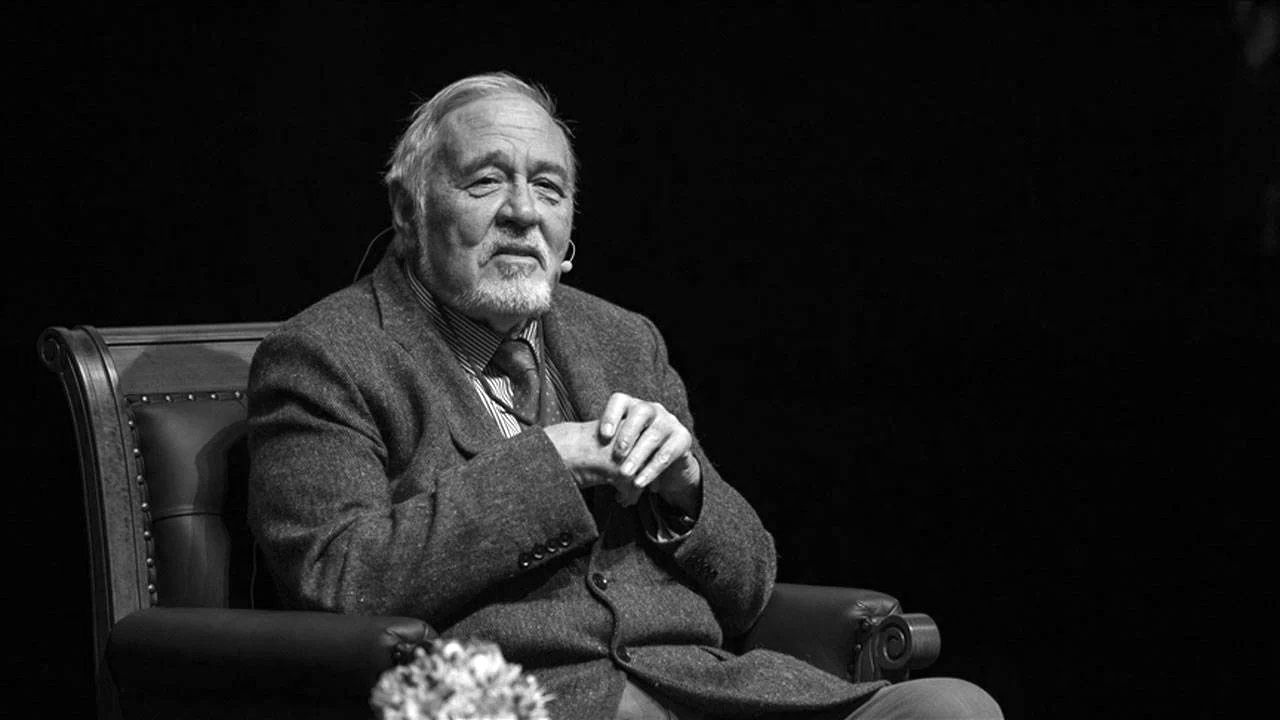
Historian and writer Prof. Dr. İlber Ortaylı, who had been receiving treatment in intensive care for some time, died at the age of 78. Türkiye has lost not only a historian but also an intellectual who knew how to communicate through memory. Ortaylı’s death resonated not just as the end of a life in academia but as the closing of a chapter in a way of thinking that spanned over fifty years. He was a figure who did not just recount the long historical journey from the Ottoman Empire to the Republic; he also showed how to think along that path.
At the core of this way of thinking was strict self-criticism. In an interview with Sibel Oral of the newspaper Radikal, he summarized Türkiye’s stance on history with this sentence: “Our most shameful aspect is our insistence on not learning history, not writing history, even though we have made history.” For Ortaylı, the issue was not just knowing the past but also writing, recording, and teaching it seriously.
Born in 1947 in the Austrian city of Bregenz to a Crimean Tatar family, Ortaylı grew up in Ankara. After graduating from Ankara Atatürk High School, he studied at Ankara University’s Faculty of Political Sciences. During the same period, he also took history courses at the Faculty of Language, History, and Geography. This dual academic background allowed him to explore both political and cultural history simultaneously.
During his master’s and doctoral studies, he concentrated on the Ottoman administrative system and the Tanzimat period. His academic experiences in Vienna and Chicago transformed him into a historian who thought not only within the context of Türkiye but also from the perspective of empire history. From the 1970s onward, he taught at Ankara University and later at Galatasaray University, inspiring the curiosity of thousands of students about history. However, he also kept his distance when it came to recent history. In the same interview with Sibel Oral from Radikal, he pointed out the structural flaws in education by saying: “Recent history—especially in Türkiye—is learned outside, not at school.”
Rescuing the Ottoman Empire from the Narrative of Decline
One of Ortaylı’s most lasting contributions was to challenge the simplistic narratives of decline about the Ottoman Empire and to view it as a complex system of administration and culture. Central to this approach was a strong emphasis on philology. In the interview he gave to Sibel Oral of Radikal, he openly acknowledged this shortcoming: “Türkiye is very weak on that issue. We must acquire the habit of reading archaic texts.”
The language reform might have been carried out, and the alphabet might have changed; yet the historian’s material was the text, and if the connection to the text was broken, memory would also be lost.
Among his major works, The Longest Century of the Empire, Rediscovering the Ottoman Empire, History of the Turks, and Gazi Mustafa Kemal Atatürk resonated both in academic circles and among general readers. In these texts, Ortaylı continued his effort to present historical depth along with a popular narrative.
Memory Extending from the Palace to the City
Serving as the Director of the Topkapı Palace Museum from 2005 to 2012, Ortaylı highlighted that the palace was not just a tourist attraction but a physical symbol of imperial memory. Istanbul, in his view, was a test. In the same interview, his comments on preservation feel even more urgent today: “There are hardly any proper examples left—neither of civil architecture nor residential architecture. Neither streets are preserved, nor mosques, nor fountains… They are all gone!”
And then came the brief judgment: “Nothing is being preserved…” These words pointed not only to architectural losses but also to a deeper question of mentality.
An Intellectual
Ortaylı was a figure who did not see a difference between the academic lectern and the television screen. His sharp, ironic, and sometimes impatient style made him both a beloved and a criticized figure. He clearly expressed his view on leadership in the same interview with Sibel Oral from Radikal: “What falls to leaders and administrators is calmness. It is very important.”
In the same interview, when asked how today’s Türkiye would be written about in the future, he did not hide his irony: “Very funny things will happen.” He then added, “Change is very interesting and entertaining. It is tragic on the other hand, full of irresolvable situations.”
In these sentences, there was both distance and irony, as well as the cool-headedness of a historian.
What Remains Behind
The death of İlber Ortaylı marks the end of one of Turkey’s most influential voices in public historiography. However, the books he authored and the students he mentored demonstrate that his intellectual legacy will endure. What remains is a memory familiar with the scent of imperial archives; an eye skilled at uncovering the layers of cities; and a voice that reminds us of calmness, discipline, and seriousness when confronting history.