

It is a feeling we often experience in today’s world: we do not know whether we are witnesses, perpetrators, or victims—we only know that we are uneasy. When we feel discomfort about a place, we usually describe it this way; we do not call it uncanny. Yet the uncanny is among the most compelling concepts and themes in art. Introduced to the world by Sigmund Freud, the concept of “unheimlich” (the uncanny) describes the moment when the familiar turns into the strange—the unexpected return of what has been repressed, the anxiety that spills beyond what belongs to the home. In German, the word “heimlich”, meaning “of the home,” does not necessarily carry a benevolent connotation; rather, it suggests something hidden away inside, something not particularly meant to be seen. Accordingly, unheimlich describes what emerges precisely because we fail to keep it concealed.
Even an ordinary phenomenon that appears entirely familiar and unquestioned can, when examined too closely, produce a sense of intellectual uncertainty, easily sliding toward the uncanny.
Indeed, the German psychiatrist Ernst Jentsch—whose 1906 essay Zur Psychologie des Unheimlichen later inspired Freud in 1919 and, decades later, Masahiro Mori’s concept of the “Uncanny Valley” in 1970—wrote:
“Automata, wax figures, and human imitations are uncanny… The inability to distinguish a statue from a human being causes discomfort. Even after a decision is made, secondary doubts continue to sustain the uncanny.”
Although Freud was not particularly fond of the idea that the uncanny stems primarily from uncertainty or indecision, he nonetheless repeated this view, shifting the emphasis toward the return of the repressed. Jentsch, for his part, suggested that art often avoids perfectly imitating nature, because exact resemblance itself can produce unease.
From this perspective, one could interpret all Surrealist artworks, or the extraordinary architecture of Antoni Gaudí, as examples of the return of the repressed, while today’s striking fascination with hyperrealism might illustrate the discomfort generated by excessive resemblance. Salvador Dalí—whose own works are often profoundly uncanny—described Gaudí’s creations as “based on an obsessive idea of returning to childhood… possessing a tremendous and almost devourable beauty.” Even this description itself can be read as uncanny.
The sculptures of the Australian artist Ron Mueck could be described as embodying “perfect uncanniness.” His hyperrealism emerges through everyday, vulnerable, fragile figures that place us in a state where we are unsure how to respond to them.
There are, of course, notable examples of the uncanny in art from Türkiye as well. Among the first that come to mind are the works of Mehmet Siyah Kalem, Osman Hamdi Bey’s famous The Tortoise Trainer, and more recently the works of Taner Ceylan and Rukiye Garip.
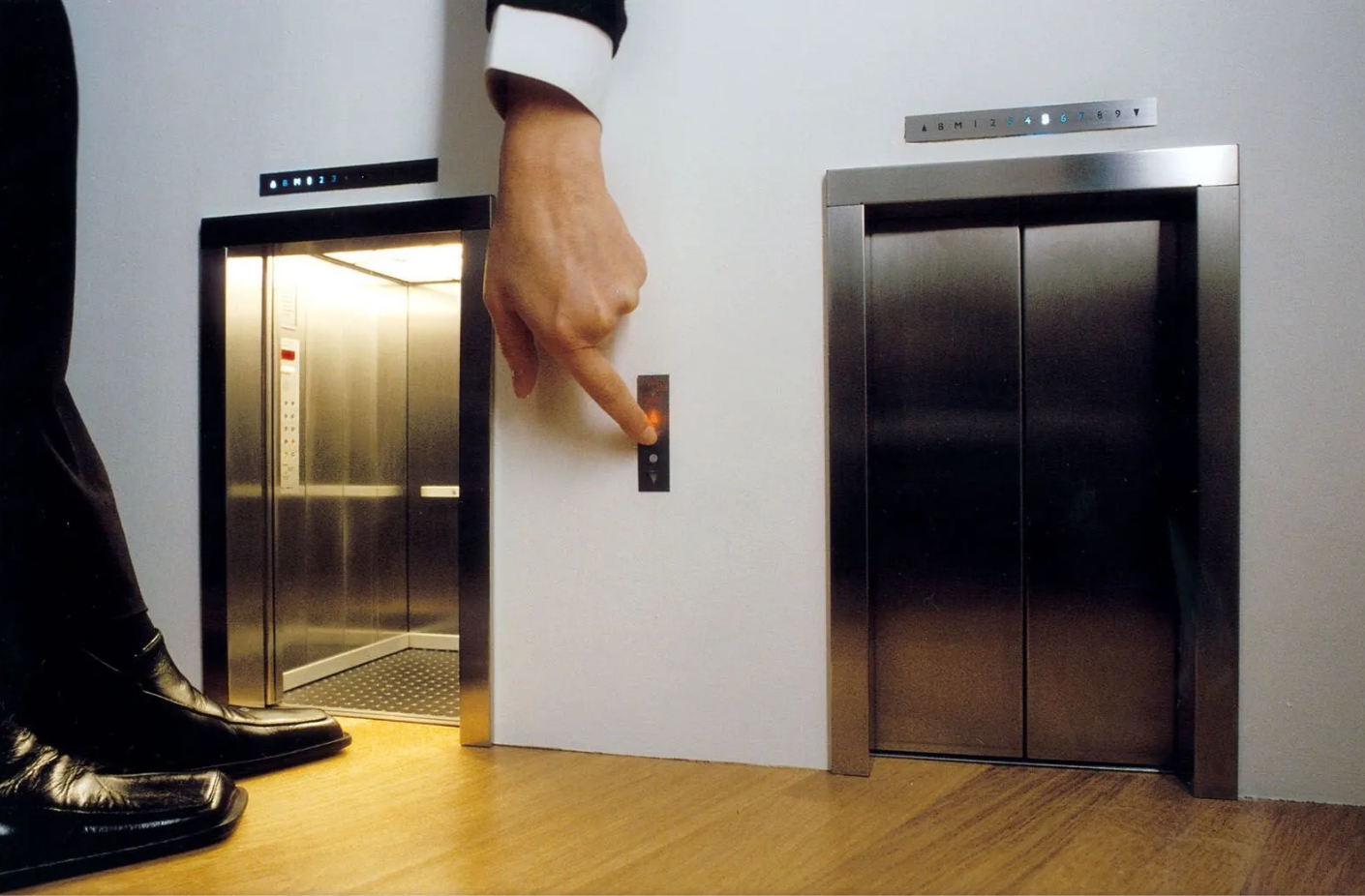
Today, particularly in visual culture, art continues to develop this theme through elements that are “almost but not quite real”—through shifts in scale, proportion, and function; through disruptions in the reliability of time and space; through transformations of body and identity. Alienation from the familiar and the sudden emergence of what has been repressed reveal what we might call the hidden violence of the normal.
For the uncanny, it would be fair to say that in art it represents “the aesthetics of small deviations rather than grand explanations.” It shifts space by a millimeter and allows what has been repressed to leak into visibility. When used well, the theme produces sensory and intellectual alertness; when used poorly, it collapses into clichés and empty tension.
Considering the uncanny’s association with uncertainty and unease, another aesthetic domain appears almost at the opposite end of the spectrum: kitsch. At this point, it becomes important to distinguish between kitsch works that suppress the uncanny by promising emotional comfort and easy consumption, and uncanny kitsch-like works that expose artificiality and produce disorientation and unease in the viewer.
For example, many themed urban sculptures appearing today are in some sense both kitsch and uncanny. The artist Komet once described them as a kind of “Turkish Pop Art,” noting their creative potential. Other artists and critics, however, have described them as absurd, kitsch, and entertaining but not art; a denial of Michelangelo; lacking Pop Art references; neither art nor craft; or reminiscent of Banksy’s dystopian family theme park Dismaland.
Kitsch typically presents familiar images in an easily consumable way. Aesthetically it tends to be overly polished, overly decorated, excessively smooth—in other words, it rarely takes risks. In this sense, unlike the uncanny, which produces uncertainty, discomfort, and a loss of mental clarity, kitsch exaggerates clarity. Like these sculptures, it conveys the message: “Nothing is uncertain; everything is exactly as it appears.”
Yet the contradiction begins precisely here, revealing the three dimensions described by Jentsch: extreme familiarity, false realism, and the suppressed sense of artificiality.
Kitsch is so familiar that it becomes almost a caricature of the emotion or situation it represents. This excessive familiarity can appear strange, artificial, even faintly unsettling. When we look at such an object—one that seems to shout “there is absolutely no problem here”—we may experience a momentary loss of orientation. Once we recognize this, the object stands before us detached from its context, both overly familiar and unmistakably artificial—sometimes even spraying water at us.
It becomes almost a kind of psychological automaton—an object that is technically lifeless yet strangely animated—and therefore uncanny.
Perhaps this is exactly what we mean today when we say “this place is not safe.” It is the moment when the overly familiar suddenly shifts out of place, leaving us suspended in that peculiar interval where we feel neither completely secure nor entirely threatened.
* Title referencing the first short story collection by Sine Ergün, published in 2010 by Yitik Ülke Yayınları.