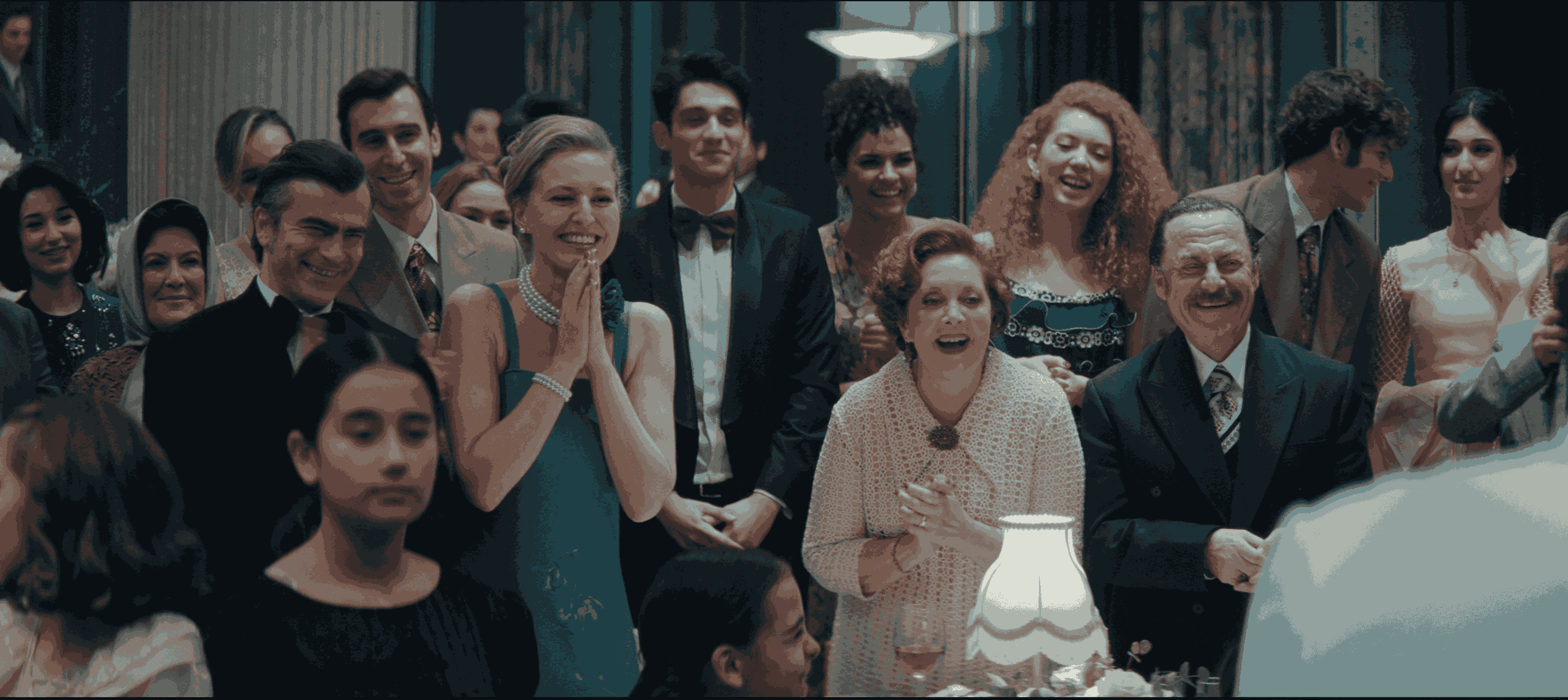




In Orhan Pamuk’s The Museum of Innocence, objects are not decorative ornaments standing at the margins of the story; they are silent beings that carry the weight of love, time, and memory. In the Netflix adaptation as well, the moment these items appear on screen, they do not merely become visible; they begin to remember. A shop window, a bag, a key, a cup, a bicycle… Each one holds within it the traces of the moments Kemal and Füsun lived—or precisely could not live.
In The Museum of Innocence, objects remain silent, but they do not forget. Every time Kemal fails to keep Füsun within his life, it is no coincidence that he keeps the objects she touched. Here, the memory of a bag is nourished not by a future to be possessed, but by a lost possibility. The key to the Merhamet Apartment points not only to a door, but to a closed life. The crystal sugar bowl preserves not sweetness, but pain that grows inward. The yellow shoes remember not the places reached, but the roads abandoned time and again. The cup carries less of the warmth of tea than the trace of the first silence. The bicycle is kept from moving forward, but to look back.
In The Museum of Innocence, love is told not through words, but through the patience of objects. And perhaps for this very reason, the heaviest burden of the story is carried not by people, but by the things they leave behind.
An Irreversible Memory
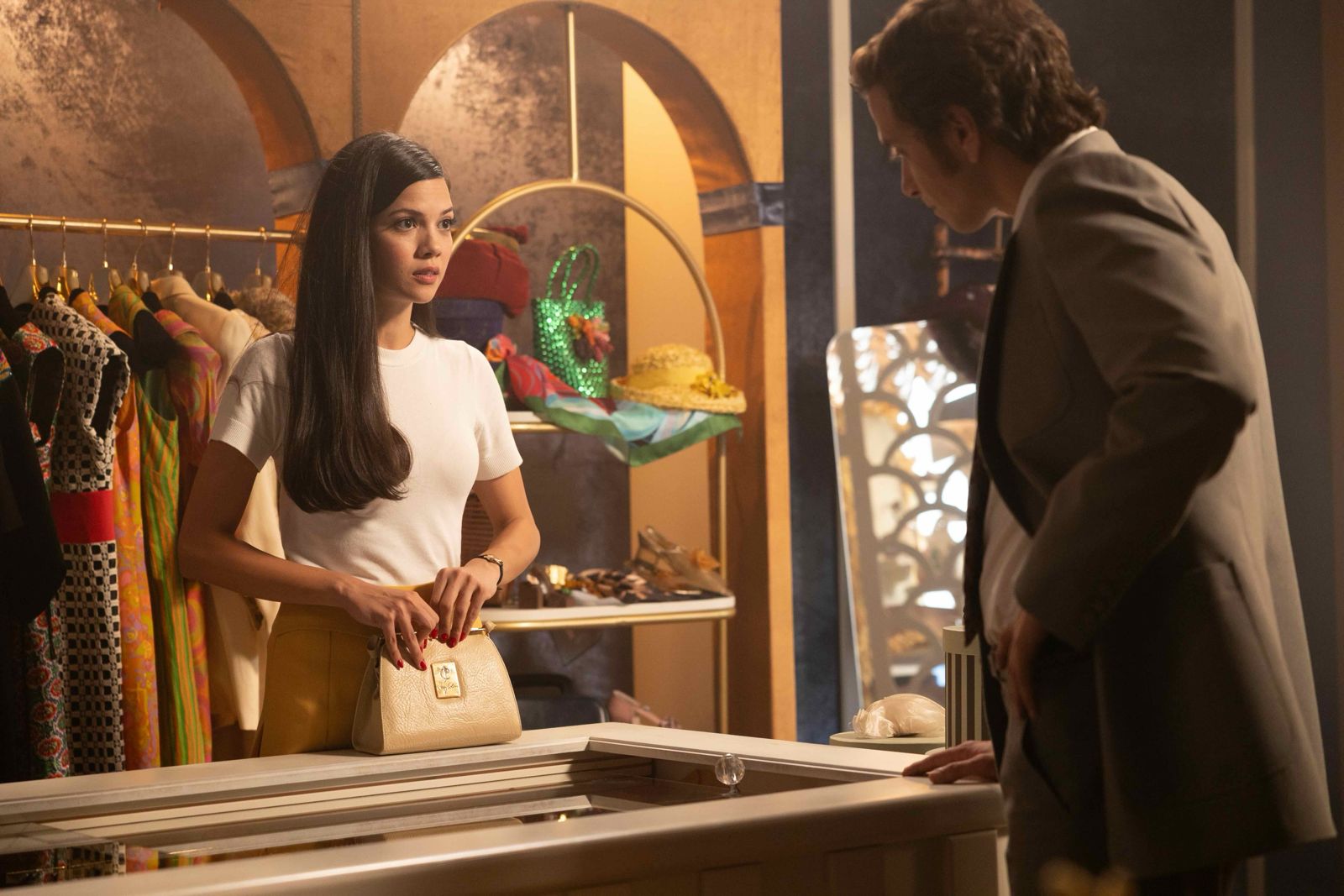
A shop window, a bag, and an unexpected encounter… the first meeting of Kemal and Füsun. This moment, which begins in the shop where Füsun works, is the silent point of departure at which two lives will become irreversibly entangled.
The Jenny Colon bag is not yet an object of use; it belongs to a moment that will be remembered in the future. As Füsun’s hands rest on the bag, the object touches a body for the first time and begins to form its memory precisely at that moment. This is a memory not yet possessed, not yet carried, but already loaded. In The Museum of Innocence, objects do not store lived moments; they store unlived possibilities. This bag is one of them. The bag bought for Sibel changes direction with Füsun’s gaze. The object’s memory breaks here; not who it will belong to, but whom it will not belong to is determined. From then on, the bag will carry the trace not of a purchase, but of a deviation.
The space silently supports the memory of objects. The dresses on the rack, the accessories on the shelves, the colors imbued in the boutique… all stand as witnesses. No one speaks, but everything is recorded. Because in this world, memory is written not with words, but with surfaces that are touched, glass that is looked at, unfinished gestures.
As Kemal’s body leans toward the shop window, his memory begins to accumulate without his awareness. This moment is like the first record of countless objects that will later find a place in the museum: a bag, a gaze, a hesitation… This is precisely how the memory of objects works: by turning the most ordinary moment into an irreversible memory.
The Memory Of The Threshold
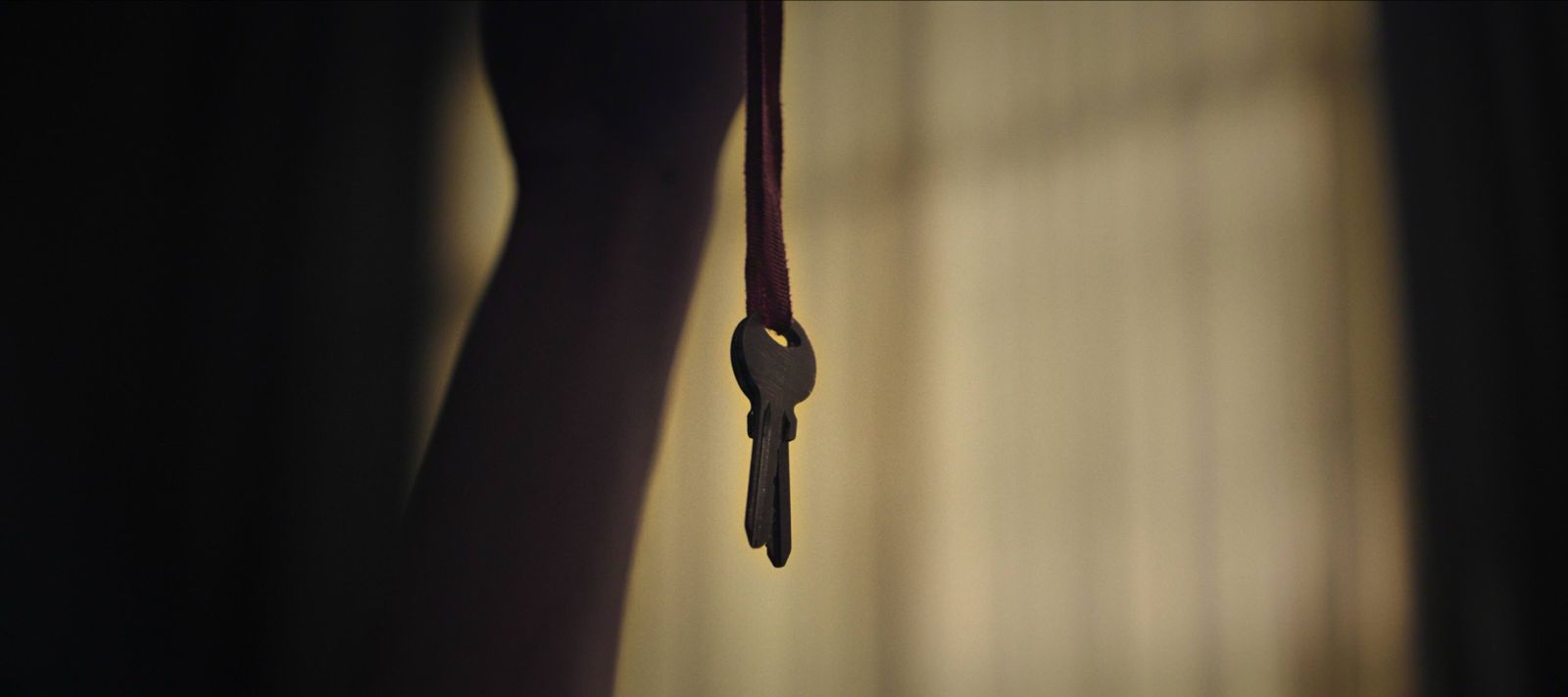
What appears in this frame is not merely a key, but the threshold of memory. One of the most concentrated echoes of the novel’s profound relationship with objects in The Museum of Innocence finds its counterpart in the series through this image: the key to the apartment in Merhamet Apartmanı. The key hangs from the end of a red ribbon. This red evokes not so much passion as attachment. Not blood, but bond. Not belonging to a place, but returning to it again and again. The door that opens to Kemal and Füsun’s secret encounters is also the door to the first space where Kemal begins to collect objects. In that sense, the key unlocks not only an apartment, but the very idea of collecting.
In The Museum of Innocence, objects seem not to remember; yet in truth, they are the ones who remember most. This key is no exception. In every pocket it touches, in every lock it turns, it holds traces of waiting, repetition, silent agreements. When the door opens, there is not yet love inside, but there is an emptiness ready for the marks love will one day leave behind. The key is the first witness to that void.
The red ribbon lifts the key out of the realm of the ordinary and endows it with something almost ceremonial. It is no longer a house key, but the key to a hidden time. A life that exists outside official narratives, outside engagements, outside the order established before society’s gaze. It marks the threshold of the “hidden” life Kemal will live with Füsun, running parallel to the “proper” life he is meant to build with Sibel.
From this moment on, objects no longer remain silent for Kemal. A glass, a dress, a key—each begins to stand in for what cannot be fully lived. That is why the key to Merhamet Apartmanı matters: because even if Kemal cannot hold on to Füsun, he can hold on to the object that opens the door to her. And, in time, he allows objects to take the place of love itself.
This key does not merely open a door; it reveals where a life has been locked away. The love preserved in the memory of objects begins precisely here: in the crack of a doorway, at the end of a red ribbon, with an irreversible silence.
Time Accumulated On A Surface
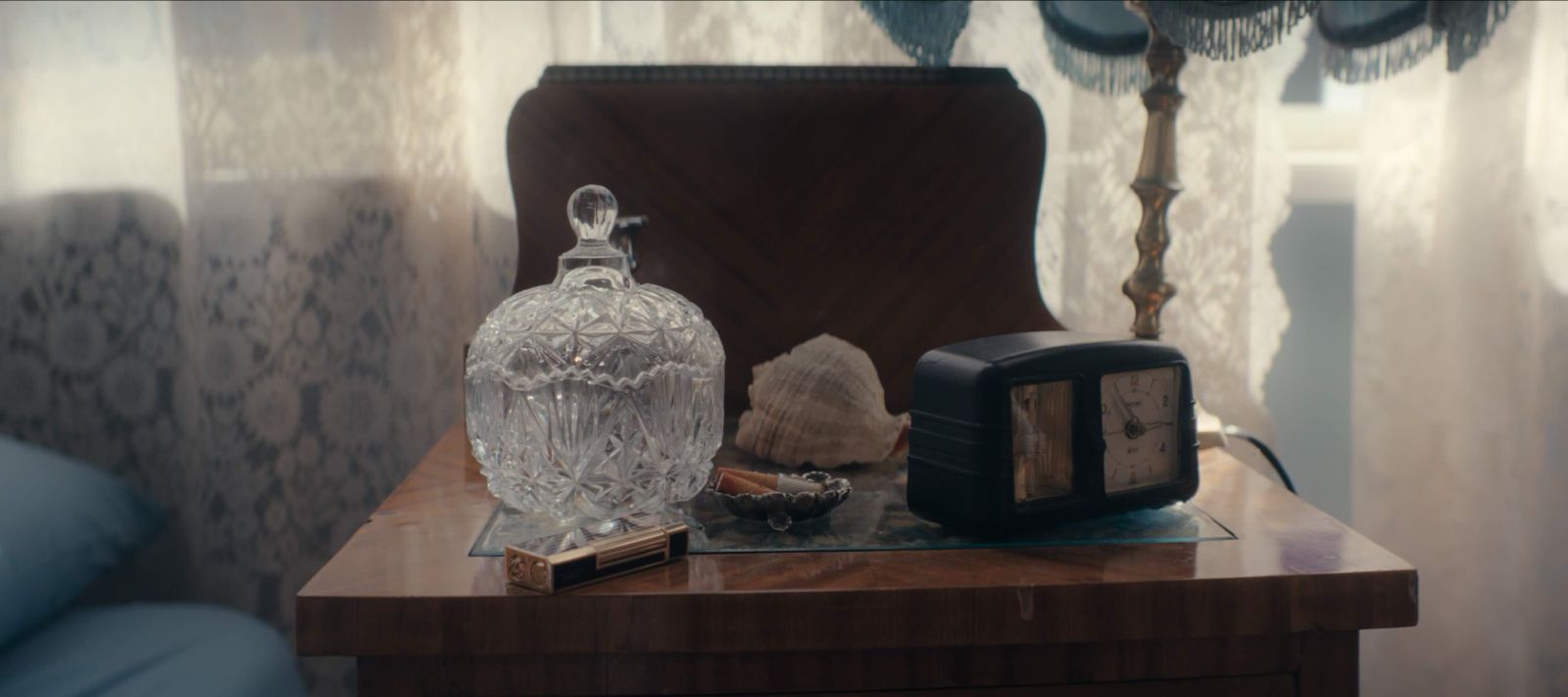
This bedside table is not a piece of furniture; it is a surface of accumulated time. In the world of The Museum of Innocence, objects speak by remaining silent; here, too, each piece carries the memory of what Kemal passes through but cannot say.
The crystal sugar bowl is innocent at first. Its transparency evokes the reassuring rhythm of domestic order. But memory does not remain fixed. Later, when Kemal puts the lid of the sugar bowl into his mouth, this object will cling not to sweetness but to pain. The sugar bowl becomes not a container of sugar, but of ache.
The lighter beside it leaves its mark not with fire, but with repetition. As the cigarettes Füsun lights and extinguishes multiply in the ashtray, the lighter records the same movement each time: a beginning, a giving up, a waiting. The cigarette butts are kept because the smoke disperses, but the object remains. The seashell is silent, but it is full. The sound Füsun listens to by holding it to her ear is not the sea itself, but the hum of absence. The shell’s memory carries the moment listened to by someone else. For Kemal, this shell is the echo of an unheard sound—the remnant of a moment that touched another’s head.
The clock is the most merciless witness on this bedside table. It does not show time; it teaches waiting. As the hands move forward, Kemal stands still. With every glance, the clock does not bring Füsun, but forces him to think of her. Time here does not flow; it folds, piles up, grows heavy. The clock is an object that stores the moments when the beloved does not arrive.
Everything standing on this bedside table together forms a museum:
a lid opening onto pain,
traces sealed with fire,
a sound listened to by another,
and a time that waits endlessly.
In Kemal’s story, objects preserve not what has been lived, but what could not be lived. This bedside table does exactly that: by waiting silently, in the night, in a bedroom.
Things Taken From Their Places
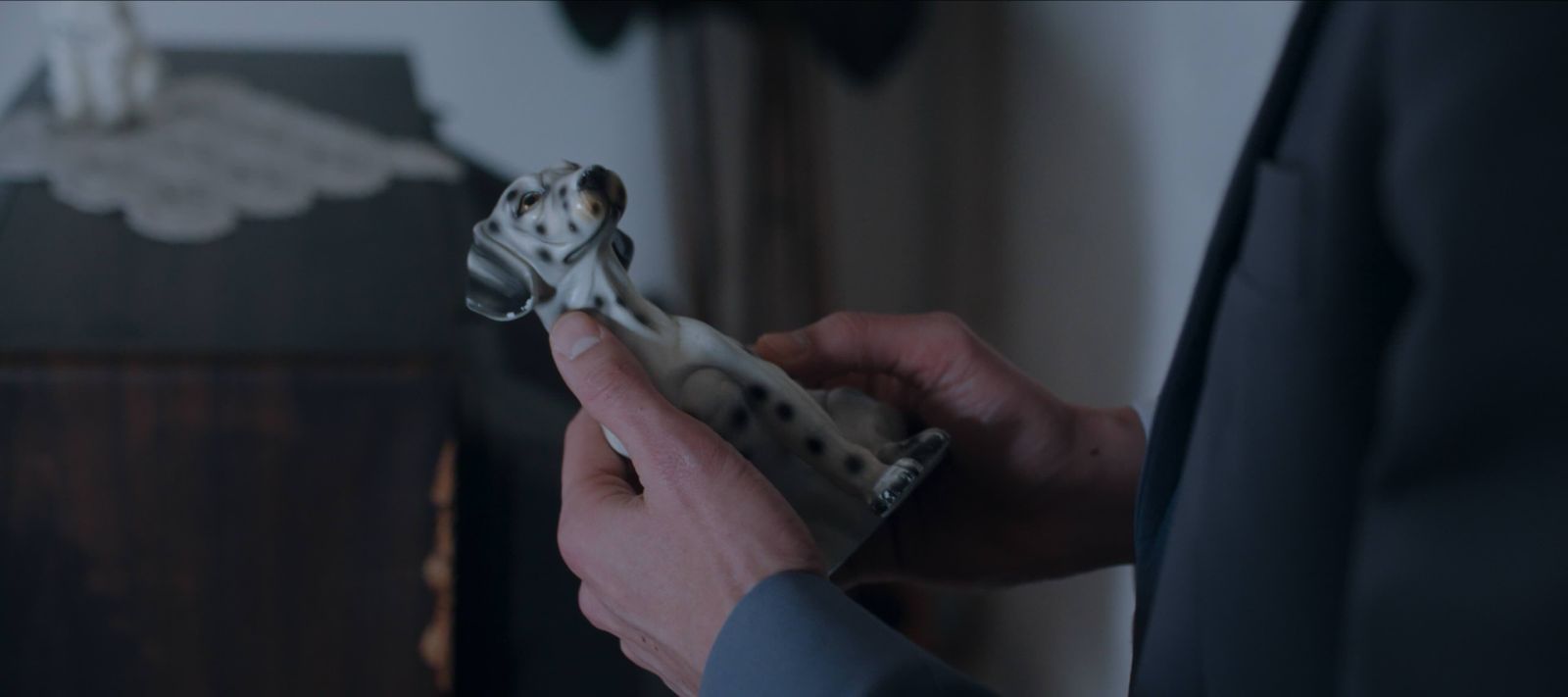
At first glance, this figurine looks like an innocent ornament; but in the world of The Museum of Innocence, no object exists merely to decorate its place—especially if it has been taken from its place.
While the dog figurine sits on top of the television in Füsun’s family home, it carries the silence of the order to which it belongs. It is like a presence everyone in the house has grown accustomed to, whose absence is not noticed—until Kemal picks it up and takes it to his own home. The object’s memory awakens precisely here: at the moment it is displaced. Because in The Museum of Innocence, objects remember not the moment they are taken, but the moment they are diminished from where they were.
Füsun’s father saying, “Where is that dog, it looked so nice there,” is actually the noticing of the void left by an object. The dog figurine is no longer just an ornament; it is a witness torn from the order of the home. Kemal, as always, does not take direct ownership; instead, he establishes an order to replace what is missing. He buys two new dog figurines, gives them as gifts, and places them on top of the television—as if everything could be as before.
But the memory of objects does not accept substitution. The new dogs do not fill the place of the old one; they only carry the strangeness of having been put in its place. And the later separation of one of these two dogs in the course of the story is no longer a coincidence. The object knows the fate of the relationship in advance. Two figures standing together yet not belonging—silently representing Kemal and Füsun’s being side by side but never truly together.
The Space Of Remembering
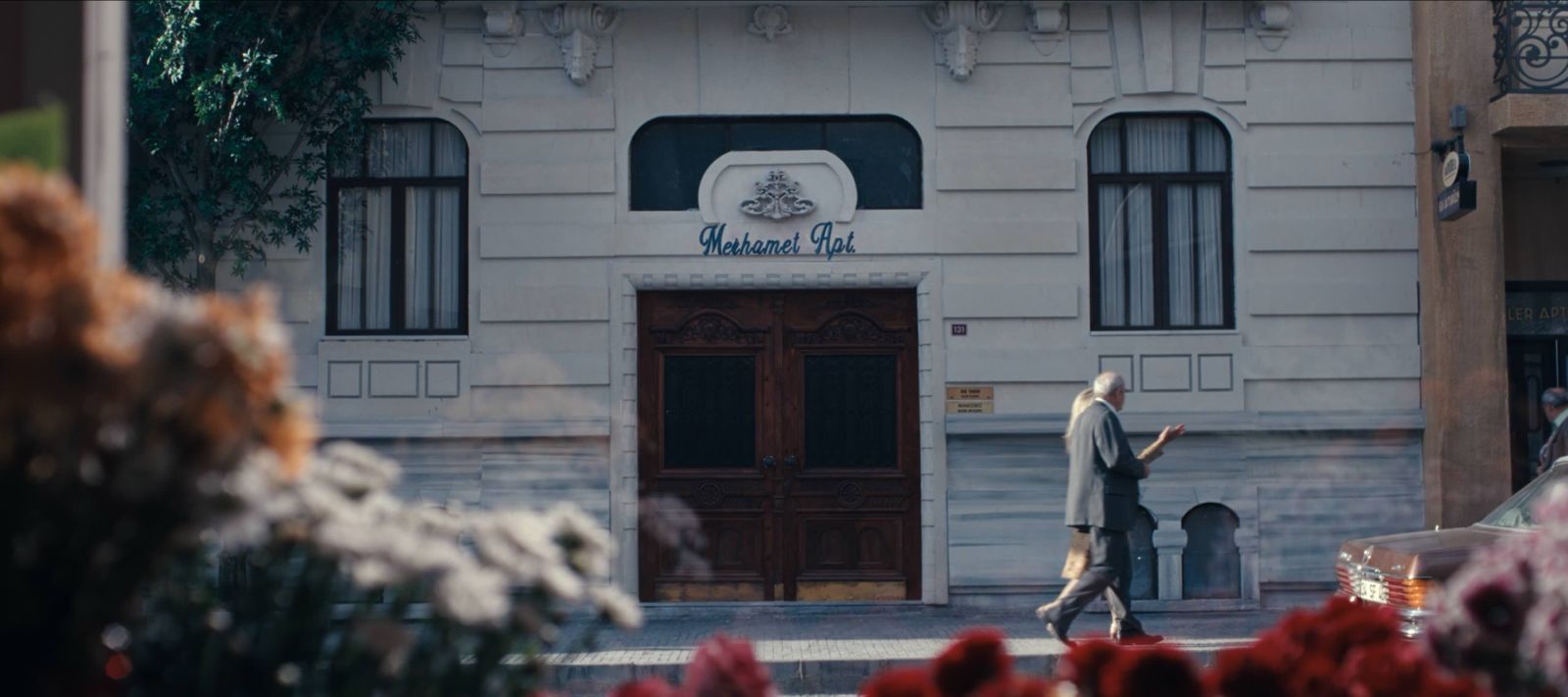
This building is not an address; it is the architecture of remembering. In the world of The Museum of Innocence, the Merhamet Apartment is a place where objects, not people, reside for long stretches of time. Everyone who passes in front of its door changes; the building remains. Because it is tasked with keeping what happens.
The door of the Merhamet Apartment is the face that completes the key’s memory. Not a passage that opens and closes, but a threshold returned to again and again. The wood of the door knows waiting. Days entered in haste, nights exited in silence, small packages carried without being seen… This door does not know the names of what is lived inside, but it bears their weight.
The façade of the building is calm during the day. Life flows, people walk, cars pass. But this calm is deceptive. Because the Merhamet Apartment is a depot of emotion hidden behind ordinariness. Time accumulates here. Doors opened at the same hours, lights turned on in the same windows, stairs climbed with the same steps… All keep the trace of a repeating life.
The memory of this building is more faithful than Kemal’s memory. He forgets; the building does not. It records Füsun’s arrivals, departures, and non-arrivals. It knows from the very beginning that the objects kept inside will one day turn into a museum. Because the Merhamet Apartment is established from the outset as a temporary place: a place that will not be stayed in, yet cannot be abandoned.
Its name is “Merhamet” (Compassion), but it shows compassion not to people, but to objects. It protects them, keeps them, allows them to pile up silently. Love is not lived in this building; it is accumulated. What remains behind the door is not happiness, but the traces that take its place.
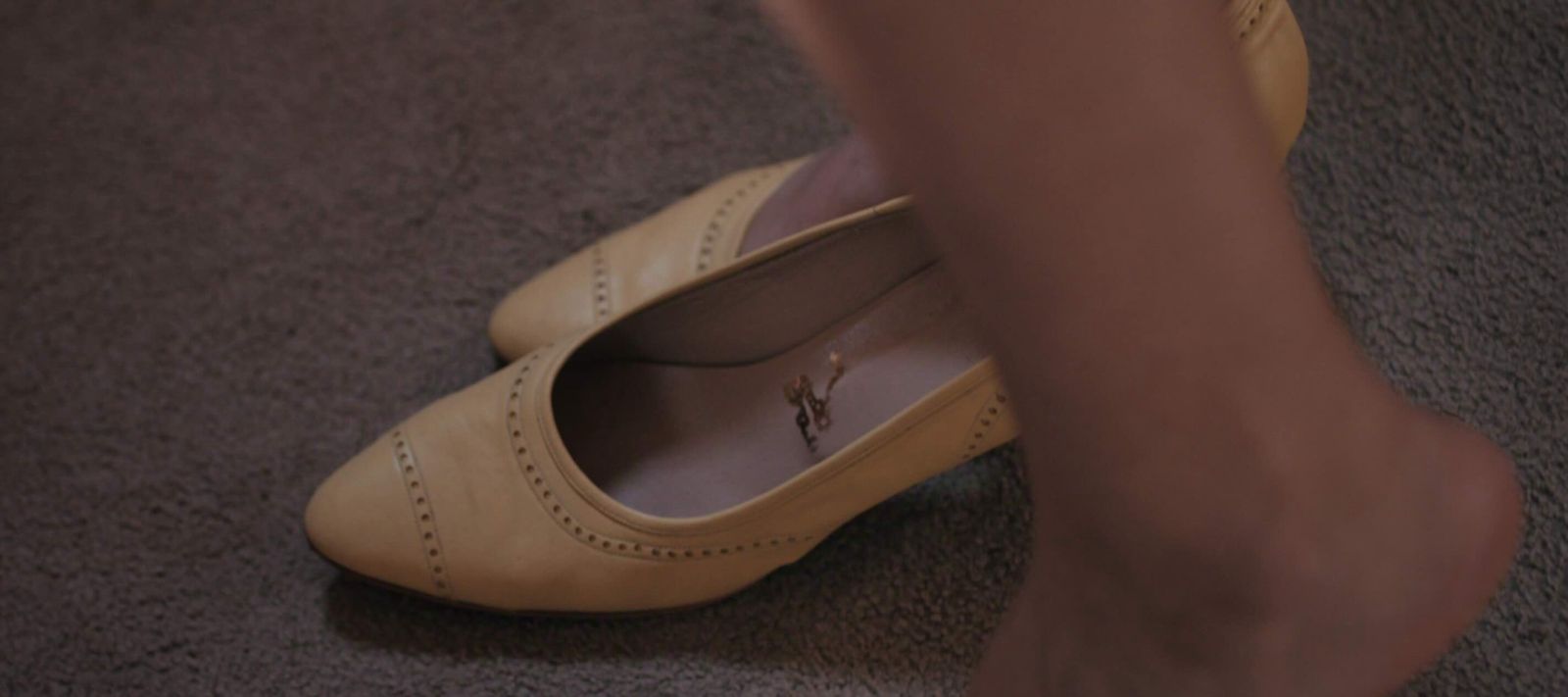
These shoes exist not to walk, but to store what remains of the road. A shoe remembers the road departed more than the place arrived at. Füsun’s yellow shoes do exactly this: they accumulate not where one has gone, but what one has left behind. With these shoes, one leaves the house—into the morning light, into the afternoon shadow. Through the same door, with the same hesitation. The streets do not change; only what is thought while walking changes. The sole of the shoe rubs not against stones, but against time. What seeps into it is not dust, but waited hours, postponed decisions, unspoken sentences. The yellow color draws the eye at first glance; yet on these shoes, yellow is not bright. It is not like the sun, but like a worn light—the color of something that has stood in the same place for a long time. Neither fully alive nor completely faded. Like the state of transience in Füsun’s life: neither fully leaving nor fully staying.
For Kemal, these shoes do not tell of Füsun’s departure, but of the emptiness left behind after her. The shoe continues to exist even when separated from the body. It stays where it is taken off, waiting for its owner. But this waiting is not hopeful; shoes know that return is not always possible.
A pair of shoes is the walked part of a life. In their heels are hesitations, in their soles repetitions, in their insides unspoken words. They remember the most familiar state of love: walking side by side, and never arriving at the same place.