
One of the most influential global art gatherings in the Arab world today, Art Dubai—launched in 2007—also marks one of the starting points of the institutional visibility of Turkish contemporary art in the region. The most important step that initiated this visibility was Galerist’s participation in the fair from Istanbul in 2008. Founded in the early 2000s, Galerist is also one of Turkey’s pioneering representatives on the global art fair stage, having become the first Turkish gallery to be accepted into Art Basel in 2006. In the 2008 edition of Art Dubai, the gallery presented a selection of works by Haluk Akakçe, Mustafa Hulusi, Can Sayınlı, Jørgen Evil Ekvoll, and Erinç Seymen. Undoubtedly, this participation marked the starting point of the circulation of Turkish artists in the Gulf.
Galerist’s presence in this geography continued uninterrupted throughout the 2010s. In the 2013–2014 editions of Art Dubai, the gallery took part with works by Haluk Akakçe, Ali Emir Tapan, Elif Uras, and Nil Yalter, and from 2017 onward it expanded this line through Abu Dhabi Art. With intergenerational presentations ranging from Semiha Berksoy to Nuri Kuzucan and Lara Ögel, the gallery appeared regularly. In the 2025 edition of Abu Dhabi Art, it met audiences with a comprehensive presentation reflecting the multi-layered structure of Turkish modern and contemporary art.
Galleries Participating in the Gulf
The institutional representation of Turkish artists in these art centers expanded throughout the 2010s, building on the line that began with Galerist in 2008 and growing with the participation of new galleries. Dirimart established one of the earliest and most enduring lines of representation by regularly taking part in Art Dubai and Abu Dhabi Art from 2009 onward. Zilberman began its presence with Abu Dhabi Art in 2012 and, from 2015 onward, became one of the most consistent Turkish participants in Art Dubai. x-ist has regularly taken part in Art Dubai since 2011, bringing the works of the contemporary generation of artists to audiences.
SANATORIUM has been among the regular participants of Art Dubai since 2017, becoming one of the most visible representatives in the region. Anna Laudel has positioned itself among the new generation of galleries by participating in Art Dubai and Abu Dhabi Art since 2022. Pilevneli made a new media–focused opening by participating in Art Dubai with the digital works of Refik Anadol. Pi Artworks also represented Turkish galleries at Abu Dhabi Art.
New Fairs in the New Year
2026 stands out as a threshold year for contemporary art in the Gulf. Art Basel Qatar and Frieze Abu Dhabi are turning the region into one of the new centers of the global art calendar. Pilot, the only gallery from Turkey participating in the Art Basel Qatar 2026 edition, will take part in the fair with works by Halil Altındere.
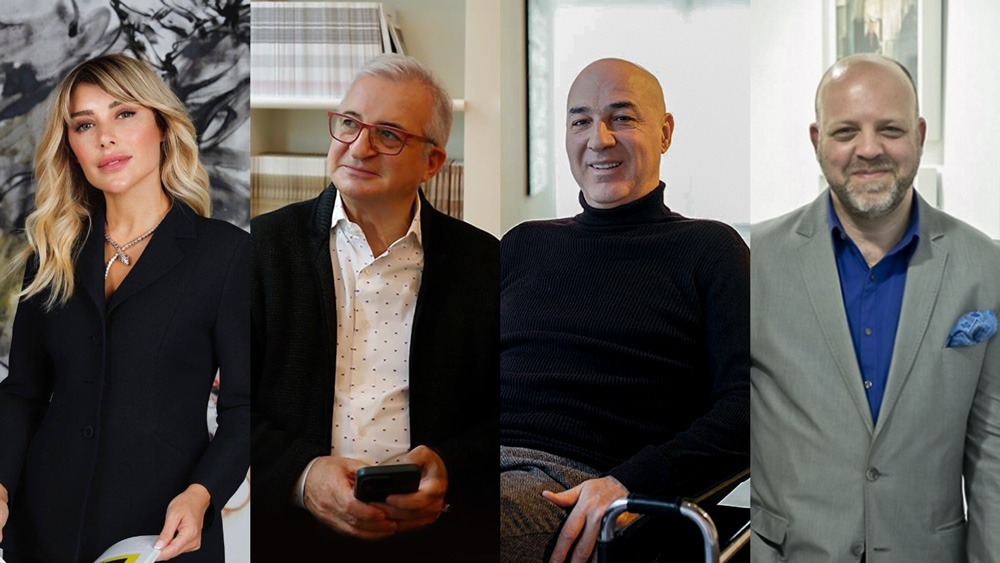
In this rapidly redefined art geography, the connection that Turkish contemporary art has established with the Gulf is deepening not only through fair participation but also through the permanent presence of galleries in the region. One of the earliest and most defining examples of this relationship is Sevil Dolmacı Dubai, the first Turkish gallery in the region. In this feature, we spoke with Sevil Dolmacı about how the transforming contemporary art environment in the Gulf differs from that of Turkey and Europe. We also asked the founders of Zilberman, Dirimart, and x-ist—galleries from Turkey that have participated in Art Dubai in various years—about their fair experiences and the new relationships they have established with the region.
Opening to the Gulf Is Not a Break, but a Matter of Circulation
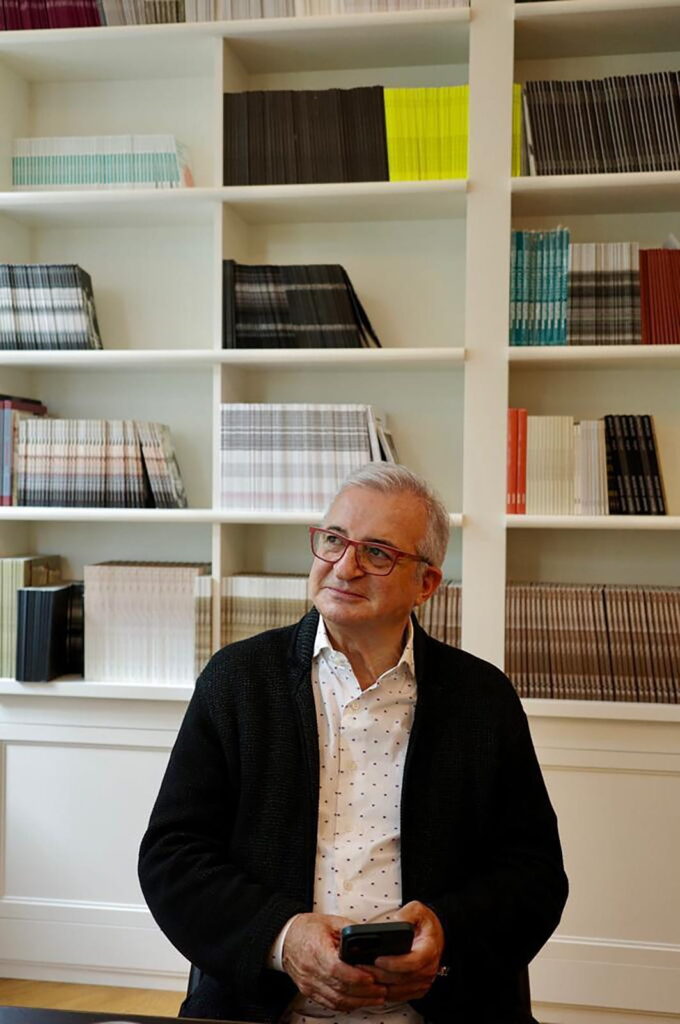
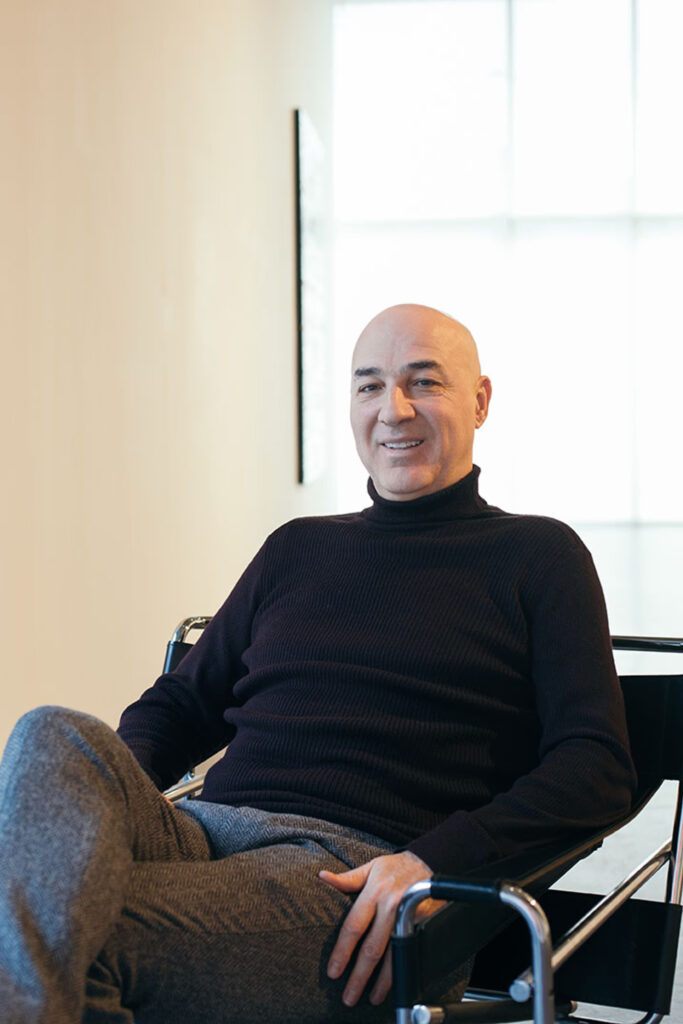
Moiz Zilberman, Founder of Zilberman Gallery
What was your motivation for taking part in art fairs in the Gulf countries, especially those held in Dubai? What opportunities did this geography offer you?
Our approach to fairs has never been limited solely to the aim of being visible in a particular geography. From its founding onward, Zilberman has moved forward as a structure that circulates across different geographies, is reread according to context, and tests its own position each time. The Gulf region is a natural part of this international circulation. I can say that our participation in Abu Dhabi Art Fair and Art Dubai has taken shape not as a one-off or as a search for a new opening, but as a continuation of the gallery’s long-term international experience.
Dubai, in particular, positions itself as a space that brings together audiences, collectors, and institutions from various geographies. Unlike the modes of viewing we are accustomed to in Europe and Turkey, I would say that there is a broader cultural intersection here. It points not only to a regional art market, but to a circulation established between the Middle East, North Africa, South Asia, and Europe. The most important opportunity these fairs offer is that they do not address a single audience profile. Within the same context, it is possible to establish direct contact both with local collectors, with international audiences who have lived in the region for a long time, and with institutional representatives. This diversity allows the works of the artists we represent to encounter different modes of reading.
How does Zilberman Gallery’s approach, which makes space for conceptual and critical productions, find a response in the Gulf art market compared to Turkey and Europe?
Zilberman’s approach of making space for conceptual and critical productions is part of an editorial attitude that spans many years. While this approach in the contexts of Turkey and Europe is often read through art-historical and theoretical references, in the Gulf geography it comes into contact with different audience profiles, and reception is shaped more through direct engagement with the content of the work. Here, the viewer tends to focus not on placing the work within a predefined framework, but on understanding how the work speaks to the present. This makes it possible for critical productions to be addressed not within an abstract theoretical field, but through the relationship they establish with current issues.
The works of the artists represented by Zilberman find resonance to the extent that they are able to establish a universal language in this context. Political, historical, or personal layers are evaluated within a broader field of reading, without being confined to a local context. This shows that critical productions do not belong only to specific geographies; when the right context is established, they can develop meaningful relationships with different audiences. In this respect, the Gulf experience gains importance not as a space that redefines the gallery’s conceptual line, but as a space that makes it visible in another context.
The Gulf as a New Context for Artists, Not a Market
Hazer Özil, Founder of Dirimart
What were the main reasons that prompted Dirimart to seek visibility in the Gulf region? Where do you position this market relative to Turkey and Europe?
In fact, our interest in the Gulf region stems in part from the very lively cultural movement that has emerged there in recent years. Museums, newly opened institutions, collectors, biennials… all of these form a very dynamic structure. As Dirimart, we follow this energy closely and believe that it offers a truly meaningful field of engagement for our artists.
When we compare it with Turkey, production here is very strong, and there is also a very deep intellectual ground. In the Gulf, on the other hand, a space is forming where this production can find resonance, meet new audiences, and be read at different scales. Europe is still an important point of reference, but it is no longer the only center; the art world has evolved into a much more polyphonic, multi-centered structure.
For us, being visible in the Gulf means, rather than a “market expansion,” placing our artists’ production into circulation across different contexts and establishing new dialogues. I believe that the contact established with this geography will be very nourishing in the long term for both artists and audiences.
How do the works of the international artists you represent relate to collectors in the Gulf? Are acquisitions in the region based more on a long-term collecting approach?
I can say this very clearly: the interest we encounter in the Gulf is not superficial or focused solely on “trends.” On the contrary, many collectors are genuinely interested in the thinking behind the work and in the integrity of the artist’s practice. The works of the artists we represent also find strong resonance in this sense, because most of them are productions that unfold over time and require deep, layered readings.
We see that in recent years, a more conscious, research-oriented, and long-term-thinking collector profile has formed in the region. There is an approach that considers a work not merely as an aesthetic or decorative element, but as part of a world of ideas. This enables a natural connection with the artists we represent. Of course, as in every geography, different motivations exist here as well, but overall, I can say that collecting practices in the Gulf are evolving into a more institutional, more sustainable, and more long-term structure. This is very valuable for artists, because it makes it possible for production to turn not only into something for today, but into a dialogue that unfolds over time.
Daryo Beskinazi
Sales Have Slowed in Europe, Movement Has Shifted to the Gulf
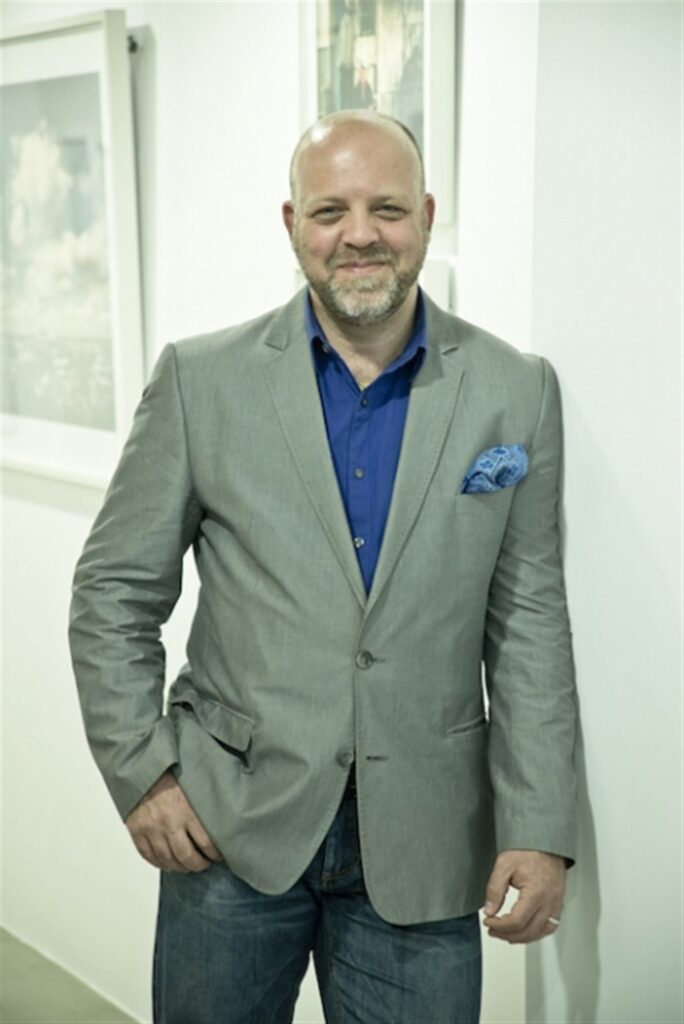
Daryo Beskinazi, Founder of x-ist
What were the main factors that led x-ist to take part in the Gulf region? Do you see this market as a new opening for you, or as a natural expansion?
The Gulf region is not a newly discovered area for x-ist; on the contrary, it is an ecosystem we have been regularly involved in since 2012, where we have established collector relationships and know it well. In recent years, the marked slowdown in sales at Europe-based fairs, and at the same time the shift of European collectors’ acquisitions to fairs in the Gulf, has been one of the important factors accelerating this process. The strong European expat population in the region allows for the collection of habits and aesthetic references to develop on a ground quite familiar to us. When tax advantages and more flexible commercial conditions are also taken into account, the Gulf has become a strategic and natural area of expansion for us.
How do you evaluate the visibility of young and mid-career artists in the Gulf art environment based on your own experience?
Since its founding, x-ist’s core vision has been built on supporting young artists and placing them into international circulation. For this reason, we prefer to read the Gulf art environment especially through young artists. At Gulf fairs, we observe that the productions of young artists are followed with curiosity and gain visibility quickly. The presence of a European expat population and European collectors in the region creates an audience profile that is open to contemporary production. This turns the Gulf into not only a sales area for young artists, but also a strong platform on which their international careers can be built.
When you think about the art market in the Gulf region on a global scale, what do you see as the key elements that make this geography decisive?
The most important element that makes the Gulf region decisive on the global art map is the balanced way in which rapidly developing economic power meets cultural investments. Museum projects, biennials, art fairs, and private collections are not focused solely on prestige; they are also directed toward the production of knowledge and the creation of archives. In addition, the multicultural structure of the region allows art practices from different geographies to be read together. Today, the Gulf has become one of the most active intersection points of global art circulation, with its economic power, cultural investments, and international collector profile.
Sevil Dolmacı
Visibility Here Means Not Opening an Exhibition, but Connecting in the Right Way
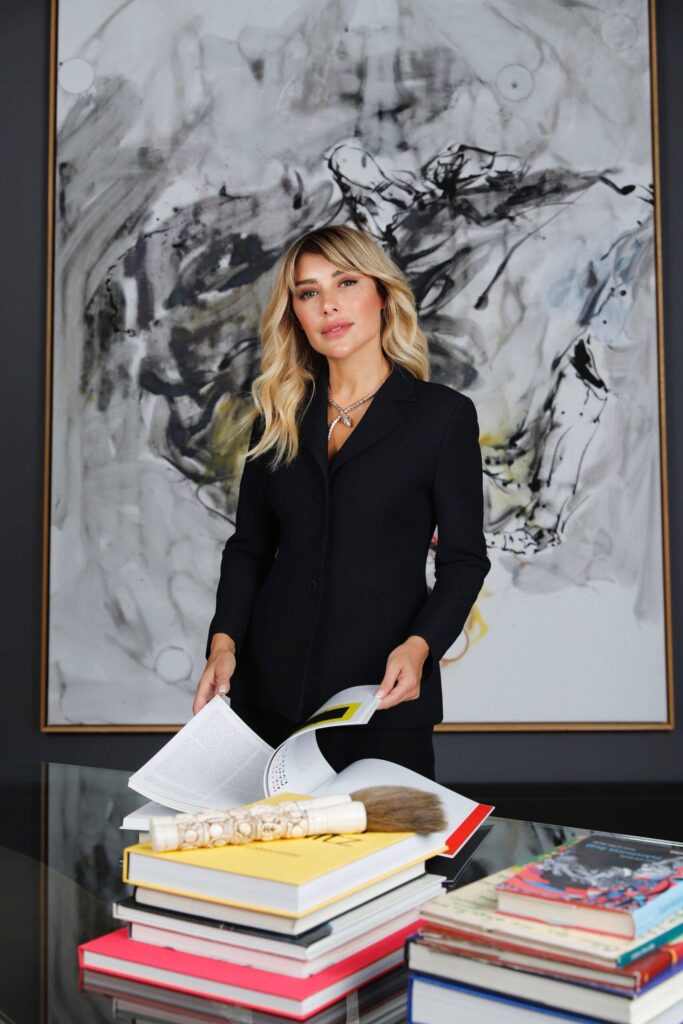
Sevil Dolmacı
Sevil Dolmacı Dubai, the first gallery from Turkey to establish a permanent presence in Dubai’s international art scene… Opening its doors in 2023 in the Dubai Design District, the gallery brings the productions of artists from Turkey to the Gulf. Among the gallery’s exhibitions are Elvan Alpay’s first solo exhibition in Dubai, Game Over. Let’s Stop Now., and Ahmet Oran’s exhibition titled Unfolded Layers, while regular group exhibitions also establish a continuous line of contact with the regional audience. Sevil Dolmacı summarizes this approach by saying, “For artists from Turkey, Dubai offers a ‘neighbor yet different’ field of reading. When framed correctly here, the universal language of contemporary production in Turkey can become much more visible.” We spoke with Sevil Dolmacı, who hosts well-known figures of the international contemporary art scene in her space in Dubai, about the region’s transforming contemporary art environment.
As someone on the inside, how would you describe the “rapidly rising art market in Dubai” in recent years?
If I had to describe the rise in Dubai in a single word: institutionalizing speed. Here, the market is not growing only through “sales volume”; it is also growing through infrastructure, logistics, legal framework, exhibition standards, and international networks. Dubai’s advantage is its ability to bring regional capital and global vision to the same table. This allows the gallery ecosystem both to function more “like a business” and to become more legible for international players. Can this momentum be balanced with artistic depth, or are market reflexes more dominant?
Two rhythms are working at the same time in Dubai: the fast market reflex (new collectors, quick decisions, high visibility) and the search for depth (institutional collections, museum investments, the strengthening of curatorial language). Yes, the market reflex can be dominant; but this is not a “negative” thing. Because Dubai is experiencing, in a much shorter time, a process that in many cities in the art world unfolds over years. The real critical point here is this: within speed, the institutions and galleries that can maintain quality become permanent. There are short-term trends, but there are also those who build long-term memory. This is the direction of our strategy and positioning.
What does “being visible” mean in this geography? How does Dubai differ from Turkey and Europe?
In Dubai, being visible does not mean simply opening an exhibition; it means “connecting correctly” within the ecosystem: the right location, the right timing, the right network, the right language of communication. In Turkey and Europe, gallery practice proceeds more through a historical cultural accumulation and a more established critical tradition. In Dubai, because the system is more “new,” visibility is defined through building trust (consistency, delivery, keeping one’s word), international standardization (documentation, provenance, logistics, after-sales processes), and the collector experience (VIP relations, special presentation language, fast communication). Dubai is a market that expects from a gallery not only “exhibitions,” but also consultancy, curatorship, production, installation, and project management.
The collector profile in the region: long-term collecting or speculation?
In my view, the collector profile consists of three different categories. First, those focused on cultural prestige and legacy: those who want to build a long-term collection and who care about the social and cultural impact of art. Second, those seeking global reference points: they follow the Europe/US scene, but want to be positioned in the region. Finally, the opportunity- and momentum-driven buyers that have increased worldwide in recent years: they can act with a shorter-term, “value increase” motivation. For Dubai to mature, the first two buyer profiles need to become more widespread. In short, speculation is not unique to Dubai; it exists in every strong period of the global art market. The main difference is that, because the process in Dubai is newer, the waves are felt more clearly.
Who are the main actors shaping the art ecosystem in Dubai? How do fairs/private collections/state policies affect it?
A “multi-actor” structure shapes the ecosystem in Dubai:
Fairs and art weeks: They set the pulse of the market and turn international eyes here.
Private collections and institutional acquisitions: They build “permanent memory”; they influence which artists will have a long-term place.
Real estate and city branding investments: In Dubai, art is a strategic element that increases the value and the narrative of space.
Cultural policies and public projects: On a regional scale, movements toward museum-building, biennials, and institutionalization create a broad “cultural field of attraction” surrounding Dubai.
What is decisive here is this: Dubai sees art not only as “culture,” but also as a city strategy.
How do the artists you represent find resonance in this geography?
The artists we represent find strong resonance here especially for two reasons. First, form and production quality. How? In the eyes of Dubai collectors, craftsmanship, material, scale, and exhibition impact are very important. Second is conceptual clarity. In short, when the story, background, and context are well framed, the buyer connects more quickly. Also, for artists from Turkey, Dubai offers a “neighbor yet different” field of reading. When framed correctly here, the universal language of contemporary production in Turkey can become much more visible.
By which criteria do you determine the selection of artists for Dubai? Which practices establish stronger connections?
International readability: Can the language of the work establish a universal narrative without being confined to local codes?
Relationship with space: In Dubai, architecture and lifestyle create a strong “stage.” The relationship the work establishes with space is important.
Sustainable career: Not just “momentary interest,” but the artist’s long-term line of production and the institutional/collection path they can enter.
Approaches that establish particularly strong connections in this geography: site-sensitive works, a strong material language and sculptural impact, and themes such as identity, migration, memory, and modernization that touch the region yet remain universal. Our strongest artists in Dubai reflecting all of this are Nevin Aladağ and Hiba Kalachi.
A major opportunity for artists from Turkey: direct contact with new collectors and international visibility. The risk area is mispositioning: marketing the artist as “exotic” or only through a “geographical label” causes long-term harm. Our approach is to present the production without confining it to a label.
When you compare Dubai with Europe, the US, and Turkey, what are the strengths and weaknesses?
Strengths: Fast decision-making, high dynamism, international access and network, strong operational standards (logistics, venues, professionalism), and a strong emphasis on the collector experience.
Weaknesses: The lack of sufficient depth in critical writing and historical art memory, the need for established institutions (museum/academy/criticism) to grow stronger over time, and the strength of trend waves (risk of fast rise–fast fall).
Turkey’s strength is very different: artistic depth and production power are very high. Europe’s strength is institutions and history. The US’s strength is the global market mechanism. Dubai is rapidly bringing together some of these components.
Is this market a real alternative to the Western-centered narrative, or an extension of it?
At the moment, it is both. Dubai is still very connected to the Western-centered narrative: global references, museum brands, and professionals come from Europe and America. But at the same time, Dubai is creating a new geographical weight that weakens the West’s claim to being the “single center.” I see this not so much as an “alternative,” but as a polycentric art world. The story is no longer written from a single center; Dubai is one of the strong nodes on this new map.
Do you see the Arabian Peninsula becoming a permanent and influential center?
Yes, I do. Because this geography does not only have money; it also has the will to build institutions and a long-term city strategy. Permanence comes not through fairs, but through the institutionalization of collections, the continuity of museum programs, and the increase of education and critical production.
What is needed for this potential to be sustainable?
Institutional continuity: Museum programs, public projects, transparent and professional management of collections.
A critical ground: Writing, research, publishing—structures that grow art not only as a “purchased object,” but as a “field of thought.”
Strengthening local production: Bringing the region’s own artists and production ecosystem into international circulation; not being only an imported market…
Dubai’s success will be measured not only by sales figures, but by which artists, which institutions, and which narratives become permanent.