
With its 55th edition, the International Film Festival Rotterdam transforms the city into a meeting point for world cinema for eleven days through the bridges it builds between mainstream and independent films, the space it opens for emerging directors, and its city-wide program.
Before moving to Rotterdam a few years ago, the only thing I knew about this city of 655,000—large by Dutch standards—was its film festival. It is one of those rare festivals that can be summed up in a single phrase. Now, as I complete my third year in our “ugly duckling” city, the festival’s place in my mind has become clearer: every year, toward the end of January, as winter’s dark days stretch endlessly ahead, shortly after New Year’s, the tiger— the festival’s mascot and logo—starts appearing everywhere in the city and doesn’t leave you alone until you dive into the catalogue and pick a few “good” films. Even residents plan their travel schedules so they don’t coincide with IFFR.
One of the main missions of IFFR, now in its 55th edition, is to build bridges between mainstream films and smaller arthouse productions. Another is to create space for emerging filmmakers and bring their work to wider audiences. Accordingly, while well-known directors and major productions appear under the “Big Screen” competition, the “Tiger Competition” is open exclusively to directors presenting their first or second films.
Poetry Before Film
In fact, IFFR’s 54-year history begins with another of Rotterdam’s oldest and most surprising international festivals: Poetry International. Founded in 1970 with the aim of bringing together poets working in different languages and styles, Poetry International hosted figures such as Pablo Neruda, Octavio Paz, Seamus Heaney, and Adrienne Rich over the years.
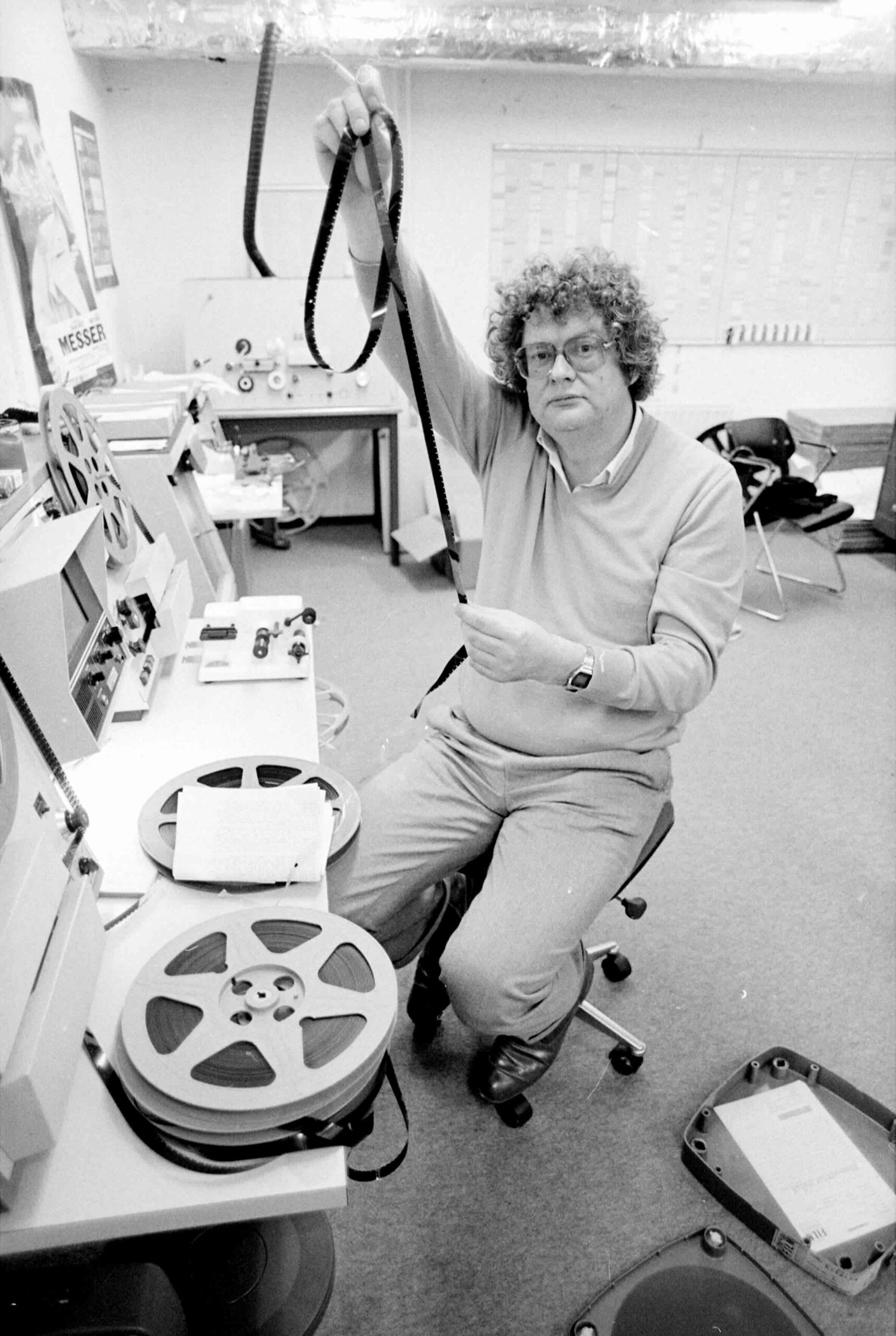
The first International Film Festival Rotterdam emerged when Martin Mooij, one of Poetry International’s founders, invited independent cinema enthusiast Hubert Bals to organize a film festival in Rotterdam. (Referencing Poetry International, the festival’s original name was “Film International.”) At the time, Bals was working at an arthouse cinema in Utrecht, organizing two festivals, and managing the program at the still-operating Hoogt cinema.
At the first Film International in 1972, the focus was particularly on East Asian cinema. According to a Rotterdam urban legend, only 17 people attended the opening night on June 28, 1972. After moving the festival to February the following year, attendance rose to over 7,000 in its second edition.
IFFR Selections Over the Years
The first festival in 1972 featured many films from Japan, as well as Peter Bogdanovich’s Targets (Hedefler) before his fame with The Last Picture Show (Son Gösteri), Wim Wenders’s first feature Die Angst des Tormanns beim Elfmeter(Kalecinin Penaltı Atışı Tedirginliği), and Ich liebe dich, ich töte dich (Seni Seviyorum, Seni Öldürüyorum), which can also be read from a queer perspective.
In the 1980s, the festival began emphasizing Rotterdam’s name and eventually became the International Film Festival Rotterdam. Many directors who later achieved mainstream fame first screened early works here: Pedro Almodóvar, Michael Haneke, Claire Denis, Lars von Trier, and Apichatpong Weerasethakul, among others. Their experimental early films were shown at IFFR before gaining international recognition. In the 2010s, IFFR’s “Masterclasses” featured speakers such as Béla Tarr, Cate Blanchett, and Bong Joon-ho.
IFFR Today
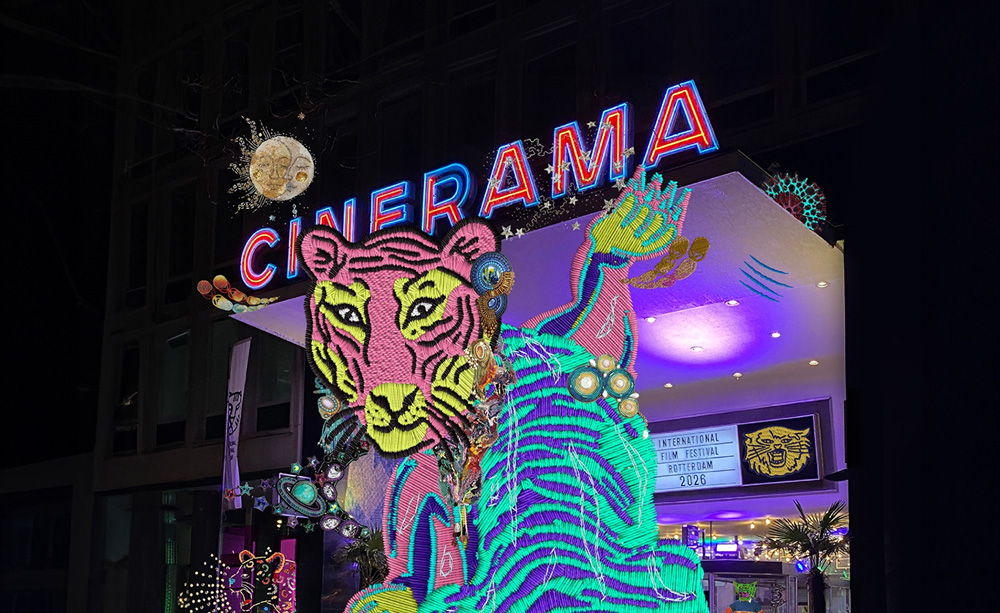
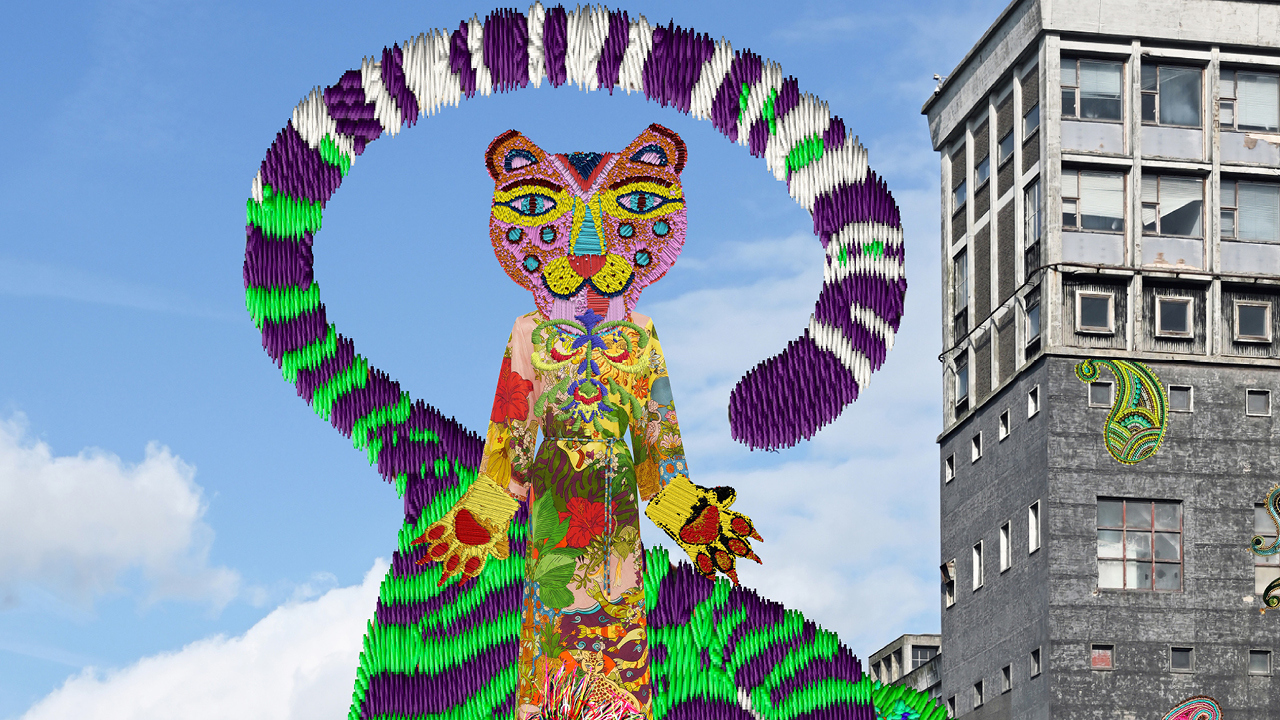
Today, during the eleven-day festival, IFFR screens 482 films from 92 countries and attracts nearly 300,000 visitors. In the 1980s and 1990s, the festival produced iconic posters in collaboration with Rotterdam’s anarchist graphic design collective Hard Werken. This year, it partnered with local studio 75B, using an embroidered tiger made of “many different threads, materials, and patterns” as its main visual. Behind the tiger are familiar city scenes such as the train station and the entrance of Cinerama.
Turkey-born Hasret Emine is one of this year’s three curators of the RTM selection, which focuses on Rotterdam-based directors and creatives. Known in the city’s cultural scene, Hasret archives Muslim queer and trans stories through her platform pembe.
When I asked her what IFFR means to her as a Rotterdamer, she said:
“For me, IFFR means cycling through the city’s lively, silent, dark, bright, narrow, or wide streets to watch a Southeast Asian horror film, or talking to a director I’ve admired all my life and their team. Sometimes it means being too tired to stay for a Q&A after a four-hour film but not leaving out of embarrassment, getting the phone number of a director who made a great queer film, hearing your mother tongue on the big screen again and again. Waiting for the program to be announced, sitting in a café to make a ten-day schedule, and realizing you planned the exact opposite of what you intended.”
Hasret has not missed a single festival since volunteering at her first IFFR at age sixteen and says being selected as an RTM curator is a great joy. She describes this year’s RTM program as “deeply connected to themes we experience in Rotterdam, while also reflecting cities where hyper-capitalist neoliberalism tries to destroy what little humanity and care practices we have left.”
The 55th International Film Festival Rotterdam Program
Alongside “Big Screen,” “Tiger Competition,” and “RTM,” the festival offers several other sections: “Tiger Short Competition” for short films, “Feminist Focus” featuring women’s cinema, “Cinema Regained” revisiting film history, and “Art Directions” for more experimental and immersive works.
The “Displacement Film Fund,” launched last year with Cate Blanchett’s participation, awarded €100,000 production grants to five displaced filmmakers. Their films are screened in this year’s edition.
A Festival Committed to Pluralism
When asked what value IFFR represents most, festival director Vanja Kaludjercic—who has led the festival since 2020 and served on Cannes’ Un Certain Regard jury last year—responded:
“I don’t find it useful to reduce the festival to a single identity or aesthetic. Over the years, IFFR has consistently committed itself to pluralism as a practice: making space for different cinematic languages, production realities, and ways of seeing the world, without forcing them into a single narrative.”
Rotterdam, largely destroyed during World War II, is now one of the most multicultural cities in the Netherlands and Europe. In the city center, only 36.5% of residents are “Dutch,” while the rest include migrants from Europe, Turkish and Moroccan workers who arrived generations ago, people from former colonies such as Suriname, Caribbean countries, and Asian migrants.
Kaludjercic emphasizes this context:
“Our roots in Rotterdam are a major part of this. The openness shaped by migration, cultural exchange, and constant movement organically forms how the festival operates. Rather than preserving itself, IFFR’s legacy lies in remaining adaptable and creating space for cinema to host complex, contradictory, and diverse perspectives.”
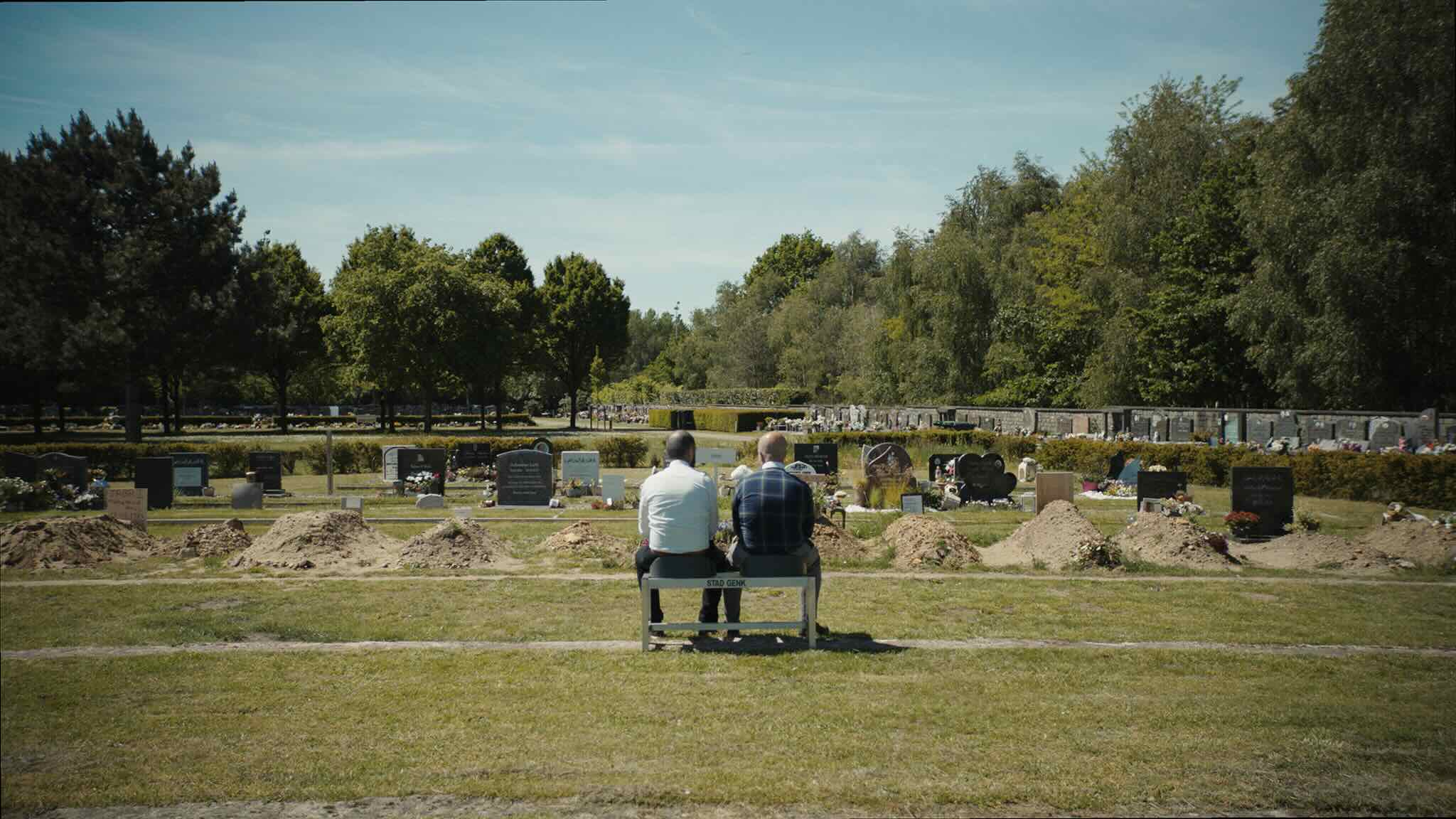
As the year’s first days approach, I join other residents in eagerly awaiting the program. Already in my phone notes are: 2m2 by Belgian filmmaker Volkan Üce, Wellen Wende (Dalgalar Dönüyor) by Austrian director Josephine Ahnelt, and Imagine Me Like a Country of Love (Beni Bir Sevgi Ülkesi Gibi Hayal Et) by Yemeni-Dutch artist Thana Faroq.
Soon, Christmas trees in shop windows will be replaced by a 54-year-old tiger, and I’ll try not to be late for the first screening.
The IFFR selection can be seen at various venues across Rotterdam from January 29 to February 8.