

The Alchemy of Performance
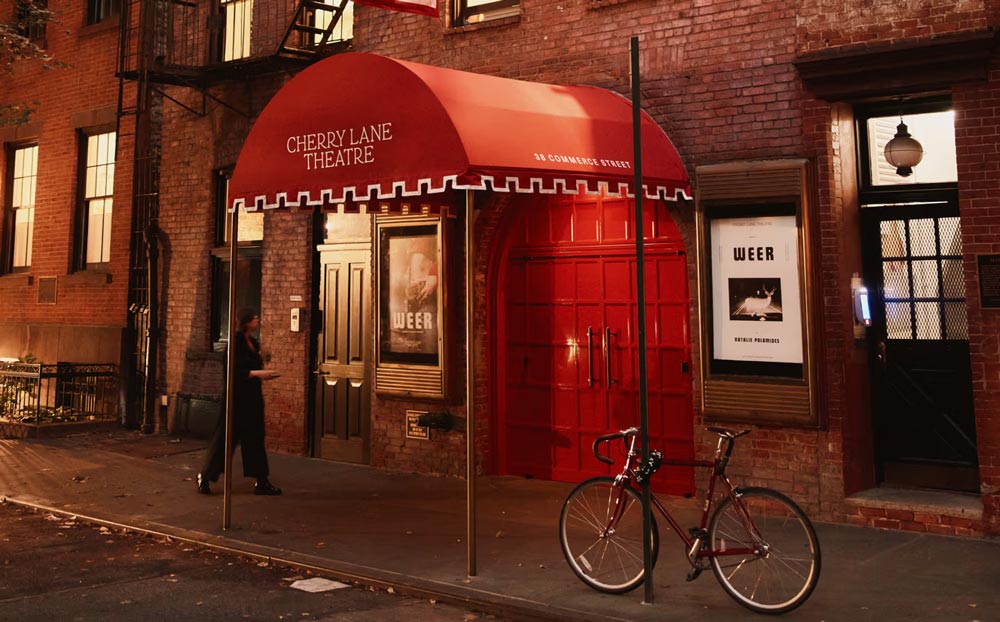
The screen fatigue brought into our lives by digitalization and the influence of algorithms on the cultural industry are taking us in an unexpected direction—on a journey back to our roots. One of the most significant stops on this journey was the acquisition in 2023 of the iconic New York venue Cherry Lane Theatre by the independent cinema pioneer A24 for $10 million. Although this purchase might be seen merely as a real estate investment, in an age when artificial intelligence can seamlessly assemble everything on the internet, it also signals a renewed appreciation for live performance as an unautomatable and singular value. The story of A24 is one of the most compelling examples of how originality can create a powerful connection in a digitalized world.
A24 and a Rhizomatic Cultural Ecosystem
A24 was founded in 2012 by Daniel Katz, David Fenkel and John Hodges. Katz reportedly decided on the company’s name while driving on the A24 motorway in Italy. Today A24 operates across a wide spectrum ranging from cinema to theatre, gastronomy (Wild Cherry Supper Club), and membership-based cultural systems. This expansion forms what can be described as a rhizomatic aesthetic network. Rather than building a vertical brand hierarchy, the company creates a new cultural ecosystem by bringing together different artistic disciplines. Choosing a venue such as Cherry Lane Theatre—a space that carries the legacy of figures like Samuel Beckett and Sam Shepard—places authenticity at the center of this network.
Unlike the editing table in cinema, in theatre each performance becomes a new connection formed instantaneously between the actor and the audience. Productions such as “Weer,” the performance by Natalie Palamides staged at Cherry Lane, are defined as works that cannot be experienced anywhere outside the live space. The performance is reborn every night, creating a different line of “deterritorialization” each evening.
On the theatre stage, emergence occurs at the moment when the static structure of the text meets the bodily presence of the actor and the collective energy of the audience. Emergence is the formation of that “magical moment” produced by the interaction of the text, light, stage design, and—most importantly—the contact established between the actor and the audience.
Artificial Intelligence and the Untranscended Domain of Theatre
Even though AI-generated productions may appear flawless in design, they lack the emotional depth and contextual flexibility necessary for this moment of emergence. Artificial intelligence is currently being tested in every field of theatre—from playwriting to stage design. Yet research suggests that while such texts may appear formally consistent, they struggle to capture the depth of the human spirit. I am not saying that this will always be the case in the future, but it is clear that AI cannot replace the embodied presence of the actor on stage.
True theatre elevates the human vulnerability and uniqueness produced by the state of flow on stage. In the face of time and space, it is precisely the vulnerability and singularity of both audience and performer that become the real actors of the moment.
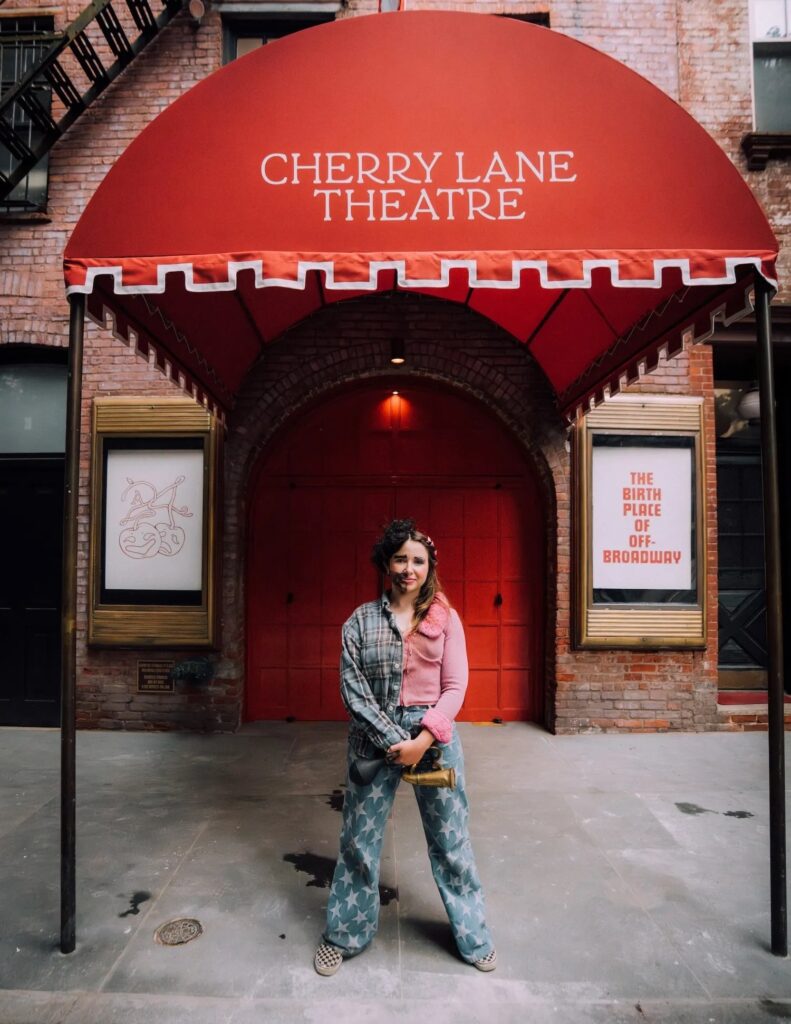
On the other hand, the behavioral patterns of Gen Z—a generation that has never been more closely watched or taken more seriously—are truly striking. The passion for ownership has largely been replaced by the experience economy, meaning investment in shareable, physically lived moments. A24 responds to this sociological demand with a model that is both new and, at the same time, not so new. The “flesh and blood” experiences offered at Cherry Lane Theatre open up a space for social catharsis that artificial intelligence cannot simulate. In the interdisciplinary field where gastronomy, cinema, and stage intersect, they bring together unpredictability and the instant creation of aesthetics. They achieve this by placing the stage—centered on the actor, requiring deep concentration and authenticity—at the core.
The future of theatre does not lie in rejecting technology, but in aestheticizing the use of living human time and space that technology cannot imitate. In other words, even while using technology, it is crucial not to forget the human touch.
New Generation Theatre and Site-Specific Performance
The new generation of theatre should focus on establishing an instant connection with everything on stage, placing the body in a state of flow at the center of performance. Theatre must go beyond being simply theatre and merge with site-specific works, blending with the infrastructure of the city and its daily rituals. Young artists should incorporate the visual language of cinema, the energy of digital communities, and the ritual power of the city into their work. They should extend their performances into streets and digital platforms, while always preserving the core of “liveness” at the center.
The audience should not be considered a passive observer but rather an element that performs the experience itself. Every component must be activated as a part that contributes to the act of creation. Creativity is not random inspiration, but the disciplined management of flow. Young actors must train their bodies and minds to enter this state of flow. A professional performance is the moment when the actor emerges within the action on stage. This moment creates a collective flow that includes the audience, transforming theatre into a transformative experience.
In the midst of the digital age, theatre is being redefined as a site of resistance against a world emptied of spirit by techno-capitalism. On this new stage, the actor is no longer merely a performer of text but also a fighter of existence. Theatre becomes the arena where this resistance is displayed in its purest form. The younger generation, under the influence of digital devices, increasingly adopts a “heads-down” communication model. Theatre, by contrast, is a discipline of “heads-up.”
This is not merely a posture; it is the ability to look directly into the eyes of a partner or audience member, to feel their breath, and to respond instantly. Young artists should cultivate this heads-up awareness on stage as a form of resistance, thereby establishing a balance against the pressures of the digital world.
The investment of A24 in Cherry Lane Theatre should be seen as the victory of the physical in the midst of the digital age. At a time when algorithms push us into constantly predictable cycles, theatre continues to exist as the last stronghold of unpredictable emergence.
This “new art” model, expanding like a network, promises young artists a future free of rigid hierarchies—one that believes in the power of flow and uses technology as a servant rather than a master. It encourages young artists to build their own creative networks and to become part of the process of emergence itself.
The Political Power of the Singular Performance
The actor’s singular performance on stage is one of the most meaningful responses to the world we live in today. Theatre will continue to celebrate that strange, flawed and mesmerizing emergence of being human. The stage lights now illuminate not only the actor but also that momentary and authentic presence within all of us. Even under the shadow of the digital world, this light reminds us of the beauty and richness of being human.
For young theatre artists, the vision is clear: keep your head up, trust the flow, create your own creative network, and become part of emergence. This vision inspires young artists, encouraging them to resist the challenges of the digital age and to make their own voices heard.
The human error that appears under the stage lights actually reveals a magical aspect of art that artificial intelligence has not yet reached. These small disruptions add an unexpected vitality and sincerity to the performance, drawing the audience in even more deeply. After all, is not the beauty of art hidden precisely within these imperfections? 🎭