




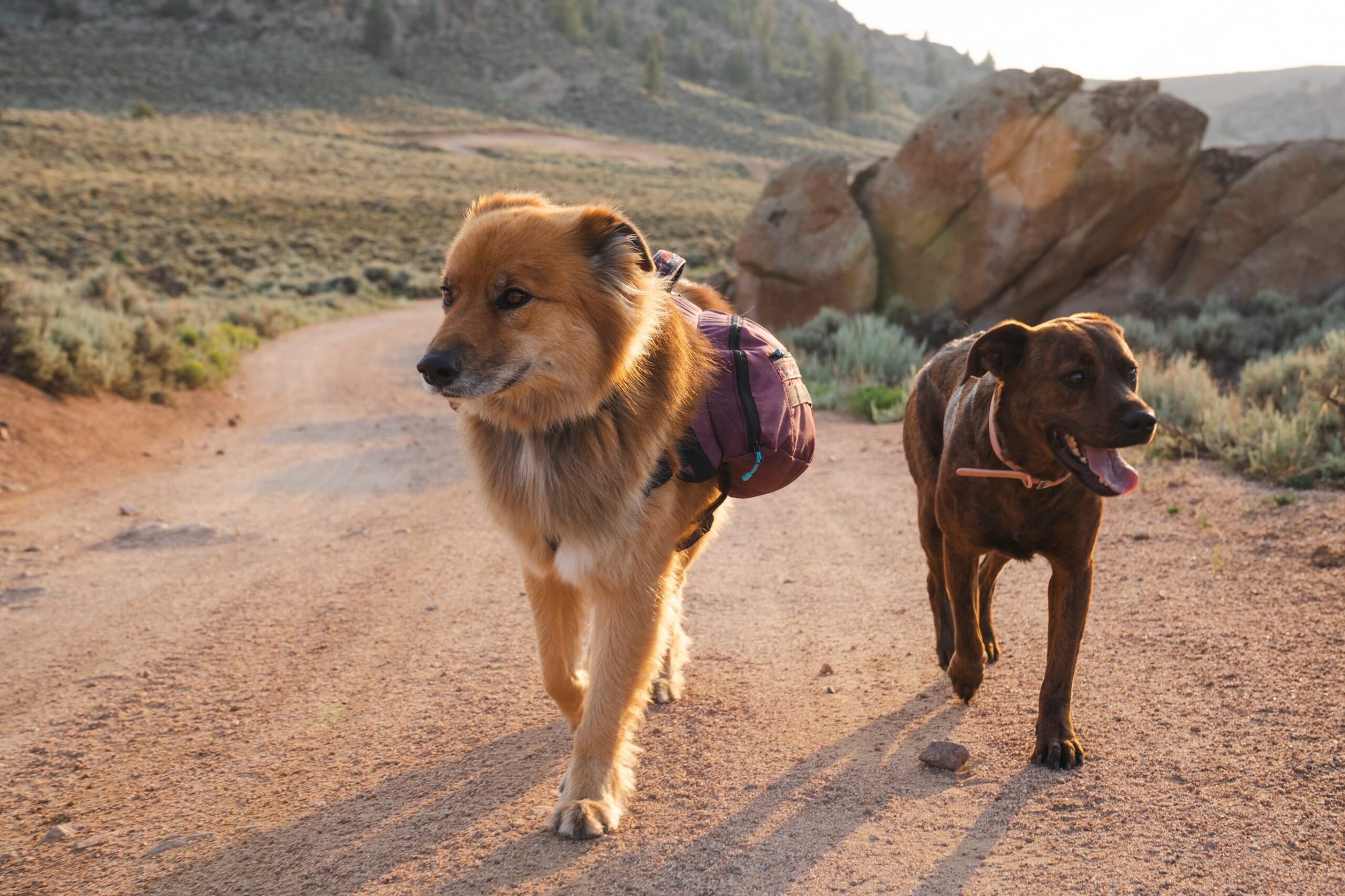
Examples of solidarity offered in their purest form by nature sometimes reach an epic dimension that surpasses the selfish limits of humanity. What unfolded recently in China’s Jilin province was not merely a case of “lost animals”; it has gone down in history as a tangible manifesto of loyalty, strategic cooperation, and the will to remain together. Seven dogs, stolen from three different families and confined in a truck to be sent to a slaughterhouse, managed to escape from their cages and, clinging to one another amid the chaos of the modern world, found their way back home.
The scene witnessed by drivers along the Changchun highway was far beyond that of an ordinary pack. Before them stood an example of solidarity and unity in which every step seemed planned, a hierarchy had been established, and no injured companion was left behind.
An Unshakable Alliance of Paws on the Highway
What made this approximately 17-kilometre journey remarkable was the strong sense of solidarity and instinctive organization displayed by the dogs. The group, which included different breeds such as a Golden Retriever, a Labrador, and a German Shepherd, chose to move together in the face of the dangers of the highway. At the very front, a small corgi, guiding the direction of the group with its short legs, led the way.
Every few steps, it would turn its head back, as if to make sure no one had fallen behind. Amid the roar of the highway, the rush of passing vehicles, and the unease of unfamiliar terrain, the seven dogs moved almost like a single body. When they stopped, they stopped together; when they set off again, they resumed the same collective rhythm.
The most fragile moment of the journey came when the German Shepherd in the group was injured. From that point on, the rhythm of the walk changed entirely; the other six dogs placed their injured companion at the center of the group, forming a silent protective circle around it. None of them sped up, none of them broke away. When one grew tired, the whole group slowed; when one stopped, the world stopped for them. There was an unspoken yet unbreakable agreement among them: no one would be left behind.
When this epic journey, which lasted three days, came to an end, what remained was not only the 17 kilometres they had covered. Those seven beings, moving side by side on the highway, wrote a story of slow yet determined resistance in a world where humans rush past one another. The images that moved millions on social media were perhaps so powerful for this very reason. Because within that frame, there were not only dogs finding their way home, but a spirit of unity surviving by holding on to one another. And the simplest, deepest truth of the story was hidden at the end of that long walk: sometimes the road home is too long to walk alone.