

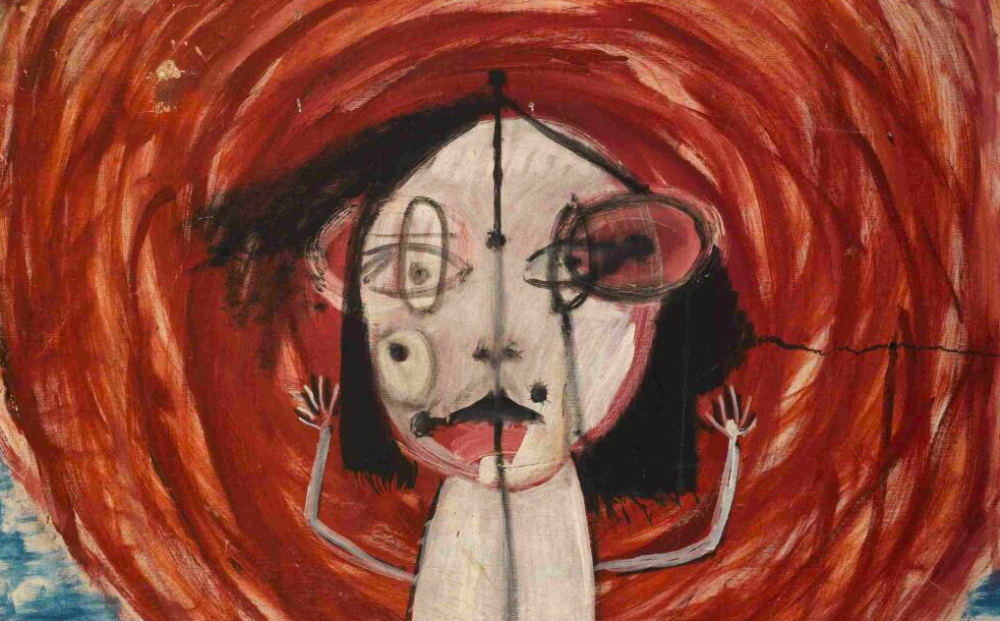
Inviting audiences to rediscover one of the most original figures of modern Turkish art through the unique language she forged between stage and visual arts, the exhibition All Colors in Aria (Tüm Renklerin Aryası) has opened at Istanbul Modern. Bringing together Berksoy’s multilayered practice—interweaving opera, theater, painting, and literature—within a strong curatorial framework, the exhibition will be on view until September 6.
Istanbul Modern has opened its doors to one of the most ambitious exhibitions of 2026. Semiha Berksoy: All Colors in Aria revisits the multifaceted world of a pioneering artist who broke new ground both in Turkey and Europe, weaving stage and life into an inseparable whole.
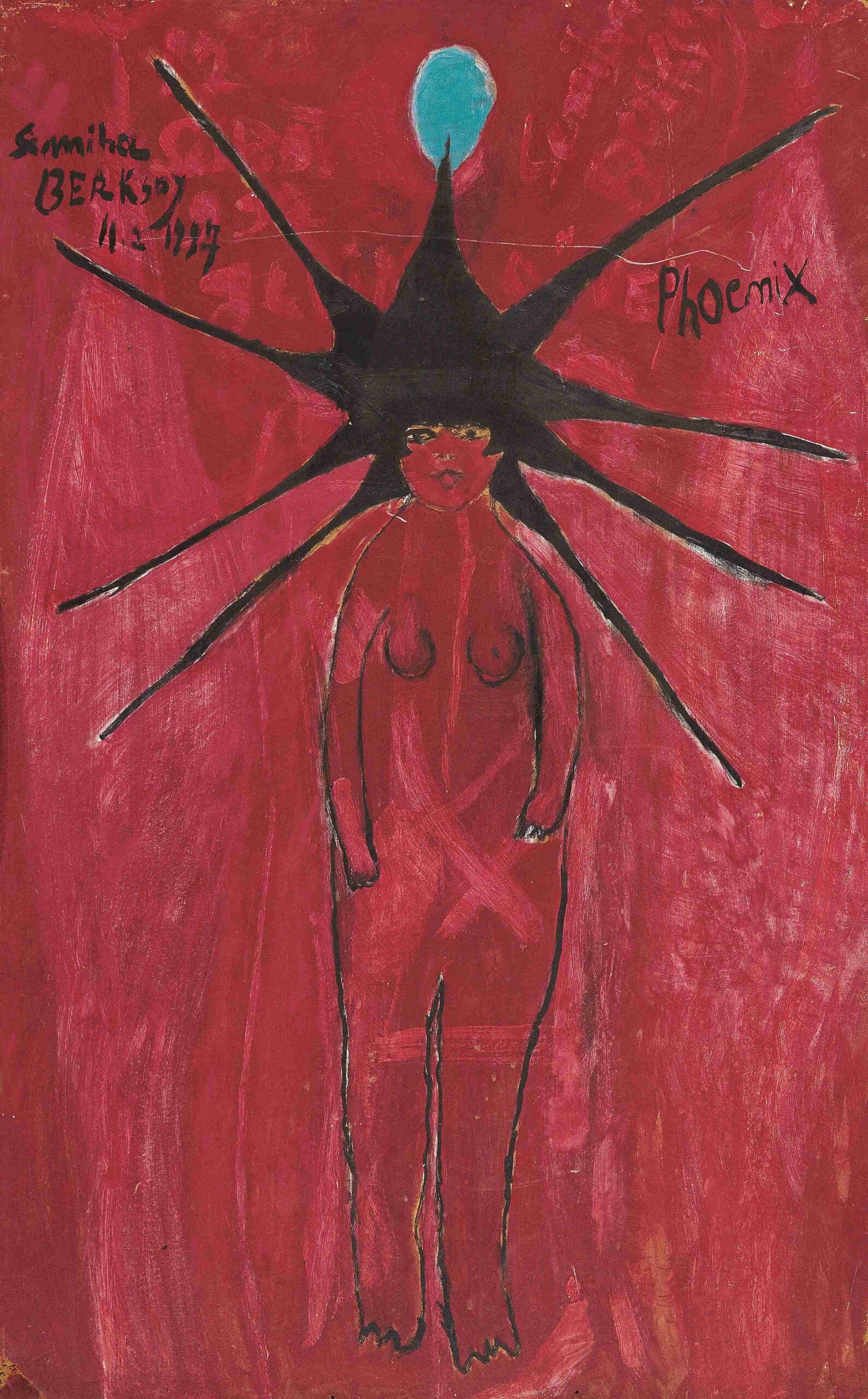
The exhibition takes as its starting point the comprehensive presentation titled Semiha Berksoy: Singing in Full Color, shown at Hamburger Bahnhof – Nationalgalerie der Gegenwart between December 6, 2024, and May 11, 2025. Curated by Sam Bardaouil and Till Fellrath, with Emily Finkelstein and Agnes Lammert as curatorial assistants, the exhibition was conceived as an operatic stage. At Istanbul Modern, it has been expanded in scale and reinterpreted under a new title and curatorial framework.
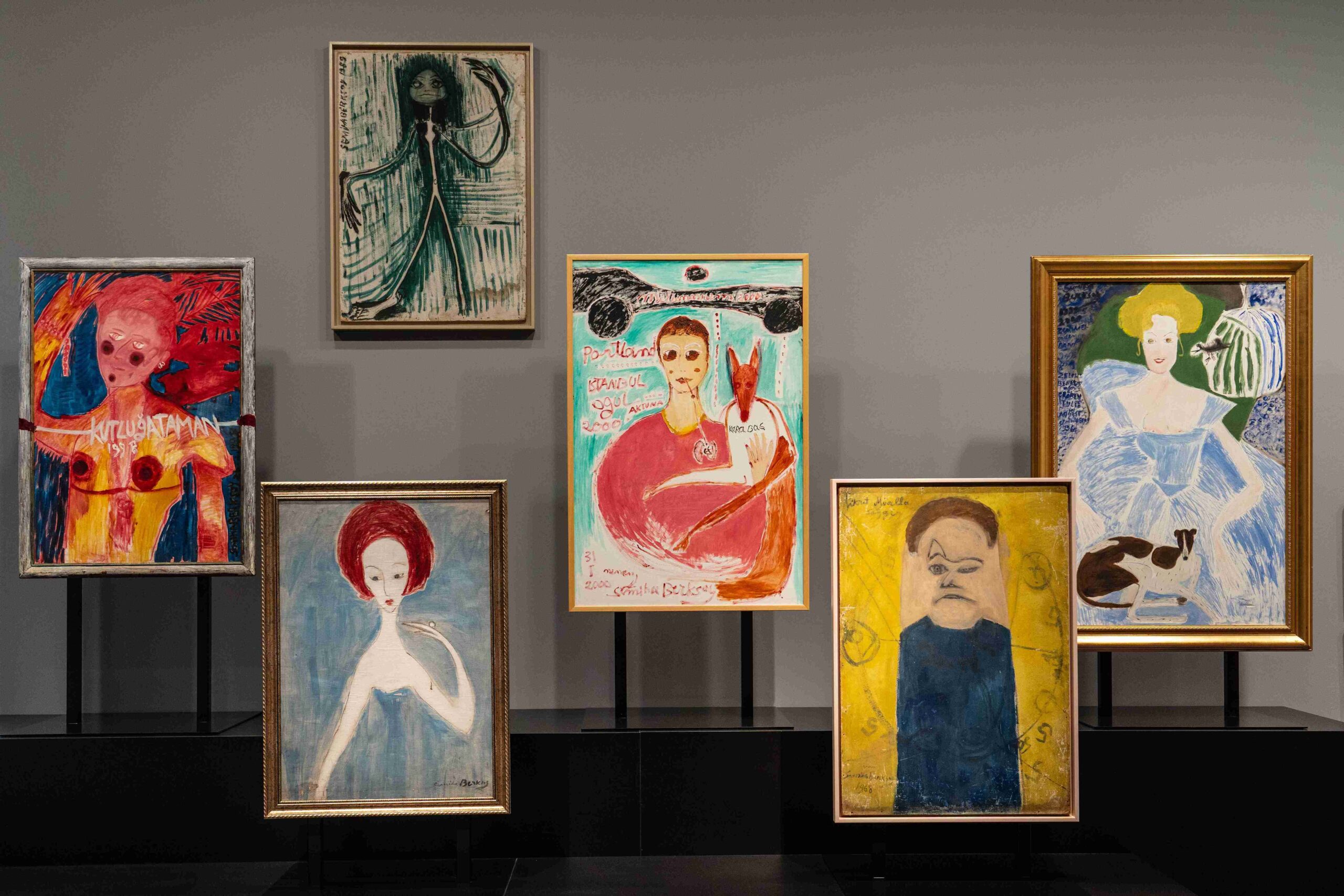
Prepared by Chief Curator Öykü Özsoy Sağnak, curator Deniz Pehlivaner, and assistant curator Yazın Öztürk, this new presentation brings into view Berksoy’s production across stage arts, visual arts, cinema, and literature through more than 200 works. The exhibition emphasizes the artist’s unique and multilayered relationships between opera, theater, painting, and writing.
“Increasing the Visibility of Women Artists Is Our Priority”
Speaking at the press conference, Istanbul Modern Board Chair Oya Eczacıbaşı emphasized that Semiha Berksoy powerfully exemplifies the pioneering role women artists have played in Turkey. She reiterated that increasing the visibility of women artists has been a core priority of the museum since its founding.
 “Since our establishment in 2004, increasing the visibility of women artists and bringing their work to wider audiences has been among our priorities. We began this journey with Two Generations in the Rainbow, featuring works by Fahrelnissa Zeid, and strengthened this approach through numerous artist-focused retrospectives. Today, we are delighted to continue this path with the most comprehensive exhibition of Semiha Berksoy in Turkey. Last year’s presentation of her work at Hamburger Bahnhof in Germany made her universal impact visible from an international perspective.
All Colors in Aria conveys Berksoy’s relationships with different artistic circles and her engagement with universal themes such as life, death, and rebirth. By bringing together paintings from different periods with archival footage, opera recordings, and documentaries, the exhibition allows visitors to experience closely her individuality, passion, and expressive power.”
Following Eczacıbaşı’s remarks, exhibition sponsor Flormar CEO Tuğba Altunterim highlighted that the brand has a strong representation of women, with more than 80 percent female employees.
“As a women’s brand, we are proud to sponsor such an inspiring exhibition that reflects the courage, excitement, and passion for color of one of the Republic’s pioneering women artists, Semiha Berksoy,” Altunterim said.
A Soul That Breathes Through Art
Zeliha Berksoy, the artist’s daughter and a theater and film actress, also spoke at the press conference, sharing her feelings about the exhibition and her mother’s artistic journey. Expressing her great happiness at seeing such a comprehensive exhibition dedicated to her mother at Istanbul Modern, she said:
“This exhibition presents in an integrated way Semiha Berksoy’s multifaceted artistic understanding that brings together painting, music, and drama.”
Emphasizing that her mother began discovering herself at a young age as part of the Republic’s bold and curious generation, Berksoy pointed to her multilayered education spanning painting, music, theater, and opera. She noted that Berksoy’s early training with Namık İsmail, her conservatory years, and her graduation with top honors from the Berlin Academy of Music shaped her artistic identity.
She added that despite her opera career, her mother never abandoned painting, and that her drawings, monotypes, and portraits produced since the 1950s are now brought together in the exhibition. She concluded:
“She was not only someone who made art; she was a soul who lived through art and breathed through art.”
A Symbolic Figure of a Generation
Before the exhibition tour, Chief Curator Öykü Özsoy Sağnak underlined that Berksoy was not only a versatile artist, but also a symbolic figure of a generation shaped by historical ruptures. Born in 1910 during the Ottoman Empire, Berksoy experienced a childhood marked by World War I, the War of Independence, and the founding of the Republic.
Sağnak emphasized that receiving musical and vocal training, joining Darülbedayi through her encounter with Muhsin Ertuğrul, and appearing on stage at a time when women’s presence was nearly impossible were acts of remarkable courage. She also noted that Berksoy enriched her practice through drawing, sculpture, and ceramics at the Academy of Fine Arts.
Her roles in Turkey’s first sound film İstanbul Sokaklarında, her performance in Özsoy Opera, and her becoming the first Turkish artist to appear on European stages in Berlin in 1936 are only a few links in this chain of “firsts.”
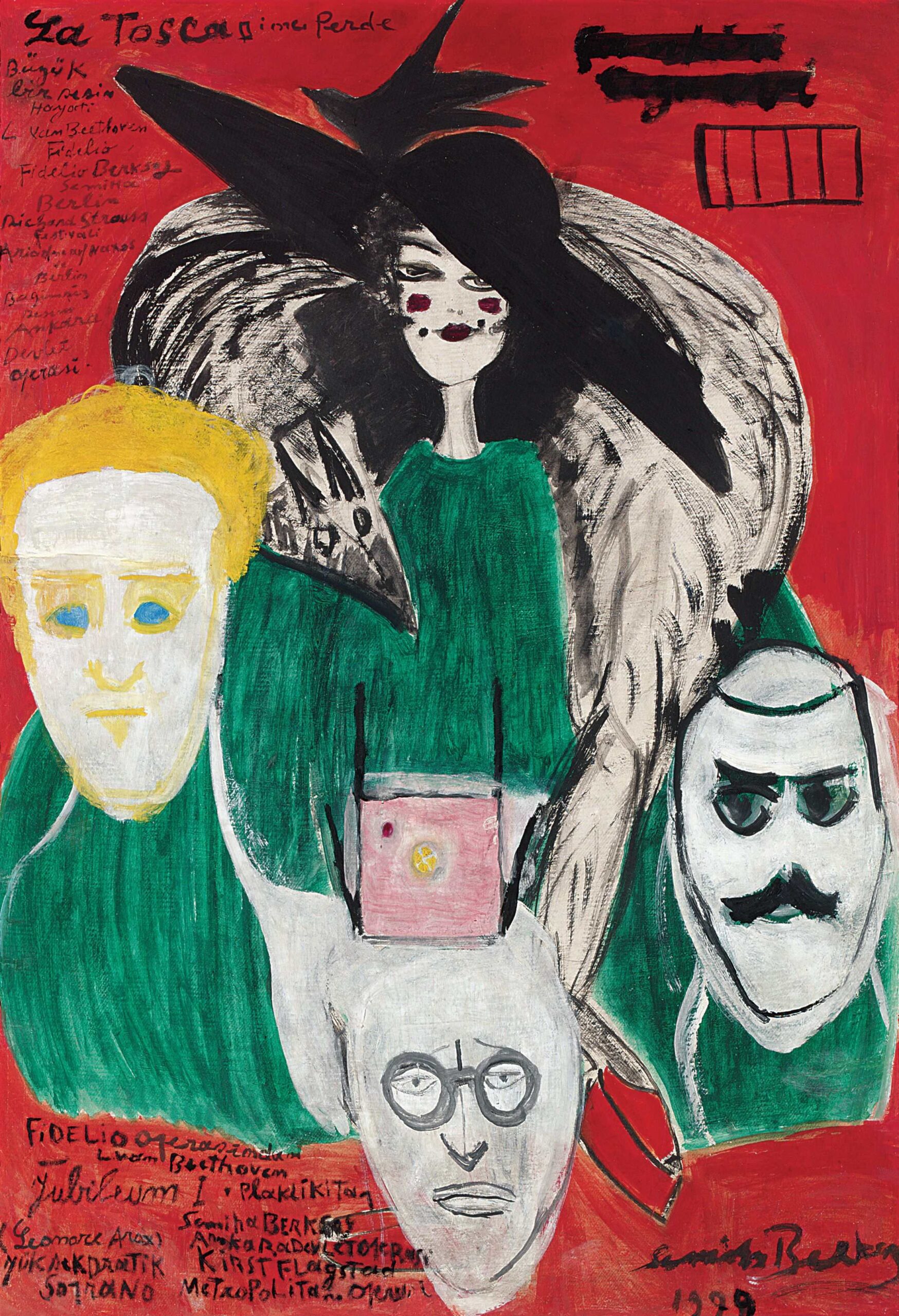
Sağnak stated that over the past year and a half, the museum team had focused deeply on Berksoy’s production, uncovering new narratives and unexpected stories as layers unfolded. She stressed that one of the exhibition’s main axes is Berksoy’s relationship with opera and music, noting how characters such as Tosca and Salome transformed into monumental figures in her paintings.
She emphasized that Berksoy internalized art as a way of life and created her own mythology, adding that her courage and resistance to patriarchal and bodily norms are strongly felt throughout the exhibition.
The Union of Opera and Painting
Curator Deniz Pehlivaner highlighted that Berksoy was an artist who thought beyond her time, knew what she wanted, and possessed strong character. She expressed pride in organizing an exhibition dedicated to such a powerful Republican woman.
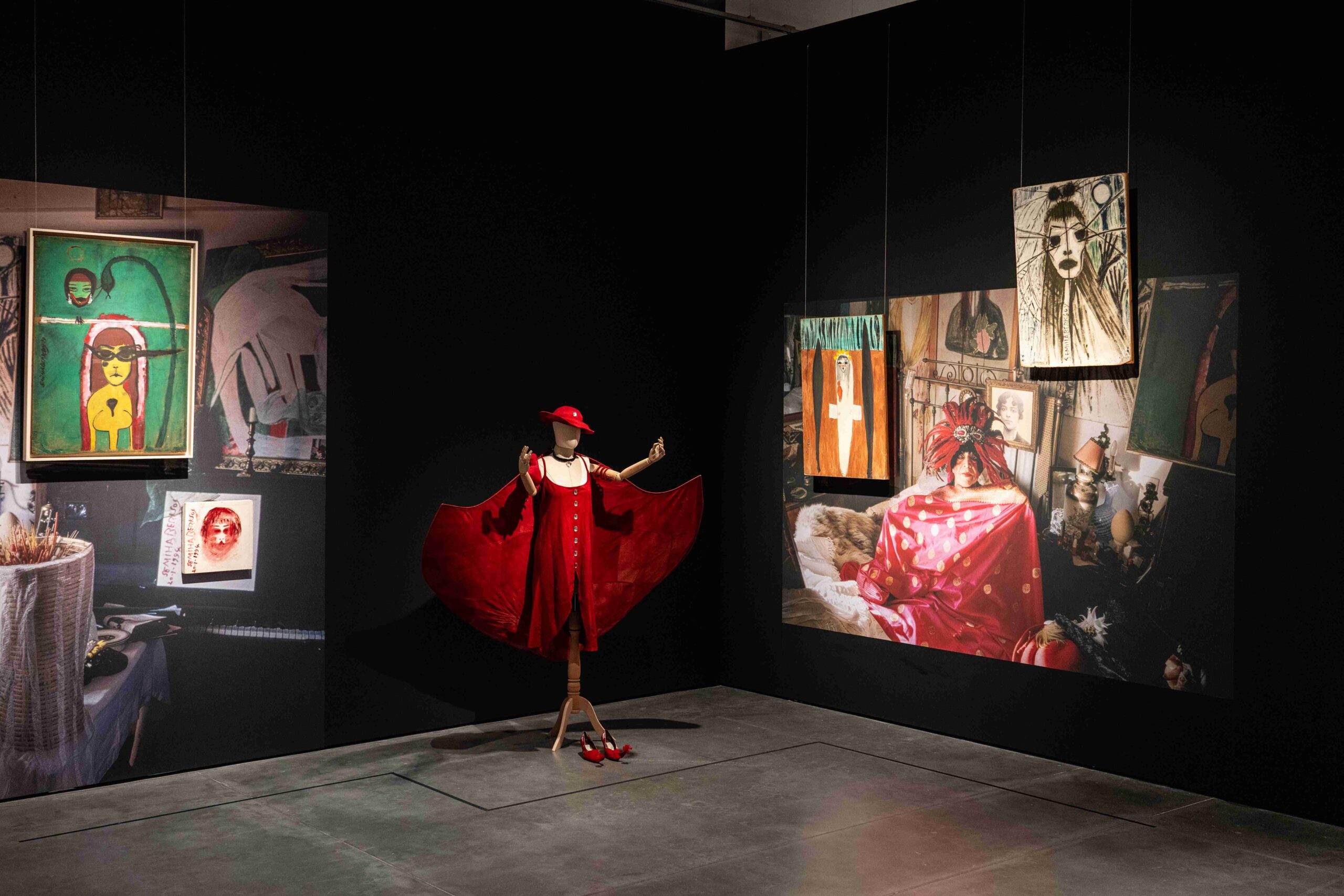
Pehlivaner explained that Berksoy created a unique mythology by transferring her relationship between life and stage into her paintings, and that the bodily and emotional experience of opera transformed into an expressive field connecting personal memory with collective history.
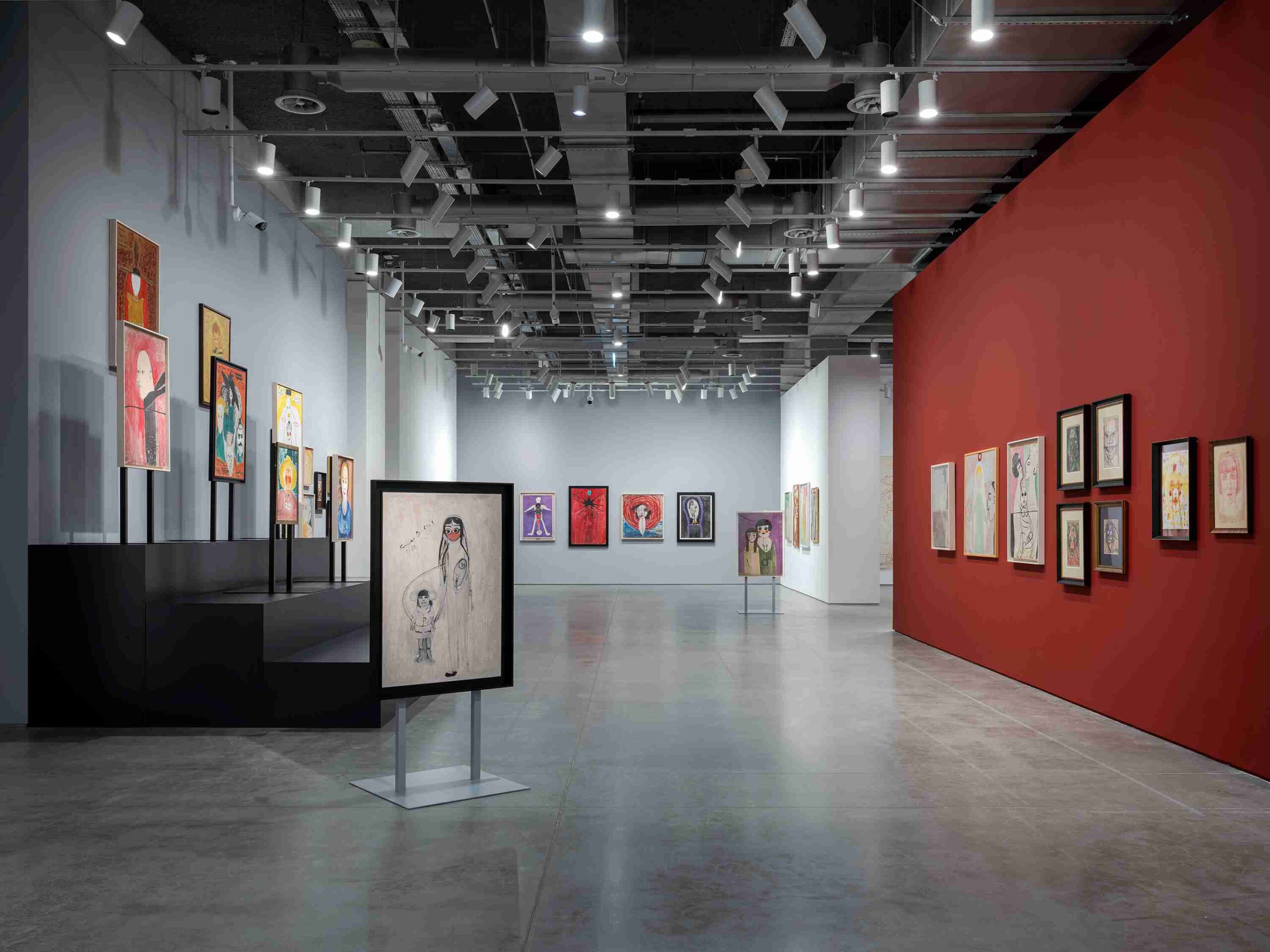
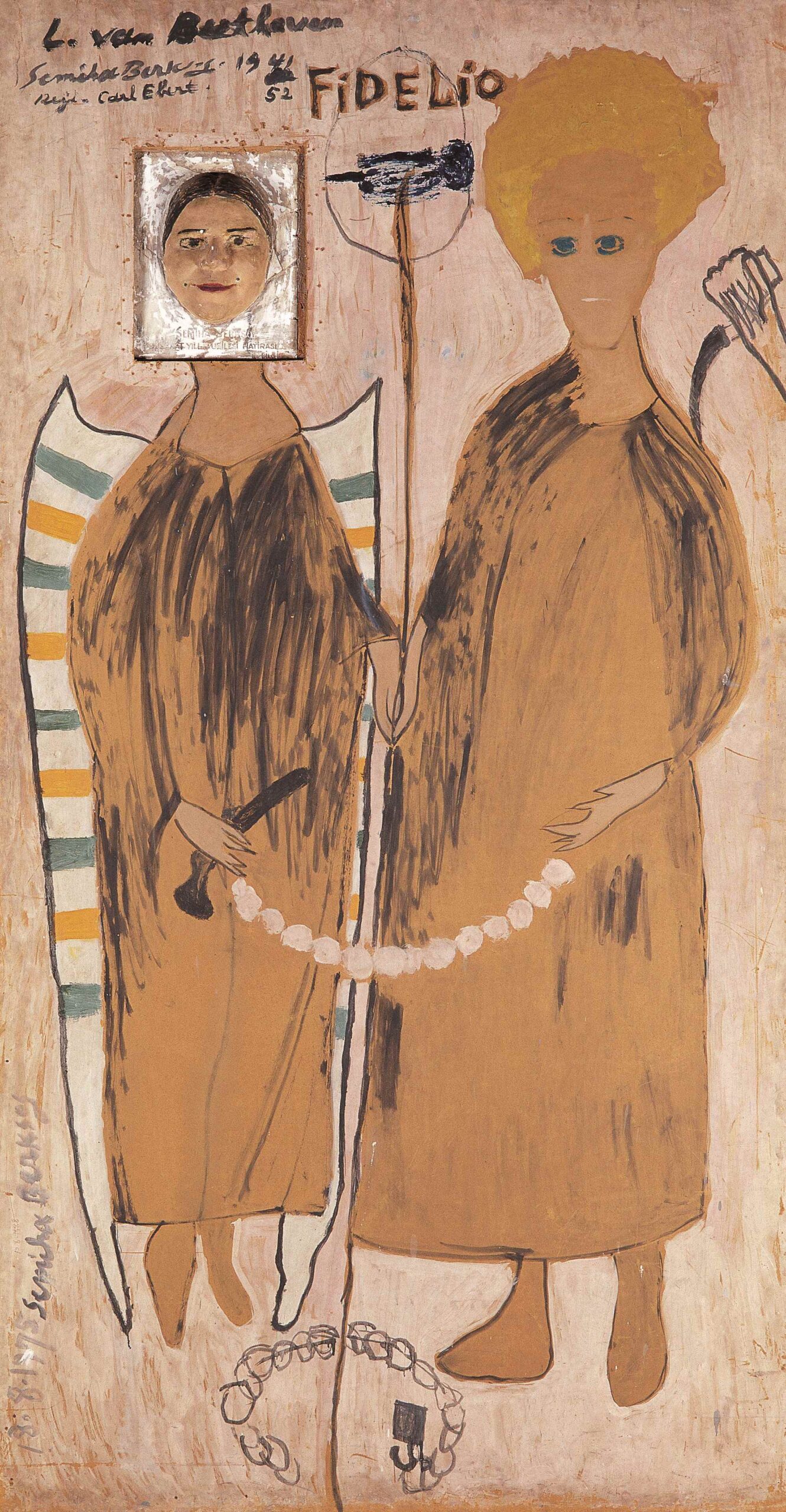
Accordingly, works depicting characters she portrayed in world-renowned operas are gathered in the Red Room, conceived as the heart of the exhibition. From this central space reminiscent of opera and theater, a fluid spatial narrative extends throughout the galleries, reflecting Berksoy’s holistic approach to art as life practice.
Semiha Berksoy: All Colors in Aria
The exhibition invites viewers step by step into Berksoy’s life intertwined with the stage. At its heart, the Red Room focuses on her depictions of characters such as Tosca, Salome, and Fidelio, transforming into monumental narratives intertwined with her own body and identity.
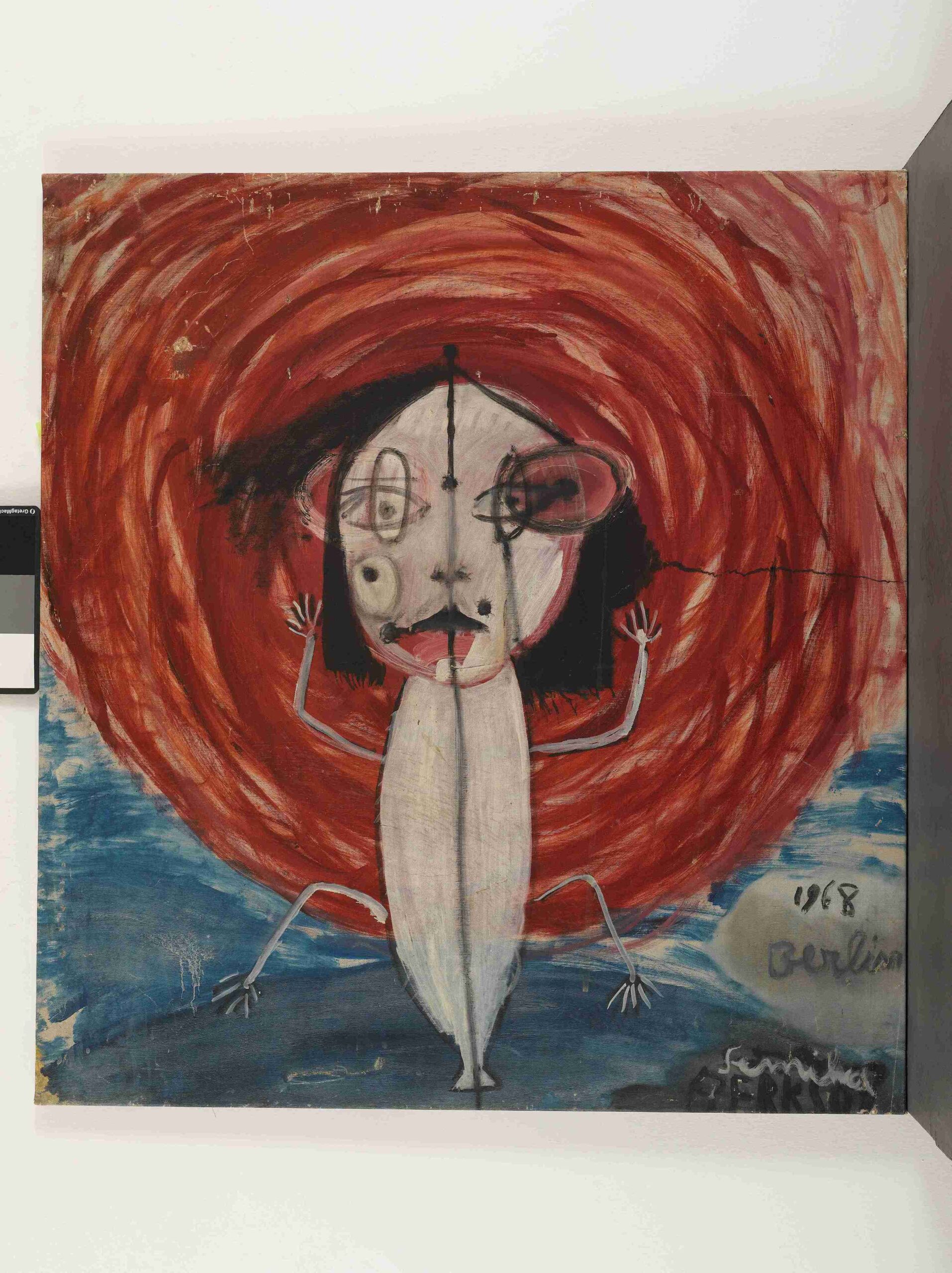
As visitors move away from this center, the exhibition opens inner layers of a life rather than following a strict chronology. Self-portraits, portraits, sheet paintings, and works centered on the mother figure create a space where personal memory and collective history intertwine.
Images appearing as graves, babies, or blue “lines of fate” render themes of life, death, and rebirth visible throughout the exhibition.
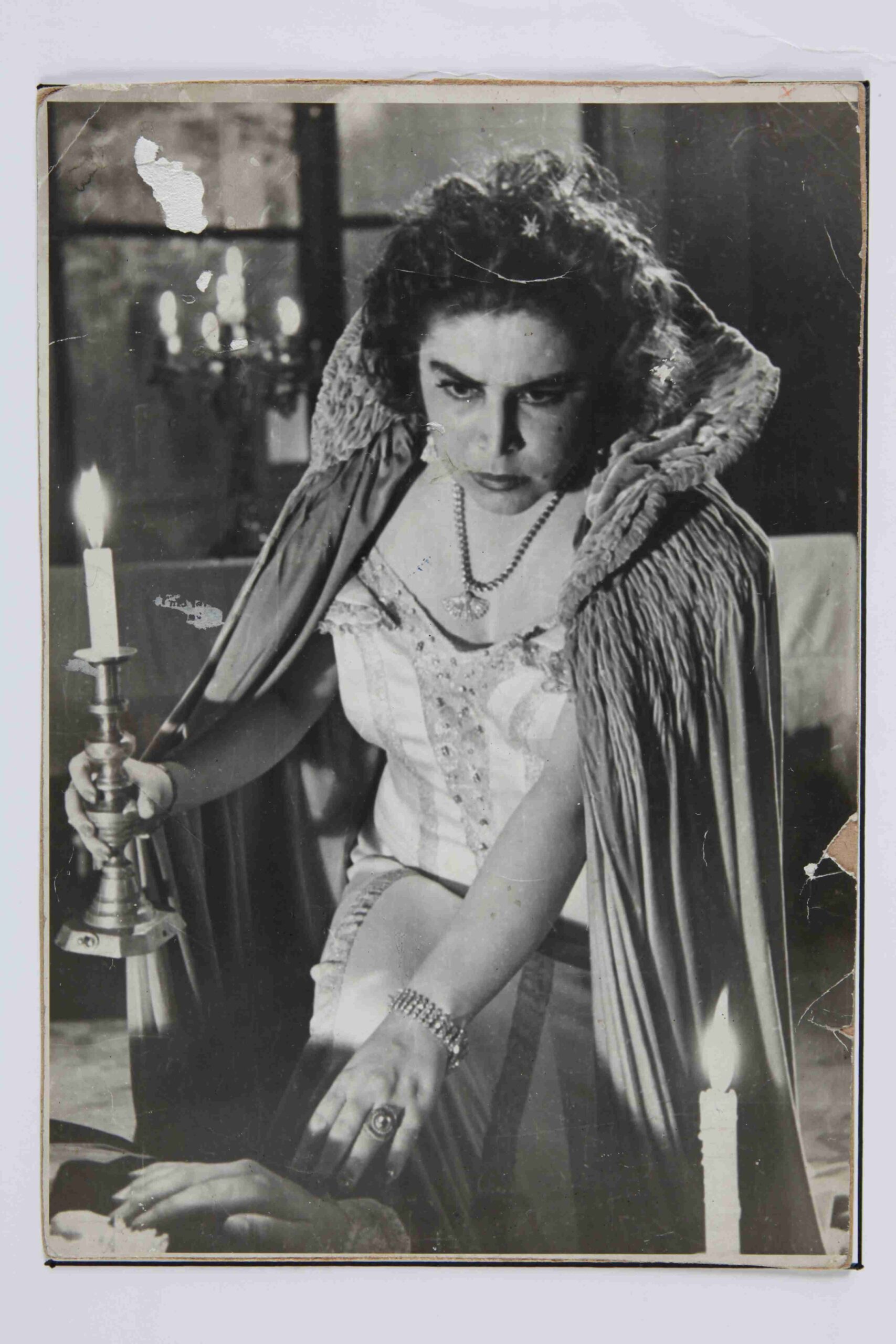
From early drawings to works from the 1950s onward, Berksoy’s production clearly reveals that she approached art as a way of life rather than a profession. Her multilayered relationship between painting, music, theater, and cinema is supported by letters, archival documents, and stage recordings.
Semiha Berksoy as a Mother
In response to a question, Zeliha Berksoy also spoke about her mother as a parent, emphasizing her alertness and deep care for life and living beings.
“She loved animals. We always had dogs and cats. Every morning, water was placed on the balcony for birds. First sparrows came, then pigeons, and finally crows…”
She added that her mother had a special affection for crows:
“She adored them. ‘They’re very intelligent, very elegant animals,’ she used to say.”
Regarding artistic friendships, she noted her mother’s loyalty:
“Nazım always called her ‘my loyal, brave girl.’ But she also had a ruthless side. When it came to art, she never compromised.”
Describing her bond with Fikret Mualla, she recalled:
“She sent him packages every month until his death—raki, roasted chickpeas, pastrami… And she would write, ‘Don’t drink it all at once.’”
According to her daughter, Berksoy was cheerful and joyful, singing songs and laughing loudly. But her attitude changed when it came to art:
“She was extremely meticulous. She was merciless with herself. If she saw something wrong, she said it directly.”
She concluded by describing her mother as:
“A person who lived within art, as if wandering through a dream world, yet remained deeply conscious of every moment.”