



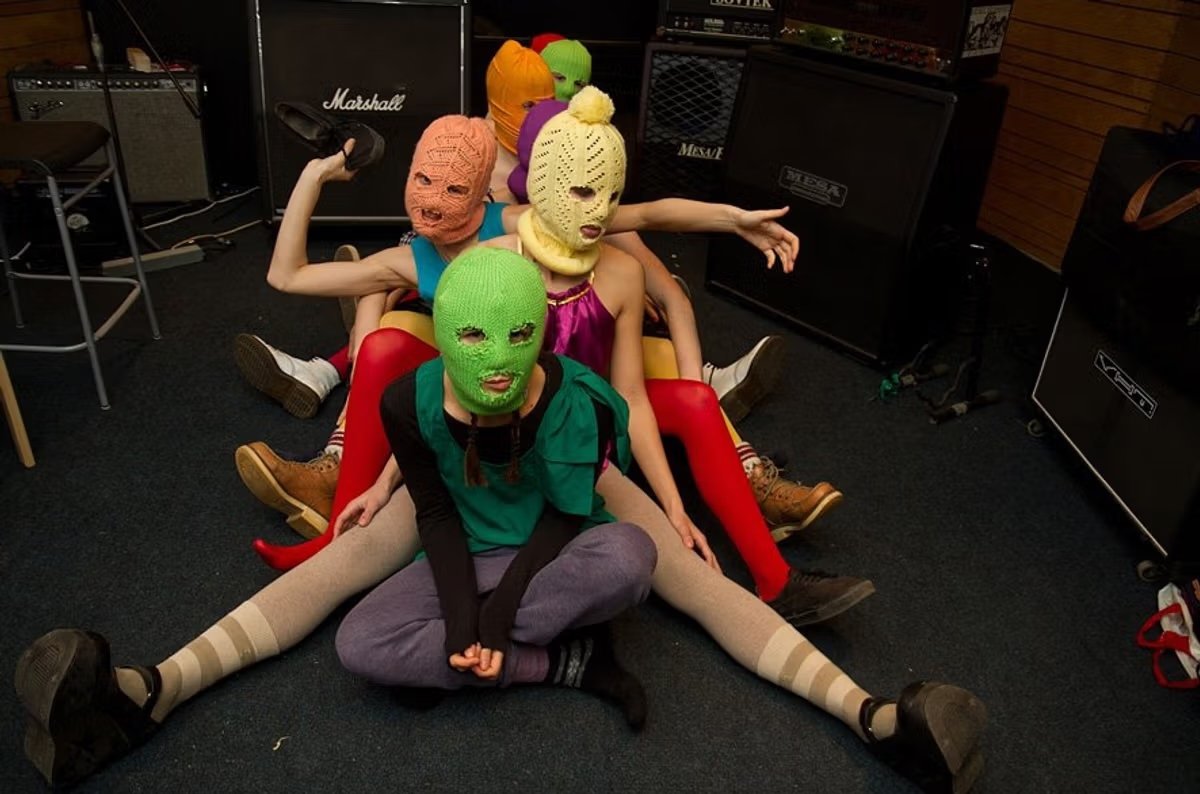
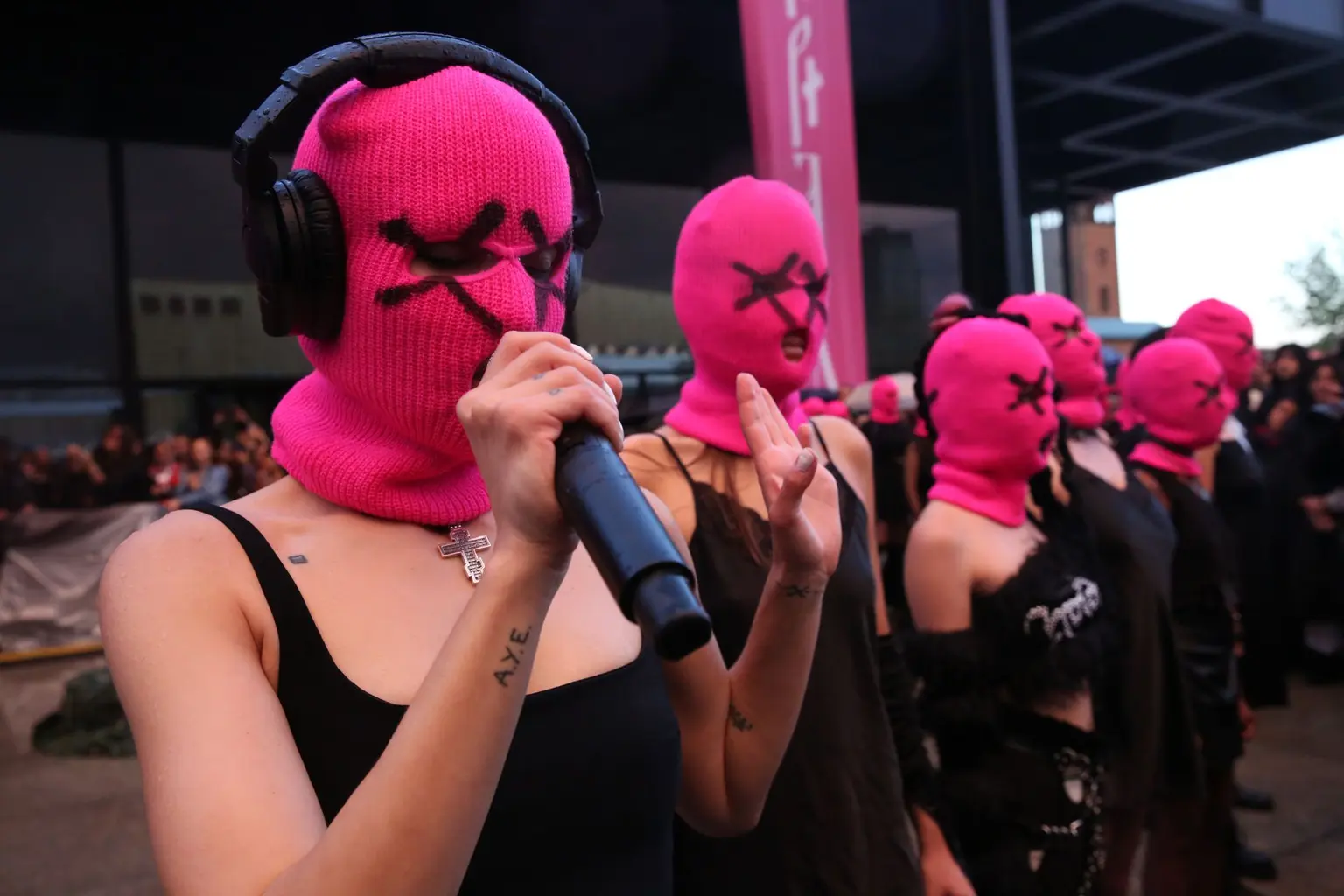
By a decision of the Russian Ministry of Justice, Pussy Riot has been designated an “extremist organization,” effectively banning all of its activities within the country. While the ruling paves the way for criminalizing any form of contact with the collective, it also starkly reveals the extent of pressure being exerted on opposition artists.
The Russian Ministry of Justice has declared the feminist punk rock group and art collective Pussy Riot—founded in Russia—an “extremist organization.” The decision was taken following a hearing held on December 15 at Moscow’s Tverskoy District Court, convened upon the prosecutor’s request. With the court ruling, all of Pussy Riot’s activities in Russia have been banned. Supporting the group, liking or sharing its social media posts, or disseminating its content has also been classified as a criminal offense.
One of Pussy Riot’s founding members, Nadya Tolokonnikova, stated after the decision that it was a political move rather than a legal one. She said they would appeal the ruling as a matter of principle, but added that she had no expectation that the Russian judiciary could act independently of the Kremlin. “Being labeled an extremist organization adds a huge bureaucratic burden and constant anxiety to my life,” the artist said, noting that the real threat concerns her family members and close circle who remain in Russia.
Property Seizures, Criminalized Contact
In Russia, individuals and organizations labeled as “extremist” may have their assets seized by the state. In some cases, this practice extends to the property of family members as well. Tolokonnikova noted that elderly parents can be evicted from their homes, or that people who remain in contact with artists can face criminal investigations. Although most members of Pussy Riot currently live outside Russia, she said that their relatives who stayed behind are under severe pressure.
The group’s lawyer, Leonid Solovyov, confirmed to Russia’s state news agency TASS that the hearing was held behind closed doors and that the ruling took effect immediately. This means that any form of contact with Pussy Riot within Russia’s borders is now illegal.
“In today’s Russia, telling the truth is considered extremism.”
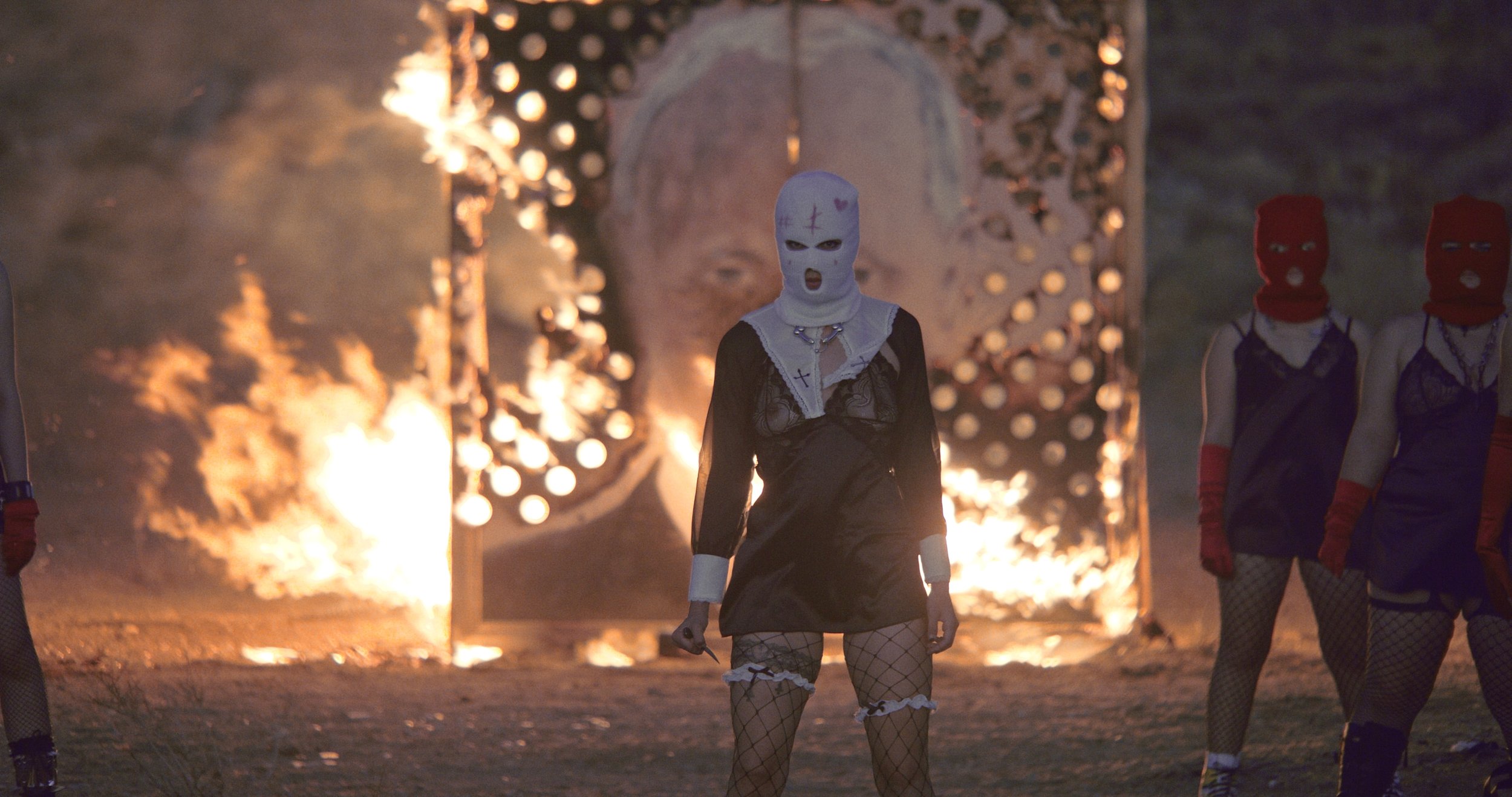
Pussy Riot has long been targeted because of its anti-Kremlin stance. Group members have previously been labeled “foreign agents,” “terrorists,” or “criminals,” and some have even been placed on international wanted lists. In September, a Moscow court sentenced five members of the group to prison terms ranging from eight to thirteen years on charges of “spreading false information” about the Russian army.
Tolokonnikova’s name was also added to Russia’s wanted list in 2023, citing her performance Putin’s Ashes as the reason. In that performance, the artist, together with women wearing balaclavas in the desert, set fire to a large portrait of Russian President Vladimir Putin.
Pussy Riot had already paid a heavy price after the 2012 “punk prayer” performance that brought the group worldwide attention. That protest, staged in Moscow’s Cathedral of Christ the Savior, targeted the close relationship between the Russian Orthodox Church and Putin. As a result of that action, Tolokonnikova was sentenced to 21 months in prison on charges of hooliganism motivated by religious hatred.
Following Russia’s invasion of Ukraine, repression against dissenting voices in the country intensified even further. The Kremlin has banned dozens of groups and pieces of content that adopted anti-war or critical positions by labeling them “extremist.” This list, which now includes Pussy Riot, covers not only organizations but also songs, videos, artworks, and even social media interactions. As Tolokonnikova puts it: “In today’s Russia, telling the truth is considered extremism.”