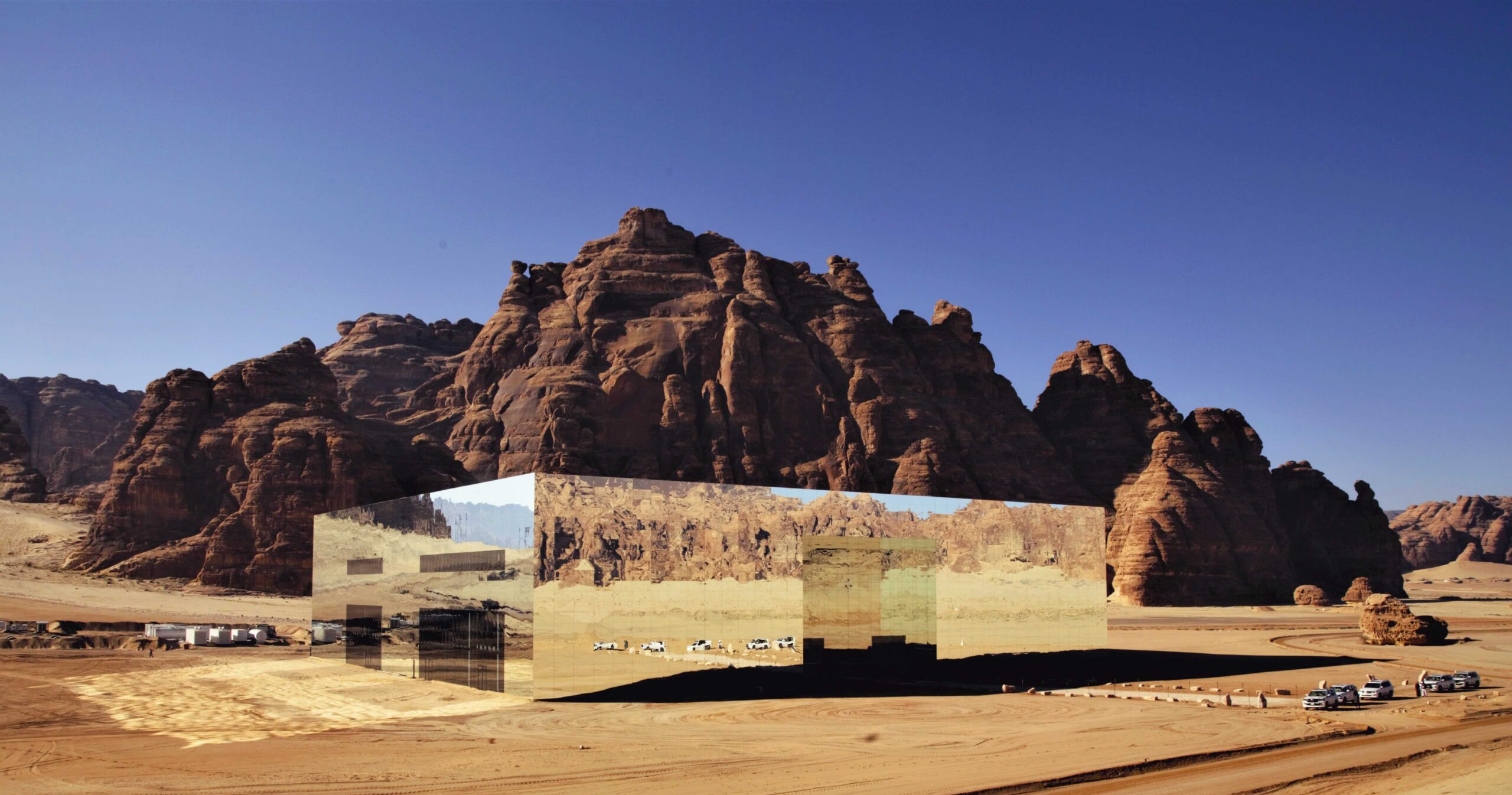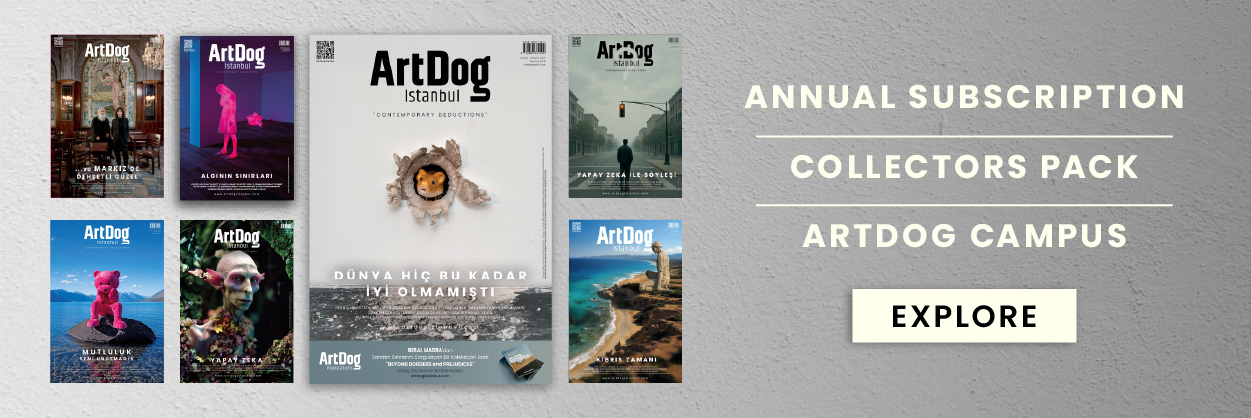

We began this issue with a question: What is happening in the Arabian Peninsula?
But from the very beginning, it was necessary to acknowledge this: this question does not, on its own, describe a geography. It asks how the cultural center is shifting, under what conditions art becomes visible, and which voices rise while others are suppressed. For this reason, rather than trying to “explain” what is happening, we built this issue by attempting to understand this shift. This was our point of departure as we gathered the first sixteen pages of the magazine around a single dossier.
The intellectual backbone of this dossier is formed by Vasıf Kortun’s text, Notes from a History. Kortun reminds us how the “East–West bridge” metaphor, through which Turkish contemporary art positioned itself for many years, has become dysfunctional—indeed, how it was problematic from the outset. In its place, he traces horizontal, continuous, and politically more honest relationships established with the MENA region. Reading Istanbul’s emergence not as a showcase or a transit zone, but as an actual center of exile, collective production, and critical thought from this historical perspective offers a key to understanding the present.
Completing this framework from within, through experience, is our interview with Yahşi Baraz. Baraz describes the cultural transformation in the Gulf not as a “market expansion,” but as a field in which power and prestige are reproduced through culture. The following sentence, at the center of the interview, clearly summarizes this approach: “To be able to say, ‘Come, have a cup of tea in our museum,’ can overpower even the richest businessman. As long as wealth is sustained through culture and art, you remain ‘the richest.’”
The analyses in the dossier titled What Is Happening in the Arabian Peninsula? and the texts focusing on the cultural architecture of the Gulf show that this transformation cannot be explained by economic power alone. Here, art does not function as decoration; it operates as a field that produces representation, prestige, and geopolitical positioning.
The work featured on this issue’s cover was selected precisely within this context. The piece you see on the cover is Notes for a Cannon by the Palestinian artist Emily Jacir. Presented in the exhibition we refuse_d at Mathaf – the Arab Museum of Modern Art in Doha, this work stands like a threshold that condenses the exhibition’s central concern. Curated by Nadia Radwan and Vasıf Kortun, we refuse_d discusses how art can establish a field of insistence under conditions of censorship, suppression, and refusal. Jacir’s work invites reflection on how public sounds—bells, warnings—are silenced, transformed, and how silence itself takes on a political form. That is why it is on the cover.
The interview conducted by Sine Ergün with the curators further sharpens the ethical dimension of this issue. The conversation centers on how claims of “neutrality” often turn into a zone of comfort, and on the questions of where art truly stands and what it refuses.
With this issue, a new and powerful voice joins the magazine. Murat Daltaban is now an ArtDog columnist. His piece, Twenty Years of DOT and What Has Happened to Us in Istanbul, tells far more than the history of a theatre company. With a clear and uncompromising tone, he reveals how independence is, before aesthetics, an attitude—indeed, a mode of survival—and how theatre has become intertwined with Istanbul amid the loss of spaces, urban transformation, and continually shrinking fields of action. This text does not mourn a lost Istanbul; it records the loss itself with cool-headed clarity.
In the exhibitions section, Hale Tenger and Hera Büyüktaşcıyan look at the present through memory, absence, and fragility. Their works remind us that art can still open up space for thinking, rather than rushing to provide quick answers.
And in this issue, we complete an intellectual journey. Dick van Zuijlen’s series I’m Just Asking reaches its final chapter here. Accompanying the last four issues, these groundbreaking texts—in which the author created a model called Zero together with AI—quietly and persistently argued that consistency is not a result, but a discipline of thought.
This issue does not try to explain what is happening in haste. Instead, it continues to look. Because today, in a rapidly changing world, perhaps the most accurate stance is to be able to stand, without rushing, in the face of complexity.
Enjoy reading…