
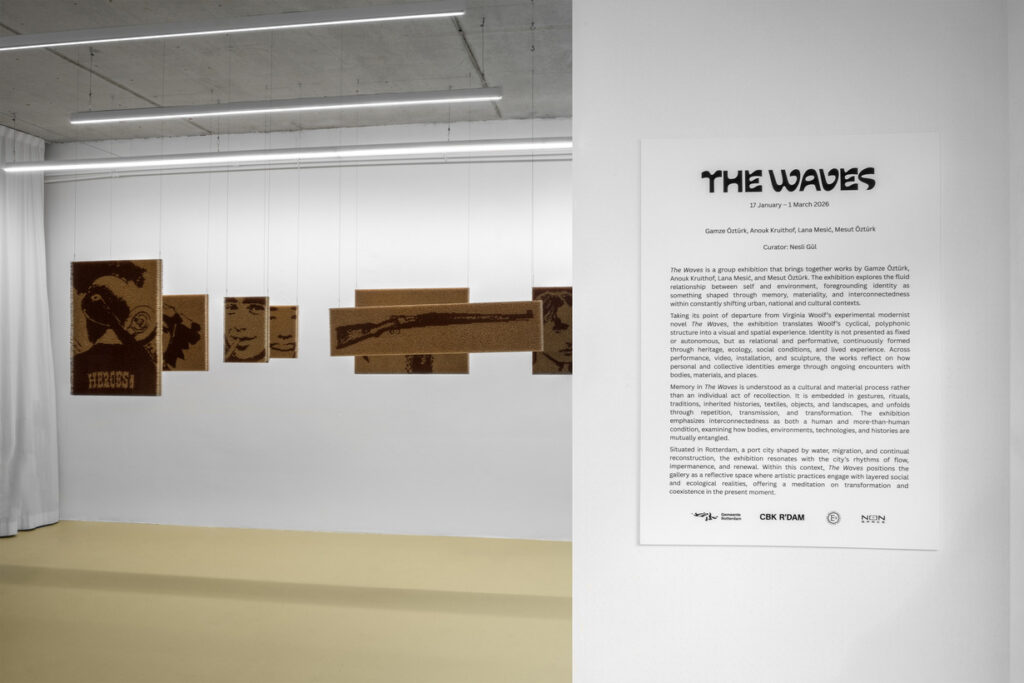
The Waves curated by Nesli Gül, on view at Contour Gallery Rotterdam from 17 January to 1 March 2026. Featuring works by Gamze Öztürk, Anouk Kruithof, Lana Mesić and Mesut Öztürk, the exhibition examines the shifting connection between the self and its surroundings, addressing themes of identity, memory and interdependence within a constantly changing urban and cultural context. Inspired by Wirgina Woolf’s modernist novel The Waves, the exhibition translates Woolf’s lyrical and cyclical narrative approach into a visual and spatial conversation. Curator Nesli Gül answered questions about The Waves.
Itir Demir: What initially drew you to Virginia Woolf’s The Waves as a conceptual framework for this exhibition?
Nesli Gül: My curatorial and research practice has gradually expanded from a primary focus on memory, archive, and migration toward a stronger engagement with ecological anxiety, coexistence, and the necessity of dialogue while in movement. The Waves offered a powerful framework for this expansion, as it understands identity not as autonomous, but as something formed through dependence on others, on environment, on tradition, on rituals, on materials and/or on inherited histories… Woolf’s novel makes us aware of how the self is always relational, performative and shaped by movement. When you are on the move, between places, cultures, or temporalities, questions of identity become more intense and sometimes constraining. This’s why I was drawn to artists who, like myself, work from positions of movement, whether through migration, displacement, or an inherited past. The Waves encouraged me to think of the exhibition as a space of ongoing negotiation where identity, coexistence, and dialogue unfold as living (and non-living) processes, shifting rather than fixed. Ultimately, Woolf did not provide me with a theme to illustrate, but with an inspiration: a way of thinking curatorially through rhythm, entanglement, and becoming.
 The Waves, curated by Nesli Gül, Contour Gallery, 2026, Photo credit: Hasan Özgür Top
I.T.: The Waves takes inspiration from Virginia Woolf’s novel of the same name. How is this literary reference translated into a visual and spatial exhibition experience?
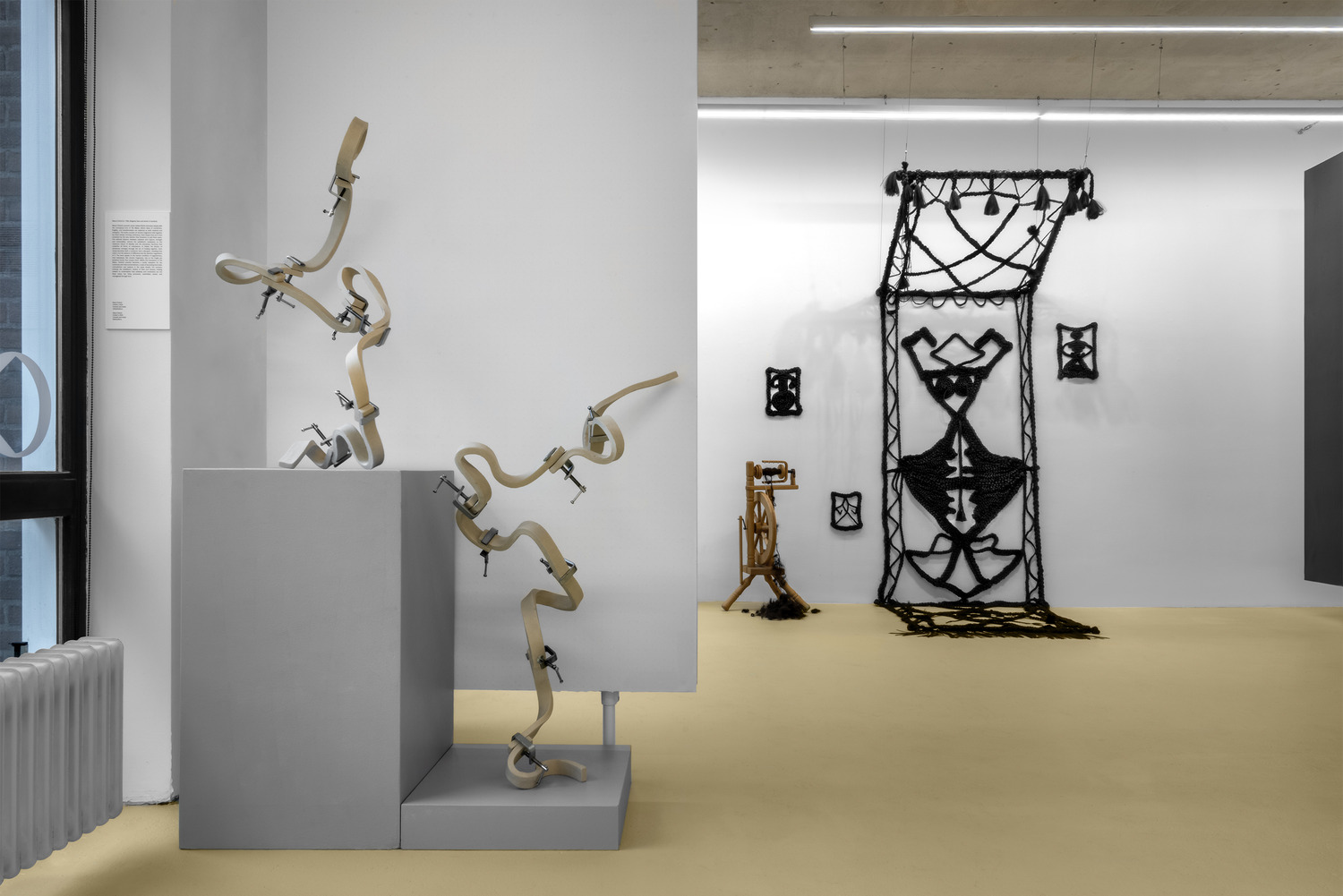
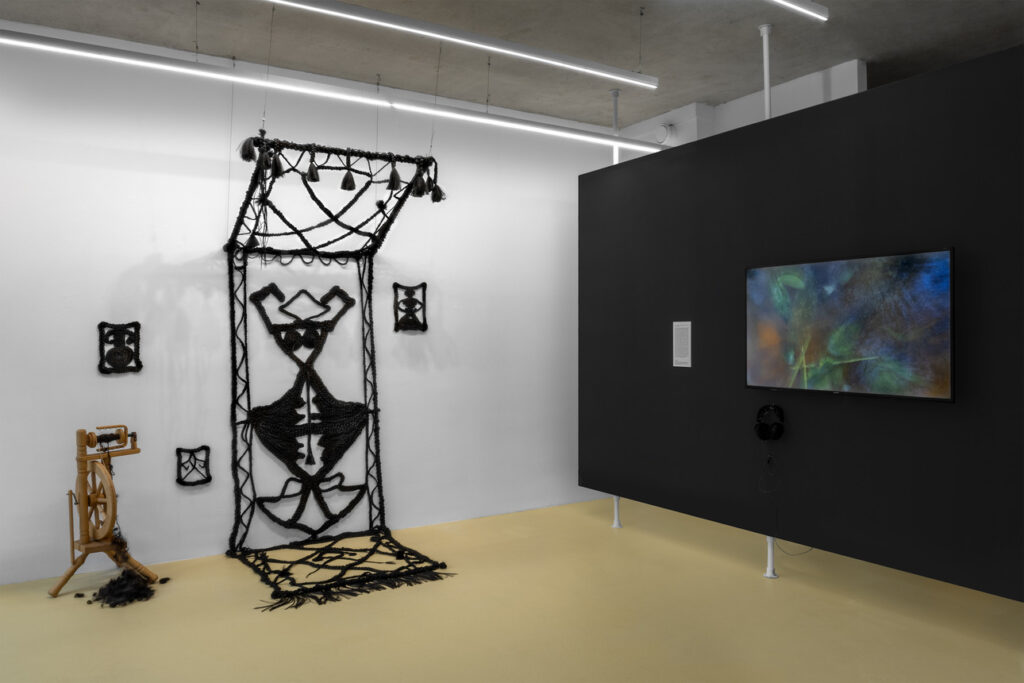
N.G.: Rather than illustrating The Waves, I translated its sensibility into a visual and spatial experience which means Woolf’s writing moves in cycles, voices overlapping, rising and receding, so the exhibition is conceived as rhythmic and non-linear. The works are positioned to create dialogue and resonance across the space, allowing themes of identity, memory, ecology, and coexistence to flow into one another. There is no fixed center or singular viewpoint; instead, visitors move through shifting intensities, pauses, and encounters. In this way, the exhibition mirrors ‘self’ as relational and in constant becoming, shaped by others, by environment, and by time. A clear example is Gamze Öztürk’s Hands-on-Hips. Emerging through a durational performance and remaining as an installation, the work unfolds through repetition, bodily labor, and shared time. The woven carpet, made from braided hair, functions as carrying gestures, memories, and inherited cultural codes. Like Woolf’s cyclical narrative, the work does not reach a conclusion but accumulates meaning through rhythm and return. Positioned within the exhibition, Hands-on-Hips activates the space as a site of encounter, where body and material, past and present, individual and collective continuously fold into one another. Identity is not presented as stable, but as a process of becoming, bodies dissolve into traditions and rituals, hair turns into both material and memory, and boundaries blur. Identity is felt as fluid, relational, performative and deeply entangled with environment and culture. Within the exhibition, the work does not stand alone, but resonates with the surrounding works and with the viewer’s movement through the space.
 The Waves, curated by Nesli Gül, Contour Gallery, 2026, Photo credit: Hasan Özgür Top
I.T.: Can you describe the process of bringing these four artists together? What kinds of dialogues emerged between their works?
N.G.: Bringing the four artists together was an intuitive but research driven process, guided less by medium than by shared concerns. I looked for practices that approach identity as relational and performative shaped through memory, environment, and movement, and that operate from positions of transition whether personal, historical, or ecological. Gamze Öztürk, Anouk Kruithof, Lana Mesić, and Mesut Öztürk each work with different materials and temporalities, yet all understand identity as something negotiated rather than fixed.
The dialogues that emerged are subtle but strong. Gamze Öztürk’s embodied rituals speak to Mesić’s archival fragments through questions of inherited memory and storytelling. Kruithof’s post-human, ecological visions extend these concerns beyond the human, while Mesut Öztürk’s fragile ceramic structures materialize interdependence and care in physical form. Together, the works create a conversation across body, archive, ecology, and material tension where no single voice dominates, but meaning emerges through resonance, proximity, and shared vulnerability.
I.T.: In your view, how can exhibitions like The Waves contribute to conversations around identity and coexistence?
N.G.: Exhibitions like The Waves can contribute to conversations around identity and coexistence by challenging the idea of identity as fixed or self-contained, and instead presenting it as relational, fluid, and continuously shaped by context. Inspired by The Waves, the exhibition approaches identity as something formed through interaction with others, with inherited histories, and with social and ecological environments.
By bringing together practices that operate across body, archive, material, and more-than-human perspectives, The Waves creates a space where differences are not resolved but held together. ‘Coexistence’ here is understood as a process of negotiation: fragile, unfinished, and sustained through dialogue. In this way, the exhibition offers a shared ground for reflection, where viewers can sense how identity emerges through interdependence, and how living together requires attentiveness to connection, tension, and care.
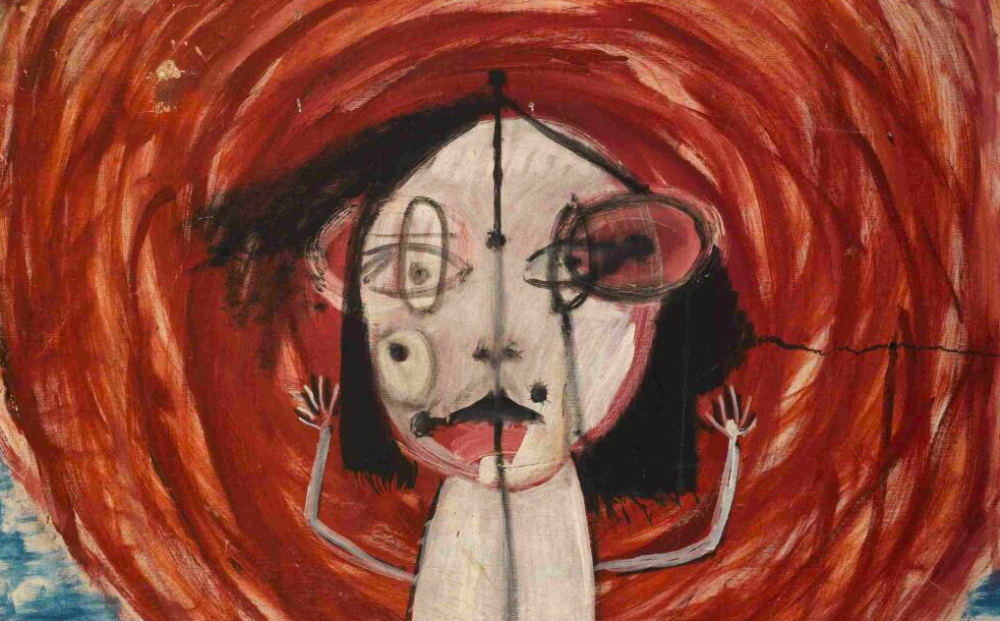
A key example is Lana Mesić’s work When You Point a Finger, Three Are Pointing Back. Drawing on personal archives, media fragments, and carefully constructed objects, Mesić exposes how collective identities are produced through selective remembering and forgetting. Her practice reveals identity as something negotiated within social and political frameworks, shaped by inherited histories rather than individual choice alone. Within The Waves, her work foregrounds coexistence as a fragile process: one that requires acknowledging contested pasts and making room for multiple, often unresolved, narratives to exist side by side. In doing so, the exhibition invites viewers to consider belonging not as consensus, but as an ongoing, shared responsibility to hold differences together.
I.T.: The exhibition emphasizes “more-than-human” interconnectedness. How do you interpret this concept within contemporary art practice?
N.G.: To speak of “more-than-human” interconnectedness in contemporary art practice is to move beyond an anthropocentric understanding of the world and to recognize that agency, memory, and care are distributed across human and non-human actors alike. Within The Waves, this idea is closely aligned with The Waves, where subjectivity is porous and constantly shaped by rhythms of nature, time, and environment.
In contemporary art, this translates into practices that consider how bodies are entangled with landscapes, materials, technologies, and ecological systems. The “more-than-human” is not treated as a metaphor, but as a living condition: plants, objects, infrastructures, and digital processes actively participate in shaping identity and experience. By foregrounding these entanglements, artistic practice can challenge human exceptionalism and propose new forms of coexistence, ones grounded in reciprocity, vulnerability, and shared responsibility within a fragile ecological reality.
A strong example in The Waves is Anouk Kruithof’s video work I Identify as. The work visualizes identity as something that moves between human, nature, and technological states. Bodies slowly morph, skin becomes plant-like, and boundaries between species dissolve. Rather than proposing a futuristic fantasy, Kruithof makes visible a condition we already inhabit: one where human life is inseparable from ecological systems and technological infrastructures. Within the exhibition, her work frames the “more-than-human” not as an abstraction, but as an embodied, sensorial experience, inviting viewers to reconsider coexistence as a shared, cross-species condition of becoming.
For further information on the exhibition ‘The Waves’: https://www.contour.gallery/