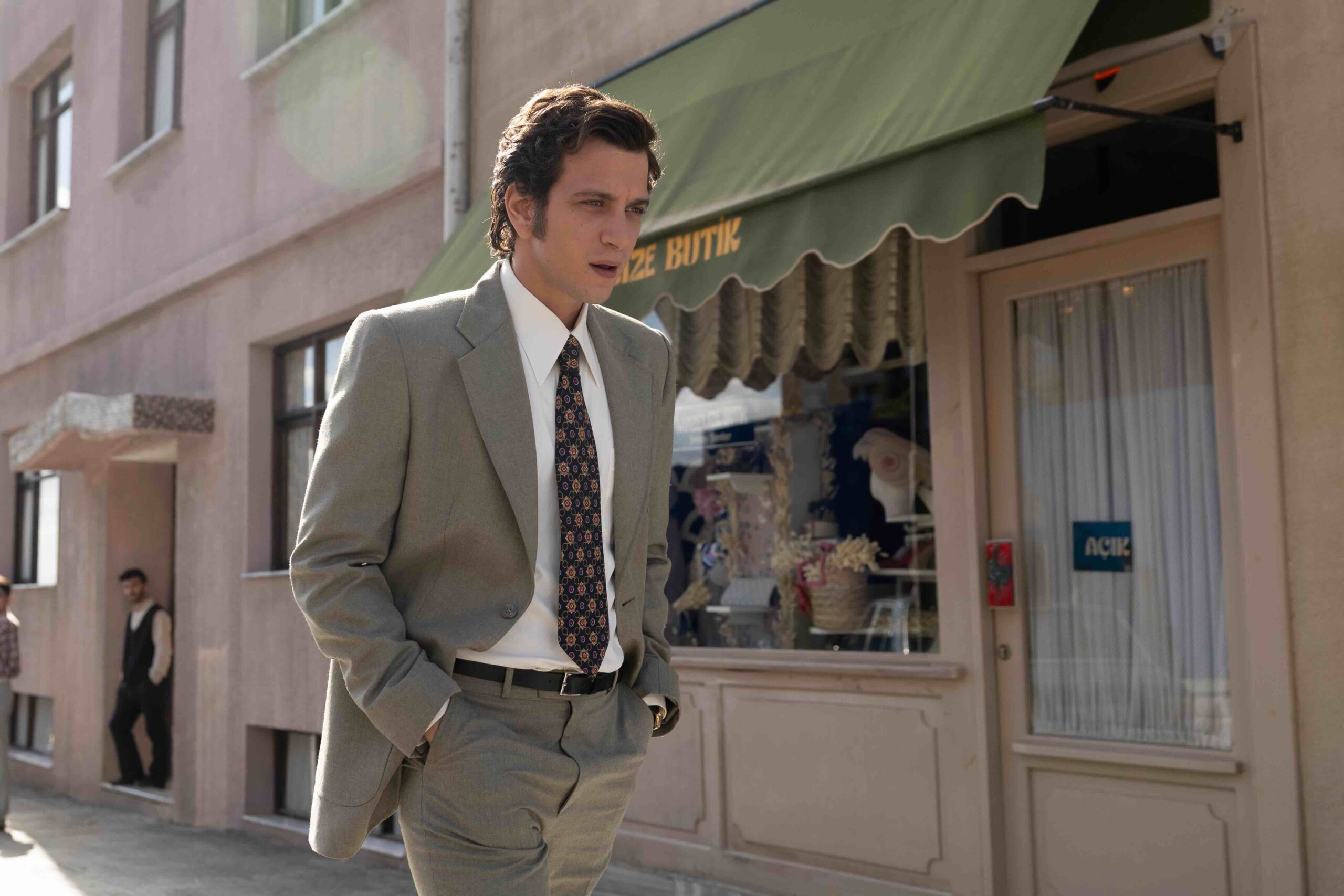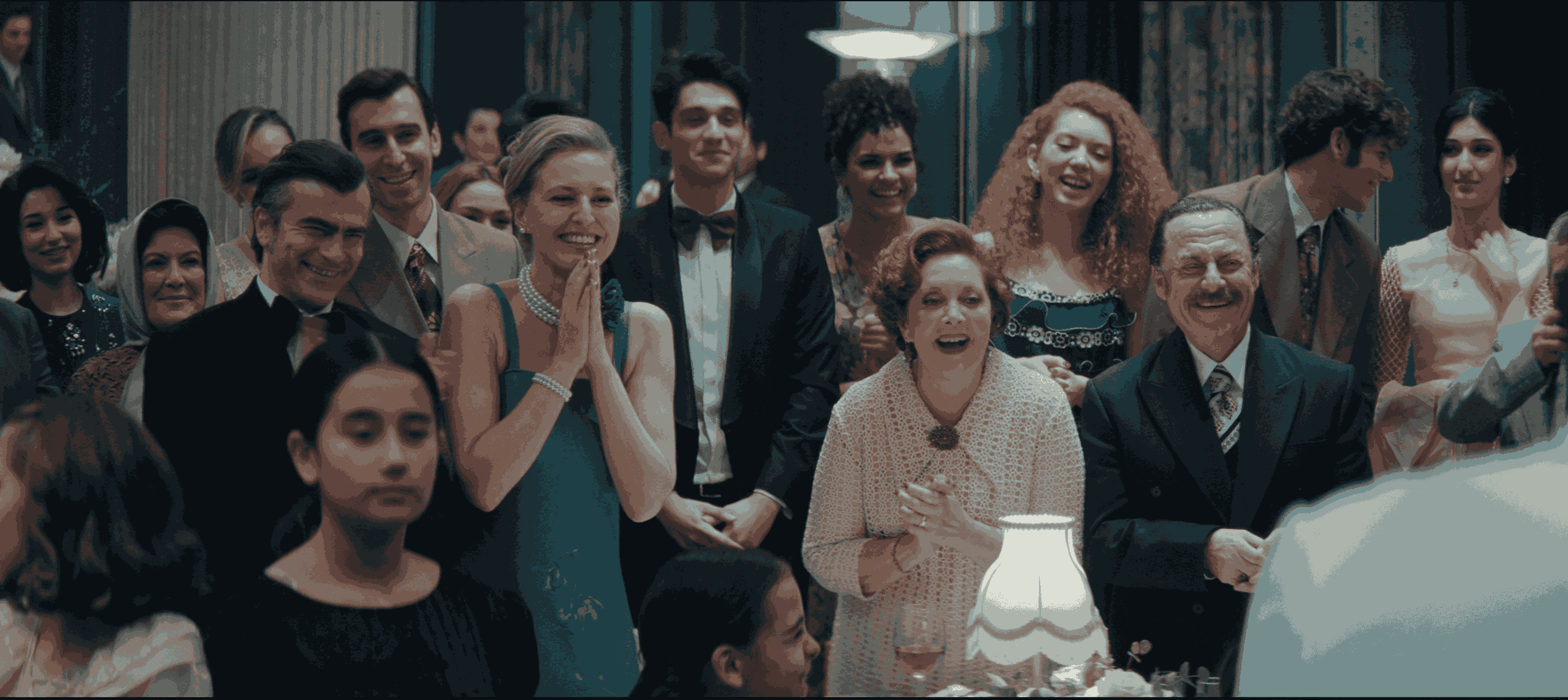


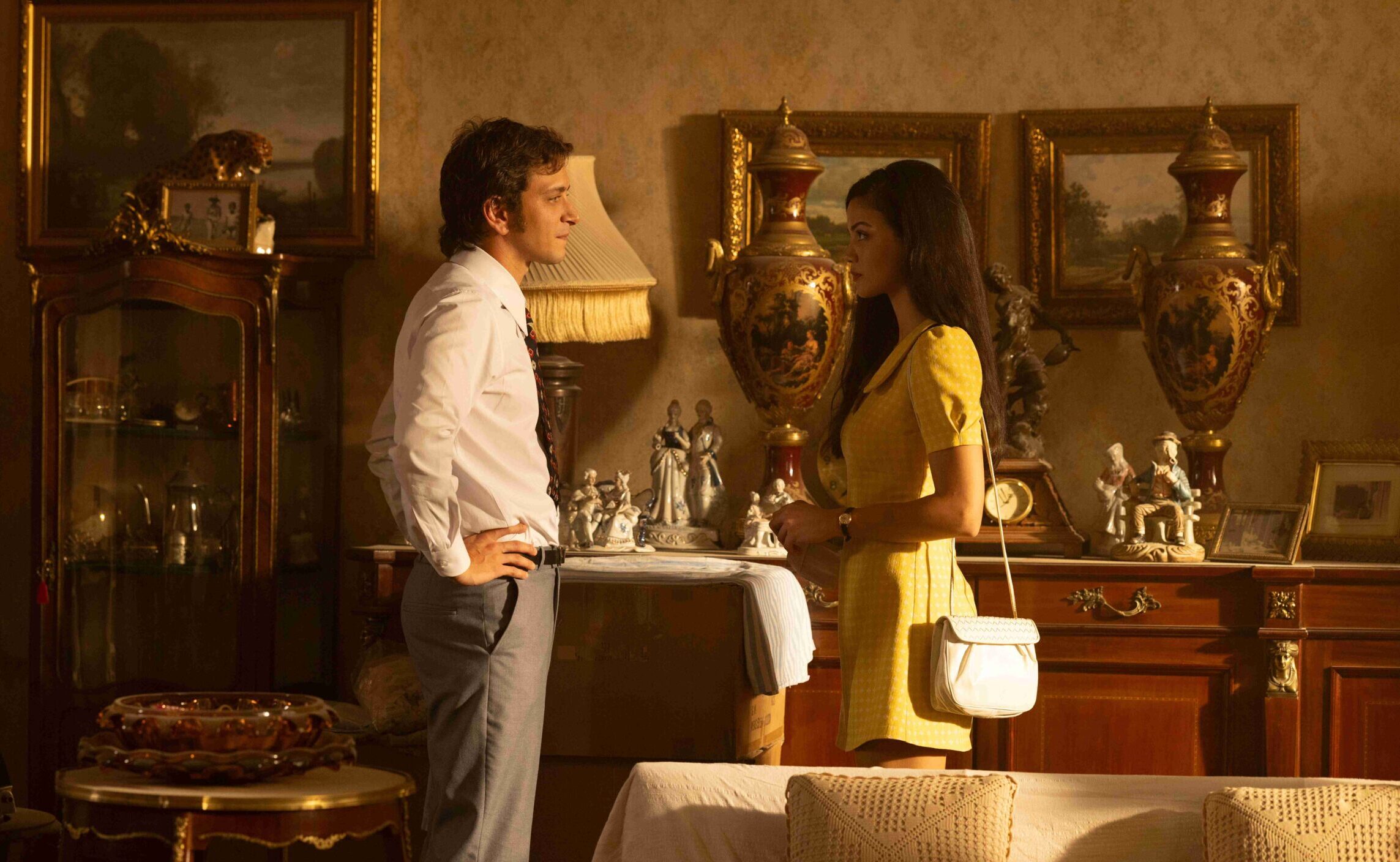
In the series The Museum of Innocence, adapted from Orhan Pamuk’s novel of the same name, space is conceived not merely as a backdrop for scenes but as a fundamental carrier of memory, obsession, and a troubled relationship with time. Objects cease to be displayed items and become accumulated, preserved fragments of memory weighted with meaning; rooms, corridors, and light quietly reveal the characters’ inner worlds.
Deliberately distancing itself from a nostalgic 1970s aesthetic, this visual language leans instead on traces of everyday life, wear, and repetition. We spoke with the series’ art director Murat Güney about how space turns into a narrative tool, the conceptual relationship with the idea of the museum, how Kemal’s and Füsun’s worlds diverge through objects, and an art direction approach built on “suggesting rather than showing.”
The Museum of Innocence goes far beyond being an adaptation of Orhan Pamuk’s novel; it constructs a narrative that visually thinks through memory, obsession, time, and repetition—indeed, one that inscribes these concepts directly into space. In the series, the story is not carried solely by what the characters say or do, or by the progression of the plot. Rooms, corridors, wall surfaces, the way light enters a space, the aging of objects or their remaining in place all become fundamental components of the narrative. For this reason, art direction in The Museum of Innocence transforms from establishing an aesthetic background into a primary creative field that builds the mental and emotional map of the story.
Traces of Everyday Life Instead Of Nostalgia
In The Museum of Innocence, time does not progress linearly; memories compress, repeat, and accumulate. The reappearance of the same spaces with small changes makes visible not a sense of progress but the deepening of obsession. While spaces often remain fixed, what changes is the meaning carried by objects and the traces time leaves on them. One of the series’ most striking choices is its deliberate removal of 1970s Istanbul from romantic and nostalgic clichés. Instead of postcard images of Istanbul, sepia tones, or decorative objects that loudly announce the period, subtle details that quietly seep into everyday life come to the fore. The color palette is built not on historical accuracy but on emotional continuity; warm yet muted tones gradually evolve into a colder, more alienating atmosphere over time. Light, material textures, and signs of wear become the most powerful tools for conveying the period.
The relationship established with the physical space of The Museum of Innocence is shaped through a conceptual encounter rather than a one-to-one transfer. The objects in the series are not exhibited items; they exist as accumulated, preserved pieces that grow heavy with meaning. In Kemal’s world, objects are protected, isolated, and almost fetishized; in Füsun’s world, everyday items that are used, worn, and dissolved into life come to the fore. The distance between the two characters becomes most evident in the ways these objects are used, in these silent material differences.
In this narrative universe—where space, light, and framing are conceived together from the outset—sets are deliberately left neither “too perfect,” “clean,” nor “complete.” Small flaws, inconsistencies, and elements of chance are preserved to create not the feeling of a constructed set, but of a space with a past. Lived experience is not shown explicitly; it is suggested. At this point, art direction becomes not merely an aesthetic choice but a creative decision that touches the very essence of the narrative. We spoke with Murat Güney, the art director of The Museum of Innocence, about how space becomes a narrative tool, how objects gain character, and how time acquires a visual language.
In a story like The Museum of Innocence, which progresses through objects, rooms, and repetition, art direction almost turns directly into the narrative itself. In this project, how did you construct space not as a backdrop but as a structure that carries the story?
In this project, we approached space not merely as a backdrop for scenes but as an active narrative tool that carries the mental structure of the story. In The Museum of Innocence, time does not progress linearly; memories repeat, compress, and accumulate. We designed the spaces according to this state of mind. Rooms, corridors, and objects functioned like memory zones carrying the characters’ psychology.
We conceived the sets not as finished, frozen structures from the outset, but as living spaces that transform along with the characters. The repeated appearance of the same space with small changes was a deliberate choice to convey that Kemal’s obsession does not advance, but only deepens. Layouts often remained fixed; what changed was the aging of objects and the meanings they carried.
The 1970s Istanbul is often recreated with a romantic aesthetic. Were there images, colors, or decorative reflexes you consciously avoided while constructing this period? How did you approach it?
From the very beginning, we deliberately avoided nostalgic and romanticized images of the 1970s. Instead of postcard Istanbuls, sepia tones, or objects that loudly announce the era, we focused on everyday details that quietly seep into life.
We built the color palette emotionally rather than historically. In the 1970s, we used warmer but muted tones; as we approached the 1980s, colder and more alienating colors emerged. Transitions were not drawn with sharp lines but felt like the gradual change of a home over time. The way light enters a space, material textures, and signs of wear became the main elements conveying the period.
One of the most frequently asked questions is this: Did some of the objects we see in the series come directly from The Museum of Innocence? What kind of relationship was established between the museum and the set design?
For us, the museum was not a source to be transferred one-to-one, but a conceptual reference field. Very few objects were used directly; the main relationship was built on the way the museum assigns meaning to objects. One of our core principles was that every object should carry a story and have a reason for being there. In set design, we referenced not the museum’s exhibition language, but its mental relationship with objects. Objects were not exhibited; they were accumulated. This approach formed the backbone of the relationship between the set and the museum.
When bringing objects taken directly from the museum or used as references into the series, did you maintain strict fidelity, or were they reinterpreted according to dramatic needs?
The meaning an object has in the museum and its dramatic counterpart in the series did not always overlap exactly. In such cases, we preferred to preserve the form while rewriting the context. Some objects were transformed in scale, color, or mode of use according to dramatic needs. What mattered was not the object being an exact replica, but the emotion it carried.
Did you make a conscious distinction between the objects Kemal accumulates and those Füsun uses in her daily life? How did these two worlds diverge through objects?
This distinction was very clear for us. In Kemal’s world, objects were meaning-laden, almost fetishized items. They were singular, protected, and isolated—accumulated, preserved, and sanctified. In Füsun’s world, objects were functional: used, worn, passed from hand to hand, and dissolved into life. We tried to observe this difference at every stage, from material selection to placement. Kemal’s objects remain; Füsun’s live. The visual distance between the two worlds was felt most strongly in the way objects were used.
How did you establish a shared language with Ahmet Sesigürgil through space, light, and framing?
The most valuable thing in this project was that, together with our director Zeynep Günay and cinematographer Ahmet Sesigürgil, we built a shared world from the very beginning. We treated space, light, and framing not as independent elements but as different layers of the same perspective. We conceived spaces as active parts of the camera. Walls, doorways, and depths were designed according to the movement of the frame.
At what point did the relationship between set design and the camera challenge you the most in this project?
The most challenging point was ensuring that such layered and detailed sets did not restrict the camera. Creating spaces that were both narrow and breathable required a serious balance.
How did you establish a balance between real locations and constructed sets? What did you pay particular attention to so that the audience would not feel they were looking at a “built” world?
We consciously carried the flaws and randomness we observed in real spaces into the sets. Small imperfections on walls, mismatched repair traces, and disproportions were deliberately preserved. We never left the sets overly clean or orderly. Our aim was not for the audience to say “this is a set,” but to feel the past of that space. Lived experience was not shown; it was suggested. In this way, we tried to establish an invisible transition between constructed sets and real locations.
Issue 33 is Now Available!
Get it in both print and digital versions.
Turkish Edition