


“It Felt Like We Were Inside The Book, Not On Set” -
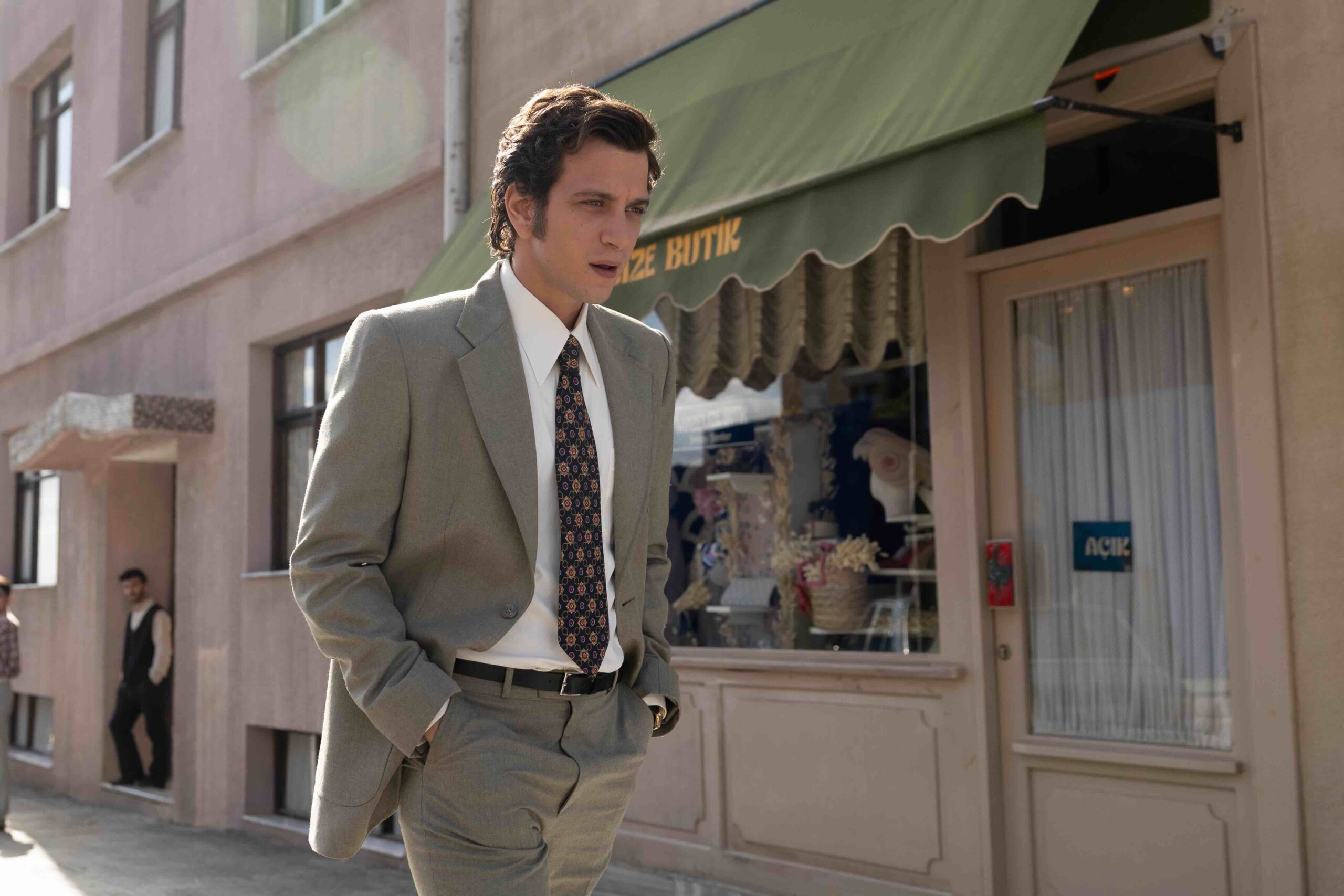
Selahattin Paşalı, Masumiyet Müzesi dizisinde Kemal Basmacı rolünde.

“It Felt Like We Were Inside The Book, Not On Set”

We spoke with director Zeynep Günay, who says, “It felt Like we were inside the book, not on set” and with Orhan Pamuk, who notes, “We wanted the work to feel timeless,” about Netflix’s upcoming series T"he Museum of Innocence", adapted from Pamuk’s novel of the same name.

/

I’m curious. What kind of relationship did you have with the book when it first came out fifteen years ago?

You know, there are two ways of connecting with The Museum of Innocence. Or rather, with Kemal. Personally, I couldn’t put the book down. I was completely immersed in it, and I understood Kemal. I found a lot of myself in him, and in Füsun too. After finishing the book, I met up with the group of friends I had been reading it with, and we started talking about it. I remember being genuinely surprised. I thought, “Did I read a different book?” The other eight friends all felt differently. There was no shared opinion at all. Everyone had their own interpretation, and I remember that very clearly. Reading the novel again, fifteen years later, through this project, turned into a very interesting journey for me. Back then, it was a 32-year-old single person at the beginning of her life who was reading the book. Now, it is a 50-year-old woman.

There’s the moment when you first read the book, and then there’s now. Let me ask about both. What feeling did it leave you with? What stayed with you?

They’re actually quite different. The first time I read it, I remember approaching the story more through Füsun. Back then, it lingered in my mind almost as a book about her. When I reread it fifteen years later, I realized that Füsun almost disappears, and that it is, in fact, Kemal’s book. I suppose the first time around, I empathized with Füsun and filled in a lot of gaps in my own mind. I also approached Kemal through Füsun back then. So I remember reading it with this feeling about Füsun: “Oh no, how instinctive and brave this girl is. Despite all social conditioning, she throws herself into love with no expectations. She offers something so profound, and yet she is never truly seen.”

But fifteen years later, working on the screenplay and telling Kemal’s story from such a grounded place, portraying love without romanticizing it, showing it as something that carries beauty but also has the power to reveal our darker sides, affected me deeply. At the same time, I noticed something I hadn’t picked up on before. When it comes to love, we tend to center ourselves a lot, our choices, our partners. Yet The Museum of Innocence also speaks about forces larger than you, about coincidences. The Jenny Colon handbag is a beautiful example of this. The book is full of chance encounters, moments that feel like the universe’s timing. That brought me a sense of relief. Not everything has to be loaded with meaning. Sometimes it’s coincidences, the places they carry you to. Sometimes moments, randomness, and chance can shape your greater destiny. That’s something I saw more clearly in my second reading, and I wanted to include that too.

And you’ve carried that into the series as well. At one point, Kemal says, “We slept together, that’s all.” It sounds simple.

Yes. He is asking, Can it really be that simple? There’s also a line from his mother, which I love. She says to Kemal, “Can there be love in a country where men and women cannot even speak to one another?” I think both lines say something very powerful, not only about love in general, but also about how love is perceived in our society. And yet, even when you reduce it to something that simple, it remains a novel of extraordinary depth, one that leaves all of us with so many unanswered questions.

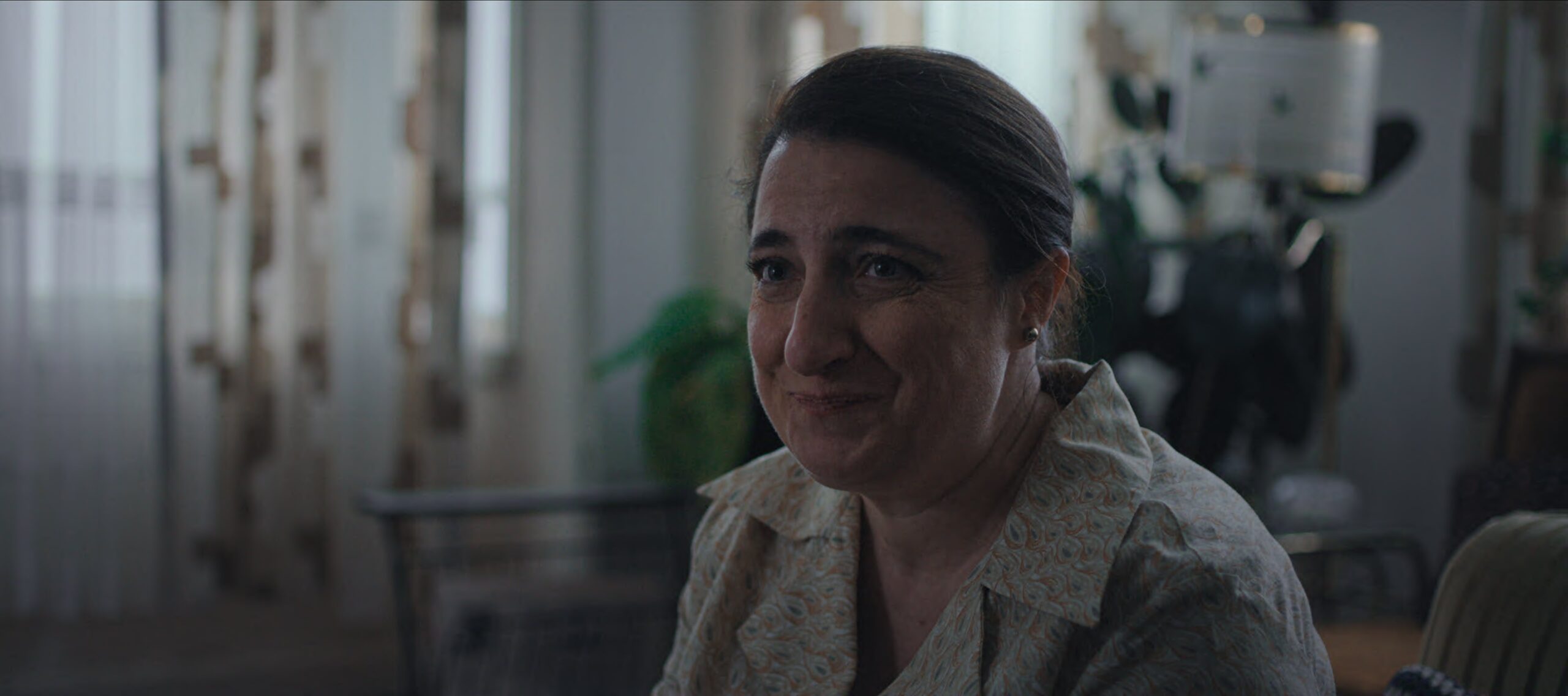
Gülçin Kültür Şahin, Masumiyet Müzesi dizisinde Füsun’un annesi Nesibe rolünde.

Yes, both scenes are very striking. And both mothers are wonderfully performed. Their roles aren’t very long, but Füsun’s mother says, “He will forget you, so you forget him too, my son.”… How did you approach that? How did you build the characters and those relationships with actors like Tilbe Saran and Gülçin Kültür Şahin?

First of all, they are both extraordinary actors. When they take on a character, they are able to move gracefully between its light and dark sides. They approach their roles without judgment, genuinely trying to understand the character. I think the greatest advantage was entrusting those roles to them. With Tilbe, of course, we have a long history. That, in itself, was very reassuring for me. I feel that the mothers carry a crucial weight in the depths of The Museum of Innocence. There was something I hadn’t noticed the first time I read the novel, and even on my second reading, when I was going through it very carefully, it still didn’t fully register. It emerged during our pre-production work. I realized that the root of Kemal’s decision to build the museum lies in his mother’s compulsive collecting. In the Merhamet Apartments, we see a woman trying to fill the void of an unhappy marriage by buying objects from various places, never used. That house is, in fact, a museum of unused belongings and an unhappy marriage. That is why, when we first see it, I wanted the curtain over the wedding photographs to be drawn back. None of the objects in that house has ever been used. To me, there is something deeply pathological about that. The apartment is neither rented out nor lived in, and yet it becomes the place where Kemal experiences the love of his life. It is almost like his subconscious. Later, he too builds a museum out of objects. This was one of the many reasons I found myself admiring Orhan Bey all over again. Because the more you read The Museum of Innocence, the more it unfolds in layers.

I agree with what you’re saying; it’s a profoundly layered novel. The series has turned out that way as well. Even though I’ve finished watching it, I still haven’t been able to fully process my thoughts about it.

I’m really glad to hear you say that. I told you about my own first journey with The Museum of Innocence, how everyone had a completely different interpretation. So I believe that each reading is deeply personal, and that is incredibly valuable. But when I began this project, that was also the greatest challenge for me. We worked very carefully not to impose a single point of view on a novel that leaves each reader with a different narrative. From the very beginning, that felt extremely difficult, and it was something I was experiencing for the first time. It was the hardest part. In my other work, I usually move toward a clear motivation based on what I understand from the character. Here, because there are so many possible readings, I wanted to leave certain spaces open. When the novel ends, each reader is left with a singular, intimate feeling. I did not want to reduce that to one shared emotion and steer everyone toward it. Choosing to say to myself, “This is how I must approach it,” was a new path for me. The screenplay also allows for that openness, because the characters rarely mean exactly what they say. They are always saying something, yet internally they are often saying something else. In that sense, both the preparation process and the shoot were very challenging for me as well as for the actors. And then there was the difficulty of translating emotions that are described over three or four pages in the novel into a single glance on screen, sometimes just a second long. That, too, was incredibly demanding.

The music choices are also very successful, very well matched. I keep listening to Ajda Pekkan’s Sana Doğru on repeat. In this sense, I want to ask you something more broadly. It seems that nowadays we have a certain nostalgia, maybe even longing for the ’90s in the time we’re living in. At the same time, both the novel and the series are set against a very distinct social period. Since you’re working with Netflix, were you completely independent in this regard, or does Netflix provide some kind of guidance?

There isn’t really any guidance. There are some areas where we discuss certain choices, but Netflix prioritizes our creative approach. The Museum of Innocence is my second project with Netflix; having had a positive experience on Kulüp, we have a relationship built largely on trust. My approach here was this: even though I had directed other period dramas before, I never wanted to treat this as a period piece. I didn’t approach it that way at all. We worked again with the creative team from Kulüp, our director of photography, Ahmet Sesigürgil, and production designer Murat Güney. From the very beginning, we decided, “We are not making a period drama; we are making something timeless.” The primary guide in designing the series was actually the objects in the museum. Orhan Pamuk himself collected the objects first, and then shaped the novel around them, so the objects come first. As someone who has both visited the museum and deeply loves the book, I embraced the space with affection from the start, even before approaching it from my role as director.

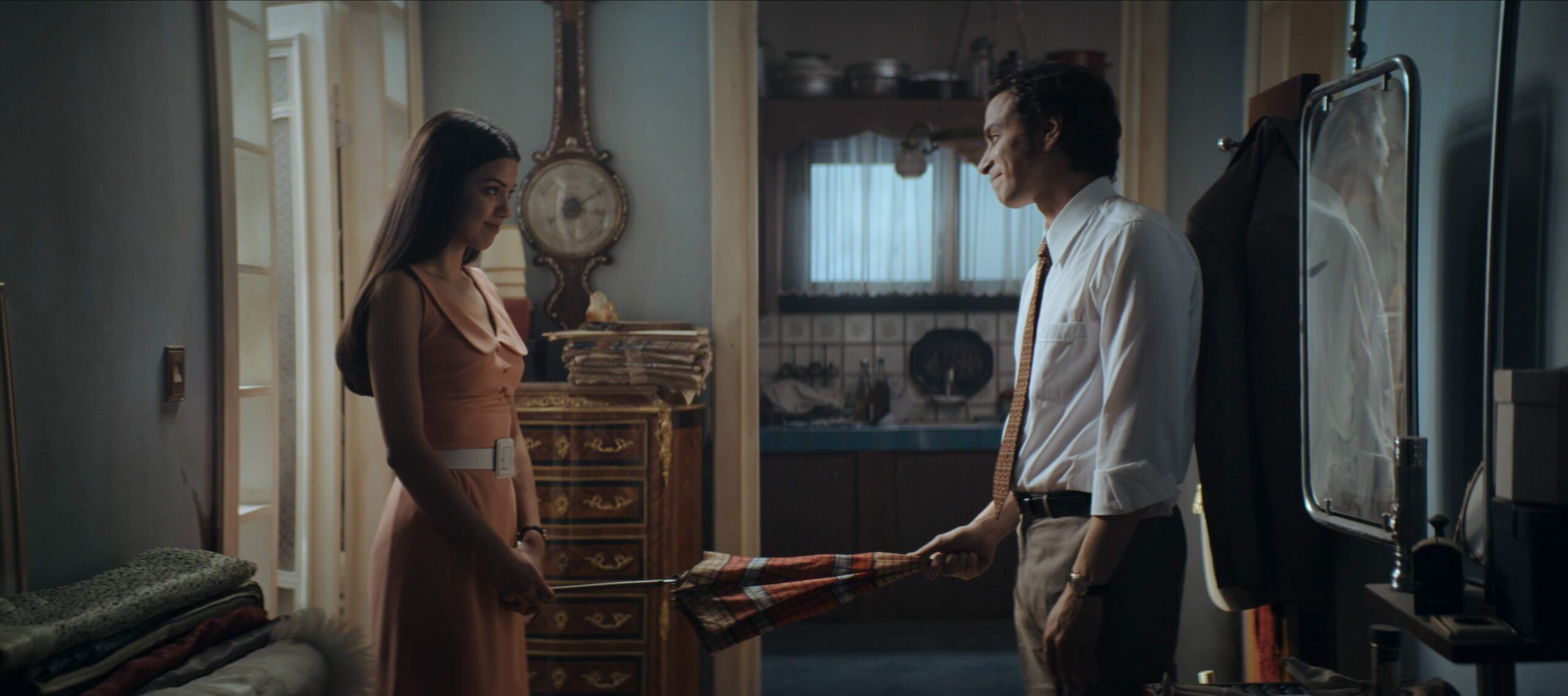
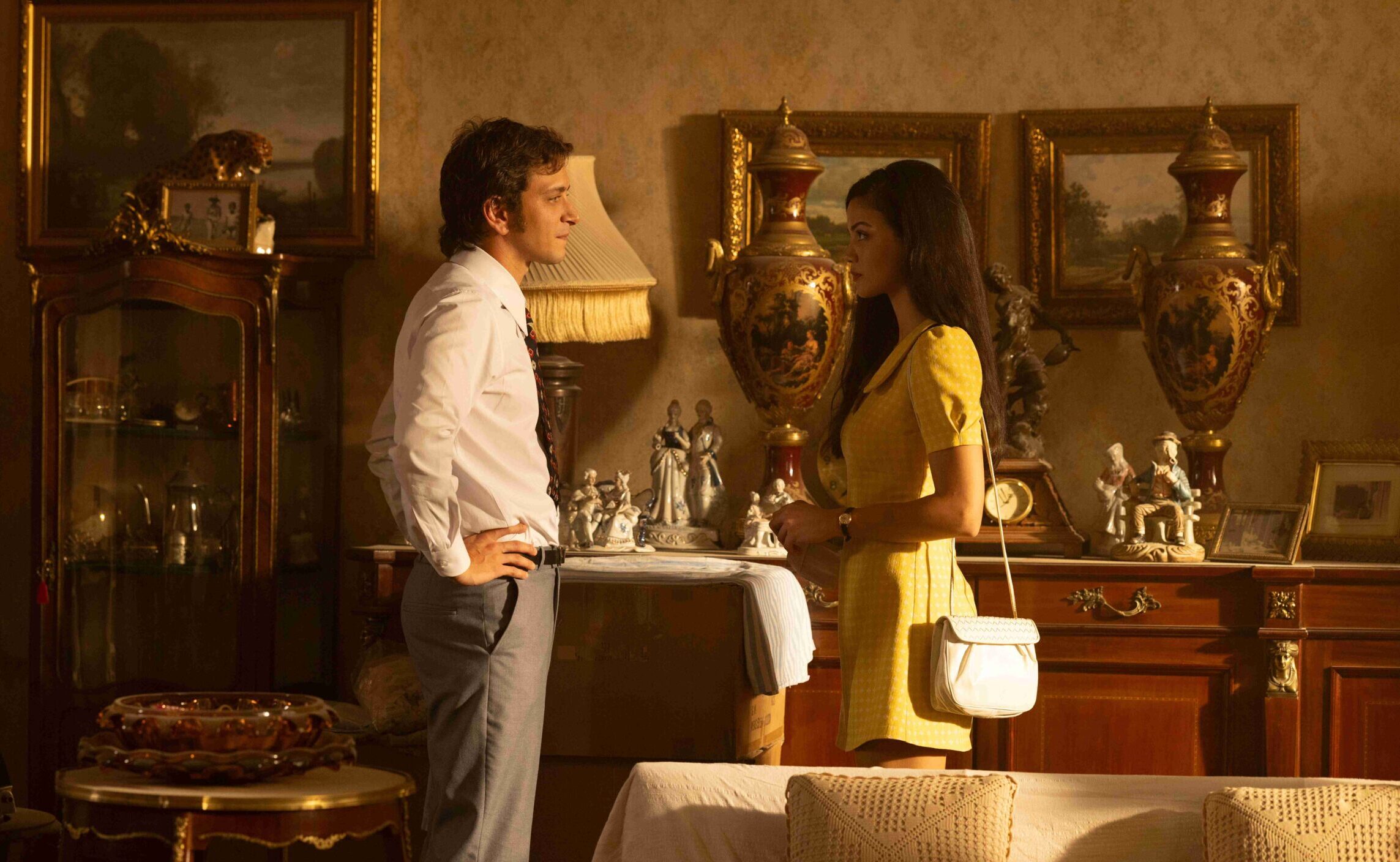
Masumiyet Müzesi dizisinden Füsun ve Kemal.

As a viewer, I can make this observation: if you take any scene from the series, the exact location doesn’t feel that central, giving it a sense of universality. You can roughly guess the era from the costumes, but if you were to take a random scene, you might think it could be anywhere in the world. How did you achieve that?

We wanted it to feel somewhat timeless, and we built the series around that idea. At the same time, we thought about Kemal’s world: he is a character trapped within the Nişantaşı society he was born into. He studied there, his home is there, his work is there, his college is there. He hasn’t really stepped outside. The country and Turkiye he knows are confined to that world. That’s where we start. As Kemal changes, we open up to another Istanbul, another reality of Turkiye. In a way, by following Kemal, this expansion happens naturally. That bourgeois world, the Nişantaşı society striving to Westernize… all of that is part of Kemal’s character. Through Kemal’s transformation and his encounter with the realities of the country, our perspective widens along with his.

In the walking scene in Çukurcuma, it feels as if his gaze is saying, “So this is another world.” Congratulations to you as well, but Selahattin Paşalı also portrayed Kemal’s character extremely well. What kind of dialogue did you have with him, and how would you evaluate his performance as an actor?

This was the first time I had to shoot a novel and screenplay entirely from a male character’s perspective. Professionally, I tend to gravitate toward telling stories about female characters—perhaps because I know them better. What really challenged us was the short preparation period. On top of that, we had to shoot scenes out of sequence. This means that emotional states were not filmed in chronological order, but in a mixed sequence. I am extremely grateful to Selahattin Paşalı for handling this. Across the nine-episode block, there were only two scenes in which he didn’t appear, and even those were very brief. Selahattin had to portray the grief of the ninth episode, sometimes the jealousy of the fourth episode, all within fifteen-minute costume-change breaks, back to back. My expectation from him was always for something very authentic and subtle. I didn’t ask him to show a specific emotion; I asked him to enter the emotion, to experience it alongside Kemal, to feel it internally rather than display it externally. Because we weren’t shooting chronologically, it was truly a challenging process—for him and for me.

How did you work with Selahattin Paşalı on portraying the character of Kemal?

We spent a lot of time creating the moments that happened before the story begins, both in the screenplay and the book. What could have happened in his childhood? For example, what is the story behind that bicycle memory? We know Kemal at thirty, but how did he first ride that bike? What was his room like? What was his relationship with his brother? What did he do during summer vacations? Did his father take him to work? How was his relationship with his mother? Does he remember the holidays when Füsun visited?

Does he remember?

Vaguely, yes. We wanted to build memories from those fragments. Before stepping on set, we actually held a workshop to explore moments not written in the screenplay, trying to experience those spaces and memories. We didn’t work extensively on the individual scenes, but we did explore areas like family dynamics together. It was a challenging process for both of us, but looking back now, it was incredibly enriching. It really felt like we were inside the book. It wasn’t the set—it was as if we were within the pages of the novel.

It’s a story that belongs to all of us. No matter where in the world it unfolds, the emotions feel human, intimate, and timeless. Given the troubled age we live in today, I think perhaps that is precisely why we feel this nostalgia, this yearning.

Reflecting on what you just said, I can relate through my own experience as a parent, observing my children’s viewing habits. Life moves so quickly now; our tolerance for anything is just a second or two. We rarely pause to reflect, and often we avoid lingering on our own thoughts, rushing past them. In such a context, staying with something and really looking at it can be challenging—but I believe it’s ultimately beneficial. Humans are, in fact, built for this. We exist fully only when we pause, observe, move through pain if it is pain, or through joy if it is joy. Yet in today’s world, everything is so fast, and we ourselves accelerate to escape certain emotions. In this sense, the act of pausing and looking within the pages of a literary novel, as in this book, can be truly restorative.

I can’t help but ask about Orhan Bey. How involved was he? I imagine it would have been impossible to do without his participation.

I truly believe the greatest gift this project gave me was getting to know Orhan Bey. We had such wonderful conversations, and he placed a great deal of trust in me. The areas we discussed and debated really opened my mind. He made me feel valued and created so many meaningful opportunities for me. I felt that, in many ways, we were on the same wavelength. Working with him was incredibly rewarding. As I mentioned, reading a book I first encountered fifteen years ago, then reading it again fifteen years later, and then reading it a third time with the thought, “Wait, I’m going to shoot this—let me pay close attention,” revealed new layers each time. Orhan Bey is someone who looks at humanity, even its darker sides, with such courage and curiosity, and for me, that is deeply inspiring. The process was beautiful in that sense. When we started filming, he couldn’t be on set because he was abroad. Toward the end of the shoot, when he finally arrived, I felt so comfortable with his presence. I wanted him to stay on set the whole time, because it truly felt as if I were inside the book. Having him on set was an immense joy—it was something that enriched me profoundly. Looking back, the work itself passes, but the human connections you build are invaluable. I will be grateful to him for life.

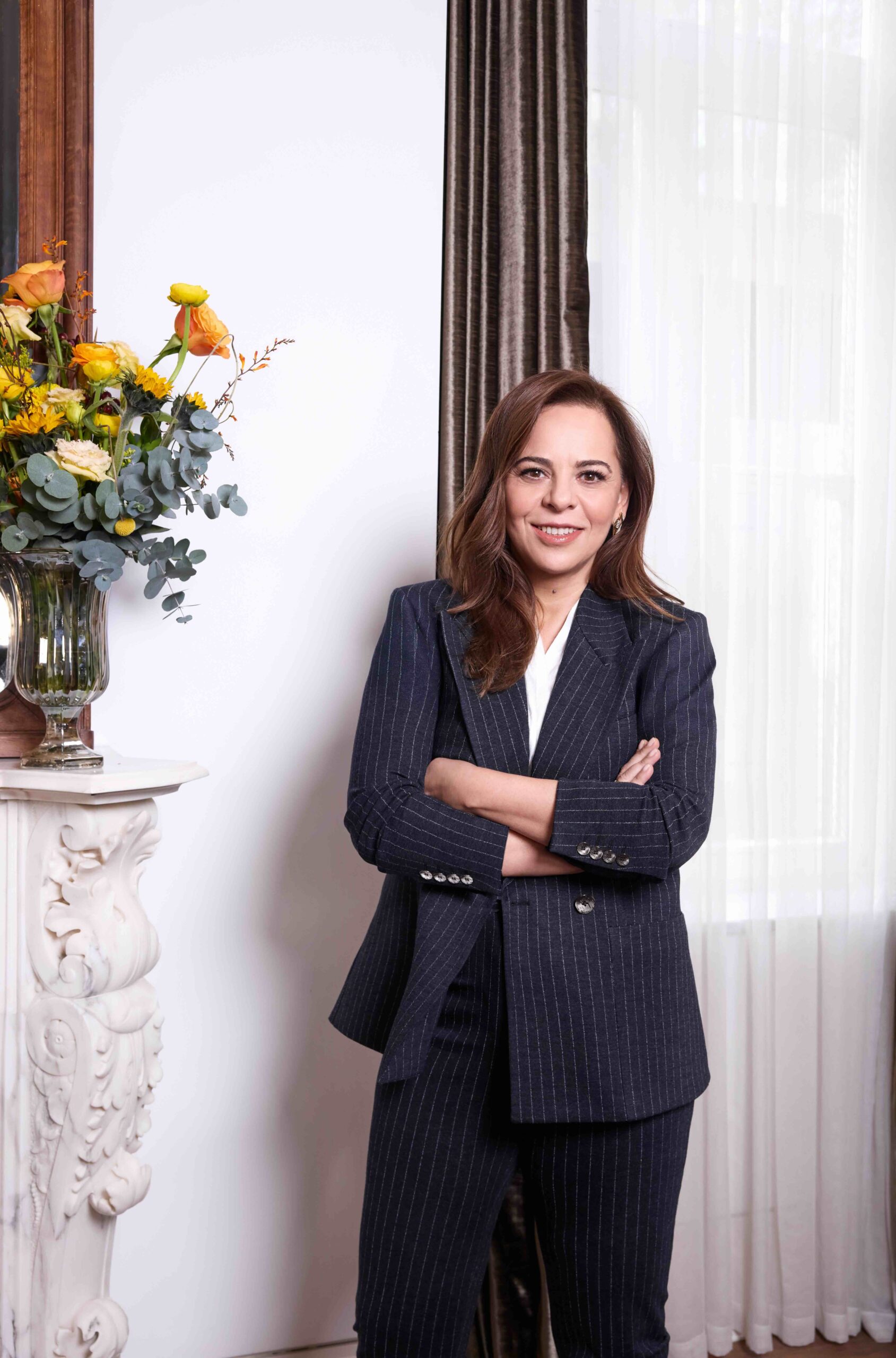
Yönetmen Zeynep Günay.

Was there a scene that was particularly challenging for you, or a moment where you were surprised and thought, “Wow, look what they brought to this scene”?

There are two scenes where I remember thinking, “Wow, look what they brought to this moment.” One is the scene after Kemal loses Füsun… when he starts reconnecting with Sibel. The other is the scene when he escapes the foyer and returns home. For that scene, I wanted it to start with rain. During pre-production with Selahattin Paşalı, we had paired certain emotions with specific pieces of music, because on set we needed to evoke those feelings very quickly. Selahattin played one of those tracks, and as we set up the lights around him, I could feel him slowly immersing himself in that emotion, feeling trapped in the moment. Lights were being arranged, he was on the bed, getting into character… I remember that moment vividly: Selahattin moving into the bed, truly experiencing something. We quickly finished adjusting the lights, and I said, “Roll camera.” When he first yelled, he didn’t even realize we were recording. That shout wasn’t for the camera—it was him navigating the emotion, letting it out, ready to come back from it. It wasn’t a “3-2-1, action” kind of moment. It was entirely within him. Then, without speaking to Selahattin, I said, “Move the camera here,” and he yelled again. By then, he realized we were recording. Watching him enter that emotion so quietly, so authentically, was incredibly moving. Even now, thinking about it brings tears to my eyes. I remember feeling goosebumps and thinking, “Wow, let this man just carry on.” That scene had a profound impact on me.

There was one moment that stood out. In the scene where he moves the candy toward his mouth on the bed, he almost sounded like a wounded, suffering animal. That wailing, mourning-like sound conveyed the pain we feel when we lose someone so effectively… I remember thinking how talented he is.

Here’s the thing: after my first reading fifteen years ago, I didn’t remember the sequence of events very clearly, but one feeling stayed with me. The only thing I remembered was him putting the objects in his mouth. I recall being so curious about it. When the screenplay arrived, I thought, “Why isn’t this here?” Later, in discussions with Orhan Bey, I said, “I want to include this too,” because it was something I had been so curious about.

ArtDog Istanbul Issue 33140,00350,00MARCH – APRIL 2026

Issue 33 is Now Available!

Get it in both print and digital versions.

Turkish Edition

Başarılı


Initiatives: The Center of Art or Its Alternative? – Performistanbul

“Kemal’s Objects Remain, Füsun’s Live”

0 0,00