

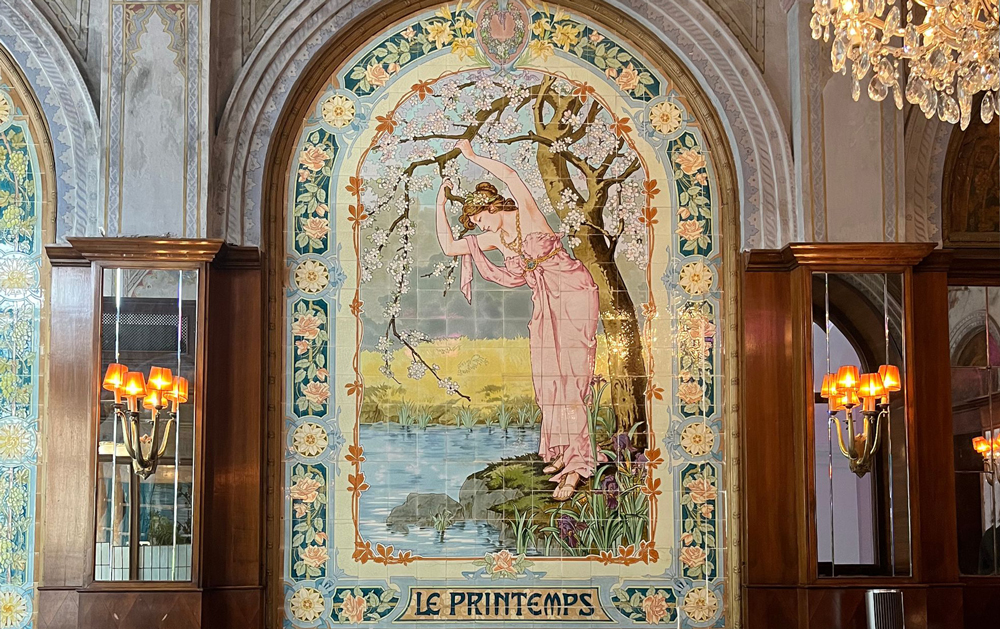
Art Nouveau, which means “New Art,” became an artistic and architectural movement in Europe at the end of the 19th century. The movement emerged as a reaction to the dullness and lack of soul in mass production, which became widespread after the Industrial Revolution.
We can identify Art Nouveau by its nature-inspired motifs, curved lines, and organic forms. These often include floral decorations, plant patterns, asymmetrical curves, and even female figures in both architecture and decorative arts. The movement is known by different names such as Jugendstil in Germany, Secession in Austria, and Modernismo in Spain. Its influence appears in various artistic fields, including furniture, stained glass, ceramics, graphic design, and architecture. Art Nouveau values craftsmanship while also embracing new materials and the advantages of the machine age.
Distinctive Architectural and Artistic Characteristics of the Art Nouveau Style
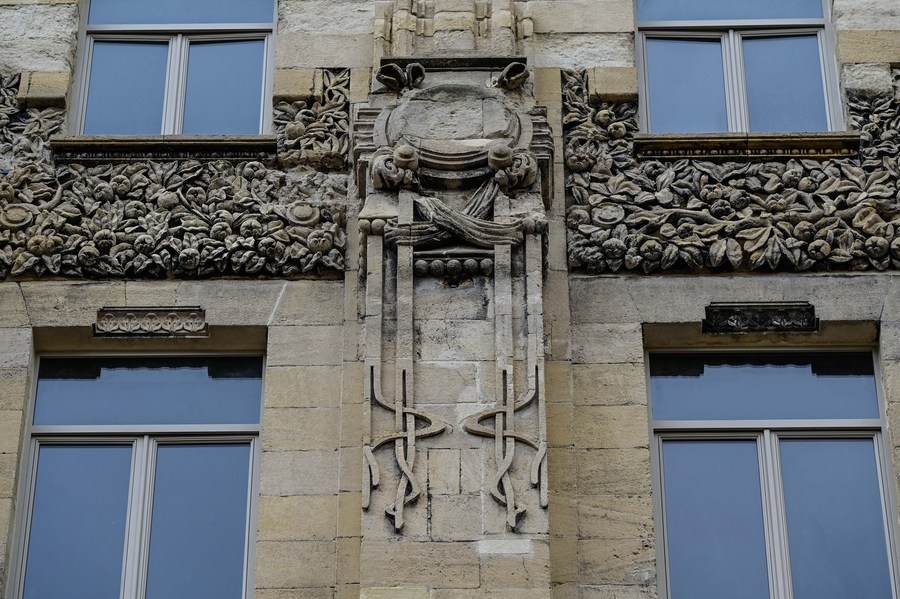
Art Nouveau architecture can be identified by its aim of aesteticizing every part of a builging and decorating it with the nature inspired designs. Façade compositions frequently display an abundance of curvilinear vegetal ornamentation, floral motifs, vines, branches. Ornamentation is not limited with façades but its visible on wrought-iron railings, stained glass windows, ceramic panels, and even furniture.
In terms of materials, Art Nouveau architects used traditional substances such as stone, wood, and plaster through careful craftsmanship, while simultaneously employing innovative materials of the period like steel and cast iron for decorative purposes. Cast-iron balcony and staircase railings, for instance, were shaped into elegant, curved forms that evoke the delicacy of lacework. Curved lines represent visual signature of the movement: façade profiles, window shapes, staircases, and furniture designs generally avoid sharp angles in favor of rounded, flowing contours.
Nature-derived forms show themseves at every part of the work from leaf and flower reliefs to wave-shaped pediments, and even to shell-like decorative elements. Color also plays a big role: vivid, natural hues appear mostly in ceramicsand stained glass compositions. In Istanbul, Art Nouveau occasionally differ from the West by including Ottoman and Eastern references. Stylized muqarnas-like patterns, calligrapy and traditional motifs often coexist with Art Nouveau’s organic and geometric ornamentation, creating an eclectic aesthetic unique to the city.
Overall, Art Nouveau merges structure and ornament elements to make art included in our daily lives. Craftmanship, creative vocabulary and a deep admiration for nature can be sensed in every part of the works from this movement.
The Arrival of the Movement in the Ottoman Empire and Istanbul
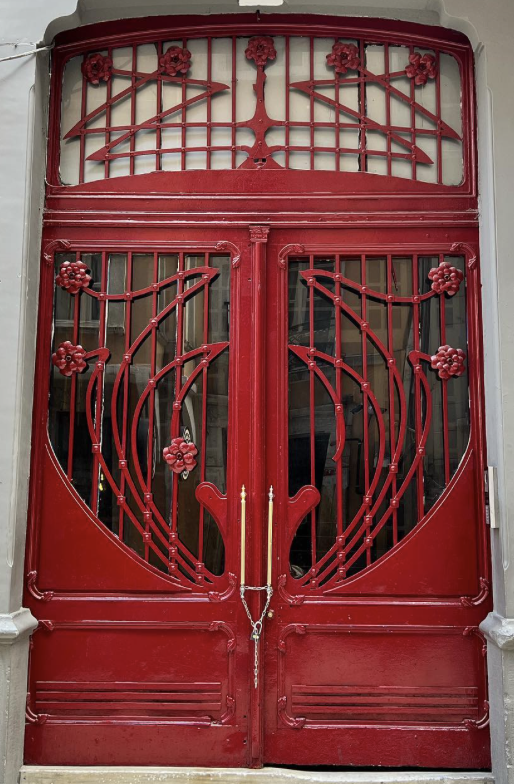
The history of Art Nouveau in the Ottoman Empire began in the late 19th and early 20th centuries, especially during the reign of Sultan Abdulhamid II. During this time, the Ottoman court and the bourgeoisie started to engage with emerging art movements from Europe. As a result, Istanbul, the largest cosmopolitan city for the Ottomans at that time, quickly adopted the influence of this international movement. The Italian architect Raimondo D’Aronco, invited by Sultan Abdulhamid for an exhibition planned in 1893, stayed in the city for many years and designed important examples of Art Nouveau architecture. Similarly, French architect Alexandre Vallaury, along with Levantine and non-Muslim architects like Hovsep Aznavur, Leon Gurekian, and Giulio Mongeri, played major roles in introducing this new style in the Ottoman capital particularly in Beyoğlu, Nişantaşı, and Büyükada. After the devastating Istanbul earthquake of 1894, reconstruction efforts gave more chances for foreign architects to restore, repair, and redesign many buildings. This increased the presence of Art Nouveau throughout the city. The façades and interiors often mixed Art Nouveau decorations with traditional Ottoman designs. By the early 1900s, Istanbul had a significant number of Art Nouveau buildings, interior designs, and objects. Although the movement was not officially called “nev-i üslup (new style)” within the empire, it has a unique place in the architectural history of Ottoman modernization, marking a distinct and noteworthy step about Westernization.
Markiz Patisserie (Lebon Patisserie)
Location: Beyoğlu, İstiklal Avenue (between Tünel and Galatasaray)
Establishment: Originally opened in 1838 under the name Lebon Patisserie. In 1940, following a change in ownership, it was renamed Markiz Patisserie.
Architect / Interior Decoration: The French-Ottoman architect Alexandre Vallaury is believed to have contributed to the interior design, although this is not definitively documented.
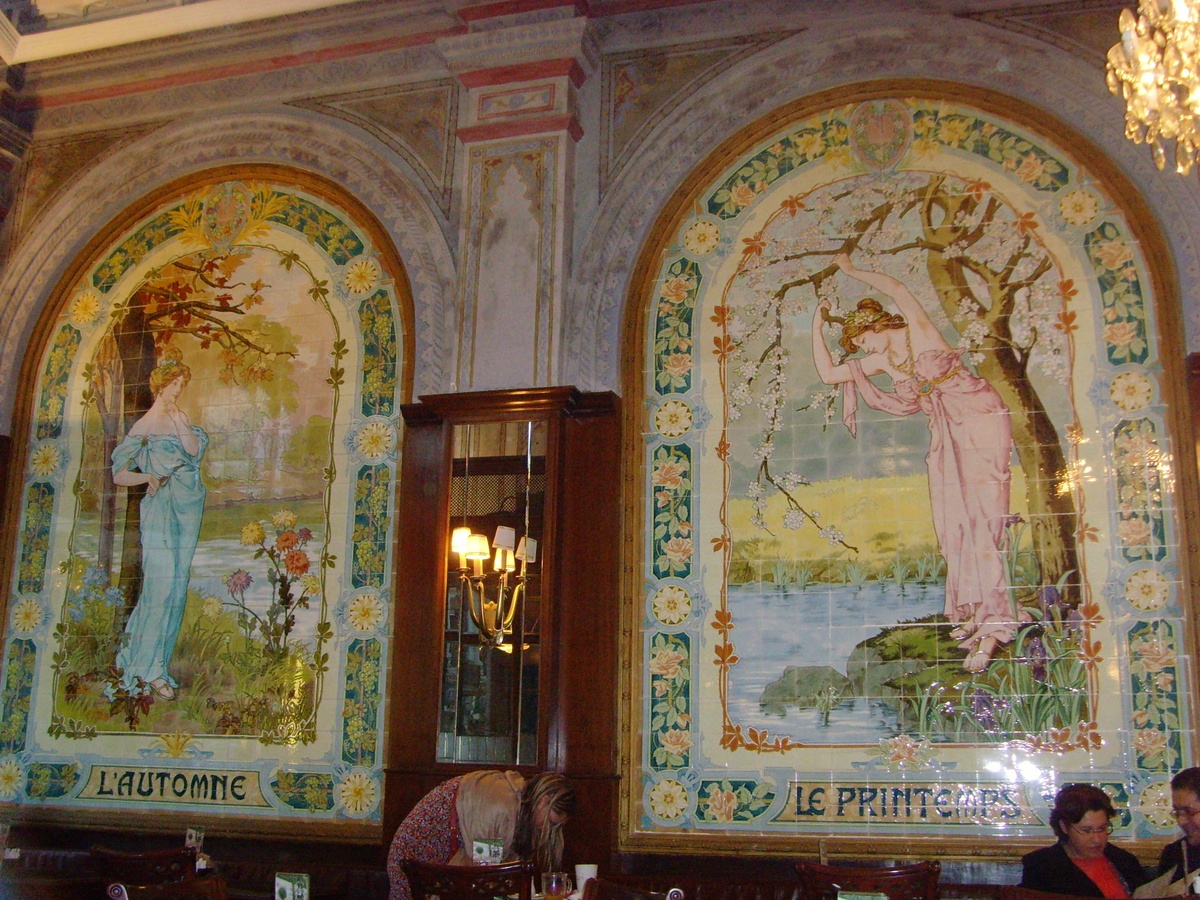
The most distinctive feature of Markiz Patisserie is the set of massive ceramic panels decorating its interior. These Art Nouveau tiles, which portray the four seasons and harmonize with the stained-glass ceiling elements adds the venue a unique atmosphere. The iconic Art Nouveau ceramic panels in the interior were commissioned from France in the 1920s. The “Four Seasons” female figures depicted on these panels were inspired by the designs of Alphonse Mucha. Original furnishings, mirrors, and wrought-iron details further reflected the elegance and refined taste of the era. Markiz served as a important meeting place for the Beyoğlu elite at the turn of the 19th and 20th centuries, attracting the upper class with its sophisticated decor and aesthetic.
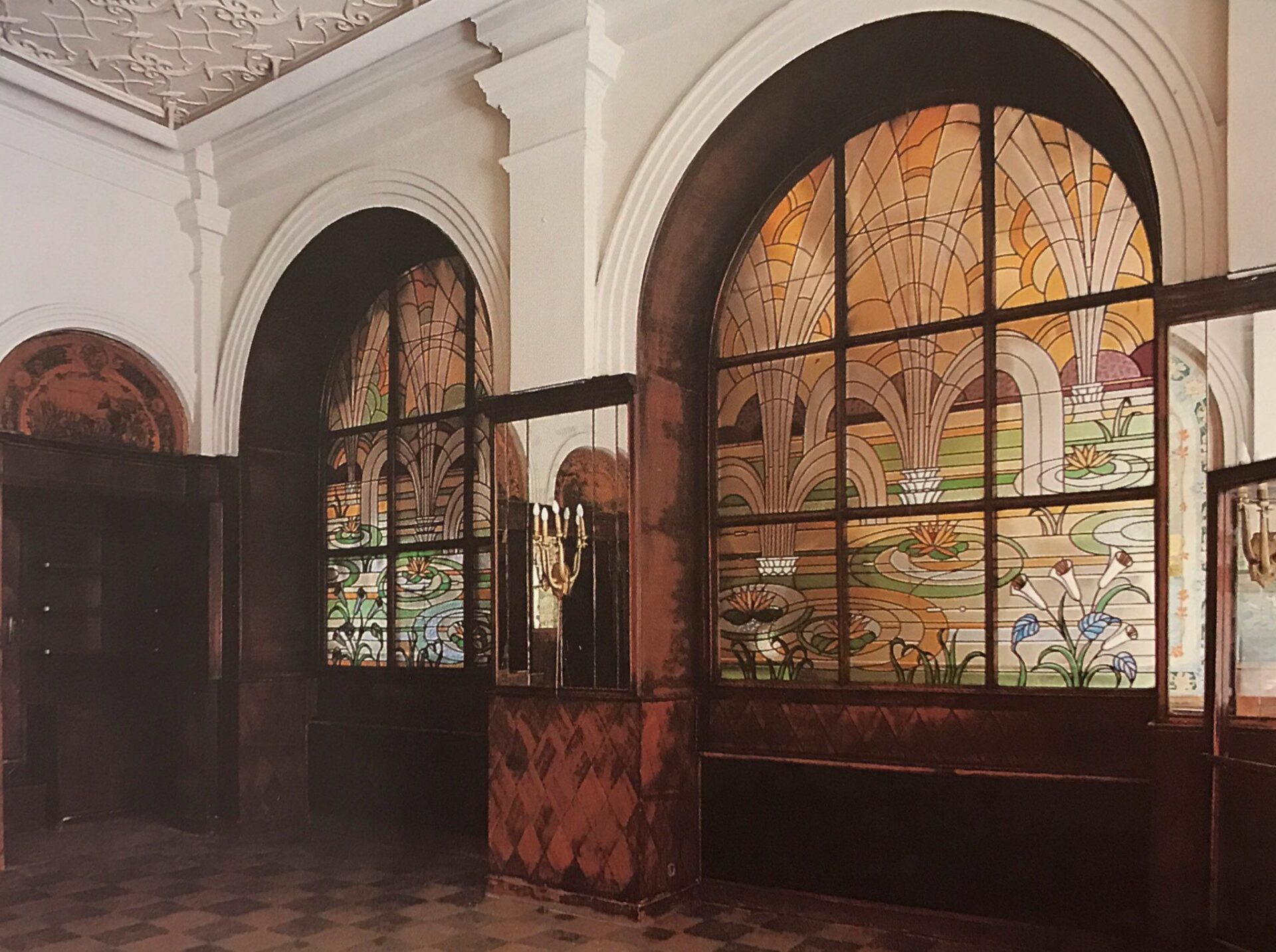
The patisserie was initially founded by the renowned French chef Édouard Lebon (in 1886) and became famous for its motto, “Chez Lebon, tout est bon” (“Everything at Lebon is delicious”). In the 1920s, Lebon renewed the decor by importing Art Nouveau wall panels from France. After Lebon’s death in 1937, the establishment changed hands. In 1940, the Armenian entrepreneur Avadis Ohanyan Çakır took over the patisserie and opened a new period under the name. The name was inspired by the Parisian chocolate shop Marquise de Sévigné, while the ceramic panels inherited from Lebon continued to be displayed in the venue. Throughout the 1940s and 1950s, Markiz became a favored haunt of leading literary and artistic figures such as Namık Kemal, Orhan Veli, and Attilâ İlhan.
After remaining closed for many years, Markiz Patisserie was restored and briefly reopened in 2003, but financial difficulties led to its closure again in 2013. Its unique ceramic panels and Art Nouveau interior decorations have been preserved and restored. As of 2025, the reopening of Markiz Patisserie has once again come to the public agenda; in March 2025, an art gallery event held inside the historic venue marked its symbolic return to Istanbul’s cultural life. Today, the historic interior of Markiz is protected as an important element of Beyoğlu’s cultural heritage.
Casa Botter (Botter Apartment)
Location: Beyoğlu, İstiklal Avenue, near Tünel, at the corner of Galata Meşrutiyet Street.
Construction: Built between 1900 and 1901.
Architect: The Italian architect Raimondo D’Aronco, the chief palace architect and one of the pioneers of Art Nouveau in the Ottoman Empire.
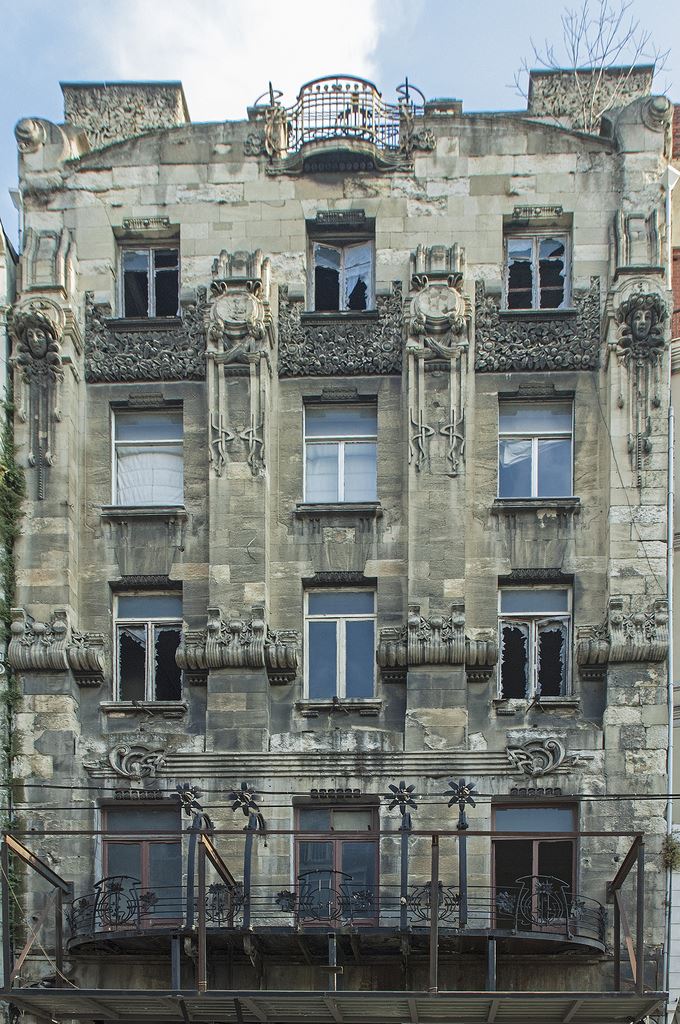
Casa Botter is the first large-scale Art Nouveau building in Istanbul. Its façade is full of with sinuous lines, leaf motifs, roses, female-headed medallions, and reliefs The elliptical projecting balcony at the front, with its floral-patterned decorative iron railing, is eye catching . Inaide, there are strong Art Nouveau characteristics like elliptical stair railings, stained-glass windows with rose motifs, one of the earliest elevators of its period, and original decorative lightings.
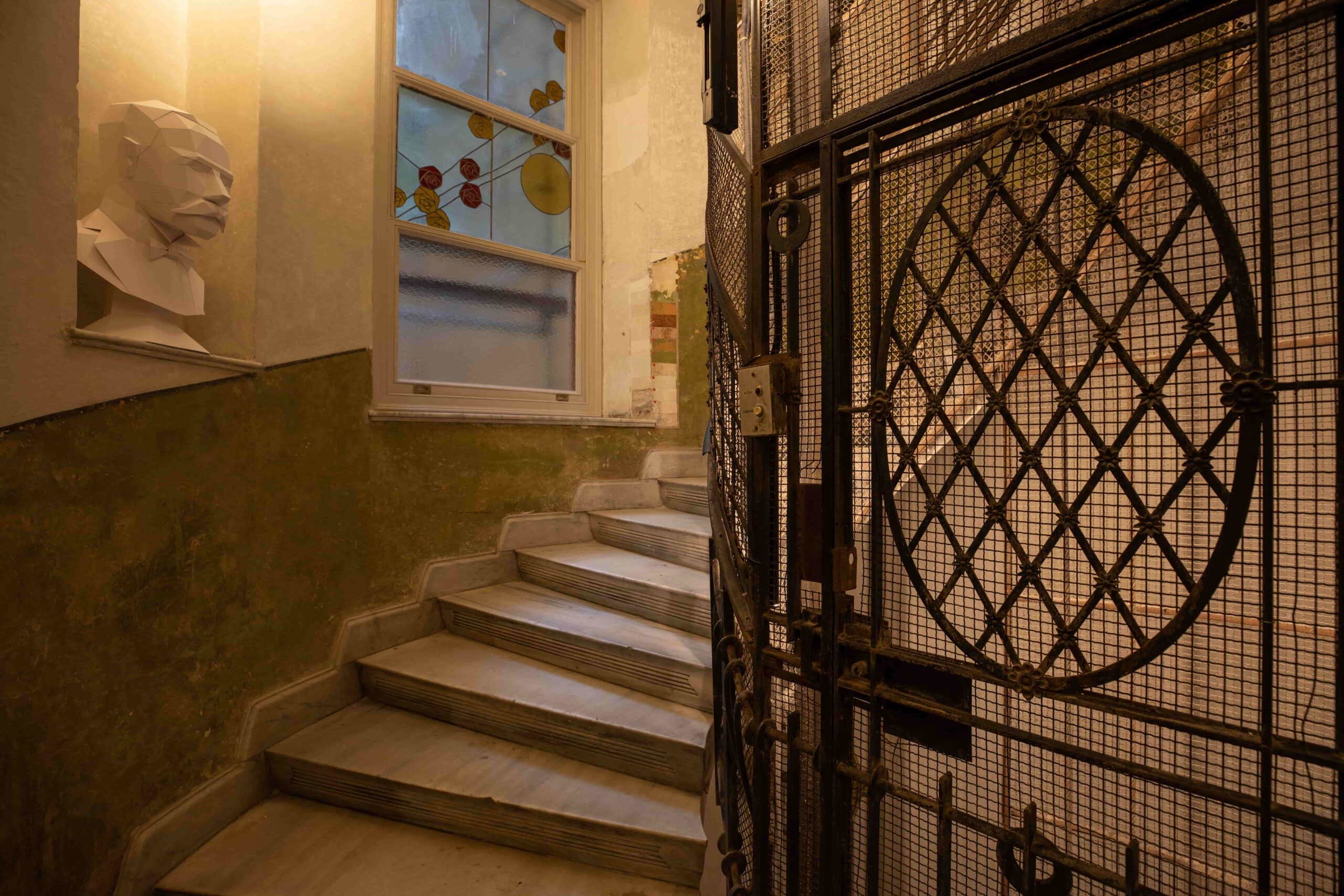
The Botter Apartment was built during the Sultan Abdülhamid II era for Jean Botter and his family. Its ground floor is Istanbul’s first fashion house where the latest haute couture dresses arriving from Paris were displayed in its shop windows. After many years of neglect and even the threat of collapse, Casa Botter underwent a restoration under the the Istanbul Metropolitan Municipality’s heritage program. In April 2023, it reopened as the Casa Botter Art and Design Center. Today, the building functions as a cultural hub, with an exhibition space on the ground floor and design studios and offices on the upper levels. The original Art Nouveau details have been carefully preserved, allowing Casa Botter to serve as a design-focused art center.
Sheikh Zafir Tomb (Ertuğrul Tekke Tomb)
Location: Beşiktaş, Yıldız, on Serencebey Slope, within the courtyard of the Ertuğrul Tekke Mosque.
Construction: Built between 1903 and 1905
Architect: Raimondo D’Aronco, the Italian palace architect.
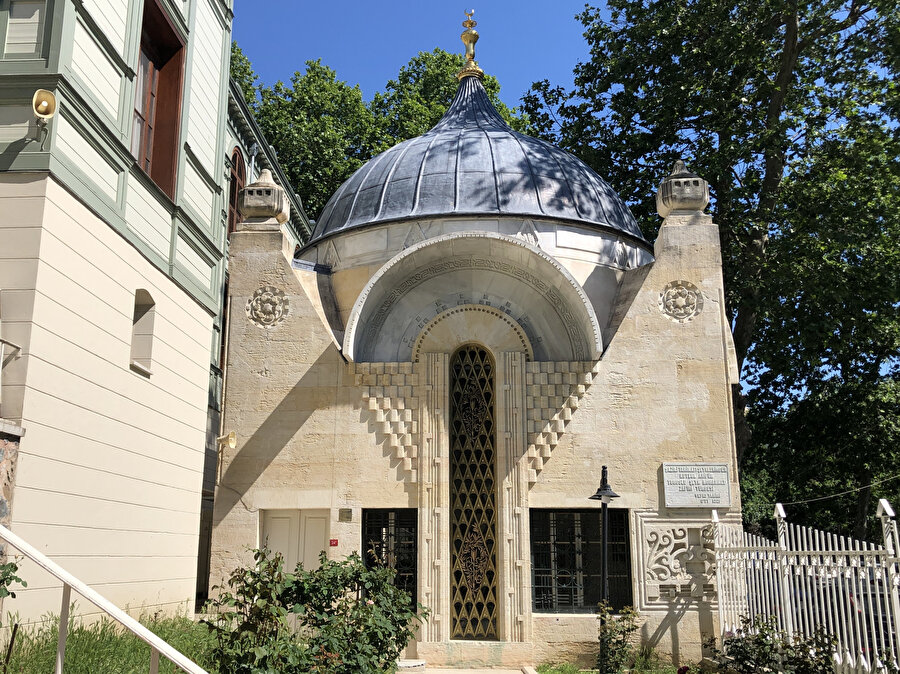
The Sheikh Zafir Tomb is an original and skillfull example of Ottoman funerary architecture with the Art Nouveau style. Its following the traditional Ottoman tomb typology by having a square plan and domed form creates a familiar silhouette from the outside. However, D’Aronco’s touch is visible in the details with three façades mirror each other, each featuring tall, narrow windows with stained glass. Within these windows, vegetal motifs in the form of olive branches rise upon conical, curvilinear, triangular bases. On the triangular areas next to the windows, reliefs that look like simplified muqarnas are used. These geometric and plant-like shapes give the façade a modern look similar to the Vienna Secession style. Inside, the dome was once decorated with light green and pink paint, circular medallions with curved acanthus leaves, and realistic flower designs.
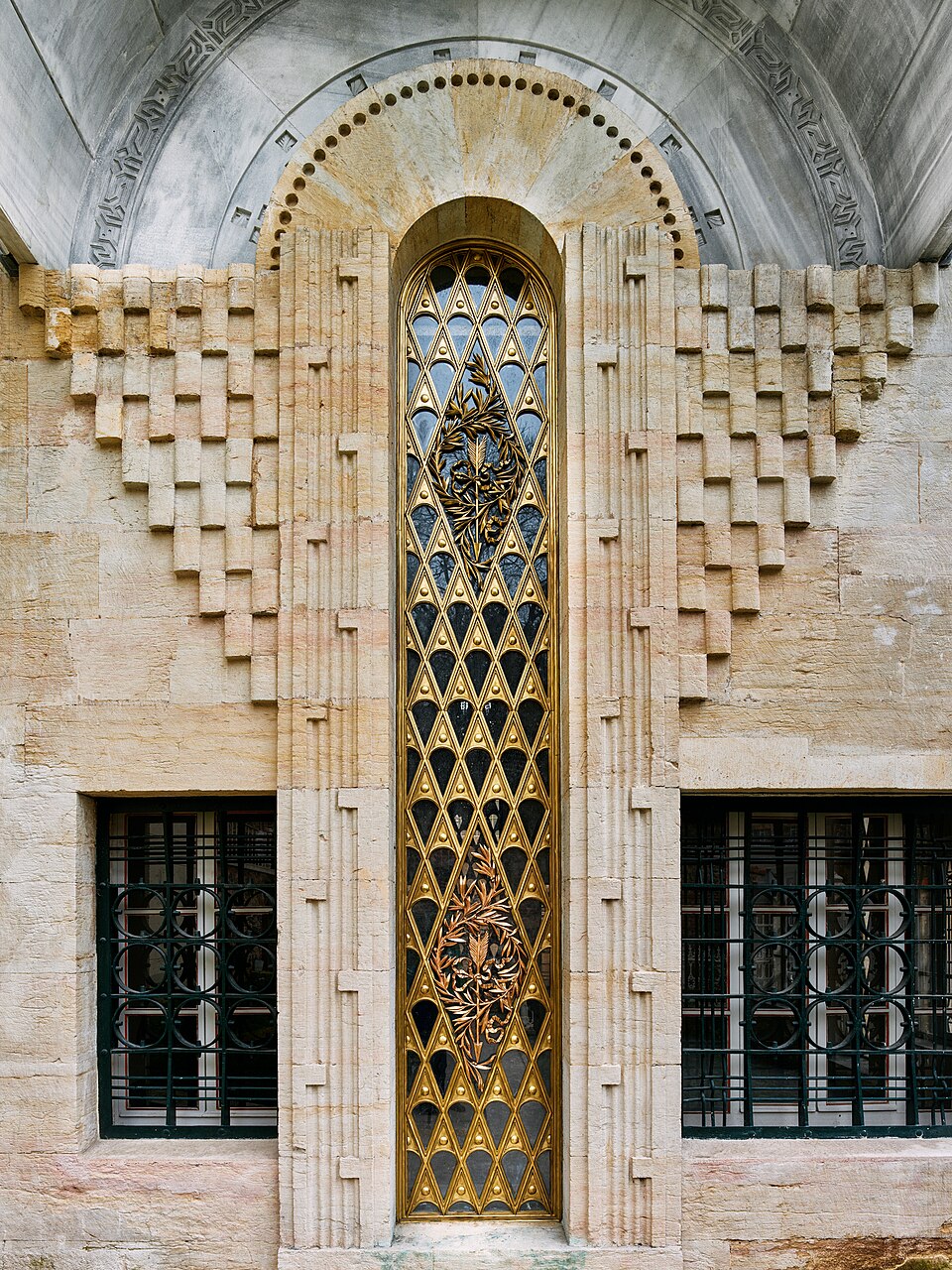
Upon the death of Sheikh Zafir Efendi on 23 September 1903, it was decided that a small complex be built dedicated to him at the Ertuğrul Tekke. Completed in 1905, the tomb became an integral part of the tekke. The complex also included a small library and a double-sided fountain designed by D’Aronco. The cast-iron grille with triangular and square geometric motifs above the street-facing fountain is particularly notable as a reflection of the era’s design sensibilities.
The Sheikh Zafir Tomb and Ertuğrul Tekke Mosque were recently restored. The tomb survives with its original decorative elements and is open to visitors. It retains its Art Nouveau wooden door adorned with lion reliefs and stained-glass windows. The library and fountain have likewise been restored and preserved. Registered as a protected heritage site in the 1990s, the complex today remains both a place of worship and of visitation.
Maksud Shahbaz Apartment (Maksud Shahbaz House)
Location: Şişli, Osmanbey, on Halaskargazi Avenue near No. 106, at the corner of Rumeli Avenue.
Construction: Built in 1905
Architect: The Armenian architect Léon Gurekian, born in Istanbul in 1871 and trained in Venice and Rome.
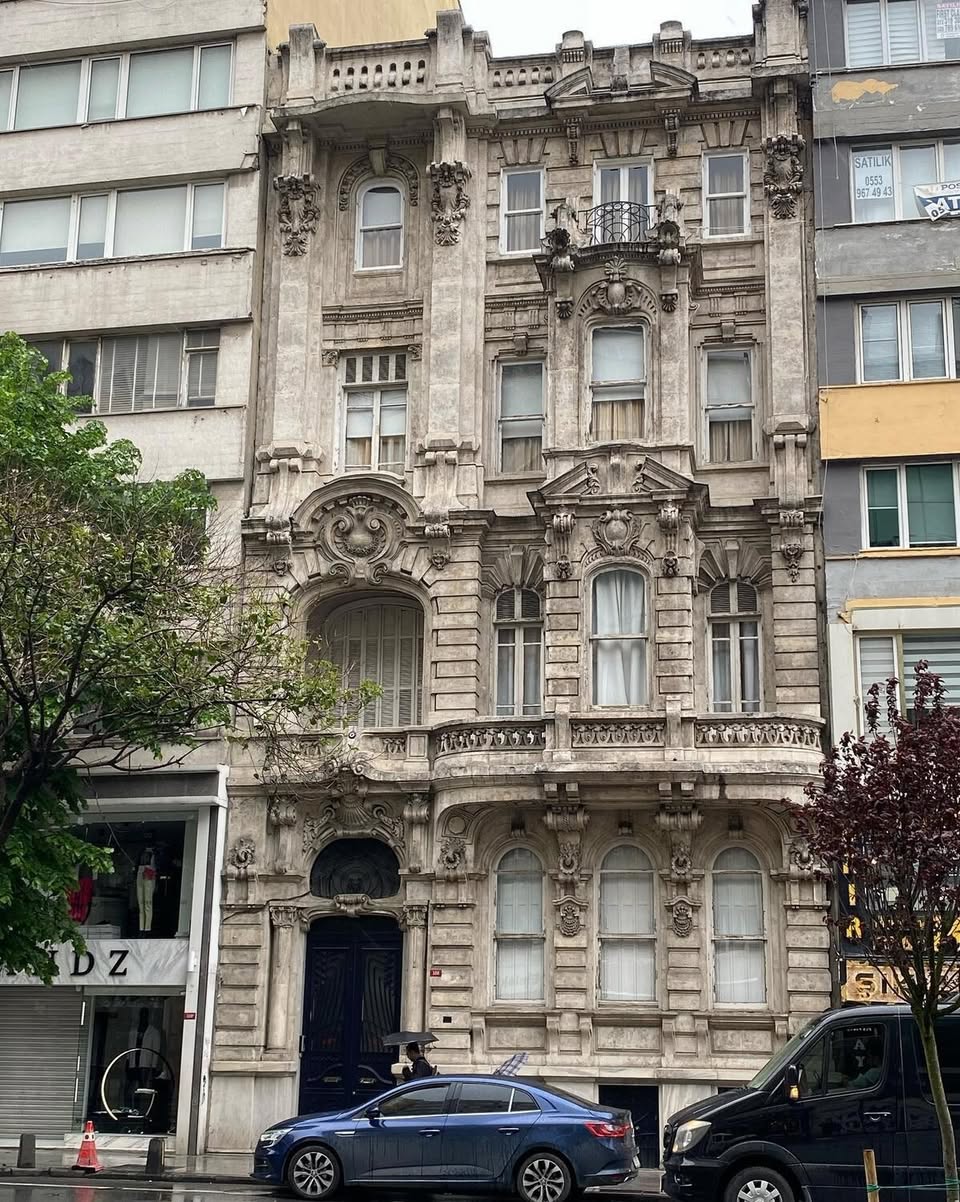
The Maksud Shahbaz Apartment is designed to have different decorative style on each of its floors. Its exterior showcases the rich ornamentation and sculptural details characteristic of the Art Nouveau movement. Floral and leaf motifs, as well as decorative bands shaped in curving wave forms, stand out on the façade. The first floor prominently displays the organic vegetal motifs of Art Nouveau, the second floor has more restrained elements in a Neoclassical style, and the third floor bears Baroque-inspired details. This approach makes the building an eclectic example.
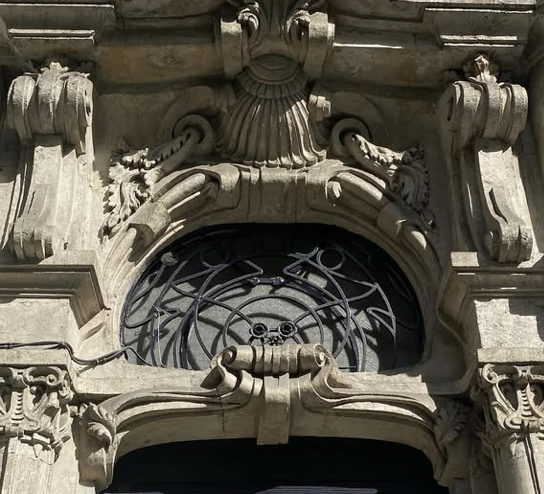
Inside, cast-iron stair railings full of motifs, stained glass windows, and wooden door frames reflect the character of the period. The building was commissioned by and named after Maksud Shahbaz who was a jeweler in Istanbul; upon his death in 1936, newspapers referred to him as “Istanbul’s beloved jeweler.” In its early years, the ground floor was used as a shop, while the upper floors served as residential spaces.
The Maksud Shahbaz Apartment still stands today and remains private property. In recent years its façade and structure have undergone maintenance, and efforts have been made to preserve its original decorative elements. According to municipal records, the current owners are the Azrak Family, and the building continues to function as a residence.
Vlora Han (Feruh Han)
Location: Fatih, Sirkeci, at the intersection of Büyük Postane Avenue and Fincancılar Street in Hobyar Quarter, directly opposite the Sirkeci Main Post Office.
Construction: Completed around 1905; the exact date remains disputed and is generally placed between 1904 and 1908.
Architect: According to recent research, the building was designed by the Italian architect Giulio Mongeri for Nureddin Bey Vlora, who was of Albanian origin. Although previously attributed to Raimondo D’Aronco, the architect was conclusively identified as Mongeri in 2023.
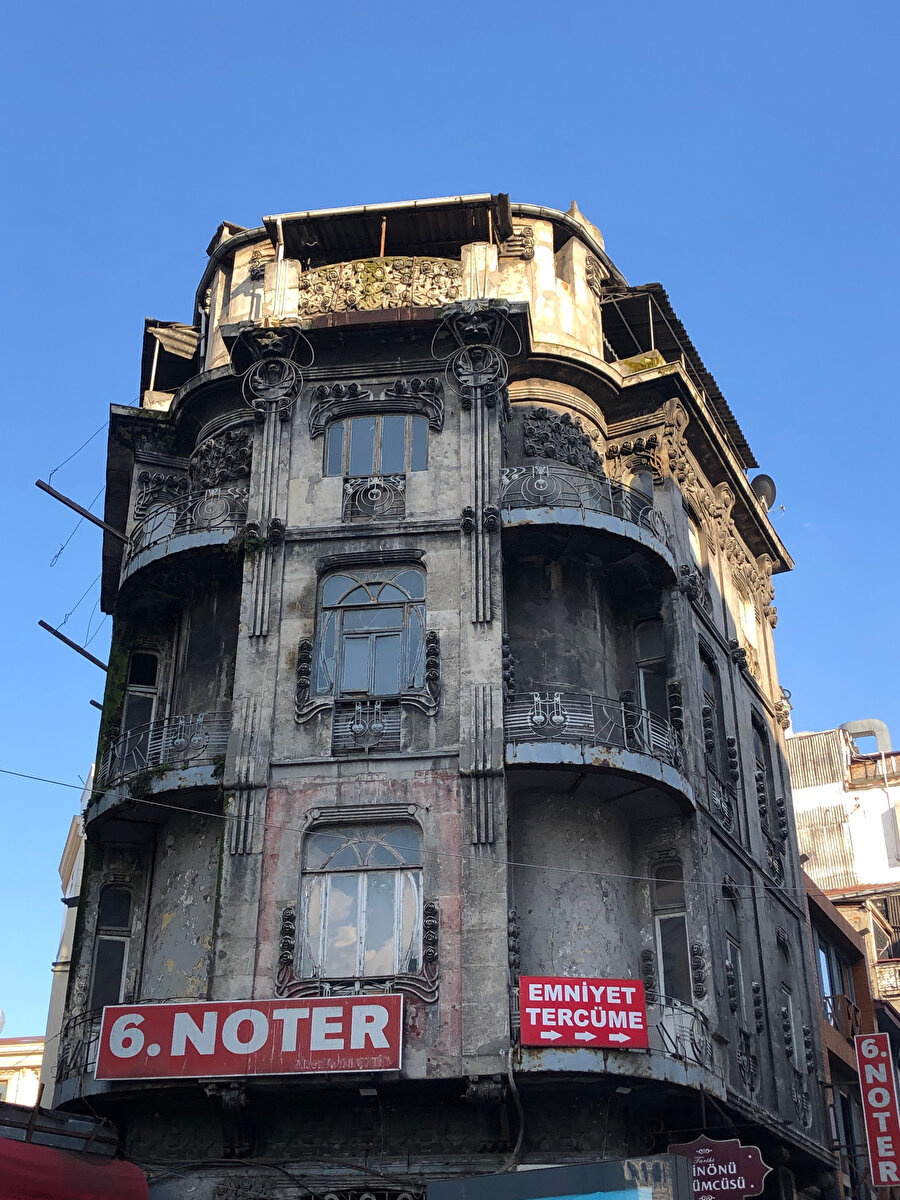
Vlora Han is a 6 floored commercial building. Its Art Nouveau façade, despite heavy urban grime, still reveals detailed ornamentation. High floral reliefs in the form of roses and elegant projecting balconies with wrought-iron railings stand out. French balconies line both façades; circular medallion reliefs positioned between the third and fourth floors give the building a dynamic rhythm. The original wooden window frames were crafted in the Art Nouveau style, and some window pediments include small lion heads and geometric iron grilles.
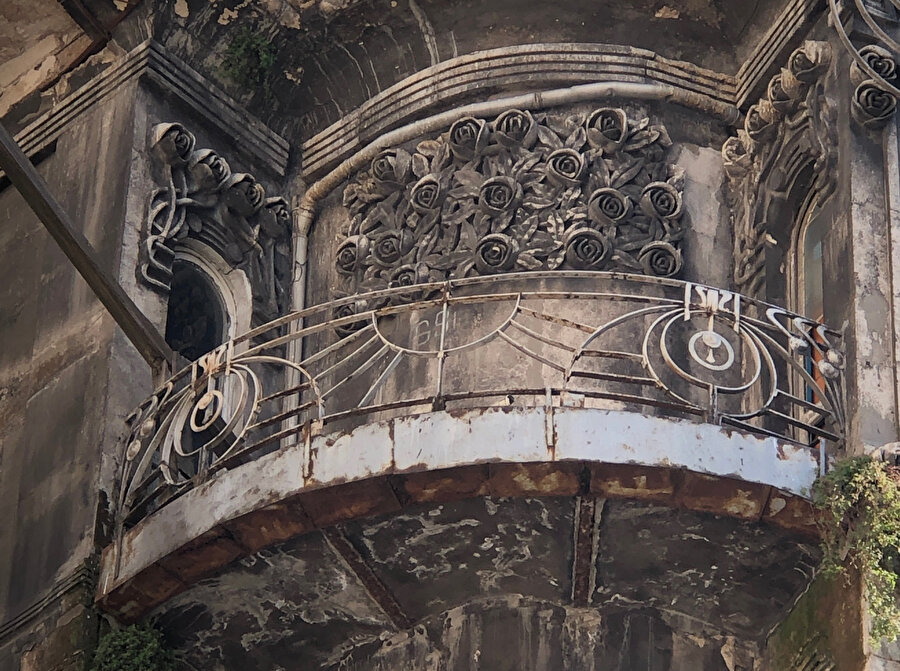
The building’s structural system combines a steel frame with masonry walls. Inside, a wide, curved marble staircase leads upward, and the landings overlooking the stairwell are paved with cast mosaic tiles; notably, the mosaic floors of the second and third floors have survived in their original form.
For decades, businesses occupied the lower floors, while companies and offices took up the upper levels. Since the 1950s, the Istanbul Sixth Notary Public has been located on the first floor.
Vlora Han is, unfortunately, in a severely neglected state. Deep cracks and crumbling façades are clearly visible; interior materials have also suffered from wear and deformation. Nonetheless, the building was officially registered as a protected heritage site in 1990 and was later elevated to first-degree historical monument status in the early 2000s. Today, building is not in use but on its entrance, there are little shops.
Faik and Bekir Bey Waterfront Mansions (Twin Waterfront Mansions)
Location: Sarıyer, Yeniköy, on Köybaşı Avenue next to the Yeniköy Pier, along the Bosphorus shoreline.
Construction: Completed in 1906.
Architect: Designed by the Italian architect Raimondo D’Aronco.
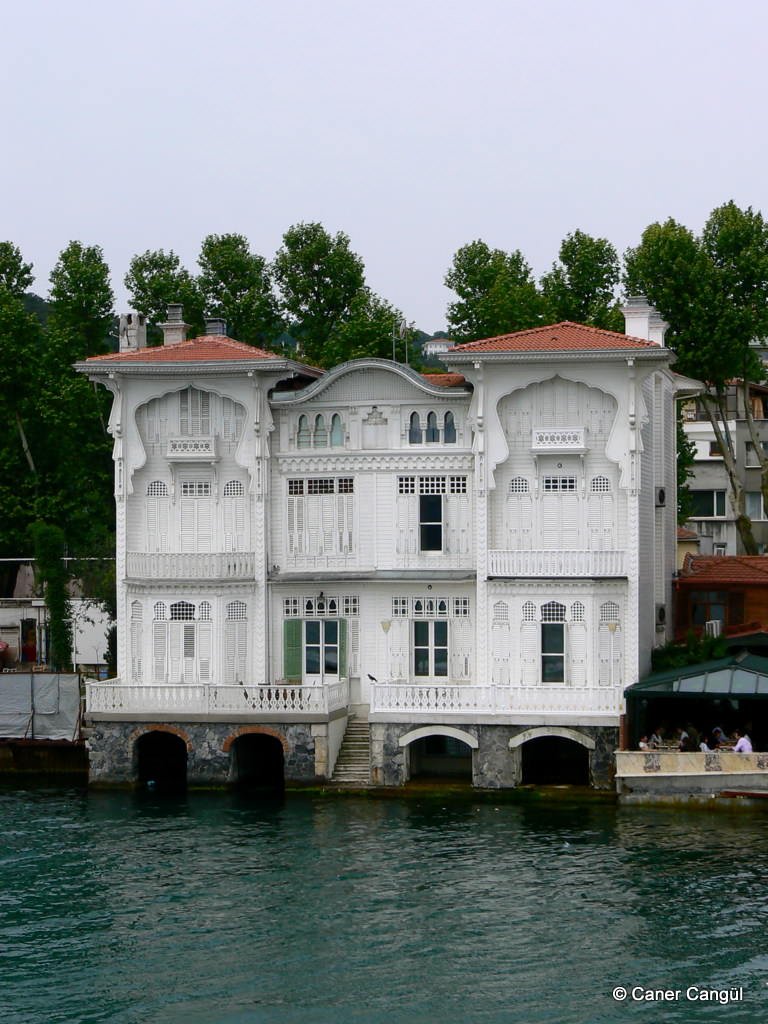
This Bosphorus mansion complex consists of two wings and was designed as a fully symmetrical twin structure. On the second floor, both wings feature wide, arched balconies in the Art Nouveau style. On the third floor, a smaller balcony faces the Bosphorus. The overall façade decoration combines carved floral and leaf motifs on wood with wavy moldings and classical elements, showing D’Aronco’s eclectic approach with the traditional aesthetic of Bosphorus mansions.
According to legend, the mansion was built by members of the Ottoman court for Sara Sultan’s twin daughters. In the early 20th century, it became one of the rare civil architectural examples reflecting the fashionable Art Nouveau influence along the Bosphorus. In the 1920s the mansion was sold to two different families, and its southern section became known as the Faik Bey Mansion while the northern section was renamed the Bekir Bey Mansion. Throughout the past century, the mansion has alternately been used either by separate households or as a single residence, but in every case it served as the home of prominent Bosphorus families.
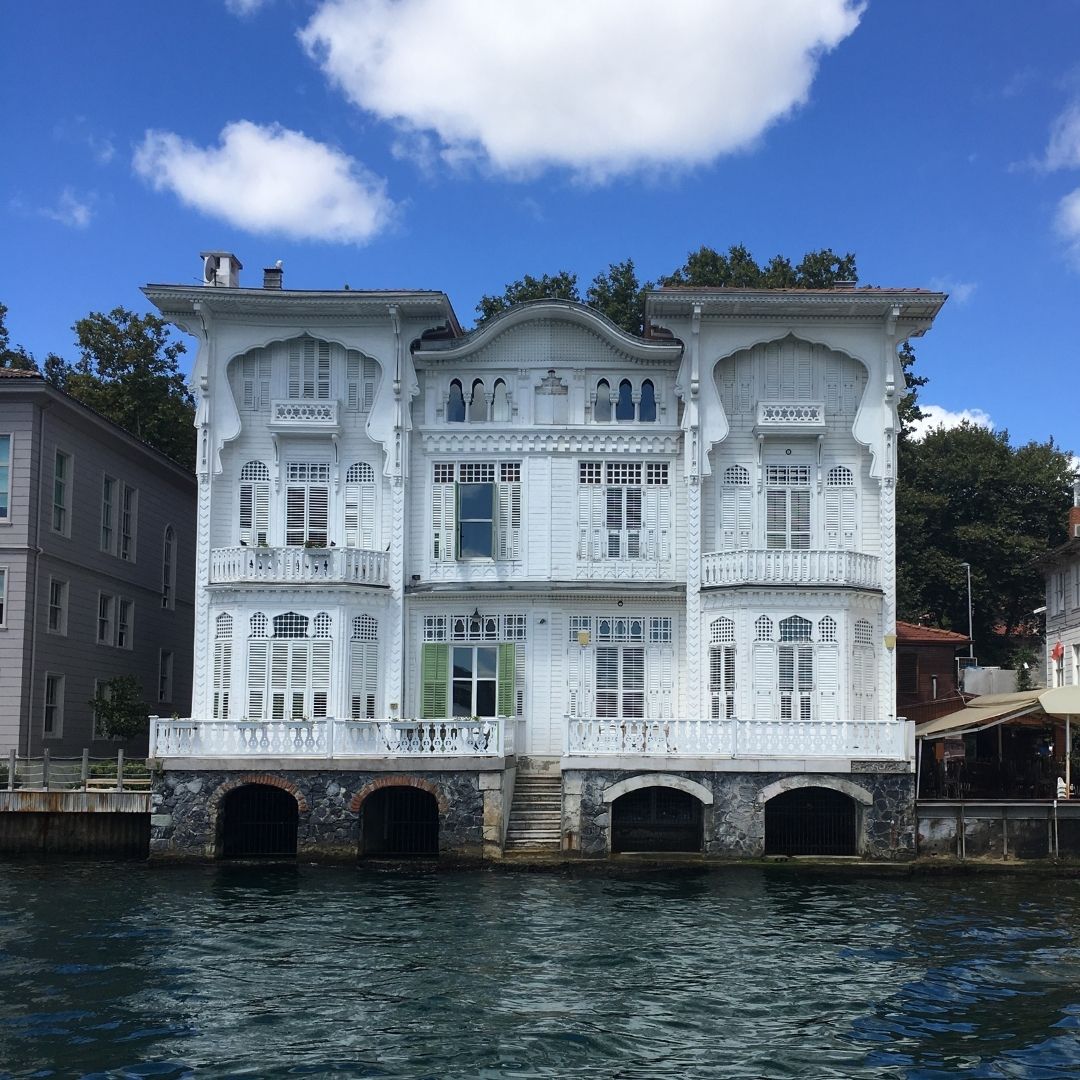
They are currently protected within the Bosphorus conservation area, and many of their original exterior details have been largely preserved. In recent years, the exterior paintwork has been renewed and the wooden structure reinforced. The buildings remain private property and are used as residences.
Mizzi Mansion (Al Palas)
Location: Princes’ Islands, Büyükada, in Nizam Quarter, at No. 31 Çankaya Avenue.
Construction: Underwent major renovation and addition in 1894. The main structure was built in the mid-19th century and was redesigned by architect D’Aronco after the 1894 Büyükada earthquake.
Architect: Italian architect Raimondo D’Aronco, responsible for the 1894 reconstruction and design.
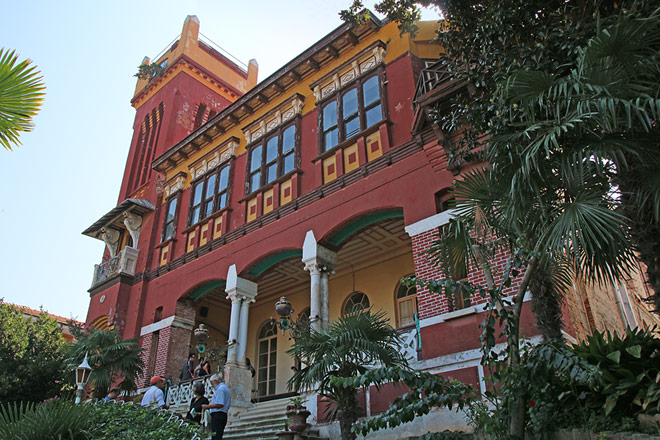
Its most striking features are the façade walls built of compressed red brick and the monumental corner tower. This corner tower resembles a medieval castle tower and was designed by D’Aronco as an astronomical observation tower. The overall façade combines Neo-Gothic and Art Nouveau elements because of its arched windows, carved stone frames and floral reliefs on the brick façade, wooden shutters, and occasional vegetal relief motifs on the tower. At the entrance, a broad marble staircase and wrought-iron railings draw attention. Inside, alongside Victorian-style furniture, an Art Nouveau fireplace added by D’Aronco, ceiling cartouches, and patterned tiles.
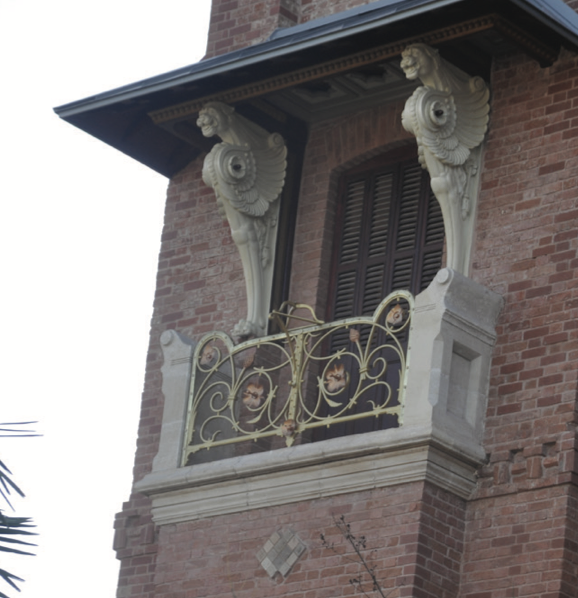
The mansion was used as a residence by the Mizzi Family. Its first owner, George Mizzi, built it as a summer house toward the end of the 19th century or purchased an existing structure. After the1894 earthquake, D’Aronco worked at the repairing an added the now-iconic brick tower, and bestowed the mansion with an Art Nouveau character. Known among locals as “Al Palas,” the mansion is now abandoned for long time and occasionally served as a film set and venue for art events.
The Mizzi Mansion is one of the few preserved Art Nouveau works on Büyükada. It was declared a registered cultural asset in the 1990s and remains private property. In 2019 it served as one of the venues for the Istanbul Biennial, with contemporary artworks installed inside for a limited time.
Cercle d’Orient Building (Büyük Kulüp Building / Grand Pera)
Location: Beyoğlu, İstiklal Avenue No: 56–58 (between Galatasaray and Tepebaşı).
Construction: It was built in 1883
Architect: French-origin Ottoman architect Alexandre Vallaury
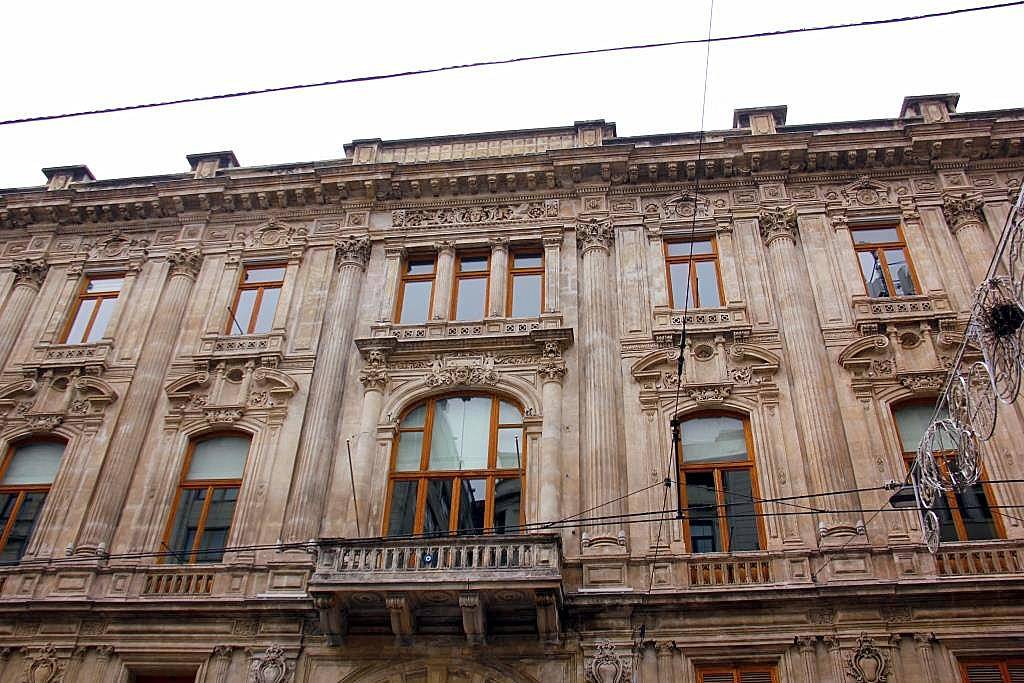
The Cercle d’Orient building is an example of Pera’s late 19th-century eclectic architecture. Its stone façades, dominated by Neoclassical and Baroque elements, reflect the era’s understanding of wealth and elegance. While the ground floor has arched shop fronts, the upper floors are lined with wide windows and balconies. Its façade, embellished with leaf and flower garlands, medallions, and mascaron reliefs, employs a decorative style that foreshadows Art Nouveau. At the time it was built, the building was one of the few structures in Pera that had modern utilities such as electricity and central heating. It was especially famous for the ice-skating rink installed in its garden at the end of the 19th century.
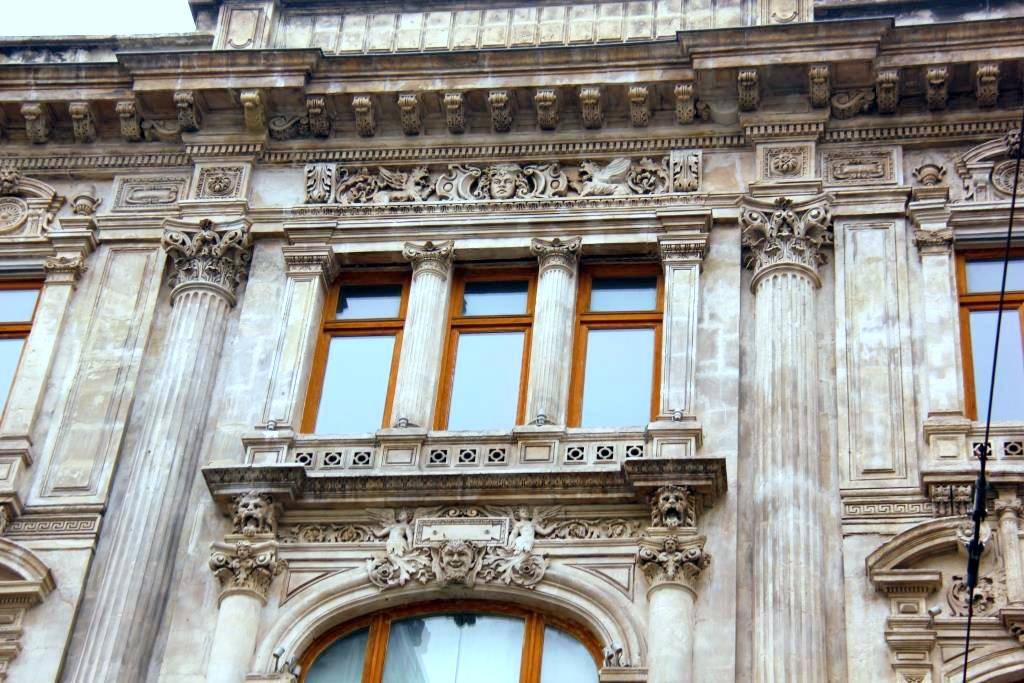
Cercle d’Orient was one of the first social clubs formed by Istanbul’s Levantine, non-Muslim and elite circles in the1880s. Using French as its official language, the club was the center of Istanbul’s cultural life. The club’s name was changed to “Büyük Kulüp” (Grand Club) in the 1920s, and in 1950 the club moved out of the building to its new place in Çiftehavuzlar. In the mid-20th century, the famous İnci Patisserie was operating on the ground floor of the Cercle d’Orient building, while some of the upper floors were incorporated into the foyer of Emek Cinema. Various offices and associations also used this building for many years.
After remaining in need of maintenance for many years, the building was taken up within the scope of a controversial “renewal” project in 2013. In this process, the historic hall of the adjacent Emek Cinema was demolished in May 2013 despite all public protests. Only the historic outer façade was preserved, while the interior was completely rebuilt with a new structure. Today, from the outside, historical façade still stands as it is, but once you step inside you see a modern mall and ballrooms/event halls.
Pera Palas Hotel
Location: Beyoğlu, Tepebaşı (Meşrutiyet Avenue No: 52, near Şişhane).
Construction: It was built between 1892–1895; its official opening took place in 1895
Architects: Alexander Vallaury (French-Ottoman architect) and Henry Duray (French engineer-architect)
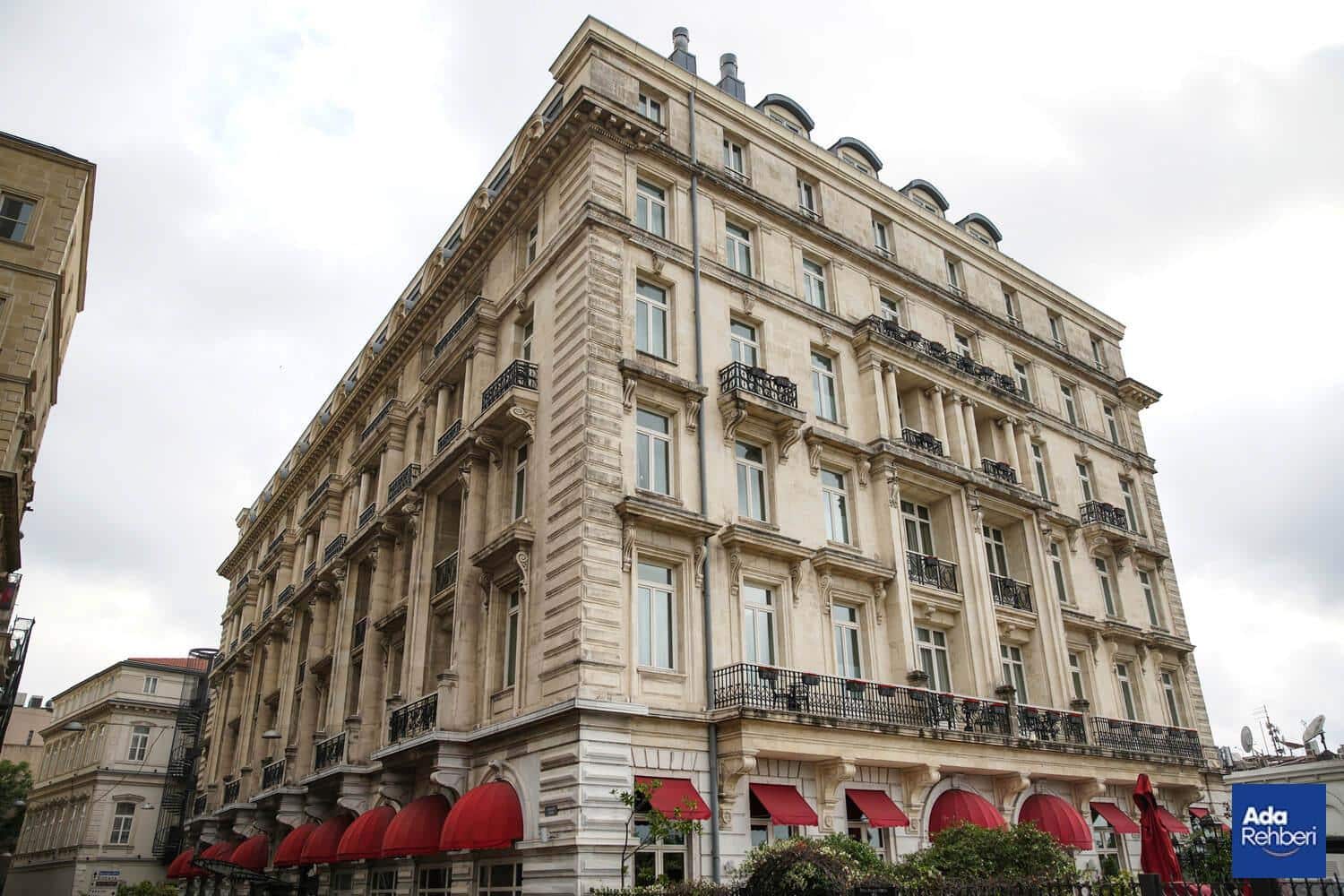
Pera Palas is the first modern luxury hotel in Istanbul, and its architecture was designed as a mixture of Neoclassical, Orientalist and Art Nouveau style. On the exterior façade, a symmetrical layout reminiscent of classical European mansions is visible. At the entrance there is a wide marble staircase and a columned lobby. At the heart of the hotel, the famous Art Nouveau elevator, with its elegant cast-iron cage and the marble staircase that spirals around it, is a milestone. This elevator was the first elevator in Istanbul to have electricity outside the palaces. In addition, Pera Palas was one of the first buildings in Istanbul to have electricity.
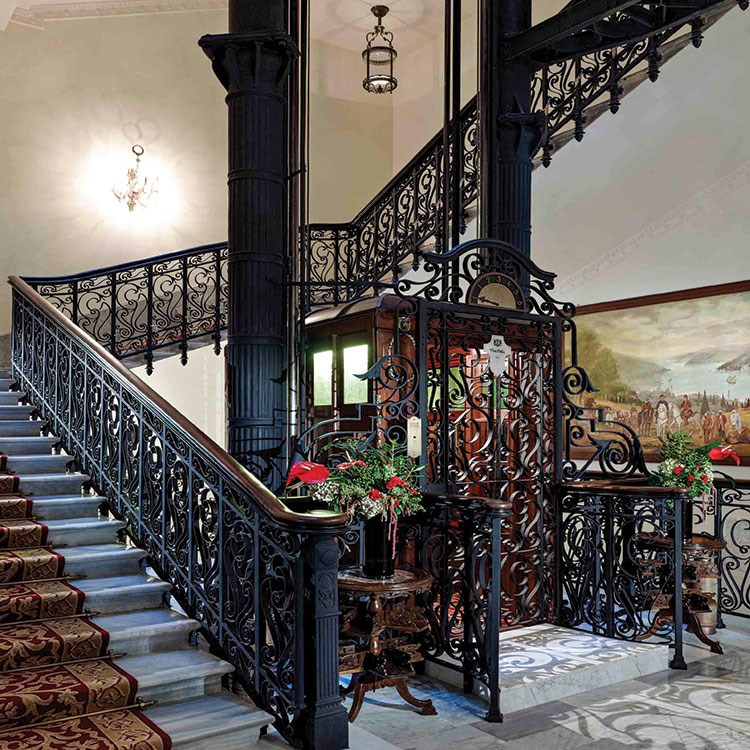
It was built to accommodate the passengers of the famous Orient Express train. Mustafa Kemal Atatürk frequently stayed here, and his Room 101 is now exhibited as a museum room. Agatha Christie stayed here in the 1920s and, according to legend, found inspiration for her novel “Murder on the Orient Express” at the hotel. The guest list also includes Queen Elizabeth II, Empress Zita of Austria, King Edward VIII, Alfred Hitchcock, Greta Garbo, and Ernest Hemingway. The hotel continued to operate during both world wars; at one point, it was used as a military headquarters.
After a comprehensive restoration between 2008–2010, Pera Palas continues to operate as a hotel.
Baudouy Apartment (Bodvi Apartment)
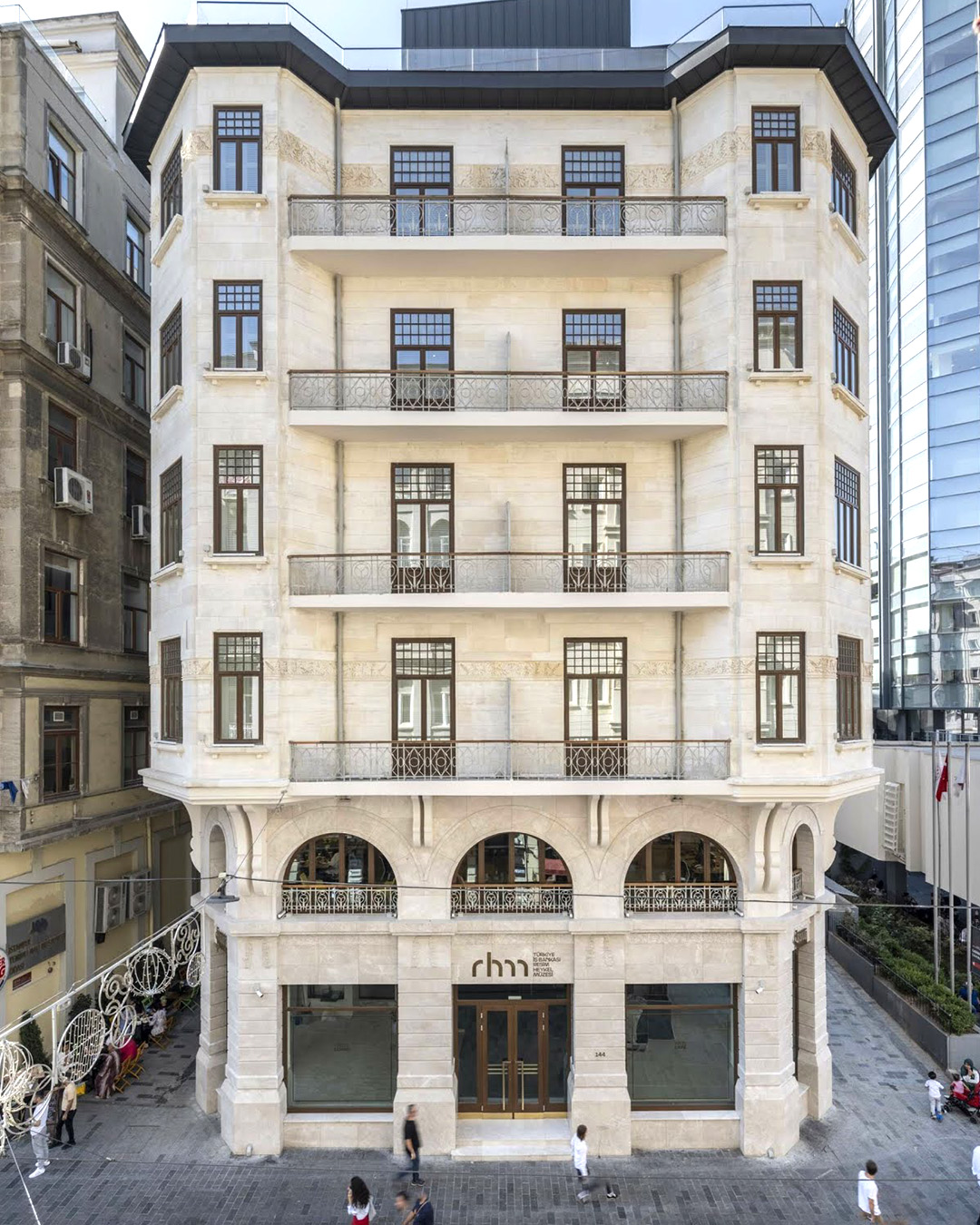
Location: Beyoğlu, Tepebaşı (Meşrutiyet Avenue – Şişhane area, opposite Odakule, today the Türkiye İş Bankası Museum building).
Construction: Built in 1907
Architect: Although not definitively known, it is attributed to Ottoman Armenian architect Hovsep Aznavur (Aznavur also designed Aznavur Passage.)
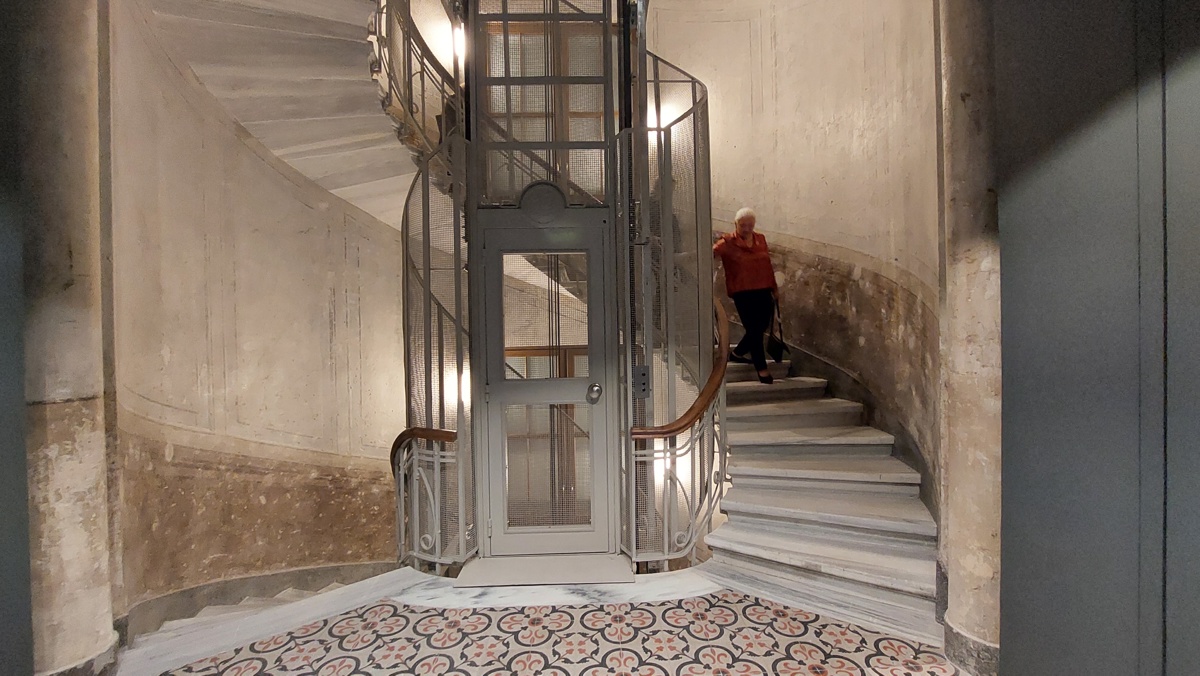
Baudouy Apartment reflects the influence of the Vienna Secession which is known with its Austrian-style Art Nouveau. Its façade features simple geometric elements: rows of large rectangular windows, stylized floral motifs and wrought-iron decorations around them. Particularly notable are the geometric Secession-style wrought-iron works on balconies and window grills. Instead of Baroque curves, straight angular lines dominate, giving the building a modern elegance. The interior contains an Art Nouveau elevator with a cast-iron cage, and the staircase railings and entrance tiles also reflect the style.
In the early Republican period, Türkiye İş Bankası purchased the building in the 1950s and adapted the interior for banking services. Although the building’s historic texture was preserved, the ground-floor redesigned to suit a bank. Later, İş Bankası decided to restore it as part of its centennial celebrations and convert it into a corporatemuseum. Baudouy Apartment reopened in 2021 as the “Türkiye İş Bankası Painting and Sculpture Museum”
In the end, Istanbul shows that Art Nouveau is not only an architectural style but a part of daily life and cultural history. The city reflects this movement in many different places, from civil buildings to religious examples. As long as we continue to look carefully, we can still find many traces of Art Nouveau hidden in the streets, façades, and details of Istanbul. These buildings remind us that the city has always been open to new ideas and artistic styles, and they keep the spirit of Art Nouveau alive today.