Initiatives: The Center of Art or Its Alternative? – Independents
What does it mean to be “independent” in art? Does an independent art initiative have a relationship with capital, and if so, how should that relationship be structured? Do initiatives—through the space they open up for solidarity, collaboration, and creativity—stand at the center of artistic production, or are they alternatives to the mainstream art ecosystem?
What does it mean to be “independent” in art? Does an independent art initiative have a relationship with capital, and if so, how should that relationship be structured? Do initiatives—through the space they open up for solidarity, collaboration, and creativity—stand at the center of artistic production, or are they alternatives to the mainstream art ecosystem?
We held the first talk in our series “Initiatives: The Center of Art or Its Alternative?” around these questions with Independents (Bağımsızlar).
Initiatives emerge as collective structures where art is conceived, produced, given visibility, and discussed. In the first talk of our art initiative series, we featured Independents (Bağımsızlar), which today has 156 members and aims to create a network of solidarity to ensure fairer representation against the centralization of art. By prioritizing accurate definitions and mapping efforts around terms such as independent, initiative, and collective, the Independents network has enabled many independent actors to strengthen lines of collaboration with one another—or at the very least, to become aware of each other’s existence.
We conducted an interview with Ekmel Ertan, Ezgi Cemre Er, and Sinan Eren Erk about Independents.
In the first installment of our three-month interview series with independent art initiatives, we wanted to speak within the framework of Independents in order to present the overall picture. Independents is, of course, a network that does not encompass only independent art initiatives. Could you tell us a bit about Independents and the kinds of structures it brings together within its network?
Ekmel Ertan:
Independents actually emerged from the need to create a kind of advocacy line as a result of the difficulties—indeed, the impossibilities—independent initiatives face in accessing resources, an issue we had been dealing with for some time. In 2013, amberPlatform, PASAJ, Halka Sanat, and Collective Çukurcuma came together for a meeting and decided first to create an index. In fact, there are many of us, but we don’t know how many. We thought that by creating a list and enabling those who share similar concerns to at least see one another, we could initiate a discussion and lay the foundations for solidarity among independent initiatives. However, precisely because of the problems we were trying to address, it was not possible to return to the issue after that meeting. Even creating a list became an additional burden amid the resource shortages under which we were trying to sustain our own initiatives—a new excuse to exploit our own labor. Still, the issue never left our agenda.
During the pandemic, when everything came to a halt, an opportunity arose to revisit the issue, and we began discussing it again with an expanded group. On the one hand, we started to build the website infrastructure; on the other, we reached out to independent initiatives and opened up discussions around the idea of independence. Zeynep Okyay led this process, and we held a series of meetings—the first in İzmir at Hayy Open Space, followed by meetings in Istanbul at Halka Sanat and Salt Galata.
“The Main Issue in These Meetings Was Who We Were Referring to When We Said ‘Independents’—Who Should and Should Not Be on This List.”
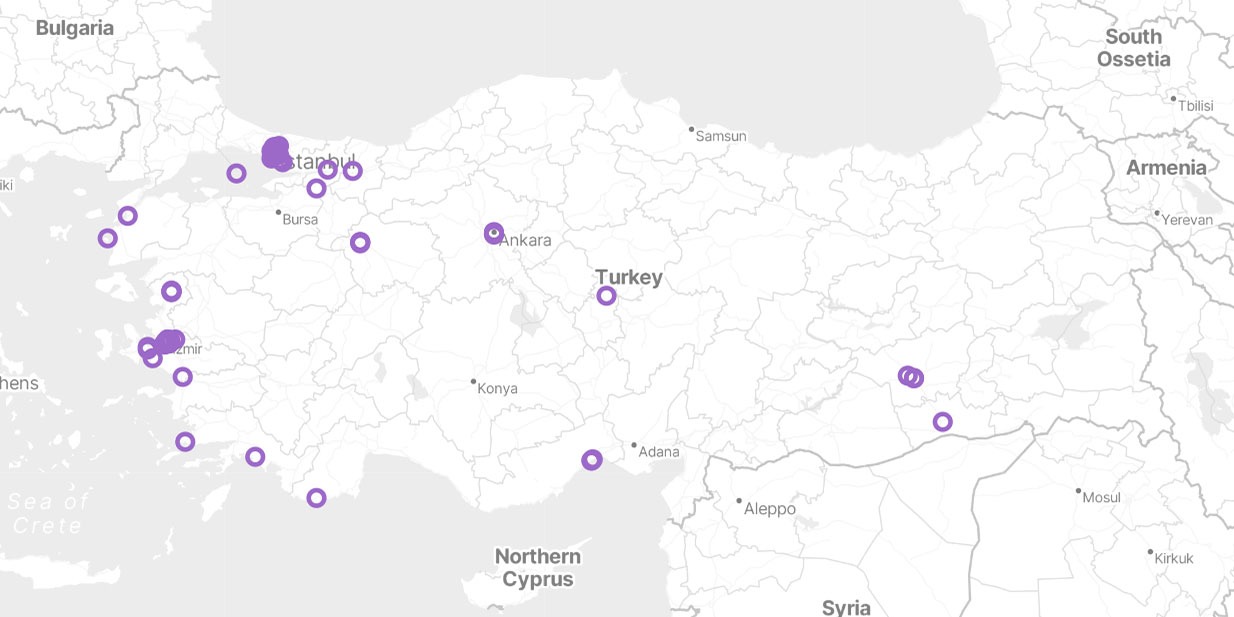
Independents map
The main issue in these meetings was who we were referring to when we said “independents,” and who should or should not be on this list. These discussions were truly productive. By constantly revising our sentences, making small but significant changes, we continuously redefined what independents meant. With the participation of the groups attending these meetings, a list took shape on the website. About two years later, this definition—repeated every week for the past 160 weeks in the Independents radio program that began airing on Fridays at 7:00 pm within Açık Dergi on Açık Radyo—took its current form:
“Independents is a web-based platform that aims to make visible the diversity and scale of the independent culture and arts field in Turkey that is not owned or directed by the state or private capital; to create an up-to-date and dynamic information resource; and to lay the groundwork for solidarity and collaboration among independents.”
Independents essentially places importance on foregrounding a conceptualization. Independence can be defined in many different ways.
“We Wanted to Conceptualize Independents Within a Culture and Arts Environment Dominated by the State and Capital.”
The concept of independence we collectively tried to arrive at refers to structures rooted in society, emerging from the foresight and needs of groups or individuals, and able to exist on the same plane without dominating others or the environment. We wanted to conceptualize independents within a culture and arts environment dominated by the state and capital. I think we did that—or at least contributed to it.
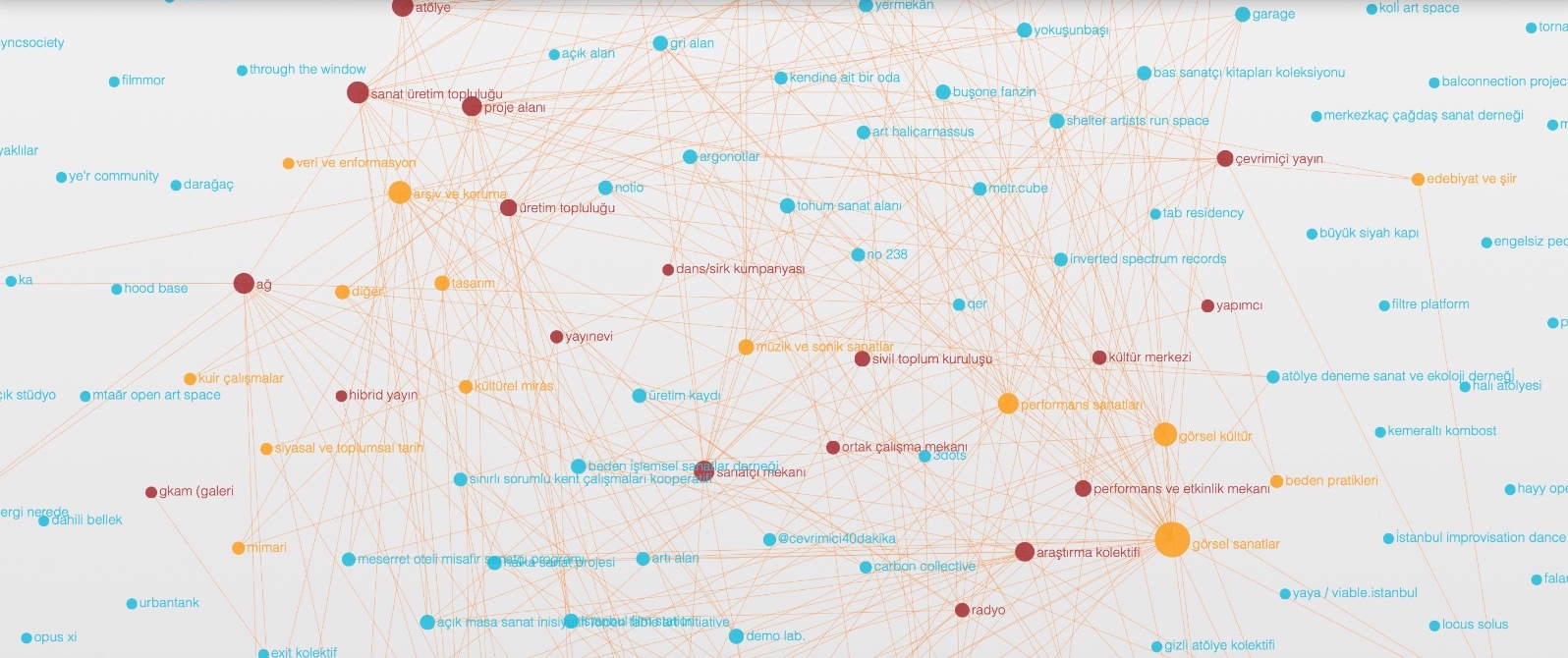
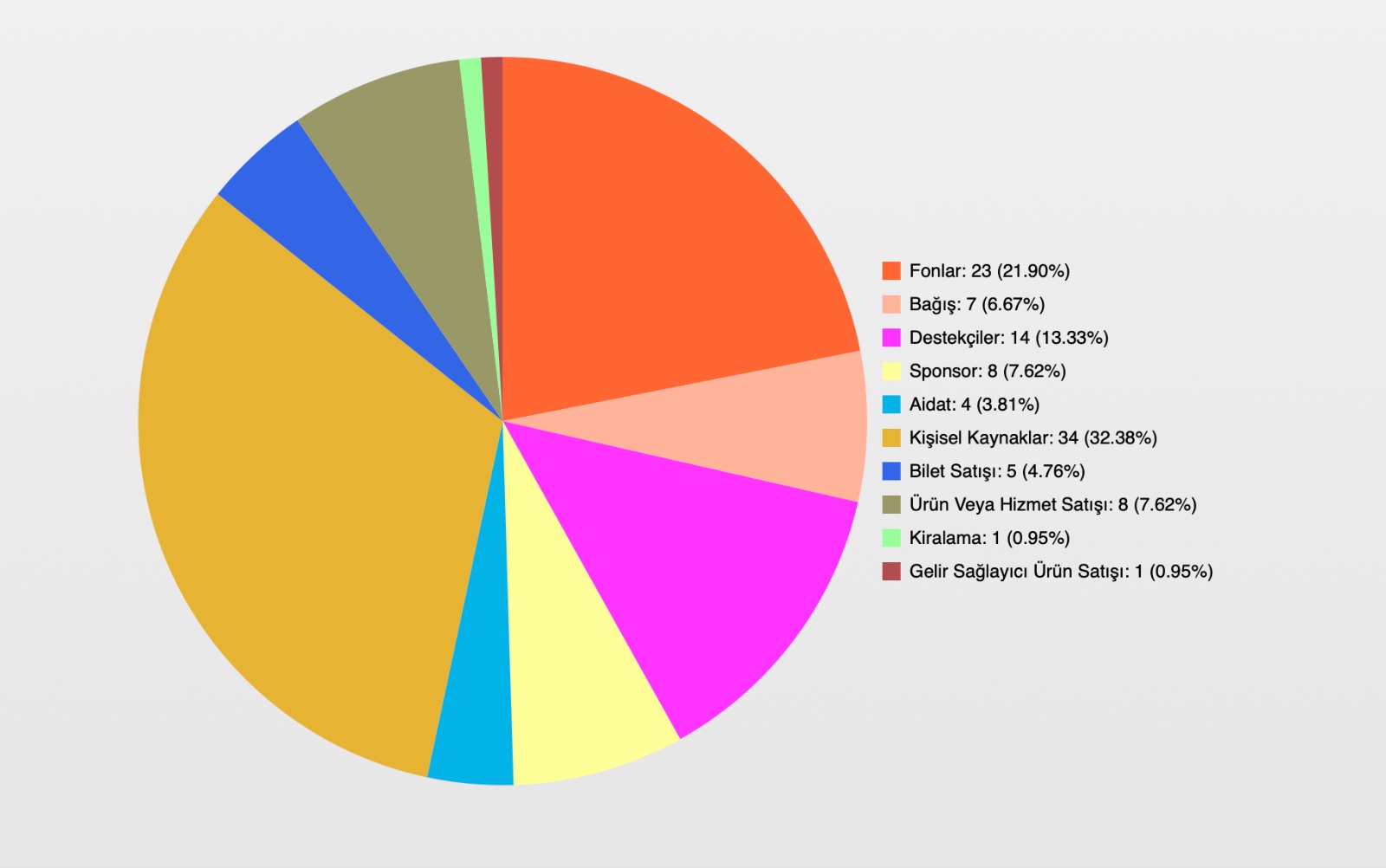
Today, bagimsizlar.org consists of 156 members. Initiatives that register on the site enter their information via a form, through which we try to map independents. We collect data about the field through questions such as: What kind of structure are they (association, foundation, cooperative, company, or collective)? What type are they (distributed, online, resident, nomadic)? In which field(s) do they operate? What are their activity types? How do they finance themselves? In this way, we aim to make the sector they form visible from various perspectives. Through different visualizations, we have tried to make this information readable and to create resources about the field for researchers, academics, advocates, and of course, independent initiatives themselves.
As in every field, the culture and arts sector is dominated by significant conceptual confusion. At the beginning of our interview series, in order to address this: How do you think an “independent art initiative” should be defined?
Sinan Eren Erk:
Perhaps first we need to redefine independence once again in today’s context. Being independent today does not mean being completely detached from capital, local or central power structures, or realities accepted by society at large; rather, it can be defined as striving to do what one does best in a sharing-oriented way for everyone, in order to enable polyphony, diversity, and an inclusive and democratic social structure—as a transformative, even balancing force within these conditions. In this sense, an independent art initiative represents a structure in which solidarity and sharing among its members are foregrounded, and which prioritizes social benefit.
As we understand it, independent initiatives aim—drawing on the notion of “initiation” embedded in the French meaning of the word—to ensure the transparent sharing of knowledge, the creation of intellectual or, where available, financial resources, and their humane distribution for the benefit of all, in line with urgency. In short, they become part of a balancing mechanism within society, acting as explicatory, transmissive, archival, and healing mediators of relationships among individuals.
Ekmel Ertan:
At this point, one of the issues that perhaps needs to be addressed is the relationship between independents and funds, sponsors, and supporters. Using funding sources, engaging with sponsors, or having supporters does not prevent an initiative from being independent. However, preserving and sustaining independence despite these relationships is a sensitive matter that must be learned carefully.
“While Independents Often Maintain Their Resilience, There Is Much for Capital or the Public Sector to Learn…”
Independents: Conceptual Distribution
In these reciprocal relationships, it is unfortunately common—and difficult to overcome—that the party providing financial resources exerts pressure on the initiative and considers this a right, thereby instrumentalizing it. While independents often maintain their resilience, there is much for capital or the public sector to learn; in fact, independents also educate these institutions in line with the requirements of a democratic society.
We observe that galleries and major institutions are often located in large cities—primarily Istanbul—while independent art initiatives, even if not to the same extent, are spread across Turkey. How should we interpret this situation?
Ezgi Cemre Er:
When establishing bagimsizlar.org, we placed importance on representation in this regard; this is also a major reason why we began as a map-based platform. How can we map the independent art environment? But this cannot be done merely by placing points on a map. Our mapping effort in the website’s design exists to connect independent art actors to one another, to amplify their voices, and to show that art does not exist only in Istanbul, Ankara, and Izmir.
“Independent Artists, Collectives, and Initiatives Have Existed and Continued to Produce for Years, but the Mainstream Narrative Still Struggles to Move Beyond Major Cities.”
Independent artists, collectives, and initiatives have existed and continued to produce for years. Yet the mainstream narrative still struggles to move beyond major cities. The issue of representation in the art field is not only about aesthetics; it is also a matter of access and visibility. Art infrastructure may be stronger in large cities, but that does not mean art is produced only there. There are independent artists, collectives, and initiatives all across Turkey. However, due to spatial inequality, these actors become less visible and have more difficulty accessing support mechanisms.
This is precisely why we try to give more space to their stories, projects, and productions. We want to look beyond what is happening in the three major cities and bring independent art initiatives from all over Turkey to the forefront.
“We Are Here to Ensure Fairer Representation Against the Centralization of Art. Because What Matters Is Not Where Art Is, but How It Lives.”
Independents: Financial Distribution
This is not just a preference, but a stance. We are here to ensure fairer representation against the centralization of art. Because what matters is not where art is, but how it lives.
Ekmel Ertan:
On the other hand, art institutions dependent on capital and commercial structures (galleries, etc.) naturally operate where their class dominance exists and where commerce takes place. For these structures, art is both a field of prestige and power, and one of the markets in which trade circulates. It would not be wrong to say that these institutions serve a particular class and that their “customers” are limited to a specific socio-economic segment.
“When You Move Away from These Centralized Structures and the Art Perception They Offer, You See That Art Is a Living Phenomenon. For Independents, Art Is Life.”
Of course, institutional statistics may suggest otherwise, but if you look at how each relates to the neighborhood it is located in, you will see this reality. When you move away from these centralized structures and the perception of art they offer, you see that art is a living phenomenon. For independents, art is life.
When we look at the more inclusive map created by Independents, we see that most independent art initiatives are unable to survive for long periods. On the other hand, it is possible to name initiatives from the past whose impact on the art world is still remembered today. What do you think is the importance and function of independent art initiatives in Turkey’s cultural and artistic environment? Do you think there is an initiative culture/tradition in Turkey?
Ezgi Cemre Er:
Independent art initiatives have generally existed in Turkey’s cultural and artistic environment as structures that open up space, transform, and at times resist. Their existence has shown that art is not an ecosystem shaped solely by major institutions, museums, or galleries, but that alternative models of production and sharing are also possible.
However, as you noted, the vast majority of these initiatives cannot sustain themselves over the long term. One of the main reasons for this is the lack of economic sustainability among independent actors.
“The Impact of Initiatives Often Lasts Longer Than Their Period of Existence.”
The lack of cultural policies in Turkey that support independent production, the limited availability of funding sources, and the treatment of art as a market element make independent initiatives fragile. Nevertheless, the impact of these initiatives often lasts longer than their period of existence. This is because the issue is not merely about running a space or maintaining a specific program of events, but about developing new practices for how art is produced and shared. These practices, over time, inspire other artists and formations and leave a lasting trace.
Is there an initiative culture in Turkey? Absolutely—there is, and it has existed and continues to exist in a highly dynamic way. However, it is difficult to say that this has become an institutionalized tradition. Rather than a long-standing, institutionalized initiative tradition like that found in Europe, we can speak of a structure that is more fragile but equally innovative, experimental, and quick to adapt—one that responds to the needs of specific periods and is often driven entirely by solidarity.
“Independent Art Initiatives Show That Art in Turkey Is Not Only a ‘Exhibition’ Practice, but Also a Way of Organizing, Thinking, and Building Alternatives.”
As Independents, we try to understand, document, and support these dynamics. This is why our map includes not only existing independent actors, but also initiatives that have transformed over time or even ceased to operate. Because the closure of an initiative does not mean it has disappeared. What is learned in that process, the relationships formed, and the works produced can give rise to something new elsewhere and at another time.
Independent art initiatives show that art in Turkey is not only a practice of “exhibiting,” but also a way of organizing, thinking, and building alternatives. Therefore, even if they are short-lived, they play a critical role in transformations within the cultural and artistic field.