

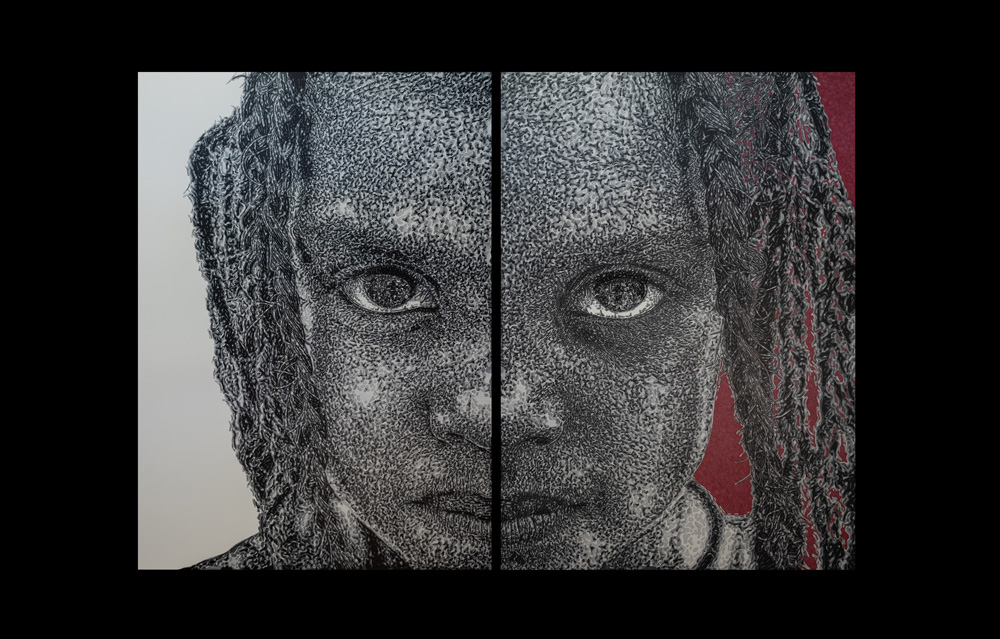
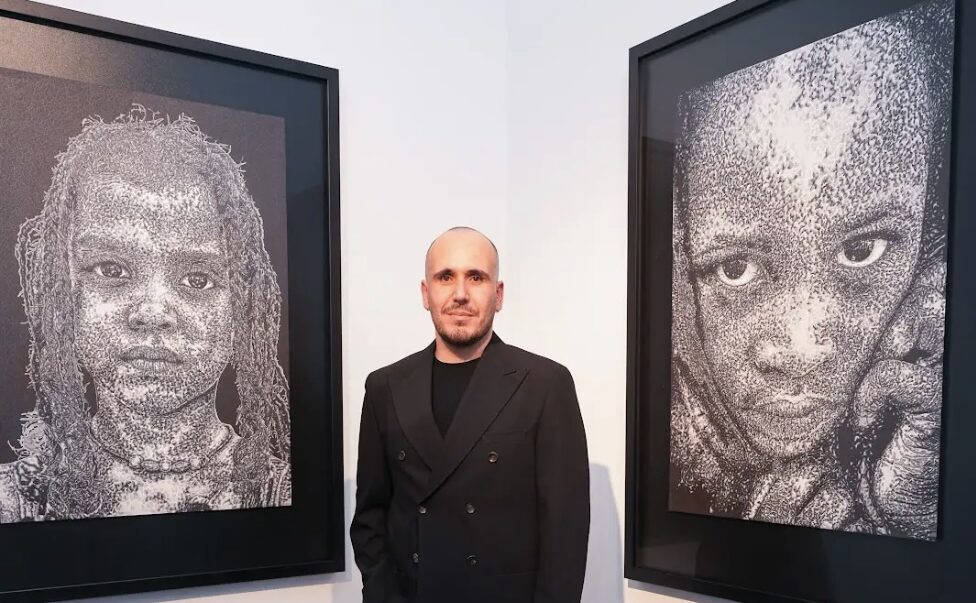
Centered on Sefa Çakır’s solo exhibition I Closed the Door from the Outside , held at Vision Art Platform, we spoke with the artist about his artistic practice, states of withdrawal, and the relationship he establishes with the gaze through the figure.
Sefa Çakır’s solo exhibition I Closed the Door from the Outside was on view at Vision Art Platform between November 20, 2025, and January 6, 2026. Bringing together states of withdrawal, gaze, and witnessing that lie at the core of the figurative language Çakır has been developing over an extended period, the exhibition seeks to render visible a state of consciousness that chooses to remain inside rather than withdraw from the outside world. Formed in opposition to noise, speed, and a reality that makes constant demands, these works strip the figure of time and place, drawing the viewer into a direct encounter.
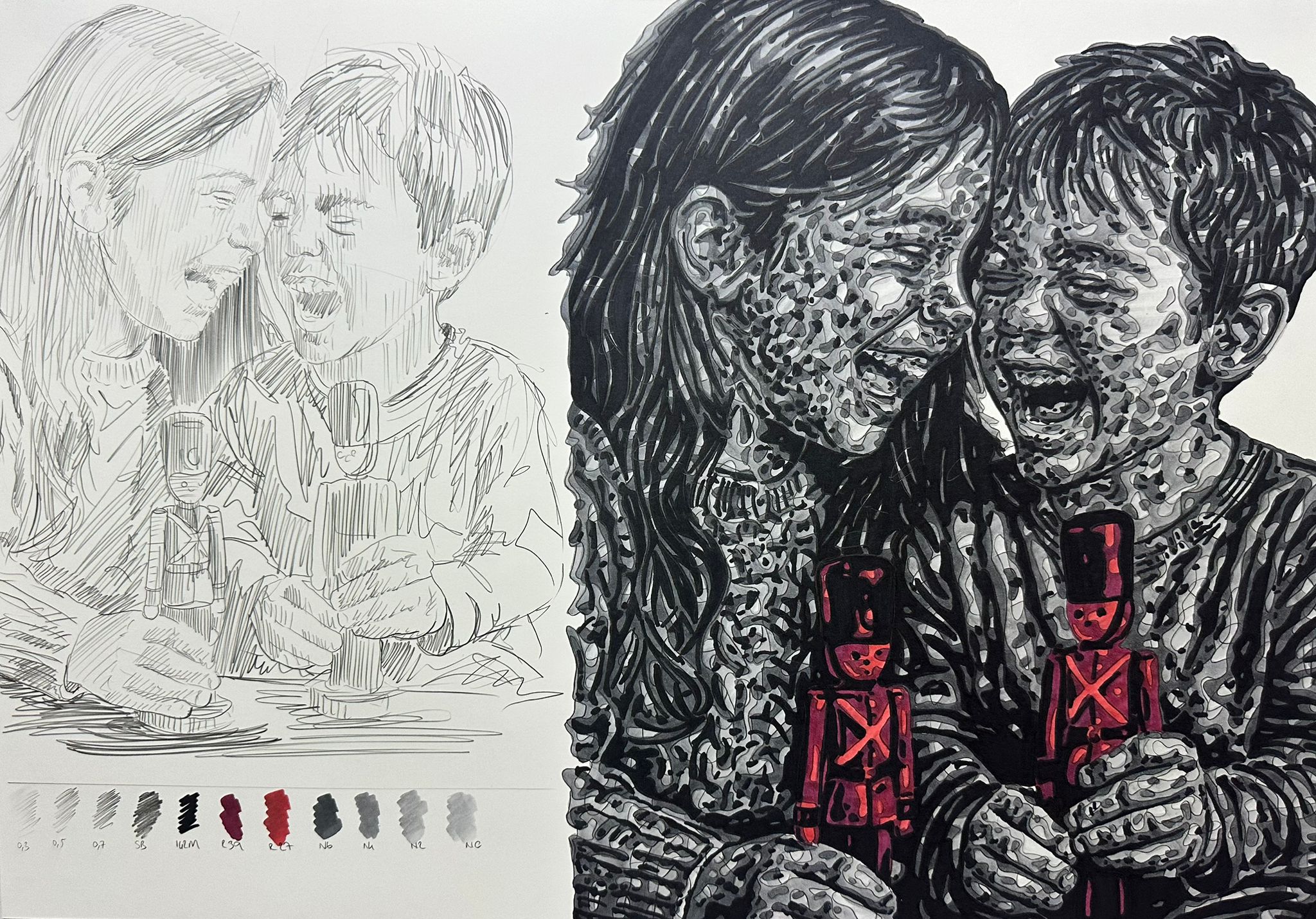
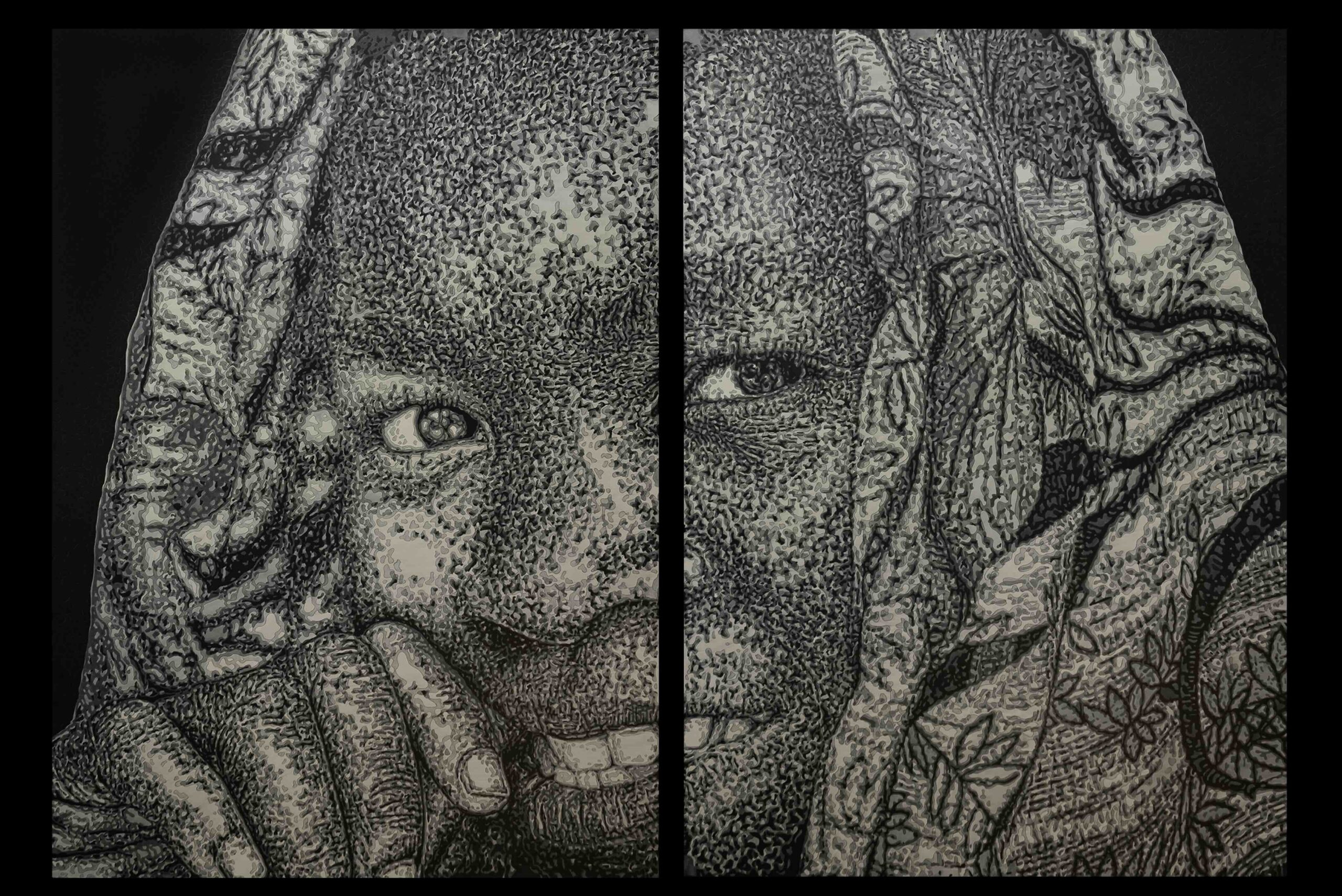
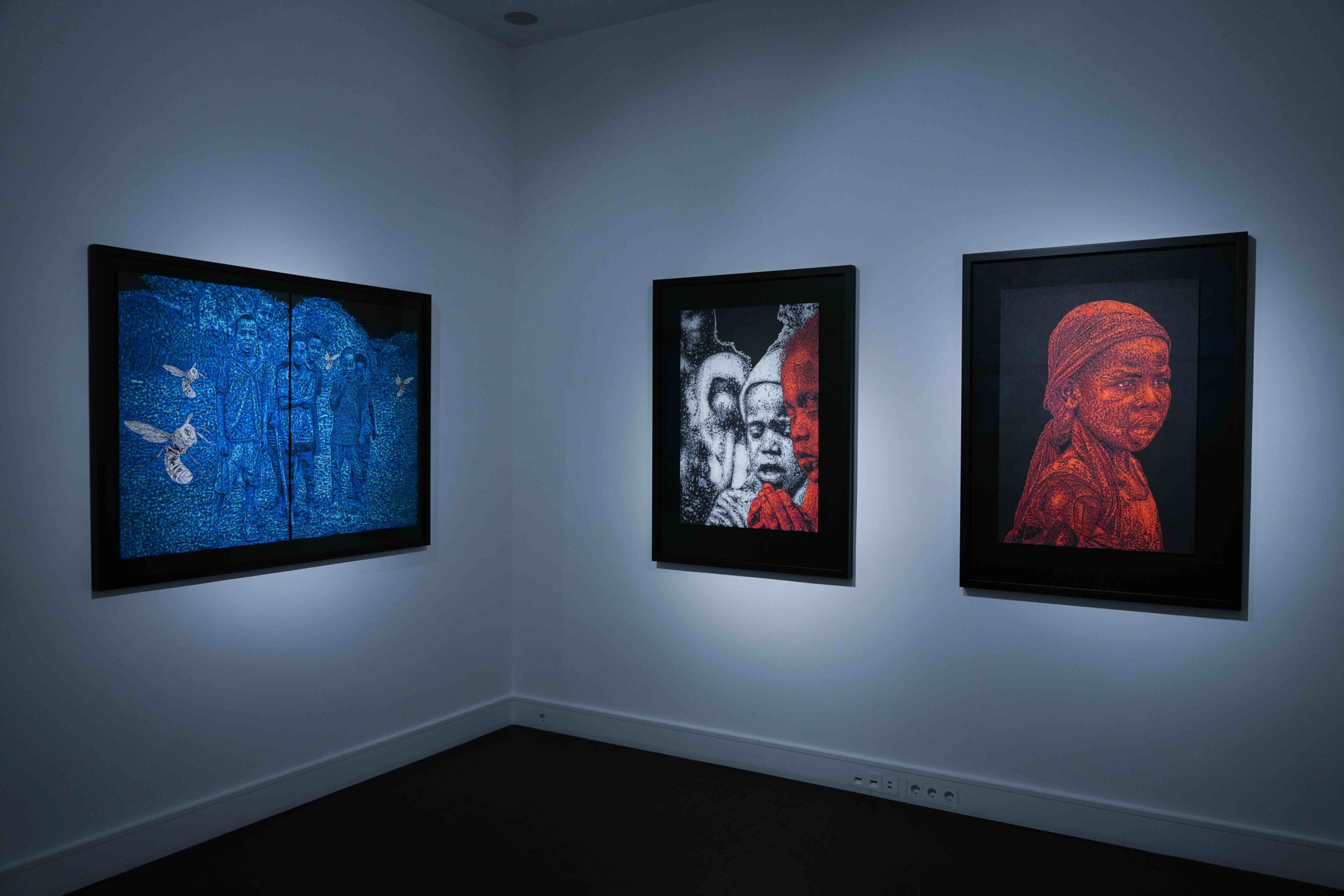
Çakır’s practice is built around a visual language that oscillates between documentary witnessing and poetic narration, deliberately avoiding the imposition of fixed meanings. Works produced using the marker technique carry traces of an intuitive process that unfolds through irreversible lines; the dark, uninterrupted backgrounds strip the figure of all context, transforming the gaze into the exhibition’s primary vehicle. The recurring faces of children and young people render a sense of incompleteness and fragility visible as a collective state of mind, while the bee figure that appears from time to time emerges as an open-ended image orbiting ideas of memory, thresholds, and silent circulation.
I Closed the Door from the Outside, held at Vision Art Platform—a space that opens room for independent exhibitions and interdisciplinary practices—constructed an atmosphere that removes the viewer from a position of observing and instead exposes them to being looked at. In this conversation, we spoke with Sefa Çakır about the idea of withdrawal starting from the exhibition’s title, the tension between witnessing and narration, the determining role of the marker technique in his production process, and the gaze relationship established between the figure and the viewer.
“Not Closing Off, but Confronting What Is Inside”
The title I Closed the Door from the Outside also points to the idea of a conscious withdrawal. Who is the subject that closes the door in this exhibition? From what kind of state of mind did this title emerge for you?
The subject in this title represents a state rather than a singular figure. Sometimes it is childhood, sometimes my present self, and sometimes the viewer’s own inner voice. Closing the door from the outside, for me, is not about escape but about choosing to remain inside—a conscious withdrawal in the face of noise, speed, and an outside world that constantly demands attention. This exhibition emerged from a state of mind that accumulated within me over a long period, one that transformed not into words but into a gaze. The real issue was not shutting oneself away, but confronting what is inside.
In this exhibition, children and young faces often appear against dark, uninterrupted backgrounds. What kind of encounter does this choice aim to establish with the viewer?
I consciously silenced the background (at times). By suspending time, space, and narrative, I left the figure alone. In this way, the viewer is left face to face with the expression itself; there is no décor to escape into, no narrative to hold on to. The reason I chose children’s and young faces is that they carry a state that is not yet complete, not yet protected. The darkness is not a threatening space; on the contrary, it is a void that allows the gaze to intensify. This encounter exposes the viewer not so much to watching, but to being looked at.
In this series, the works hover between documentary witnessing and poetic narration. Where do you position yourself within this relationship while producing—bearing witness, constructing the story, or at times leaving the gaze directly to the subject?
I see myself mostly as a witness—but not a passive one. I do not settle for conveying what I see as it is; I transform it as I record it. Rather than constructing the story, I would say I make space for the story to construct itself. At certain moments, I leave the gaze entirely to the figure; my control diminishes there. At that point, the works begin to detach themselves from me, and that is the most precious moment of the production process.
The marker technique we see again in this series clearly determines the rhythm and tempo of the works. When developing this visual language, what was the most important concern for you?
Marker is indispensable and constant for me, but it is also an irreversible tool. There is no erasing, correcting, or softening. This turns each line into a moment of decision. What matters to me is the honesty of that moment. The trembling of a line, its harshness or interruption—all are traces of a state of mind. In this series, I used the marker not so much as a technique, but as a way of thinking. What determined the rhythm was not the speed of the hand, but the mind’s hesitation or resolve.
The recurring bee figure in the exhibition remains open to multiple associations rather than pointing to a fixed meaning. What did you want this figure to carry when you included it in the series, and what kind of relationship did you hope it would establish with the viewer?
For me, the bee is both a carrier of memory and a threshold figure. I was not seeking symbolism tied to industriousness or order. I thought of it more as a presence that moves silently but continuously. At times a threat, at times a witness, at times merely a trace. I wanted the viewer to invest their own meaning in the bee—not to decode it, but to live with it. Rather than offering clear answers, the bee leaves questions behind in the exhibition.
In this series, we sometimes see the gaze directed toward the viewer, and at other times surrendered directly to the figure’s own gaze. How do you construct this relationship of looking during the production process; how do you sense when you need to withdraw and make space for the figure?
The gaze is the backbone of this series. At times, the figure looks at the viewer—this is a state of confrontation. At other times, I am drawn toward where the figure is looking. In those moments, I feel that I need to step back, because I begin to become excess. When the figure no longer needs me, I leave both the line and the gaze to it. This is an intuitive decision, not a planned one. I think that over the years, I have been learning when to remain silent.