
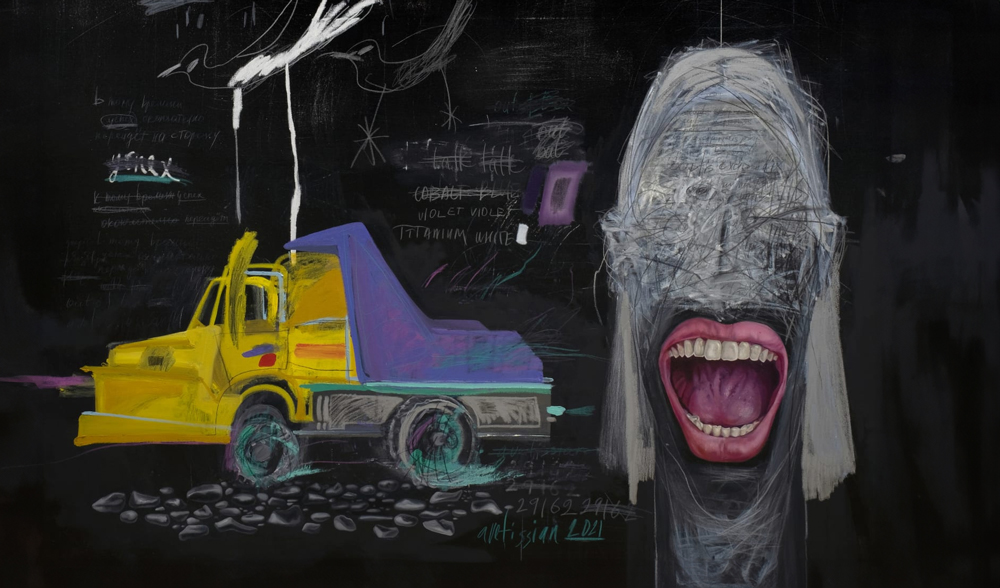
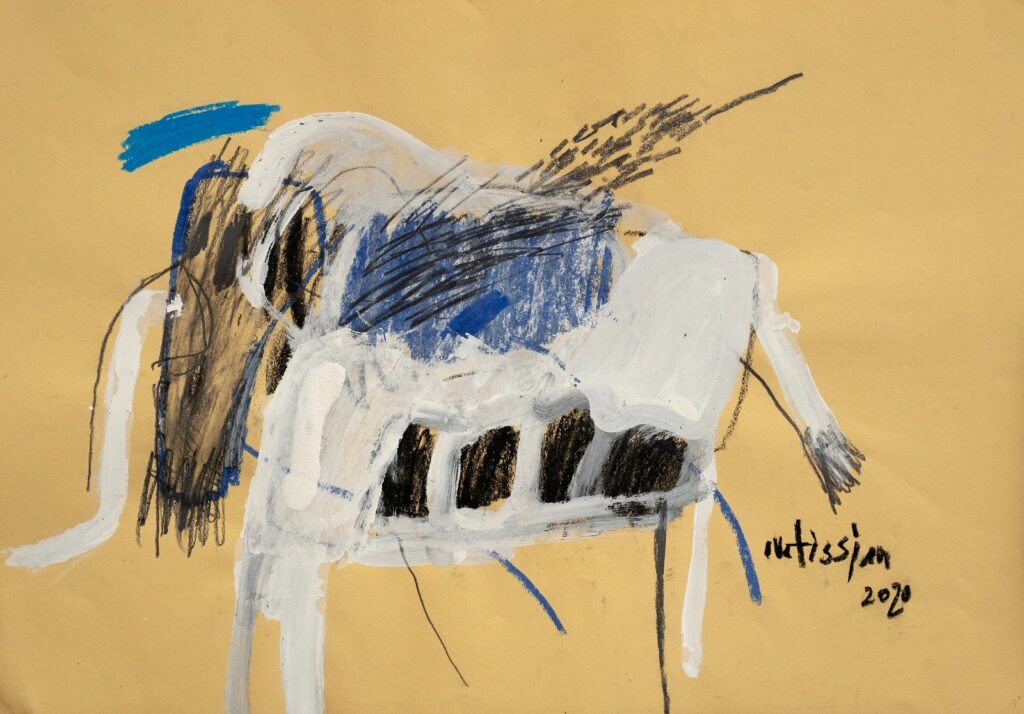
Gayane Avetissian’s first solo exhibition, Tabula Rasa, now on view at Gallery 77, presents a comprehensive selection that places drawing at the center as an autonomous and research-driven mode of expression. Comprising four canvases and twenty-four works on paper, the exhibition approaches paper not merely as a supporting surface, but as a field of inquiry where thought, memory, and perception are recorded in their most direct form. While Avetissian’s practice is grounded in traditional techniques, it unfolds within a contemporary conceptual framework that questions whether identity, learning, and artistic expression can ever begin from a truly “neutral” point.
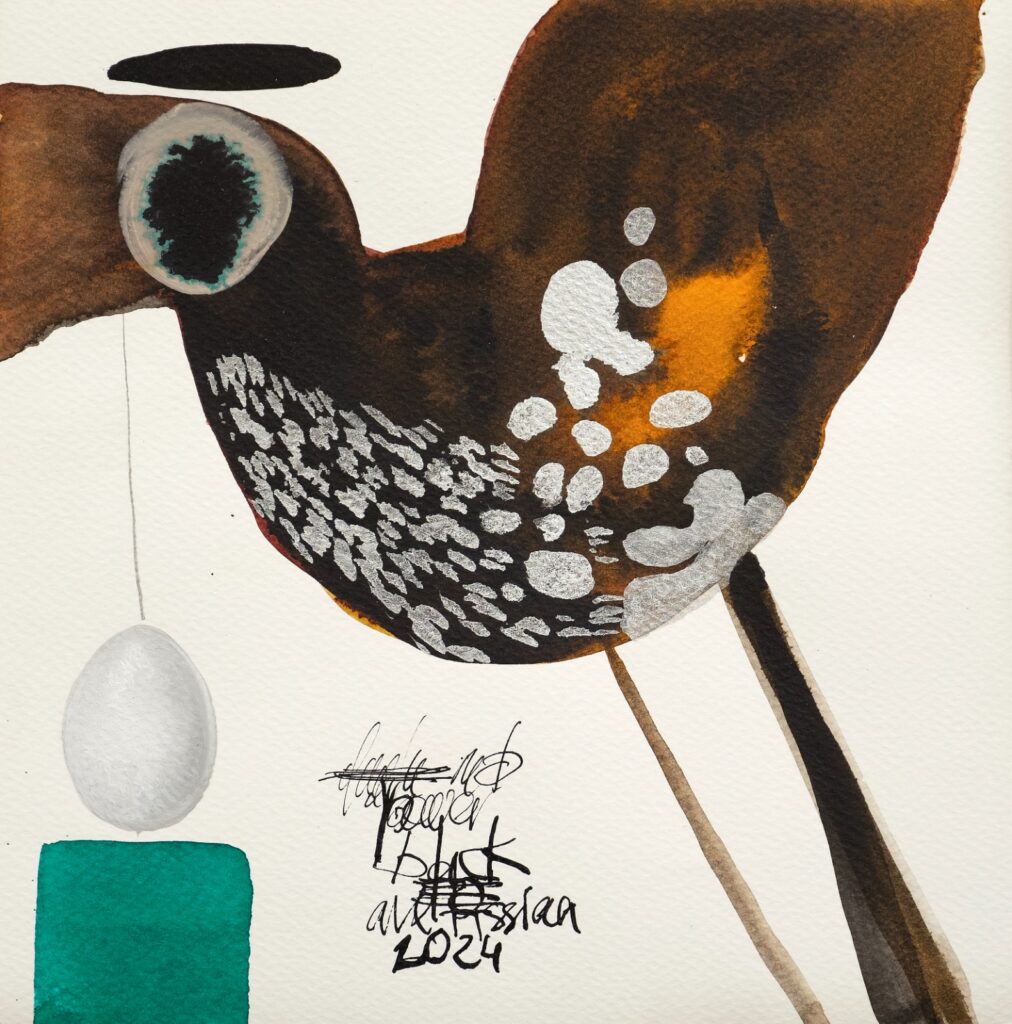
The exhibition foregrounds drawing as an independent and investigative language. With its four canvases and twenty-four works on paper, Tabula Rasa treats paper not simply as a surface, but as a site where thought, memory, and perception are immediately inscribed. The prominence of works on paper points toward a visual language marked by directness, reduction, and a turn toward the primitive; one in which gesture, repetition, and instinct take precedence over formal refinement. These works are not positioned as preparatory sketches, but as complete and autonomous expressions. As a philosophical concept, Tabula Rasa interrogates the notion of the “blank slate,” raising the question of whether identity, learning, and artistic expression can truly originate from a neutral ground. Avetissian conceives the surface not as an empty field, but as terrain already shaped by inherited memory, emotional experience, and cultural traces. Through raw lines, fragmented figures, and symbolic imagery, she makes visible the idea that every act of inscription is a negotiation with what already exists.
The Surface of Identity: Written and Erased
The exhibition’s core conceptual axis is shaped by processes of education, upbringing, and lifelong learning. The serial and repetitive works on paper evoke practices of writing, erasing, learning, and “unlearning,” emphasizing that identity is continuously constructed and reconfigured over time. Avetissian’s fluid visual language—moving between abstraction, primitivism, neo-expressionism, and realism—parallels the layered and often contradictory nature of human perception. Recurring motifs rooted in childhood memories, personal fears, and collective cultural references function not as fixed symbols, but as psychological markers that bridge the individual and the collective. Rather than guiding the viewer toward a definitive conclusion, Tabula Rasa can be read as an open-ended field of inquiry, inviting a reconsideration of beginnings through processes of learning, confrontation, and transformation.
Gayane Avetissian
Born in 1995 in Yerevan, Armenia, Gayane Avetissian stands out as a young-generation artist who reconsiders painting and drawing within a broader conceptual framework. She completed her education at the Panos Terlemezyan State College of Fine Arts, Department of Painting, and the Graphic Department of the Armenian State Academy of Fine Arts. In 2021, she studied on a full scholarship at the Joseph Backstein Institute of Contemporary Art in Moscow and was selected as a resident artist for the artist program of the Garage Museum of Contemporary Art in Moscow. Over the past decade, Avetissian has participated in numerous group exhibitions in Armenia, Lebanon, and Russia, and has also worked as an art director for various theatre productions in Armenia.