
Louvre Abu Dhabi, the National Museum of Qatar, Guggenheim Abu Dhabi… In recent years, museums across the Gulf have been rising not merely as exhibition spaces, but as symbolic structures that make states’ cultural ambitions visible. By commissioning increasingly monumental museums designed by some of the world’s most renowned architects, countries in the region are seeking to carve out a place for themselves on the global cultural stage. Strengthened by the branded language of architecture, this process positions contemporary art as a new domain of prestige, representation, and visibility within the region’s cultural policies.
Yet this transformation extends far beyond architecture alone. Collectors, curators, auction houses, galleries, and foundations have also become key actors in this emerging art ecosystem across the Gulf. While economic power plays a decisive role in shaping the scale and boundaries of the region’s art scene, tracing this trajectory reveals that Qatar, in particular, took early and strategic steps in positioning culture as an international showcase. Indeed, the Museum of Islamic Art, opened in Doha in 2008 and designed by the modernist master I. M. Pei, stands today as one of the world’s most comprehensive museums of Islamic art, with a collection spanning three continents and encompassing ceramics, manuscripts, textiles, and metalwork from across the Islamic world.
From National Narrative to Global Fracture
Continuing along this line, Mathaf: Arab Museum of Modern Art, which opened in Doha in 2010 and was designed by Jean-François Bodin, positions itself as the first major regional museum dedicated to Arab modern and contemporary art, tracing a trajectory from the 1840s to the present. Mathaf is not merely a site of collection, but a narrative space that approaches artistic production in the Arab world through its own historical continuity, inviting a rethinking of center–periphery relations. Considered alongside the Museum of Islamic Art, these two institutions stand as early and defining examples of an approach in the Gulf that does not confine the museum to a purely exhibitory function, but instead frames it as an active instrument of identity construction, collective memory, and cultural representation.
Yet the scale and language of this state-backed art scene in the Gulf crossed a decisive threshold with the opening of the Louvre Abu Dhabi in 2017, designed by Jean Nouvel and described as the Arab world’s “first universal museum.” Through its direct partnerships with Western institutions, its strong diplomatic framework, and its global brand value, the Louvre Abu Dhabi emerges not merely as a museum, but as a strategic turning point—one that repositions the Gulf on the world’s art map.
Louvre Abu Dhabi
United Arab Emirates / Abu Dhabi
The Louvre Abu Dhabi stands as the first and most defining example of Western-centered cultural partnerships established in the Gulf. It is not merely a case of licensing the Louvre name; rather, it represents a comprehensive model that extends from museum infrastructure to exhibition design, built through collaborations with Western institutions such as the British Museum, alongside independent advisors and curatorial networks. For this reason, it is not inaccurate to read the Louvre Abu Dhabi as Abu Dhabi’s step onto the global cultural stage—and even as the starting point of a new form of cultural diplomacy forged between the West and the Gulf. Let us take a closer look.
The museum is just one component of a vast tourism and culture complex on Saadiyat Island, valued at approximately $27 billion. First conceived in 2007 and realized after a decade-long construction process, the building opened its doors on November 11, 2017. It is the first of five major museum projects planned for the island and, without question, the most powerful spark behind the contemporary museum movement in the Gulf today. Inaugurated in the presence of French President Emmanuel Macron, the museum welcomed one million visitors in its first year—around 60 percent of them international.
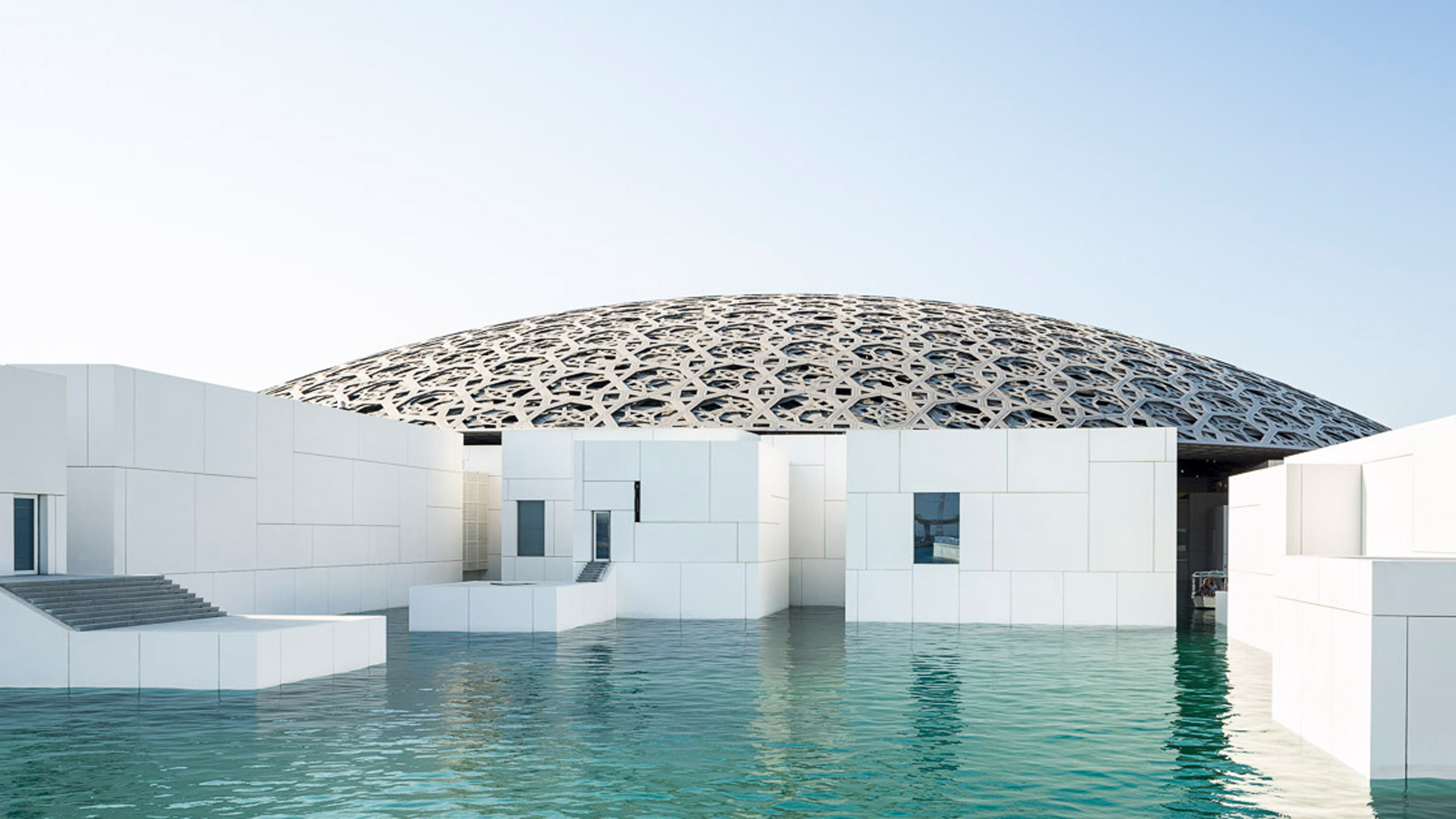
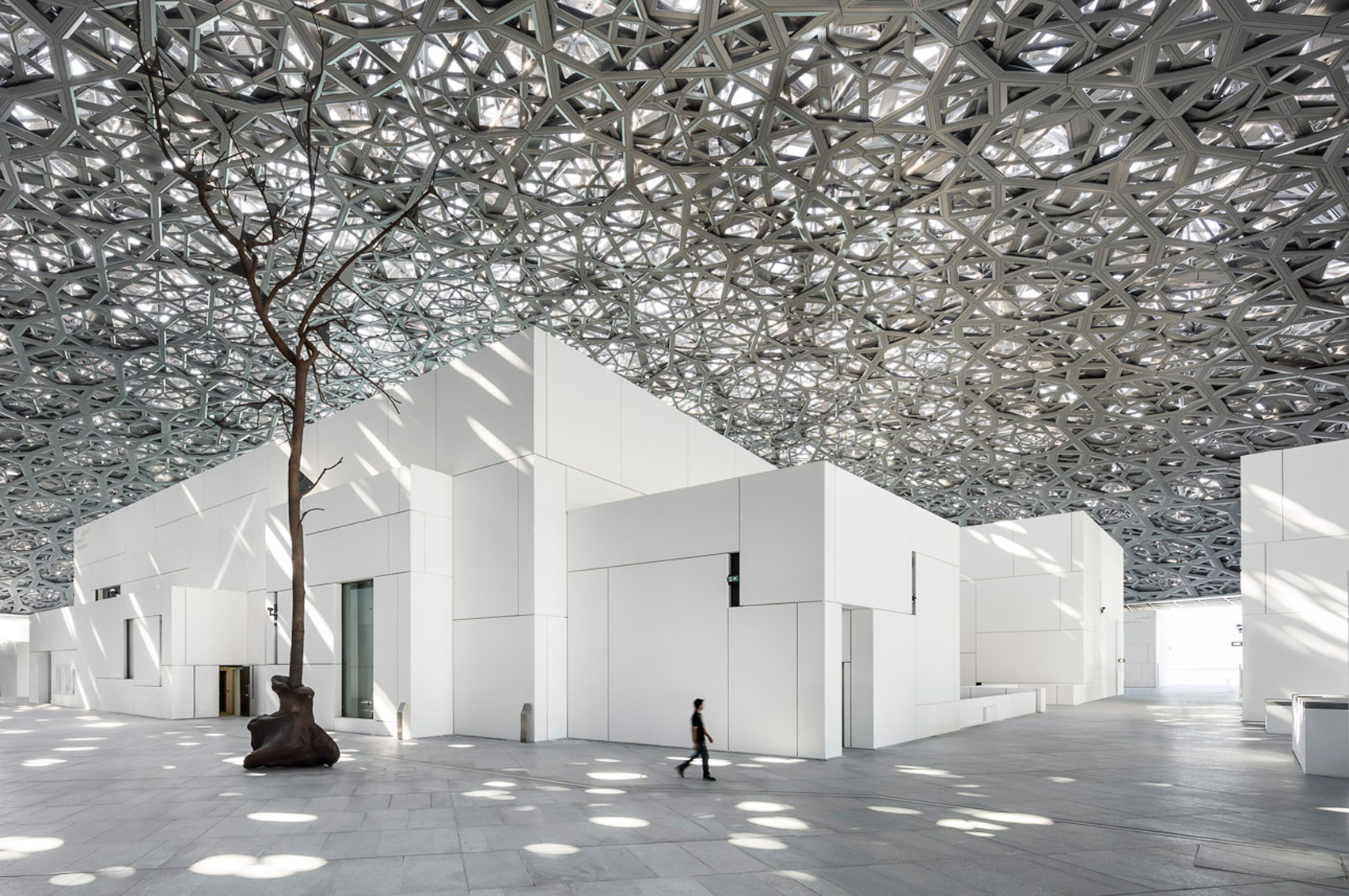
Designed by Pritzker Prize–winning architect Jean Nouvel, the building is conceived as a “museum city,” a contemporary interpretation of the Arab urban fabric, structured around light and shadow. Its monumental dome—composed of 7,850 interwoven metal stars arranged across eight layers—casts a soft, dappled illumination into the interior, often described as a “rain of light.” Nouvel describes the museum’s relationship with water, sky, and climate in his own words:
“I do not see this as an oasis. It is a complex geometry interweaving Arab motifs… Here, light falls like rain. I wanted to create a dynamic relationship between light and water.”
The Louvre Abu Dhabi asserts its ambition to create a universal museum in the Arab world. Today, its permanent collection includes more than 600 works, tracing a trajectory from prehistory to the present—ranging from ancient archaeological artifacts to contemporary installations. Under an intergovernmental agreement with France, works on loan from partner institutions are also displayed here. Masterpieces sent annually by institutions such as the Musée du Louvre, Centre Pompidou, Musée d’Orsay, Musée de l’Orangerie, Musée du Quai Branly, Versailles, Guimet, Musée Rodin, Chambord, and many others keep the collection dynamic and in constant dialogue.
As visitors move through this settlement of 55 structures—23 of them galleries—linked by streets, courtyards, and terraces, they encounter unexpected connections across time and geography. This is where the Louvre Abu Dhabi’s exhibition language comes into play: relationships forged between seemingly distant civilizations, a flow that is chronological yet also thematic, and a quiet, understated mode of storytelling. As The Guardian’s art critic Jonathan Jones has noted, it is “a turning point in cultural history.” Today, the Louvre Abu Dhabi stands as the most visible symbol—through its architecture, its collection, and its curatorial approach—of the Gulf states’ desire to position culture as a new realm of prestige and global representation.
National Museum of Qatar (NMoQ)
Qatar / Doha
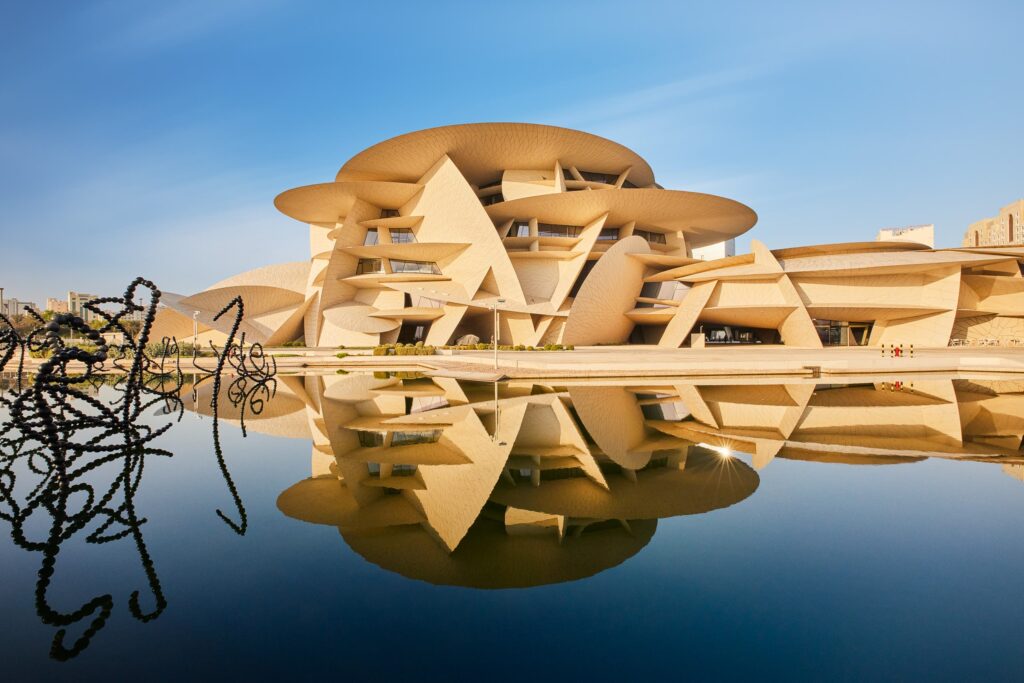
From the outside, the National Museum of Qatar resembles a vast crystal formation that seems to have emerged spontaneously from the desert. Behind this sculptural structure once again stands the signature of Jean Nouvel. Opened in Doha in 2019, the museum draws its inspiration from the desert rose crystals that naturally form in Qatar’s sands. Its façade—composed of hundreds of overlapping discs—presents a shifting form depending on the viewer’s perspective, making the building appear less like an architectural object and more like a natural phenomenon. Rather than foregrounding the “new,” the architectural concept is organized around the Old Emir’s Palace placed at the heart of the structure. Dating to the early twentieth century, this building is preserved as a physical core representing Qatar’s historical continuity, allowing the museum’s narrative to bring past and present together within the same spatial framework.
The museum’s collection conveys Qatar’s millennia-long history through archaeological finds, ethnographic objects, archival documents, and contemporary works. The maritime culture rooted in pearl diving, Bedouin ways of life, and the social structure of the pre-oil era are presented alongside multimedia narratives and oral history recordings. Contemporary, site-specific works by Qatari artists, integrated into this historical framework, add a current layer that connects the story to the present day. In this way, the National Museum of Qatar positions itself not merely as an institution that displays the past, but as a narrative space that reconstructs national identity through experience.
Guggenheim Abu Dhabi
United Arab Emirates / Abu Dhabi
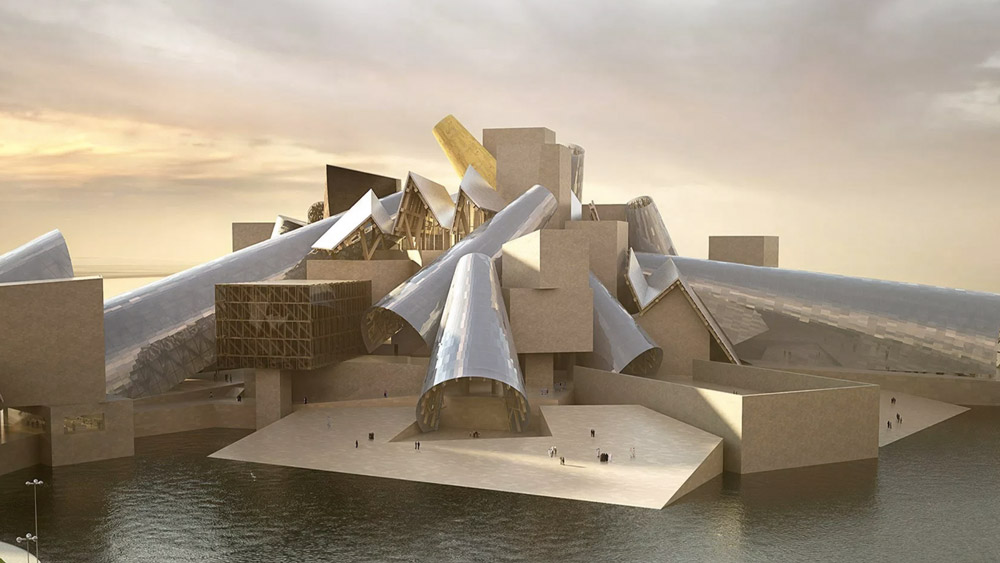
The Guggenheim Abu Dhabi, bearing the signature of the late Frank Gehry—architect of such iconic structures as the Weisman Art Museum in Minneapolis, the Walt Disney Concert Hall in Los Angeles, and the Guggenheim Museum Bilbao—also draws attention as the renowned architect’s final major cultural project. First announced in 2006 and with construction beginning in 2011, the project was delayed for many years for various reasons. Following the pandemic and regional circumstances, work gained renewed momentum in 2019. Richard Armstrong has stated that the museum is targeted to open in 2026, describing the building as Gehry’s “late-period masterpiece.”
Located within the Saadiyat Island Cultural District, the Guggenheim Abu Dhabi will be the largest museum in the Guggenheim network, with a total area of approximately 80,000 square meters. The structure consists of asymmetric cones and cylindrical volumes that translate Gehry’s sculptural language into the Gulf context. These conical forms on the exterior are inspired by the UAE’s traditional wind towers, contributing to natural ventilation while also functioning as entrances to both interior and exterior exhibition spaces.
Beyond its 28 galleries, the museum is conceived less as an enclosed institution and more as an open exhibition settlement, with outdoor display areas spanning courtyards, plazas, and terraces, totaling around 23,000 square meters. The program also includes an art and technology center, educational spaces for children, archives, a library, and a conservation laboratory.
The Guggenheim Abu Dhabi’s collection encompasses modern and contemporary works from the 1960s to the present. With a particular emphasis on West Asia, North Africa, and South Asia, this curatorial framework seeks to respond to the global and cross-cultural nature of contemporary art. More than 900 works by over 400 artists from more than 70 countries invite viewers to read global modernism through a multi-centered perspective. Temporary exhibition programs are planned to range from individual artist careers to thematic explorations.
The museum will be operated in partnership between the Abu Dhabi Department of Culture and Tourism and the Solomon R. Guggenheim Foundation. This collaboration aims to position the Guggenheim Abu Dhabi not merely as an exhibition venue, but as a platform for research, education, and cultural dialogue. Situated in the Saadiyat Cultural District alongside the Louvre Abu Dhabi, the Abrahamic Family House, and the soon-to-open Zayed National Museum, the Guggenheim Abu Dhabi stands out as one of the most ambitious links in the Gulf’s global contemporary art landscape. After years of postponement, Gehry’s final major museum in the desert is slated to open in 2026.
teamLab Phenomena Abu Dhabi
United Arab Emirates
Opening its doors in 2025 within the Saadiyat Cultural District, teamLab Phenomena Abu Dhabi stands as one of the most recent examples in the Gulf of redefining the museum concept through digital experience. Dedicated to the Japanese art collective teamLab, the venue is not built around a traditional collection, but rather around interactive experiences that place the relationship between art, technology, and nature at their core.
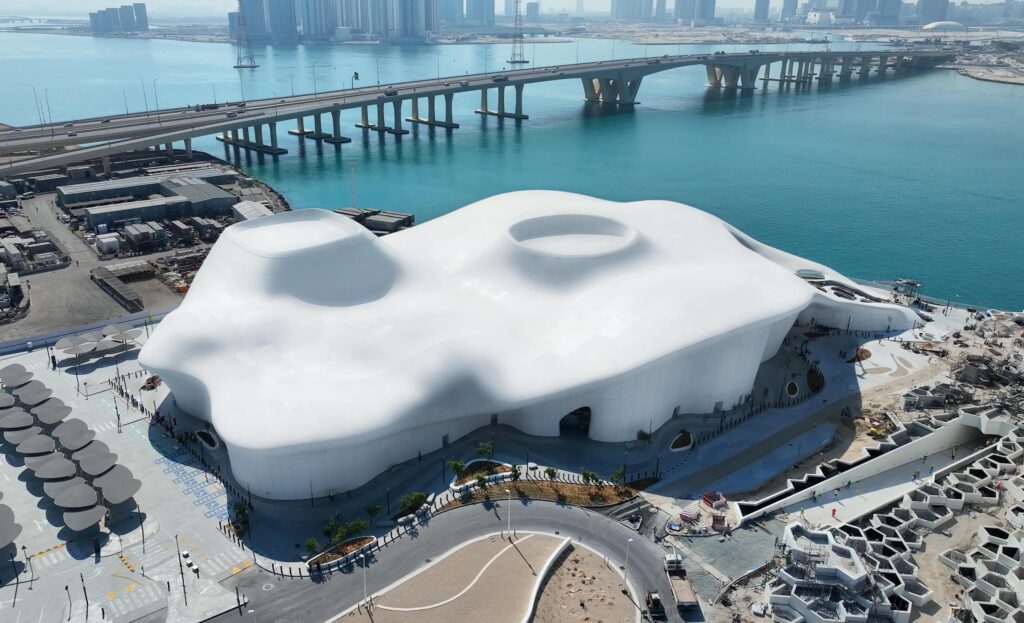
Spanning approximately 17,000 square meters, the building was designed by Abu Dhabi–based MZ Architects in parallel with teamLab’s installations. The architecture functions less as a shell that contains exhibitions and more as an organism that becomes part of the works themselves. Its mirrorless, windowless, white, and fluid exterior deliberately sharpens the transition into the dark, sensory interior spaces.
Inside, visitors step into multisensory digital installations where swarms of butterflies disperse and regroup across the walls, columns of light move through the space, and objects rippling across water surfaces respond to touch. The works are not fixed; they continuously transform in response to the viewer’s movement, the temperature of the space, and sound. For this reason, teamLab Phenomena offers not so much an exhibition to be observed as an environment to be experienced through the body.
Zayed National Museum
United Arab Emirates / Abu Dhabi
Located at the heart of the Saadiyat Island Cultural District, the Zayed National Museum (ZNM) opened its doors in December 2025 as the most comprehensive institution to bring the United Arab Emirates’ national narrative into dialogue with a global museum language. Dedicated to the country’s founding leader, Sheikh Zayed bin Sultan Al Nahyan, the museum stands as the UAE’s first major national museum, presenting the nation’s history, culture, and social transformation.
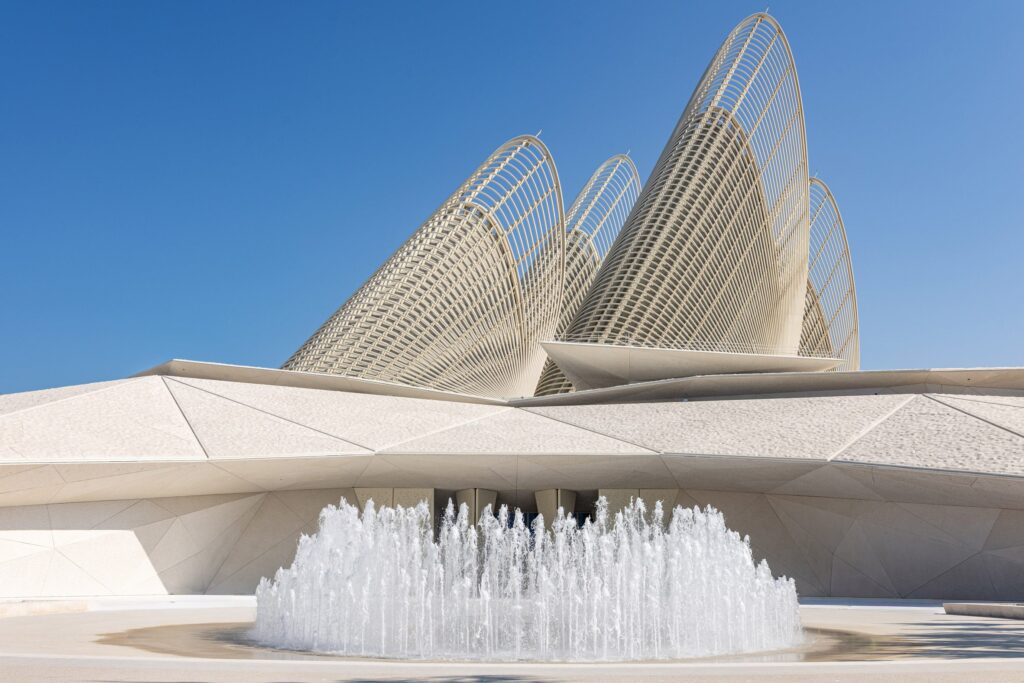
The museum was designed by Pritzker Prize–winning architect Norman Foster and his studio, Foster + Partners. ZNM’s most distinctive architectural feature is the five monumental towers rising from the exterior, evoking the wings of a falcon. Ranging in height from 83 to 123 meters, these sculptural towers are not merely symbolic gestures; they also function as thermal chimneys that provide natural ventilation for the building. Cool air drawn from the desert floor is channeled into the structure through the towers, while warm air is pulled upward and expelled, enabling the interior to be naturally cooled.
Spanning approximately 56,000 square meters, the museum is composed of capsule-like galleries that appear to float within the main volume. These capsules allow natural light to filter down and circulate through the space, offering— in Foster’s words— a visitor experience in which the sense of scale shifts gradually throughout the journey. The ZNM’s permanent collection comprises more than 3,000 works, around 1,500 of which are on display. Focusing on 300,000 years of history across the UAE and the Arabian Peninsula, the museum—alongside the Louvre Abu Dhabi and the soon-to-open Guggenheim Abu Dhabi—represents the national narrative pillar of the Gulf’s emerging architecture of cultural power.
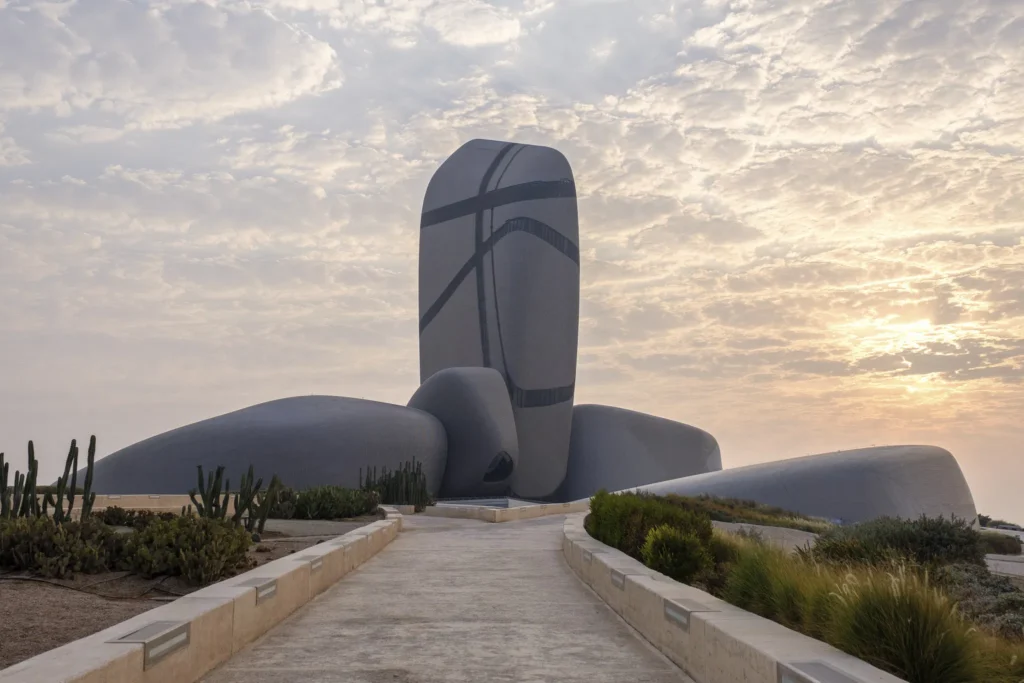
King Abdulaziz Center for World Culture (Ithra)
Saudi Arabia / Dhahran
Opened in 2018, Ithra stands as one of the most comprehensive institutions in Saudi Arabia to bring culture and learning together on a public scale. Designed by the Norwegian architecture firm Snøhetta, the building forms a powerful architectural landmark with its pebble-like volumes rising from the desert landscape. The main tower, reaching 110 meters in height, establishes a cohesive composition alongside grounded and suspended masses.
At its core, the museum and archives trace the nation’s cultural memory along a timeline that extends from the past to the present, while the library, exhibition halls, auditorium, and cinema expand the center’s public program. Drawing on the idea of cultural interdependence, the architectural concept brings together layers embedded in the ground—symbolizing the past—with forms that reach toward the future within a single, unified structure.