
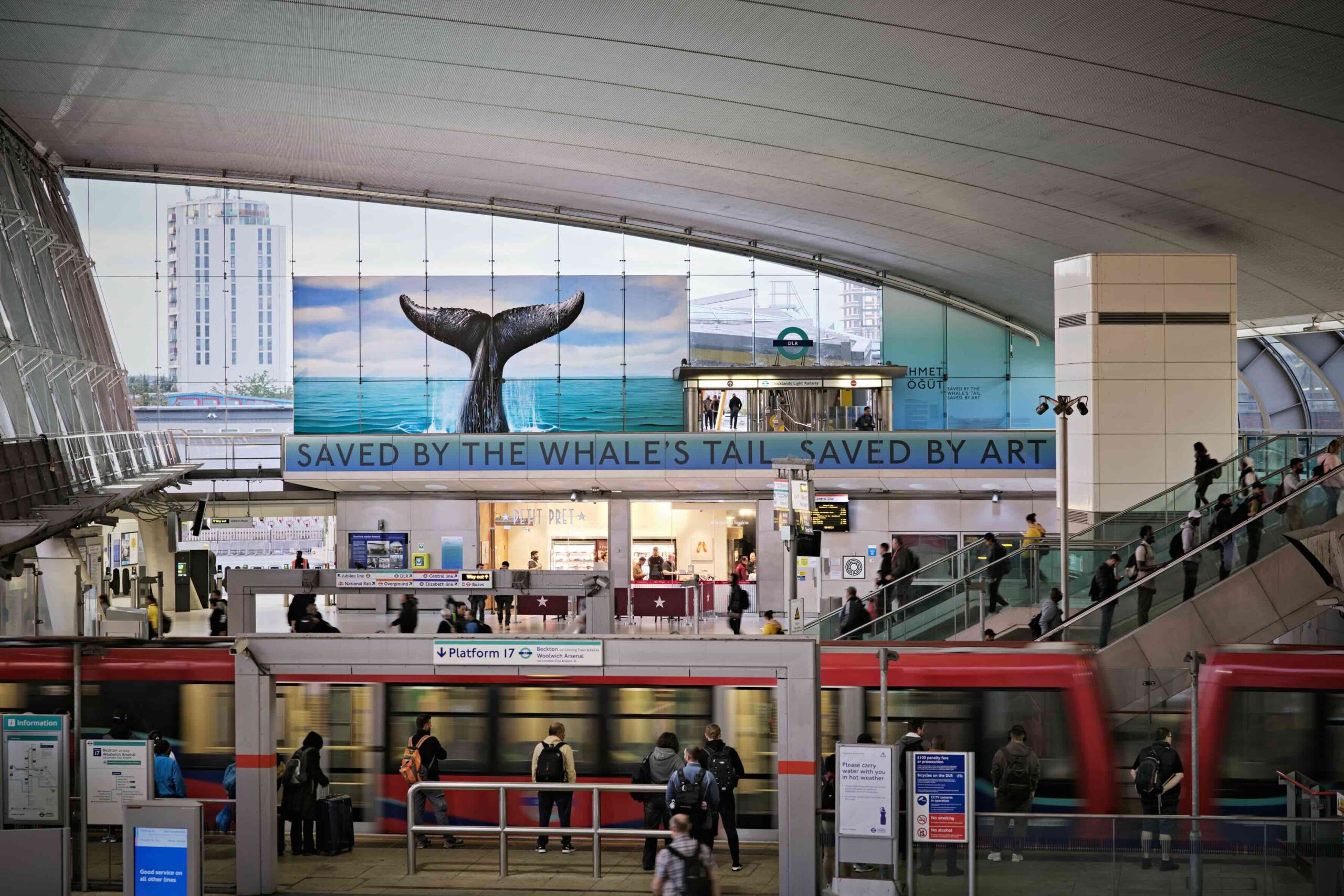
Ahmet Öğüt has exhibited at many prestigious institutions both internationally and in Türkiye. Our familiarity with him spans over twenty years. We wanted to revisit his journey—from his education at Hacettepe University’s Faculty of Fine Arts, which marks the beginning of this shared timeline, to the present—by highlighting key moments along the way.
You studied at the Painting Department of Hacettepe University’s Faculty of Fine Arts from 1999 to 2003 in Ankara, and since then you have become an active artist both nationally and internationally. How would you summarize your journey from Ankara to today?
After graduating from Diyarbakır Fine Arts High School, I started hitchhiking between Ankara and Istanbul at age 21 during my student years. I also began participating in exhibitions at places like Proje 4L with performance, video, and photography works. After earning my degree from Hacettepe University’s Faculty of Fine Arts, Department of Painting, I pursued a master’s at Yıldız Technical University’s Faculty of Art and Design in Istanbul (2003–2006). This period marked a shift toward an interdisciplinary and conceptual approach in my practice.
Initially, many places were inaccessible due to visa restrictions. I used to think: if our bodies can’t go, then our works and ideas should go instead. First our imagination leaves, and eventually, we follow—its time will come. Just as Istanbul was beginning to gain international recognition, I moved to Amsterdam between 2007 and 2008 to join the Rijksakademie van Beeldende Kunsten as a guest artist. During that period, many international curators who wished to visit my studio in Istanbul continued to contact me, but because I was in Amsterdam, I missed those opportunities.
I turned what seemed like a disadvantage into an advantage, positioning myself from the start as an artist within an international context rather than as a local one. From that point onward, my works have appeared in museums and biennials across Europe, Asia, and the Americas, without focusing on any single country. My practice has been shaped—and continues to be shaped—by themes such as public space, labor, solidarity, alternative education models, and institutional critique. What began with painting gradually evolved into video, installation, performance, archival practices, and participatory projects.
Today, working across different regions is less about distancing myself from a place and more about the need to rethink and reposition myself in each new context. This journey actually started even earlier, with Diyarbakır Fine Arts High School—something that shouldn’t be overlooked.
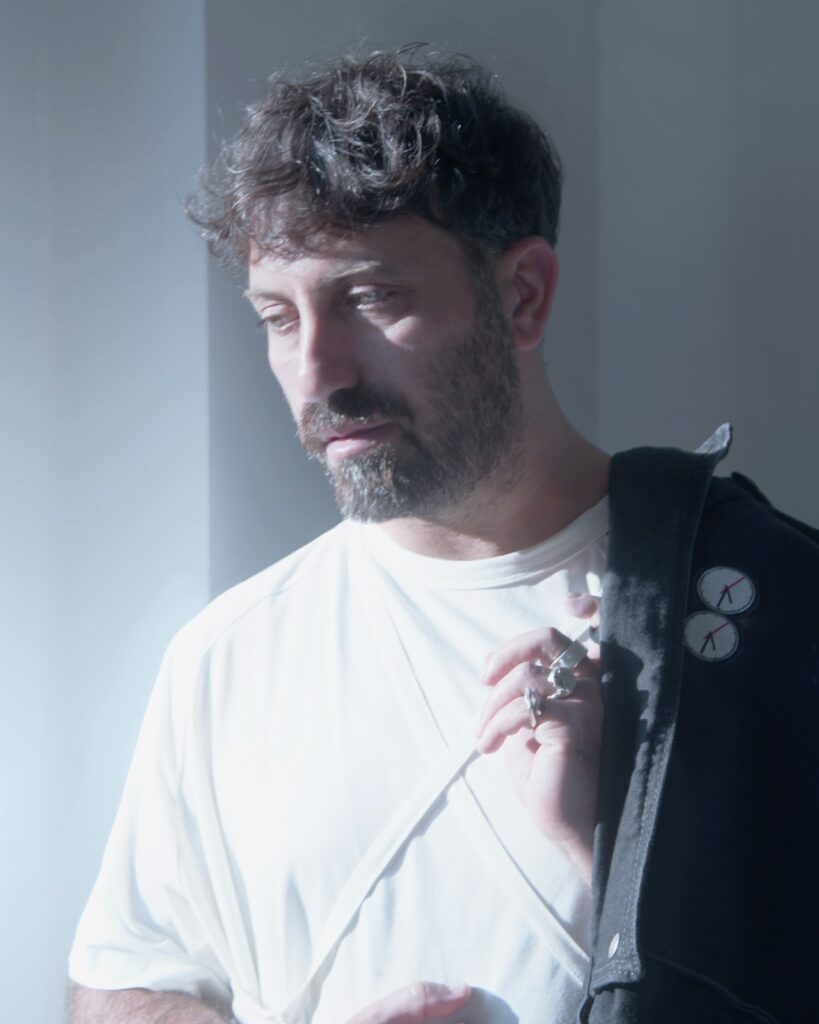
Would it be okay to ask about the main reasons behind your decision to return permanently to Türkiye?
Istanbul has always been the city where I have felt most rooted. Although I have mostly lived in Amsterdam and Berlin since 2007, I’ve never lost my connection to Istanbul. Even during brief visits, I used to return every two or three months. Now, that landscape is shifting: I will plan my travels with Istanbul as my primary focus. I will visit Amsterdam and other cities where I work only briefly, as needed. I’ve always wanted to spend most of my time in Istanbul, and now that wish is coming true.
Similar reasons influenced James Baldwin’s decision to leave New York, flee to Paris, and eventually move to Istanbul. I’ve long believed that reversing the migration flow could be more impactful for my circumstances. I don’t say this because art institutions in Istanbul have warmly embraced me; sadly, the reality is different. Still, being based in Istanbul will make it easier for me to mentor young artists. In fact, I’ve quietly been practicing underground mentoring for years.
“As Institutions Increase, Spaces of Freedom Narrow”
My engagement with young artists has never stopped; much communication happens over the phone, but I believe face-to-face interactions would be far more effective. If institutions created spaces where young artists could meet me directly—rather than only seeing my work from afar through the internet—my voluntary efforts could develop into a longer-term and more sustainable form of support.
Unfortunately, institutions often lag behind; they are slow to develop programs based on urgent needs. Delays of three, five, or even twenty or thirty years can occur, sometimes almost a century late. For this reason, contemporary art—art that truly responds to the present moment—frequently has to create its own independent, underground platforms. As institutions grow, the paradox of shrinking spaces of freedom persists. My hope is that institutions will eventually evolve into structures that genuinely protect these spaces of freedom in a timely manner.
Looking from the scale of Türkiye, at least from the general impression I have, being an artist living abroad is often perceived as a luxury or an advantage—being part of stronger networks and, in that phrase I don’t particularly like, “building a career,” seemingly more advantageous than living in Türkiye. You have spent many years abroad. As an artist who has moved between Berlin, Amsterdam, Finland, and Istanbul, how would you interpret this situation?
Stepping out of one’s comfort zone can be broadening; the issue is less about “where you went from and where you arrived,” and more about a misconception that often arises when looking from Türkiye—especially toward the West—as if one were looking at an advanced and flawless democratic society. In reality, in Europe forms of nationalism and discrimination exist not only among right-wing groups but also in more subtle and sophisticated forms within white European leftist circles. Those who truly relocate, rather than just visit for holidays, notice this immediately.
Tokenism, for instance, is a very common practice. People coming from the West are labeled as “expats,” while those coming from the South and the East are consciously labeled as “exiles,” whether they actually are or not. In other words, there are clear class-based distinctions. Foreigners are often seen not as individuals with merit but as groups in need of assistance; sometimes there is a condescending, authoritative tone and an expectation to conform to certain ideological frameworks. Liberal racism, soft racism, and microaggressions are also attitudes that should not be underestimated. Moreover, these often come from the most unexpected groups at the most unexpected moments. For this reason, one often has to struggle against visible and invisible barriers in order not to remain excluded from the class-based positions and roles largely reserved for white Europeans.
“The Issue Is Not the Word, but Where We Position Ourselves”
“Foreigners” are forced to prove themselves again and again every day. Expressions such as Ausländer raus! (“foreigners out!”), heard in Germany, or the term illegal aliens used in the United States, are examples of how this mentality is reflected in language. Of course, there are also people who are aware of the condescending attitudes within their own societies and who struggle to change them.
As Nawal El Saadawi has also criticized, terms such as “Middle East” or “Far East” are products of a colonial perspective that defines the world by taking Europe—historically London in particular—as its center. What was once “middle” or “far” was determined according to Europe; that is why terms like “Middle West” or “Far West” sound strange to us—we never hear them, because the West has always positioned itself as the center. As Saadawi points out, organizing the world hierarchically according to a single center places Europe as the norm and other regions as the “other.” Today many academics and thinkers criticize these terms and propose alternatives such as West Asia or Southwest Asia and North Africa (SWANA). Because the issue is not merely the word itself, but how we position the world—and ourselves—within it.
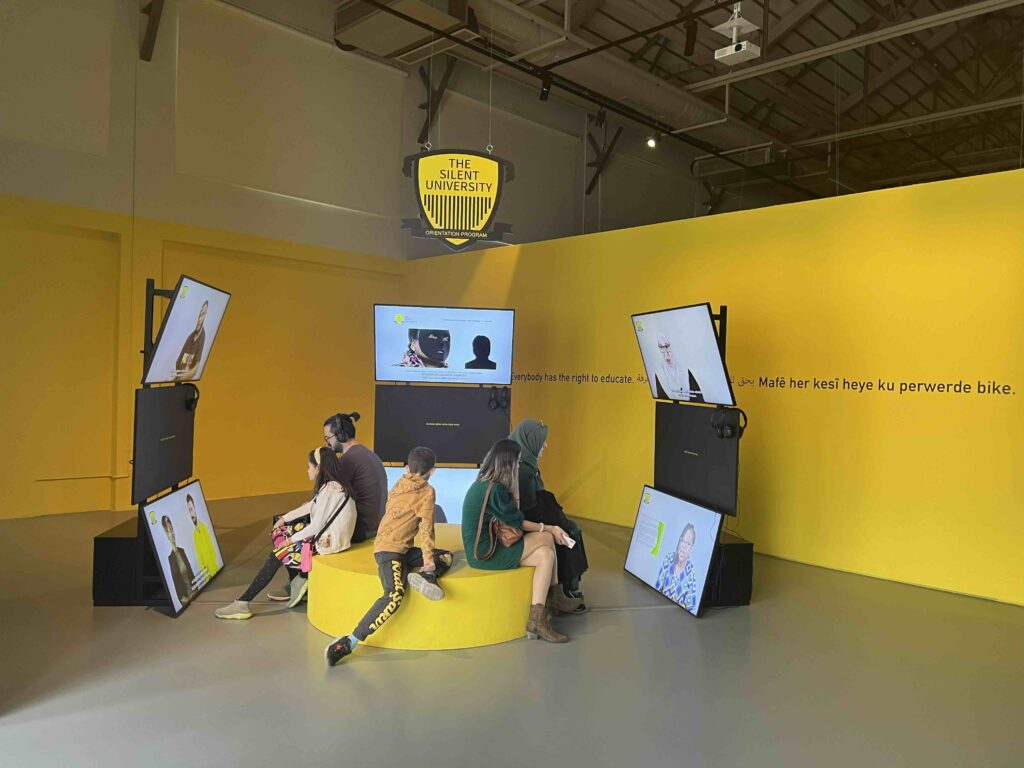
I think the “Silent University”, which you launched in 2012, has strong conceptual connections with the “Free University” founded in Düsseldorf in 1973 with the involvement of Joseph Beuys. What kind of relationship and difference exists between the two? Could you summarize both the starting point and the current state of the Silent University?
I used to admire Joseph Beuys very much, but as I got to know him more closely, he gradually became an artist I can no longer admire in the same way. That said, one of Beuys’s initiatives I still appreciate is the radical alternative education model he proposed in Düsseldorf—opening his classes to everyone, whether they were officially enrolled in the academy or not, a decision that eventually led to his dismissal. This model later evolved into the independent Free University.
There are many historical as well as contemporary examples of such radical educational institutions: the Antiuniversity of London, founded in 1968; Black Mountain College (1933–1957), known for its interdisciplinary pedagogy; and the Skowhegan School of Painting and Sculpture, established by artists for artists and continuing since 1946. More recently, initiatives such as Open School East, SOMA, and Dar Jacir for Art and Research have continued this tradition through participatory, critical, and self-organized models.
The Silent University, by contrast, creates a democratic platform for academics who have been forced into migration and who often lack even an official identity, a bank account, or a permanent home address. By persuading other universities and institutions to collaborate with us according to our own principles, we collectively question and dismantle hierarchies. In other words, The Silent University argues that bureaucratic and administrative obstacles are the responsibility of institutions—not of individuals who have already been pushed into difficult conditions.
You say, “As I got to know Beuys more closely, he became an artist I can no longer admire as much.” I became curious about your perspective on a figure who has become something of an idol in Germany specifically, and in the West more broadly.
As is well known, Joseph Beuys served in the Luftwaffe, the air force of Nazi Germany, during the Second World War. On 16 March 1944, his plane crashed on the Crimean Front. After the war, it is known that he maintained relations with certain former Nazi circles. Debates around Beuys’s political inclinations continued for many years and still persist today. There are examples pointing to his connections with nationalist or right-wing thinkers and to aspects of his ideas that seem closer to völkisch (ethno-nationalist) concepts than to liberal democracy.
For many years, we interpreted his refusal to learn English as a stance against American imperialism. However, after living in Germany for eleven years and becoming more familiar with his biography, I cannot help but wonder whether a latent form of German nationalism might also have been at play. At that time, provocative artistic gestures could easily be perceived as courageous acts; yet in some cases artists who claimed to criticize nationalist discourse may have ended up reproducing it—or even reinforcing it—whether consciously or not.
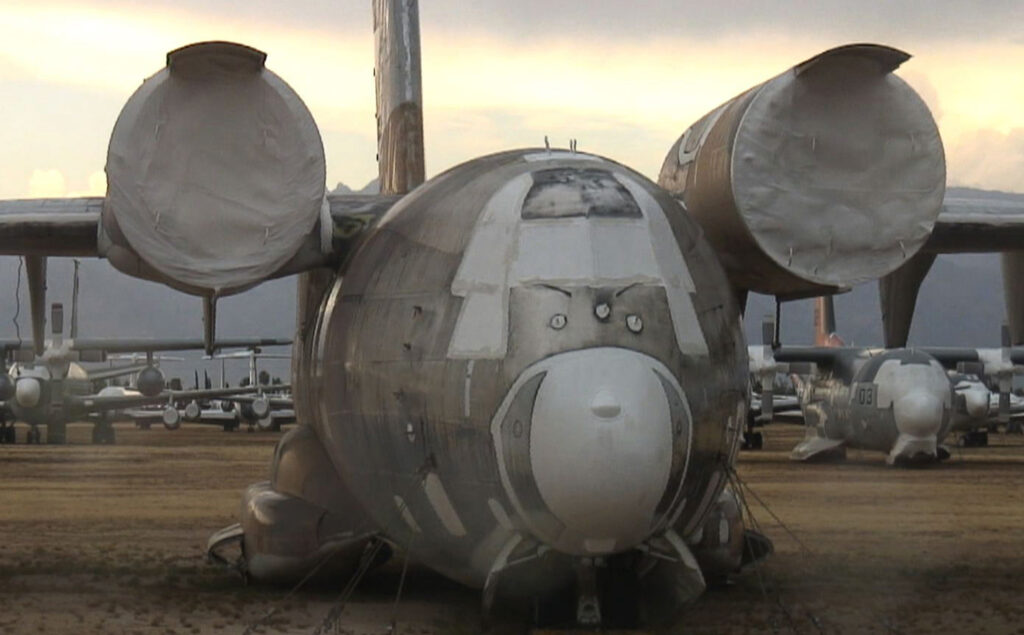
In your 2008 video Things We Count (2008), we hear a voice counting the number of airplanes abandoned in an aircraft graveyard in Turkish, Kurdish, and English. I had interpreted the work as a kind of “sound monument” dedicated to the victims of war. I’m curious—how did you encounter this graveyard, and how did the idea develop?
I had been invited to participate in a short artist residency in Arizona. The aim was to develop a proposal for a monument in public space; the invitation came from Bruce W. Ferguson. Instead of realizing that project, however, when I heard about the existence of the military aircraft graveyard in Tucson, I requested special permission to visit it.
Seeing thousands of warplanes in the middle of the desert—planes that would never be used again but were preserved in remarkably good condition—was a very strange experience. These aircraft had been used in Vietnam, Iraq, Afghanistan, and many other regions. Although it may not appear so, the filming was entirely spontaneous. The fact that the violence produced by these planes had taken place in distant geographies, and that they later returned to the place where they were manufactured only to remain abandoned in a state of stillness, felt uncanny to me—even unsettling.
Although you studied painting, in one of your interviews you say, somewhat jokingly, “I wish I had studied law,” a remark that seems to allude to your projects that prioritize actions, performances, and participatory practices beyond painting. Yet this does not sound like regret about studying painting, but rather something said in the context of the urgency of law. How would you suggest we think about it?
In fact, I am quite happy that I studied painting. I only made that ironic remark because I have collaborated with so many lawyers for my projects that sometimes I think it might have been easier if I had studied law directly. Beyond needing legal support when negotiating with institutions, conceptual contracts have often become part of my projects—particularly in processes concerning the circulation of artworks, their transfer of ownership, and their return to public space—so that in the future they do not lose their ethical stance, their function, or their capacity to stimulate our imagination.
Regardless of scale, questioning the cultural labor and backstage dynamics behind the exhibitions or organizations you participate in seems to be as important to you as the act of exhibiting itself. One example is the Intern VIP Lounge, which you created as part of Art Dubai in 2013. What do you think about transforming exhibition environments into constructive formats that create a sense of status equality among cultural actors or provide support funds for those in need?
The first version of the Intern VIP Lounge was created in 2013 as a special space for all unpaid interns working at the art fair and galleries in Dubai. Only these volunteers were allowed to enter the Intern VIP Lounge. This special area not only offered a comfortable and enjoyable environment—with a chocolate fountain, massage sessions, table tennis tournaments, snacks, and drinks—but also functioned as a space for knowledge exchange through a dedicated program that included meetings, presentations, and film screenings.
In 2016, within the framework of Museum ON/OFF at Centre Pompidou, we established another Intern VIP Lounge for interns living and working in Paris. I see this project as an example of a “counter-hierarchical strategy” model.
Vid Simoniti suggests that for an artist to engage with society, it is not necessary to abandon art as something unusual, impractical, or outside its own field. Instead, he proposes that we should think carefully about whose experience art is rooted in and how an artist opens their work to a specific audience. He further explains that poetic forms of expression can also have political value. As an artist whose works contain clear political references, what would you say about your relationship with politics? And related to this, could you share your thoughts on the origins and current impact of your installation Bakunin’s Barricade (2015)?
I have never labeled myself a political artist because I don’t believe there is such a thing as non-political art. Every form of art—whether poetic or aesthetic—is socio-political because of the context in which it exists. I think every artist should share this responsibility, question it, and reflect on it. It’s not only important to consider the work during its creation but also to anticipate how it will circulate and change hands, and if necessary, to include these considerations as part of the work itself.
The project Picasso in Palestine by artist Khaled Hourani is a significant example of this. It was carried out over more than two years through a partnership between the International Academy of Art Palestine and the Van Abbemuseum. As part of the project, Pablo Picasso’s work Buste de Femme (1943) was brought to Ramallah and displayed to Palestinian audiences under armed security. However, the process was more than just a simple exhibition; because of Palestine’s highly restricted political and legal conditions, the insurance, transportation, and import procedures had to be reorganized, and standard museum loan protocols had to be completely redesigned.
I first installed Bakunin’s Barricade in 2015 at the Van Abbe Museum. Demonstrating that original paintings from the museum’s collection—works with extremely high insurance values by artists such as Oskar Kokoschka, Fernand Léger, and Marlene Dumas—could be incorporated into the barricade installation was an important starting point for me. But the most crucial element was the conceptual contract that accompanied the installation.
Five years later, after different versions of the work had been exhibited in various museums, the Stedelijk Museum Amsterdam became the first institution to sign this conceptual contract. This changed the work from a proposal into a functional system with the actual potential to be loaned back to the streets. The agreement was signed after months of negotiations with the museum’s lawyers. Based on the Universal Declaration of Human Rights, the contract guaranteed that the work could be lent to public spaces and streets if requested during future mass protests or times of war.
In 2024, during the ongoing genocide in Gaza, a group of cultural workers, artists, and activists requested to borrow Bakunin’s Barricade to help protect students protesting against violence from police aggression. Unfortunately, the museum refused to lend the original works from its collection and, in doing so, revealed its own inconsistency. In fact, Bakunin’s Barricade is a work that goes beyond a single request. It creates an ongoing cycle of testing and confrontation—either compelling the museum to stay true to its own ethical standards or exposing its contradictions when it fails to honor the agreement.