



Museum Ludwig is celebrating its 50th anniversary with a retrospective of Yayoi Kusama. On view from March 14 to August 2, 2026, the exhibition brings together more than 300 works, ranging from the artist’s first drawing made at the age of five to a newly produced Infinity Room created specifically for the museum. Encompassing painting, drawing, sculpture, installation, performance documentation, and literary production, the exhibition presents Kusama’s creative journey spanning over eighty years. Museum Ludwig marks its 50th anniversary with a comprehensive exhibition dedicated to Yayoi Kusama. Opening in Cologne on March 14 and running until August 2, 2026, the exhibition transforms the entire museum into Kusama’s visual universe by bringing together nearly ninety years of artistic production. Featuring more than three hundred works, the exhibition stands out not only for its scope but also for its complete reconfiguration of the exhibition space.
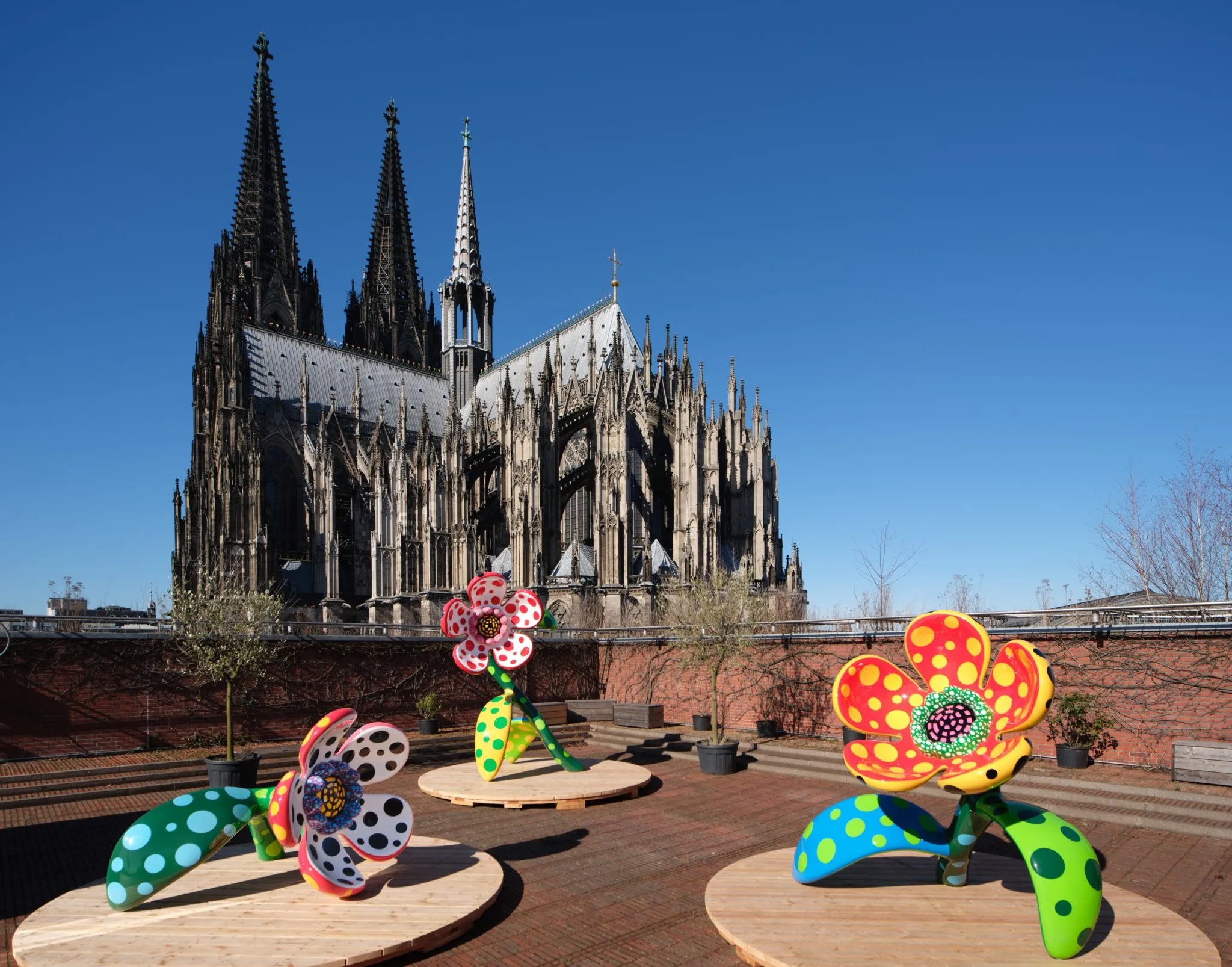
The selection, which includes painting, drawing, sculpture, installation, performance documentation, fashion, and literary production, extends from Kusama’s earliest drawing at the age of five to a newly produced Infinity Room created specifically for this exhibition. The exhibition is not confined to the museum’s temporary galleries but spreads across various spaces, from the main halls to the rooftop terrace. The painted bronze flower sculptures, displayed on the rooftop terrace for the first time, stand out as one of the key elements strengthening the exhibition’s relationship with the space.
A Retrospective from Early Works to the Present
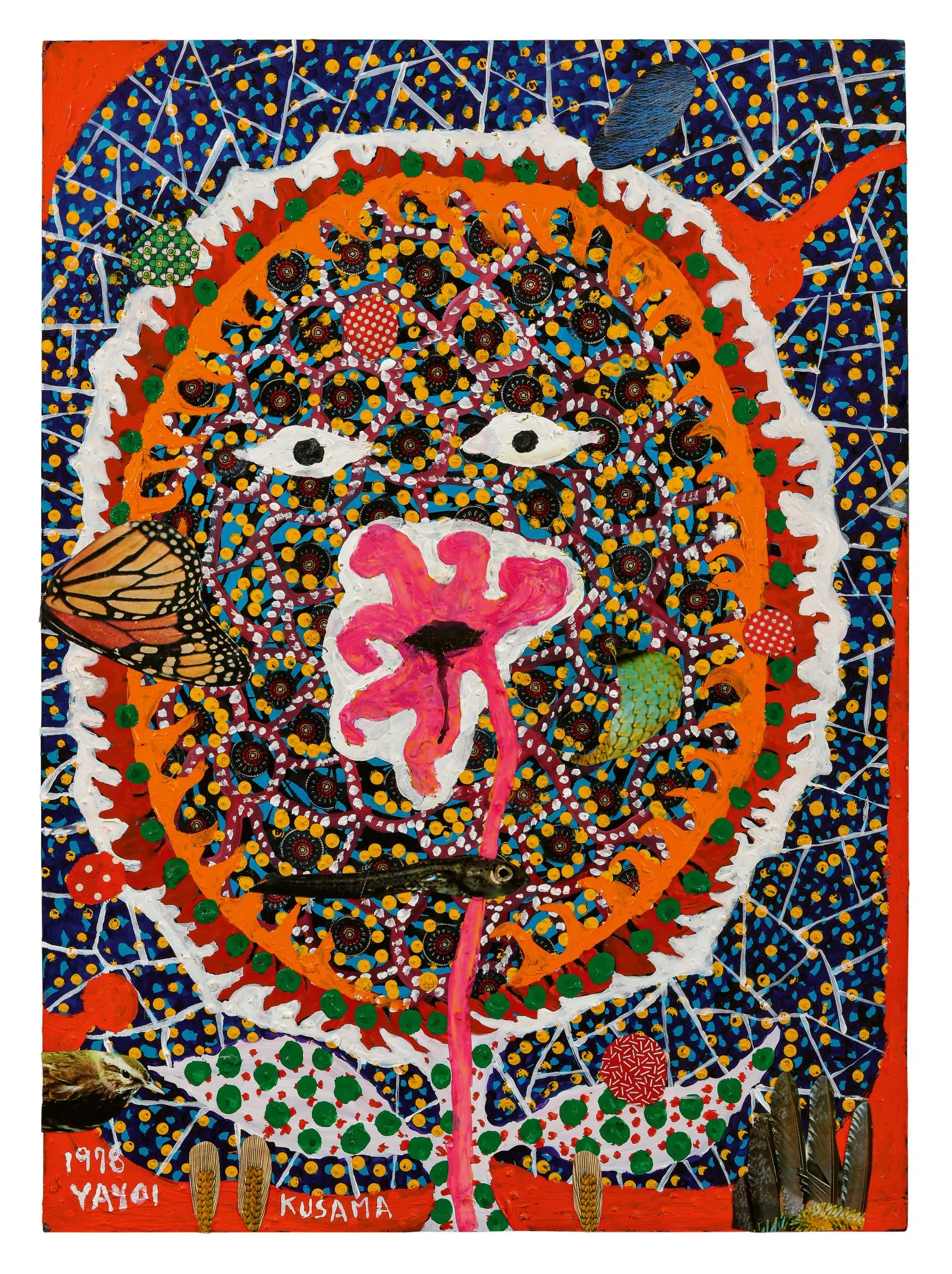
Curated by Stephan Diederich, the exhibition presents Yayoi Kusama’s work in a chronological framework. From her early drawings in the mid-1930s to the paintings she produced after leaving her studies in Kyoto in the 1950s, and to the installations and performances she developed in New York during the 1960s, a wide range of periods is brought together. The strong presence of paintings and drawings from the 1950s offers an opportunity to reconsider Kusama’s early period.
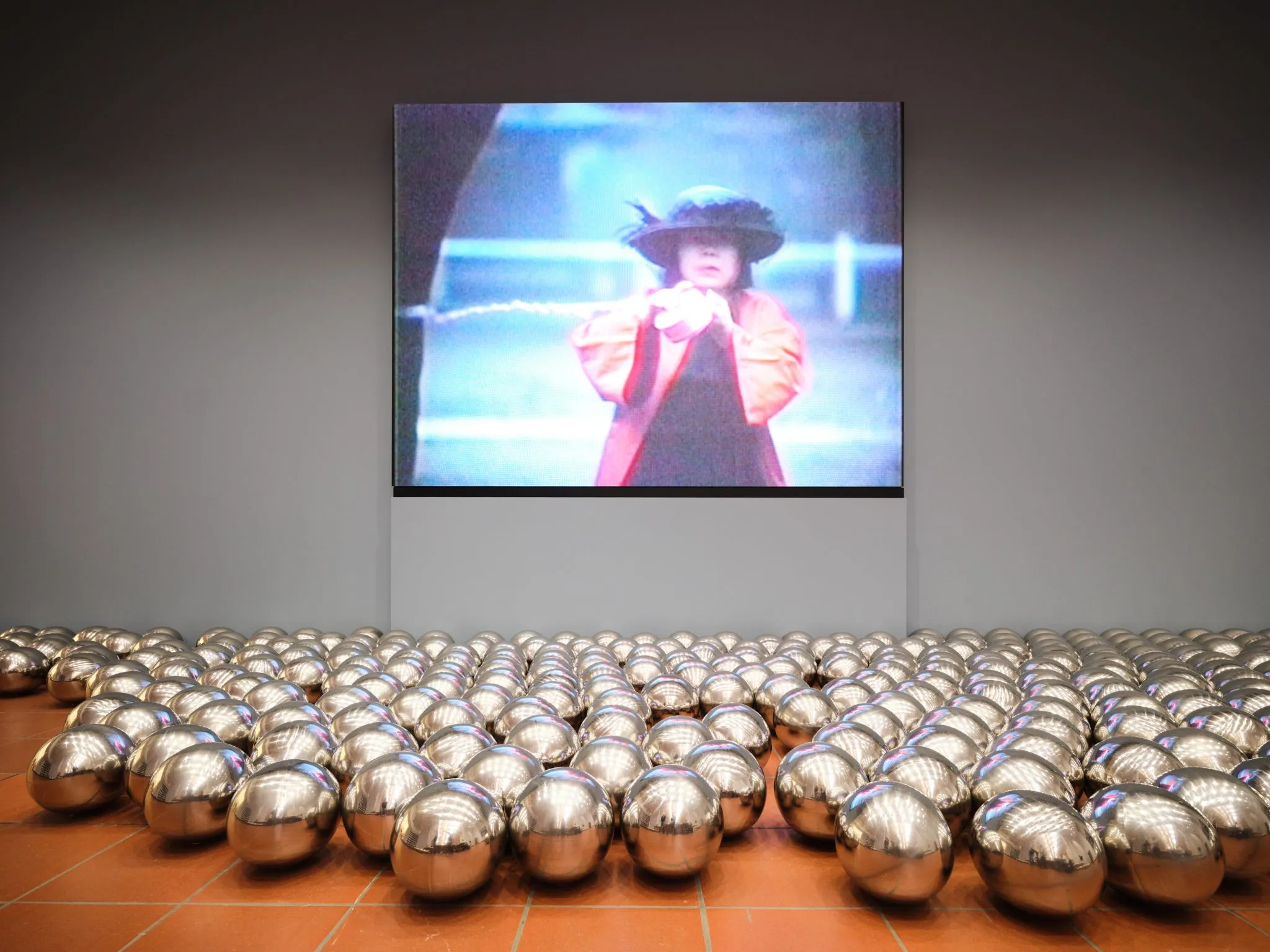
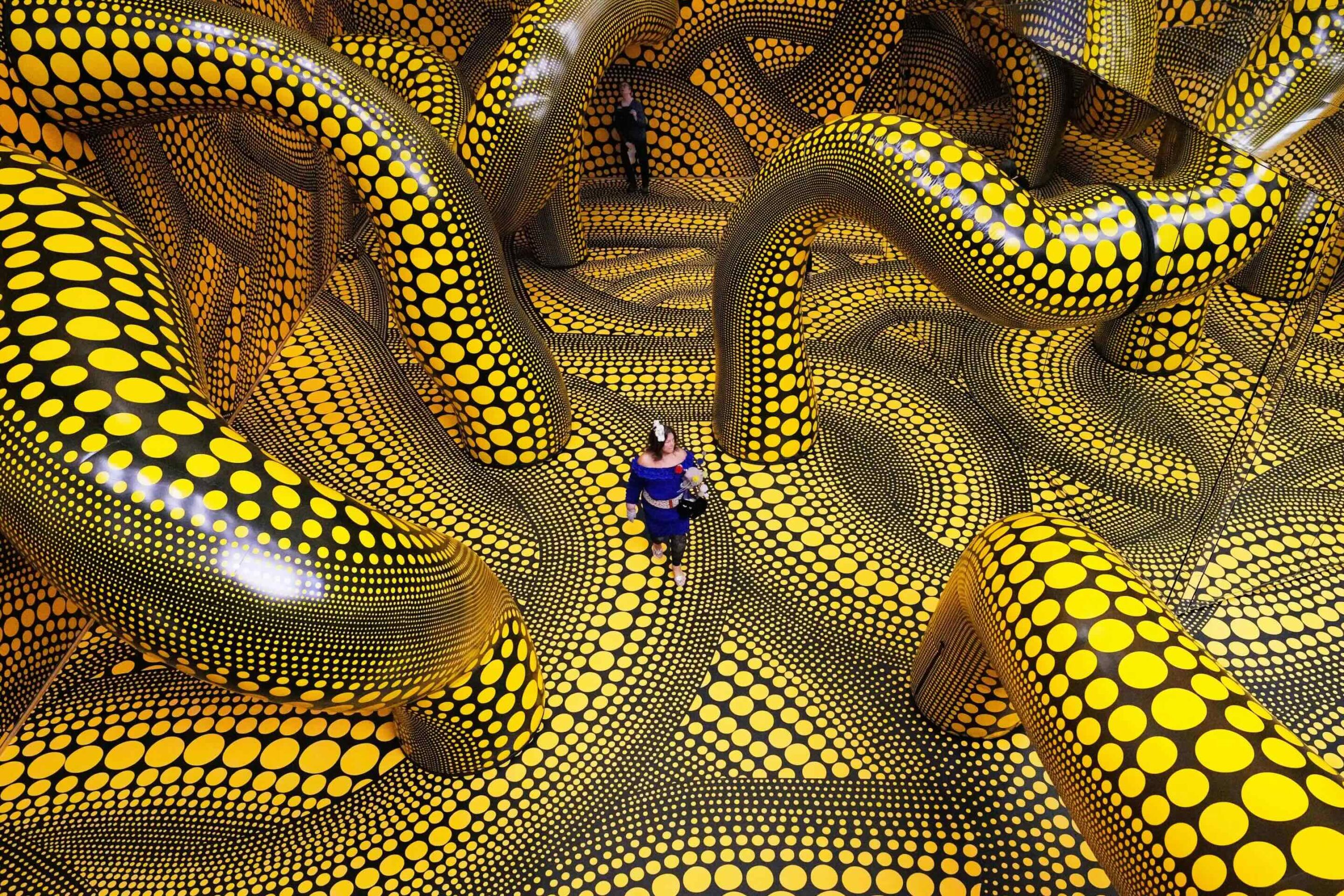
One of the most striking works in the exhibition is Aggregation: One Thousand Boats Show (1963), considered the artist’s first installation. In addition, the installation I’m Here but Nothing, originally initiated in 2000 and reconfigured for this exhibition, is also presented. The museum’s largest hall is dedicated entirely to a new Infinity Room created specifically for this show. This new work can be read as a continuation of Kusama’s ongoing exploration of mirrors, repetition, and the idea of infinity.
The New York Years, Performances, and Return
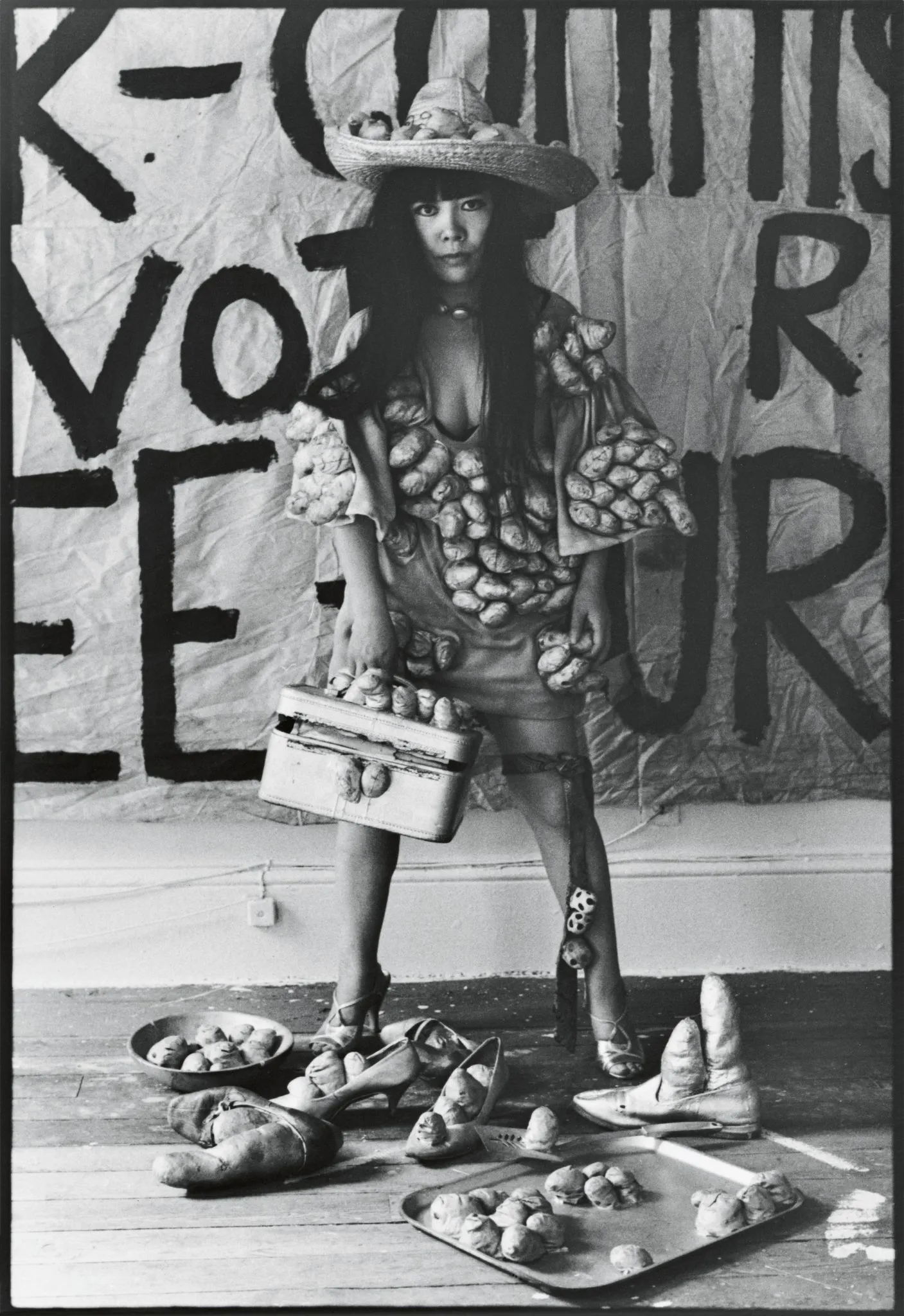
The exhibition also examines in detail Kusama’s radical productions developed in New York during the 1960s. Her performances staged during anti–Vietnam War protests are included alongside photographic and video documentation from the period. The soft sculptures, polka-dotted objects, and performative actions she developed in public space reveal how Kusama became a powerful figure not only within visual arts but also in political and cultural contexts.
Another key section of the exhibition focuses on the transformation in her work following her return to Japan in 1973. The novels and poems she began writing during this period are presented alongside her visual production. The final section of the exhibition highlights Kusama’s renewed international visibility from the 1980s onward, particularly through her colorful painting series and large-scale installations. The growing global interest following her representation of Japan at the 1993 Venice Biennale becomes especially evident through these later works.
Kusama’s now-iconic polka dots, pumpkins, and Infinity Rooms naturally occupy a central place in the exhibition. However, rather than focusing solely on these iconic works, the exhibition aims to present her practice within a comprehensive narrative. This approach creates a strong sense of continuity from her early drawings to her recent installations.
In one of her statements, the artist notes that her admiration for the vitality of life has sustained her production for over seventy years. This perspective—shaped around life, nature, repetition, and infinity—is strongly reflected in the overall structure of the exhibition. The exhibition also emphasizes how the hallucinations Kusama experienced in childhood and her recurring patterns became defining elements of her artistic practice.
Following its presentation at Fondation Beyeler in Basel, the exhibition at Museum Ludwig will later travel to the Stedelijk Museum in Amsterdam. However, the Cologne iteration stands out as one of the most comprehensive stops in this international exhibition circuit, with its new works and site-specific installations.