

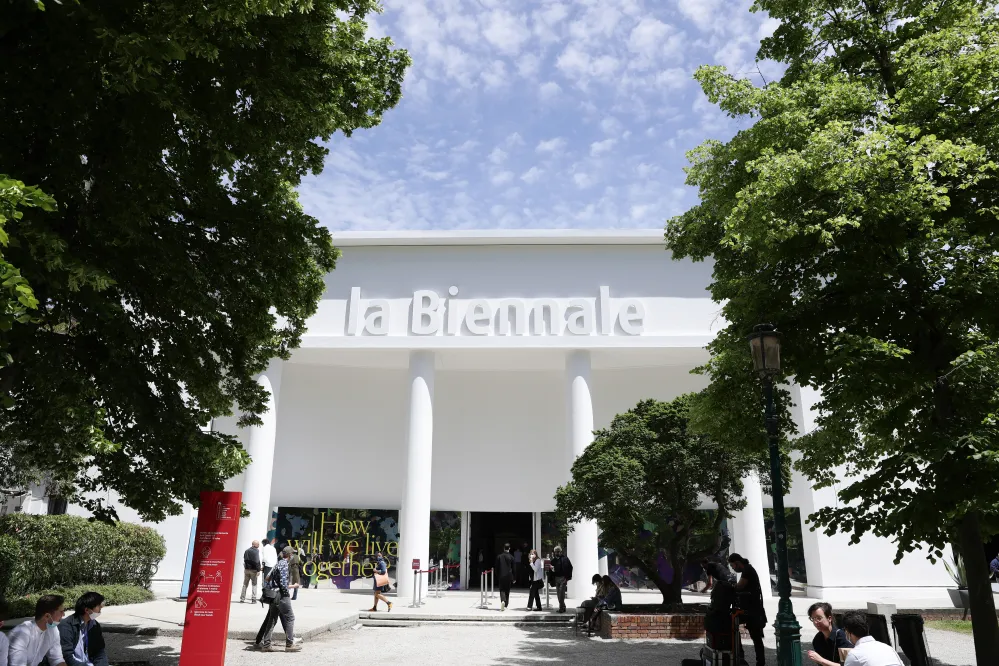
The 61st Venice Biennale’s main exhibition, In Minor Keys, realized by her team following the sudden passing of curator Koyo Kouoh, opens on May 9. Bringing together the works of 111 participants, the exhibition gathers contemporary artistic practices around the motifs of “Procession,” “Shrines,” “Schools,” and “Rest.” The 111 artists selected for the main exhibition of the 61st Venice Biennale have now been announced to the public. Opening on May 9, this edition carries particular historical significance, as it continues within the framework defined by Kouoh after her death. In the 131-year history of the Biennale, held since 1895, this marks the first edition in which the vision of a curator who passed away during the preparation process has been realized by her team.
The conceptual framework and artist selection that Kouoh established prior to her passing in May last year were carried forward by her collaborators in Dakar. London-based curator Gabe Beckhurst Feijoo, Berlin-based Marie Hélène Pereira and Rasha Salti, along with assistant Rory Tsapayi, completed the exhibition in line with Kouoh’s notes and guidance. The exhibition catalogue is edited by New York–based writer Siddhartha Mitter.
As its title suggests, In Minor Keys proposes an approach that listens to low frequencies, poetry, and the emotional realm of music rather than to high-volume rhetoric. In her texts, Kouoh’s references to Toni Morrison’s Beloved and Gabriel García Márquez’s One Hundred Years of Solitude reveal the exhibition’s intellectual kinship with literature. The curatorial framework seeks to reconsider the social role of art through sensory and subjective experience.
Conceptual Motifs and Notable Names
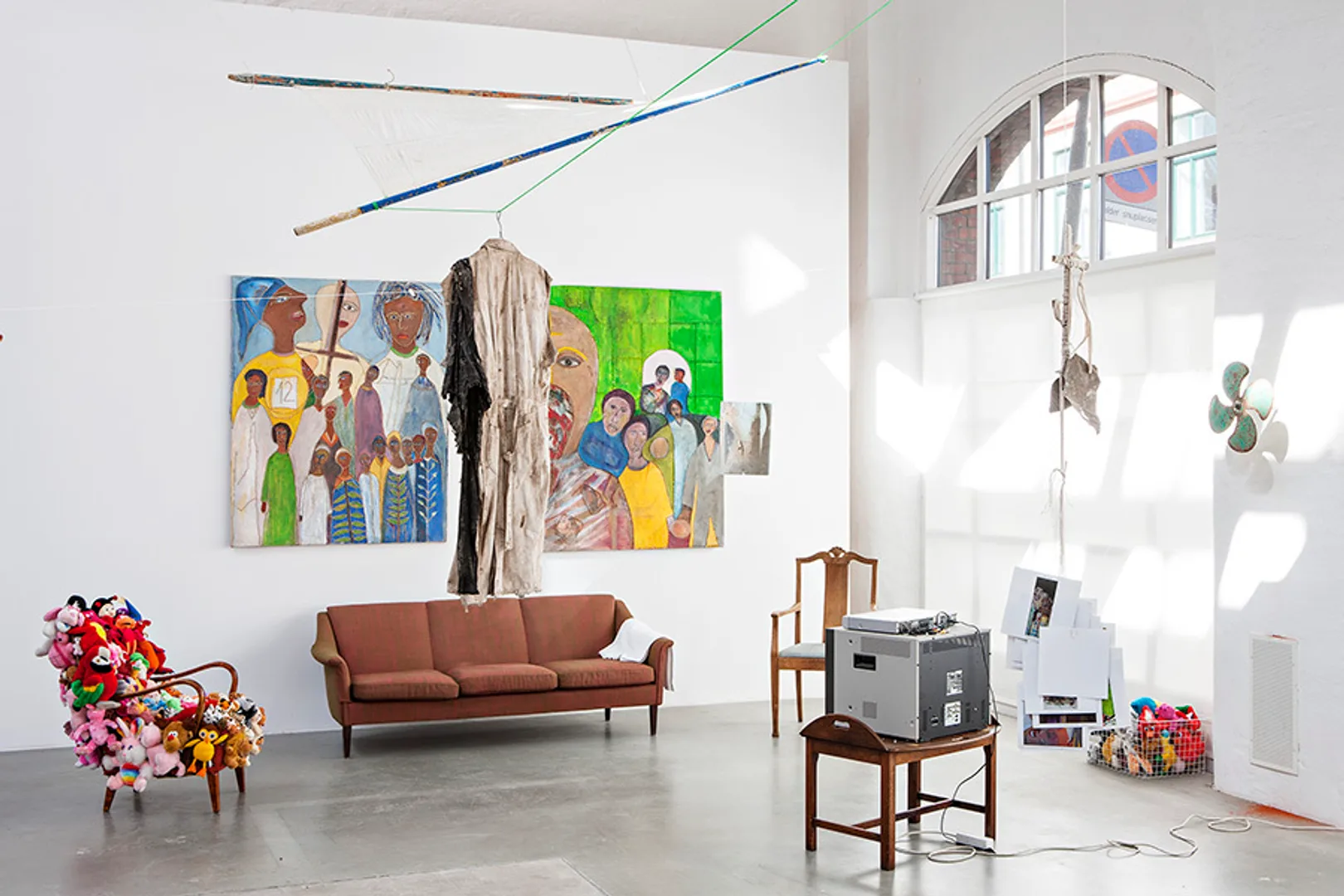
The exhibition is structured around the themes of Shrines, Procession, Schools, and Rest. Two monumental sections in the Central Pavilion are dedicated to Senegalese artist and thinker Issa Samb and American artist Beverly Buchanan. These two figures, who left a mark on Kouoh’s intellectual world, form part of the backbone of the exhibition.
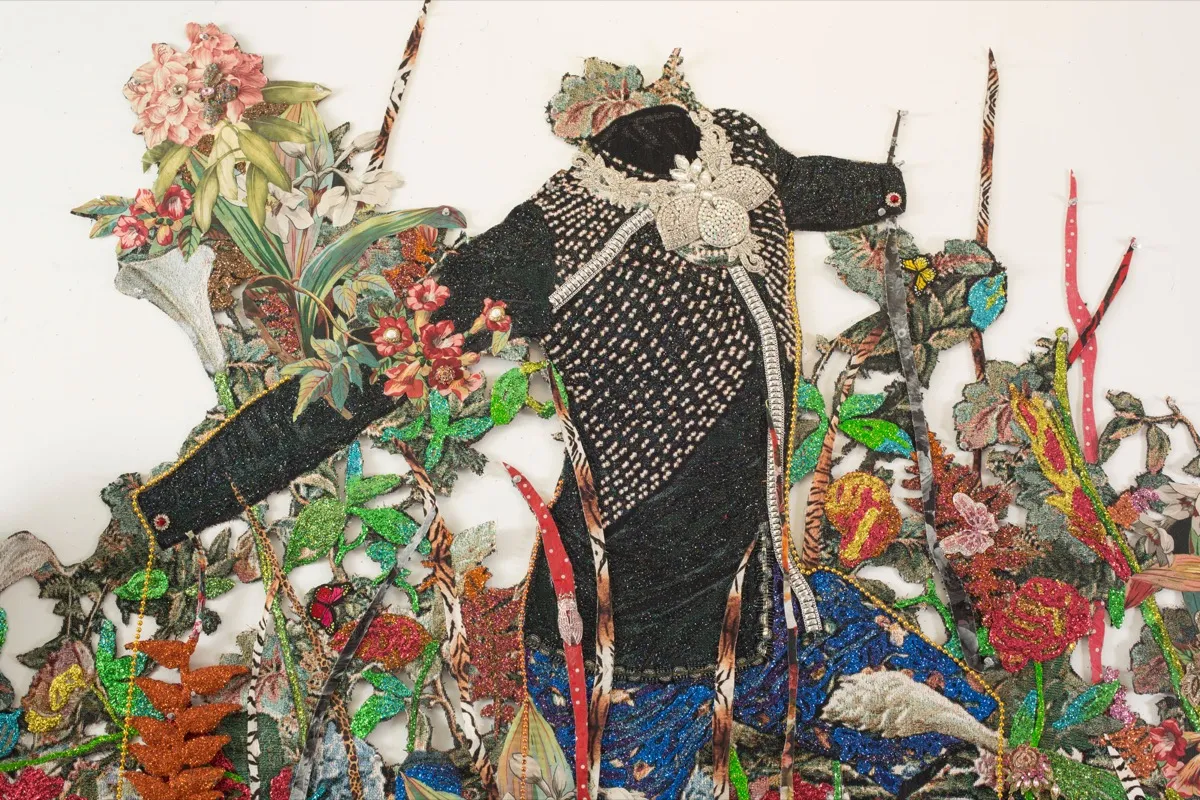
The Procession section draws inspiration from the carnival traditions of the Afro-Atlantic geography. Rather than positioning the viewer as a distant observer, it invites them into a shared movement. Works by artists such as Nick Cave, Alvaro Barrington, and Ebony G. Patterson are presented under this heading. In the exhibition design, an open and permeable layout is favored over permanent walls, reinforcing this sense of circulation.
Rest emerges as a space of pause against the constant speed and production pressure of contemporary art. Born in 1943, South African artist Helen Sebidi stands out in this section as the oldest living participant in the exhibition. Born in 1997, Mohammed Z. Rahman is the youngest artist on the list. Overall, 105 individual artists are joined by six artist initiatives. Structures such as Dakar-based Raw Material Company and Lagos’s GAS Foundation represent knowledge-sharing and collective modes of production within the “Schools” motif.
It is notable that a significant portion of this year’s participants come from the Global South. Another distinction from previous editions is that the program consists largely of living artists. In the 2022 and 2024 editions, curated respectively by Cecilia Alemani and Adriano Pedrosa, historical works were given broad space. Kouoh’s structure, by contrast, places greater emphasis on contemporary production.
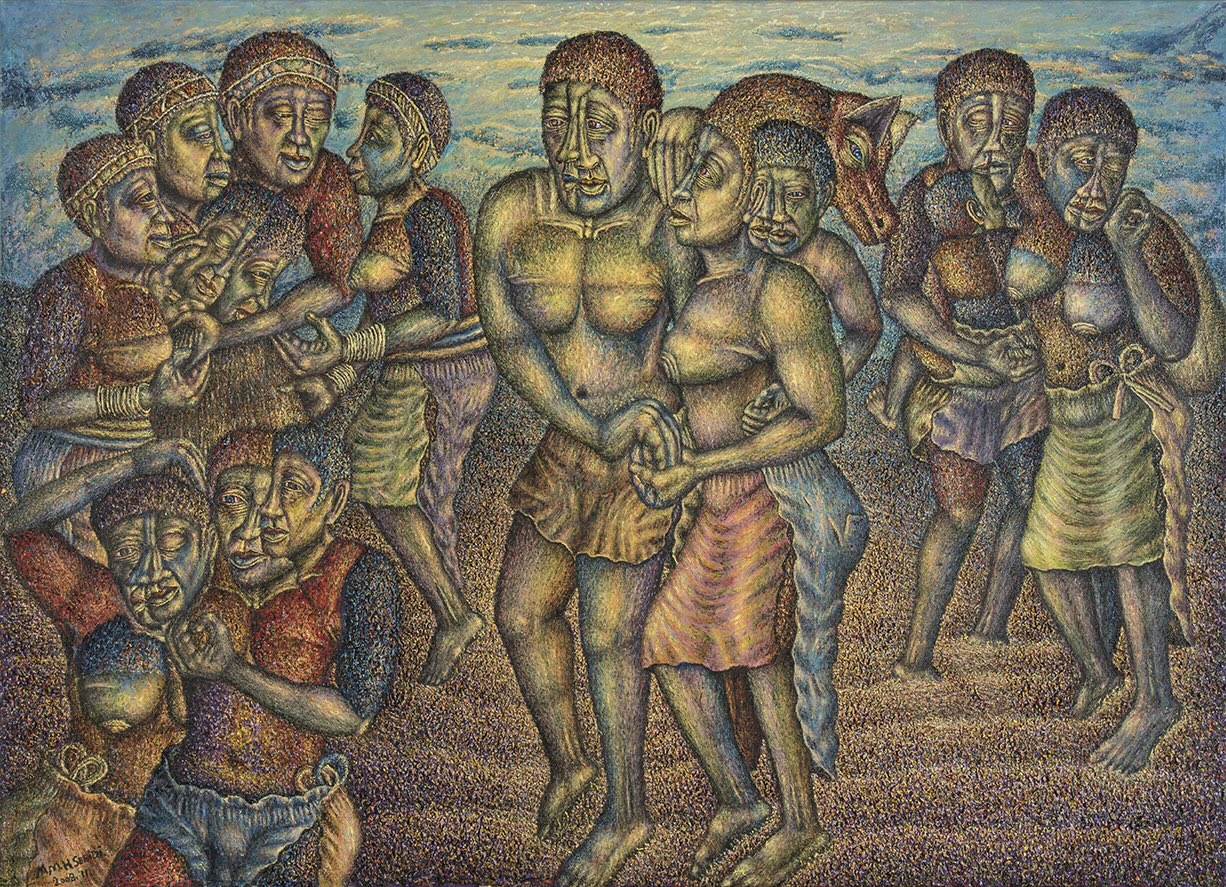
Lebanese-born Australian artist Khaled Sabsabi, whose representation in the Australian Pavilion sparked public debate, is the only artist participating both in a national pavilion and in the main exhibition. After having his representation withdrawn last year and subsequently being re-invited, his large-scale installations will be on view in two different Biennale venues.
Due to Kouoh’s passing, the Biennale administration has announced that the Golden Lion for Lifetime Achievement will not be awarded this year. During the opening week, Kouoh will be commemorated with a poets’ procession in the Giardini. This event references the curator’s 1999 Poetry Caravan initiative that traveled from Dakar to Timbuktu.