
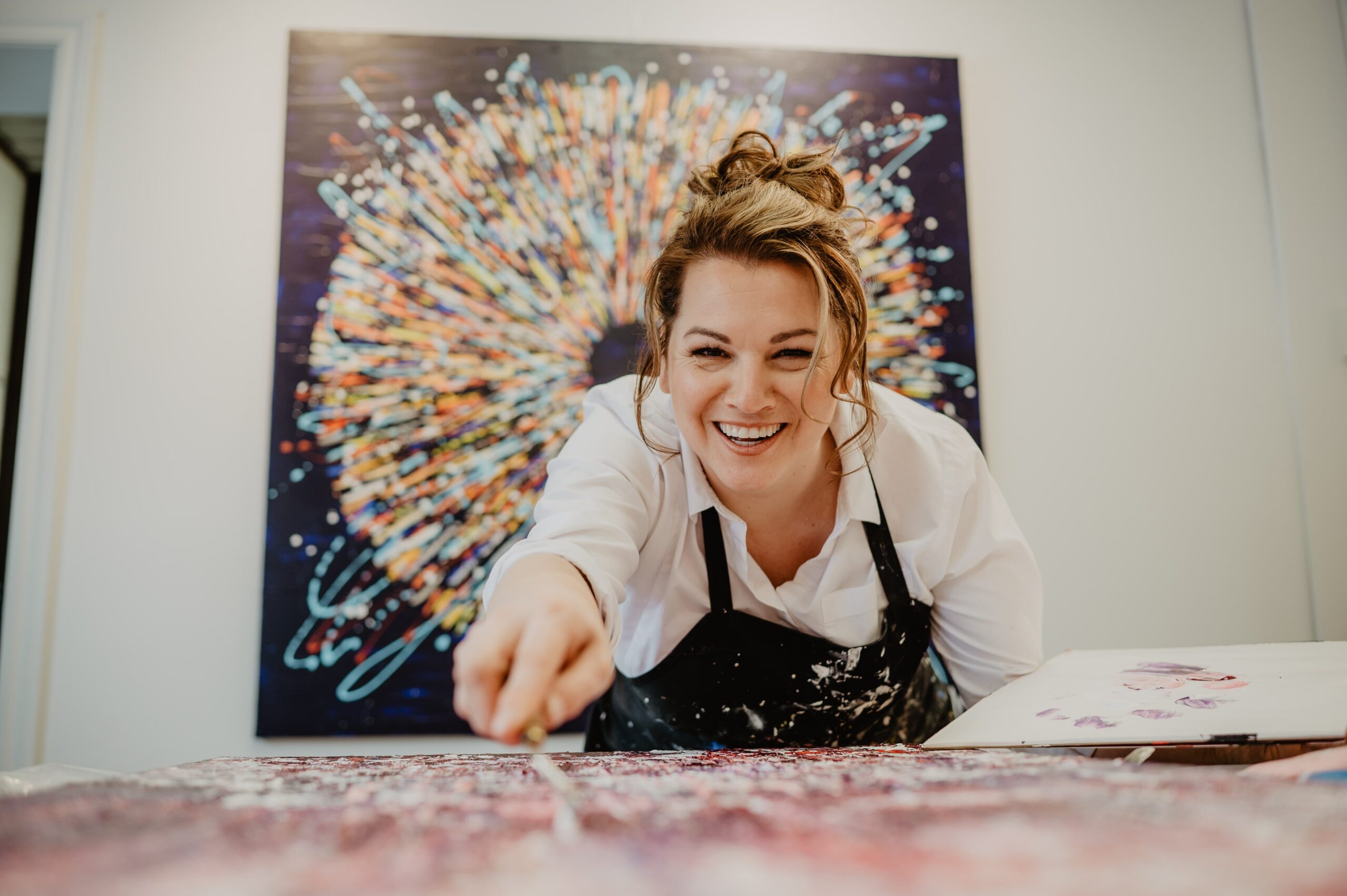
In The Flow of Silence, you associate silence with different stories. In fact, your artworks aren’t silent; they seem to want to interact and communicate… And what does the silence in your paintings mean to you?
To me, silence is not an absence of sound. It is a pathway to reconnecting with the deepest part of ourselves.
For most of my life, I lived in a world of strategic planning, anticipation, and performance. I focused so much on preparing for the future that I almost forgot how to live in the present moment. When I discovered painting in 2017, something profoundly shifted. For the first time in years, I found myself in a space where I had nothing to prove, no expectations to meet, and no one to please. I could simply exist, experience, and feel. Painting allowed me to quiet my constantly analytical mind and reconnect with my intuition, my emotions, and something greater than myself. This is the essence of The Flow of Silence. To truly hear what our hearts and souls have to tell us, we sometimes need to quiet the noise of our thoughts.
There is a beautiful paradox in my work: my paintings are vibrant, expressive, and full of movement, yet they emerge from a place of profound inner silence. For me, silence is not emptiness. It is the space where we can finally hear ourselves without needing to explain anything.

How do you see the power of abstract painting to express the invisible and our inner experiences? You also have writings behind them; how do you come up with these ideas?
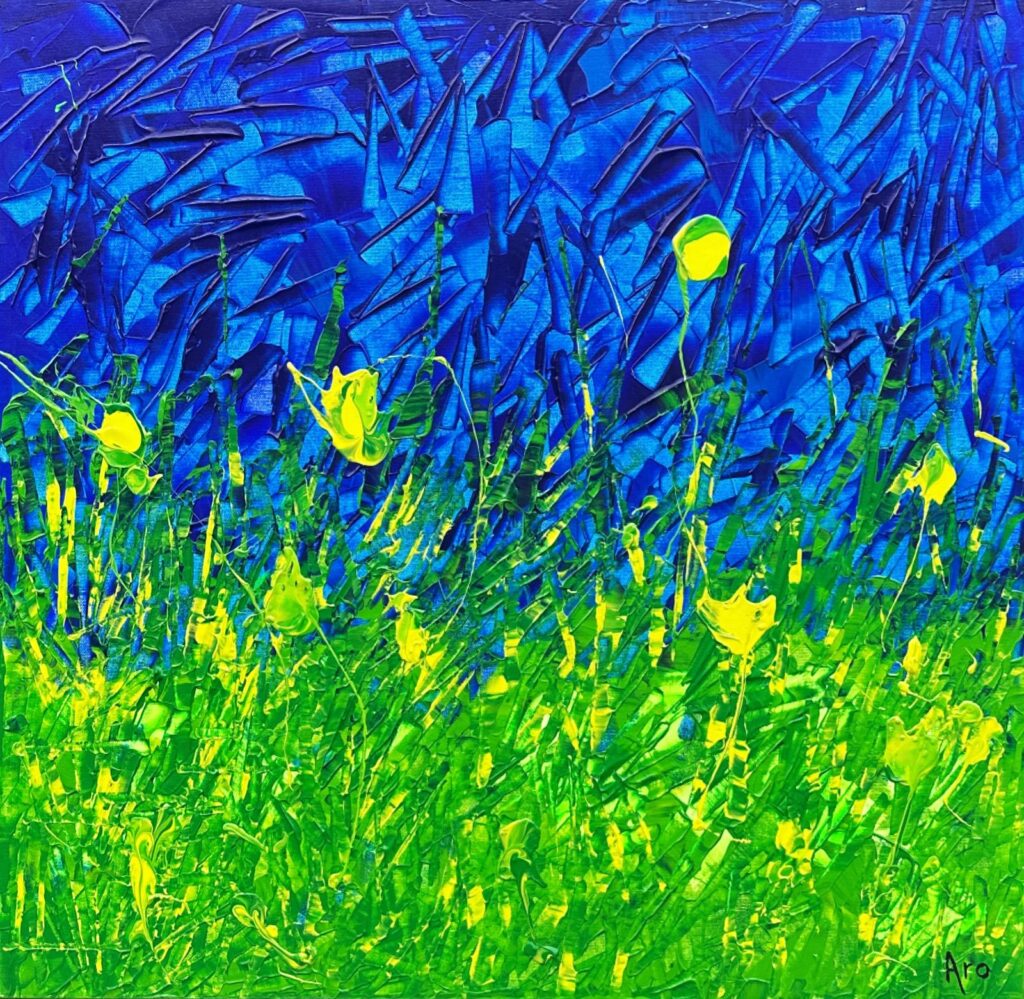
Abstract painting came to me instinctively from the very beginning. After spending much of my life in a highly structured environment, I felt a deep need to step outside the box in which I had confined myself.
Abstraction gave me an extraordinary sense of freedom. It allowed me to explore color, texture, and movement without the boundaries of figurative representation.
When I paint, I enter an almost trance-like state. I am not trying to express a specific emotion or tell a predetermined story. I surrender completely to the creative process. I never know what a painting will look like when I begin, and the result is always a surprise, inevitably influenced by my emotions and who I am at that particular moment.
Throughout the creative process, I write down my thoughts, feelings, and reflections. Once the painting is completed and the paint has dried, I revisit those notes and write a personal text on the back of the canvas. These words become an intimate record of my inner experience during the creation of the artwork.
However, I never want to impose my own interpretation on the viewer.
What fascinates me most is when someone experiences a physical or emotional reaction while standing in front of one of my paintings. Only then do I sometimes invite them to discover my story, without influencing their own interpretation.
I believe the true power of abstract art lies in this freedom: one painting can tell my story while allowing someone else to discover their own.
Paint takes on an almost sculptural quality in your work. How would you describe your relationship with the material?
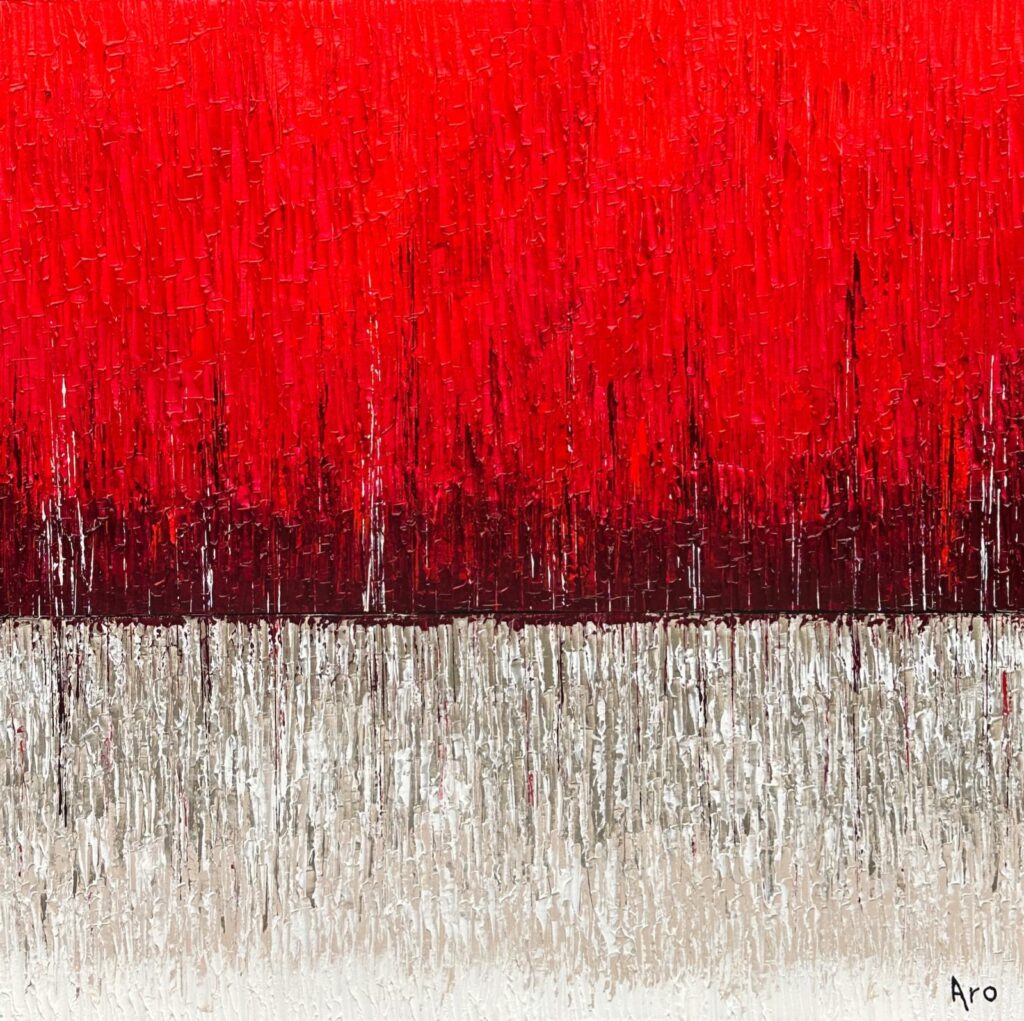
Since my very first days as an artist in 2017, I have worked with palette knives and painting spatulas. This approach came to me naturally and has remained an essential part of my artistic language.
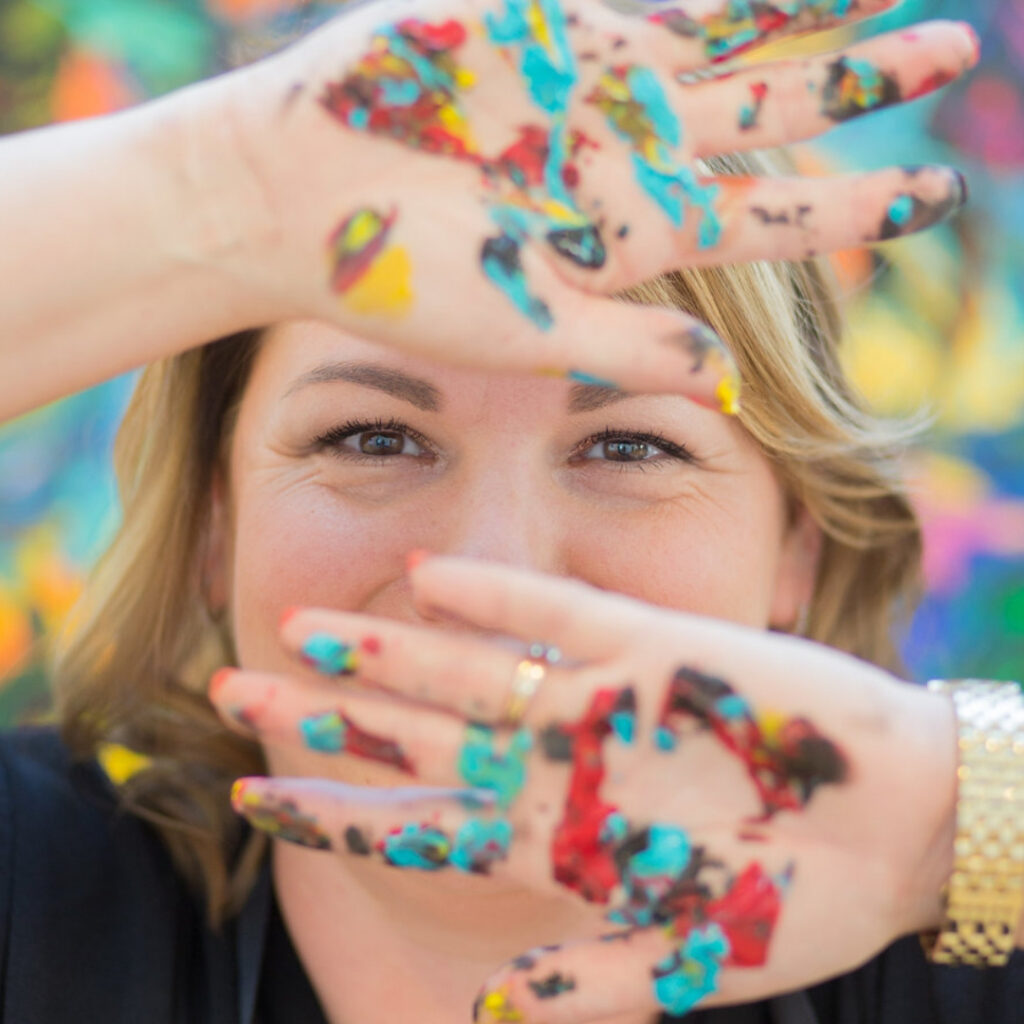
My relationship with the material is deeply instinctive and physical. I love exploring textures, creating relief, and bringing movement into my paintings. When I paint, it feels almost like a dance around the canvas. My entire body participates in the creative process, and the material becomes an extension of what I am experiencing emotionally. What fascinates me most is the richness of texture. It gives my paintings a physical presence, an almost sculptural dimension that goes beyond color and surface. There is something profoundly emotional about working with the material, something I sometimes find difficult to put into words.
And perhaps that is precisely why I love painting so much. It allows me to experience and express sensations that words alone could never fully capture.
Do the circular forms and spirals in your paintings emerge intuitively, or are they carefully planned?
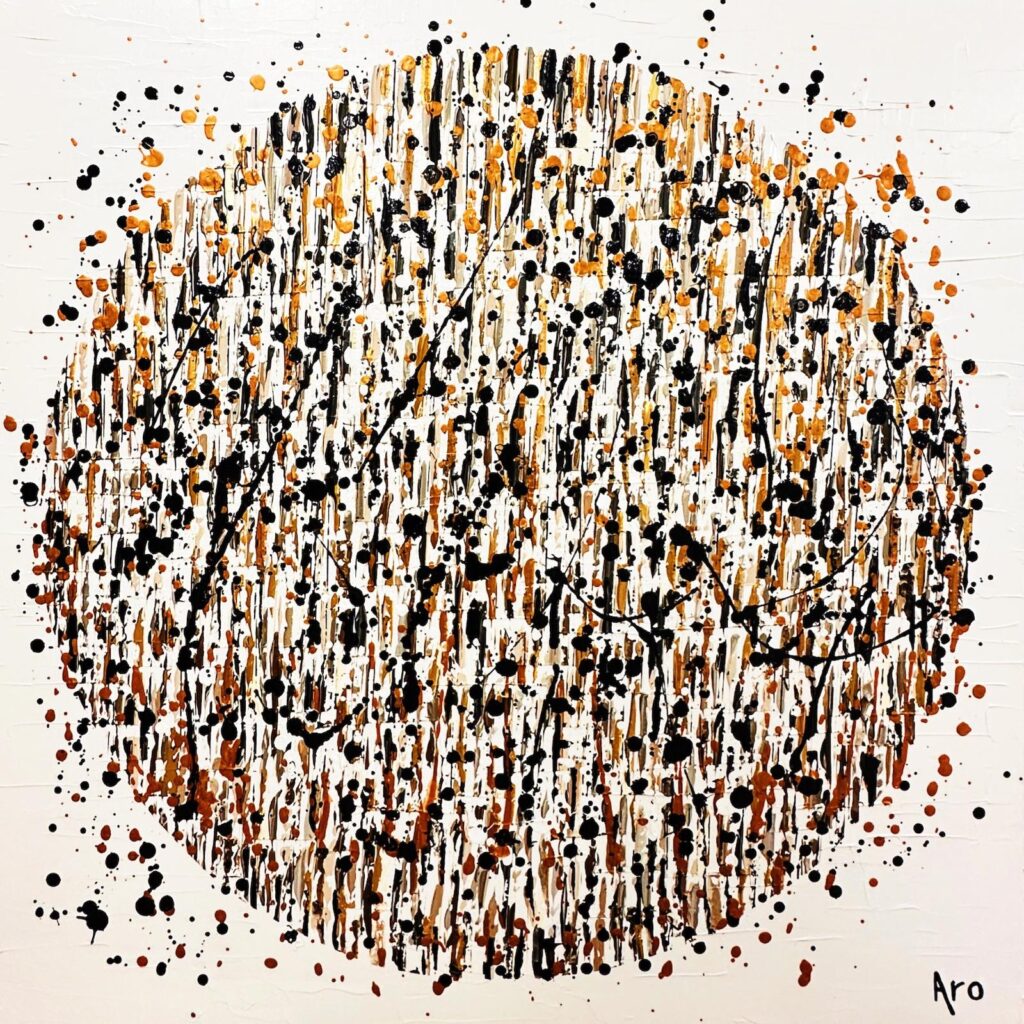
The circle holds a very special place in my artistic universe. To me, it represents infinity, perpetual movement, the cycles of life, and the fascinating idea that everything is connected to everything else. I find this form incredibly powerful, both in its simplicity and in its symbolism. What is interesting, however, is that although circles carry a deep personal meaning, the circular movements and spirals appearing in my paintings are never truly planned. They emerge spontaneously through the creative gesture, without any attempt to control their direction or final appearance. I allow my intuition, the movement of my body, and the material itself to guide me. One gesture naturally leads to another, and I gradually discover what is unfolding before my eyes.
This is one of the aspects I cherish most about my creative process: the freedom of not knowing exactly where I am going. The circle represents infinity to me, and paradoxically, it is by letting go of control that I allow the movement to become truly free. Every painting becomes an encounter with the unexpected.
Do you believe art can become a meditative or spiritual experience?
Absolutely. For me, painting is a form of meditation in motion, an experience that is deeply intuitive and, at times, spiritual.
When I create, I enter a state that feels almost like a trance. I stop questioning, analyzing, and trying to control the outcome. I simply allow whatever needs to emerge to express itself. I often finish a painting with a profound sense of wonder and inner satisfaction, almost as though something greater than myself had guided me throughout the process. More importantly, painting has allowed me to access emotions I could never fully express through words. It has given me a space to acknowledge, release, and sometimes even soothe feelings that had been buried deep within me. What moves me most is witnessing a similar experience unfold in someone encountering my work. When a person stands in front of one of my paintings for several minutes and becomes visibly emotional, I feel that something meaningful has happened. A sensitive part of their inner world has been touched.
Through color, movement, intensity, and texture, an invisible connection can emerge between two people who may have lived entirely different lives. I believe art has the extraordinary ability to bring us into a space where words become secondary, allowing us to reconnect with ourselves and simply feel.
How do you relate your artistic practice to artists such as Jackson Pollock and Jean-Paul Riopelle?
Interestingly, when I first started painting in 2017, I was unfamiliar with both Jean-Paul Riopelle and Jackson Pollock. At my very first exhibition opening, a television journalist covering the event introduced me as the “new modern-day Riopelle”. I had no idea who Jean-Paul Riopelle was. I actually had to look him up to discover who he was! That unexpected introduction led me to explore the history of the Automatistes, the Refus global manifesto, and the artistic movement that played such an important role in Quebec’s cultural history.
Over the years, people have often pointed out similarities between the movements I create with my palette knives and certain aspects of Riopelle’s gestural approach. I receive those comparisons with great respect, but they were never the inspiration behind my work.
As for Jackson Pollock, I particularly appreciate the freedom of his dripping technique. There is something incredibly liberating about allowing liquid paint to flow and splash across a canvas, embracing movement and unpredictability.
I recognize certain affinities with these artists in the spontaneity of the gesture, the energy, and the relationship with the material. However, I have never sought to imitate them or consciously follow their artistic paths. I don’t paint to resemble another artist or to belong to a particular movement. I paint to explore who I am, freely and authentically, without trying to control what emerges. My artistic journey is deeply personal, yet it becomes universal when my paintings encounter the emotions and experiences of others.
Do you think the meaning of an artwork changes when it encounters the viewer?
Absolutely. I believe a work of art can carry as many interpretations as there are people who experience it.
When I create, I leave a part of my story, my emotions, and who I am at that precise moment within the painting. But the moment someone stands before it, another story can begin.
A color, a movement, or a texture may awaken a memory, evoke an emotion, or touch something deeply personal within the viewer. These experiences belong entirely to them, and I want to preserve that freedom of interpretation. For me, every emotion has a place in this encounter. What matters most is that I remain authentic throughout the creative process and allow others to discover their own truth within the artwork. There is also something very special about the moment a painting finds its collector.
I see it as a meaningful encounter, almost like an appointment that life has arranged. An artwork born from my personal experience becomes part of someone else’s story and begins a new chapter.
I create to awaken emotions and foster human connection. And if my paintings can bring hope, joy, or happiness into the lives of those who choose to live with them, then they continue to fulfill what inspires me to create. I bring a painting into existence, but it is the people who encounter it who allow its story to continue.
How has your artistic approach evolved over the years, and where does The Flow of Silence fit into this journey?
Since I began painting in 2017, my artistic approach has naturally evolved. My early years were marked by experimentation with different techniques, but abstract painting with palette knives and spatulas quickly became my preferred language of expression.
Through each collection, my artistic identity has grown stronger while maintaining certain recurring elements, particularly movement, texture, and lines. The linear dimension of my paintings carries a deeply personal meaning. To me, every stroke of the spatula represents a memory, an experience, or a moment in our lives that deserves to be remembered.
Almost like a lifeline unfolding across the canvas, one moment at a time. I have always had a particular relationship with time. Having been surrounded, directly or indirectly, by illness throughout much of my life, I developed an early awareness of life’s fragility and a profound urgency to live fully.
I believe this relationship with time reveals itself unconsciously in my paintings through the accumulation of gestures, lines, and movement. What has never changed is my reason for painting.
For nearly a decade, I have created primarily to express what I feel, but also to connect with others. Art has brought extraordinary people into my life and has shown me how a painting can touch someone, awaken an emotion, and sometimes even change the way they see their own life. The Flow of Silence in Istanbul represents an important milestone in this evolution.
As one of my first international solo exhibitions, it reflects both my personal journey and my desire to share my work with new audiences, cultures, and communities.
For me, Istanbul is not a destination. It is a new foundation for the international future of my artistic career.
After nearly ten years of painting, I still carry that same urgency to live. But today, I also understand that every artwork is an opportunity for human connection, emotion, and shared experience. And I truly feel that this is only the beginning.
In a world dominated by constant stimulation and digital noise, can art help us rediscover silence and contemplation?
I believe it is becoming increasingly difficult to pause and reconnect with ourselves in a society that constantly celebrates action, productivity, consumption, and achievement. We are surrounded by endless stimulation. There is the noise of the outside world, but also the noise created by our own thoughts, worries, and expectations. In our constant pursuit of doing more, we sometimes forget what it means to simply be.
I deeply believe that art can offer us a much-needed space to pause. When we take the time to stand before a painting, breathe, quiet the external distractions, and soften the noise within, something can shift. For a moment, we no longer need to understand, analyze, or perform. We can simply welcome what we feel.
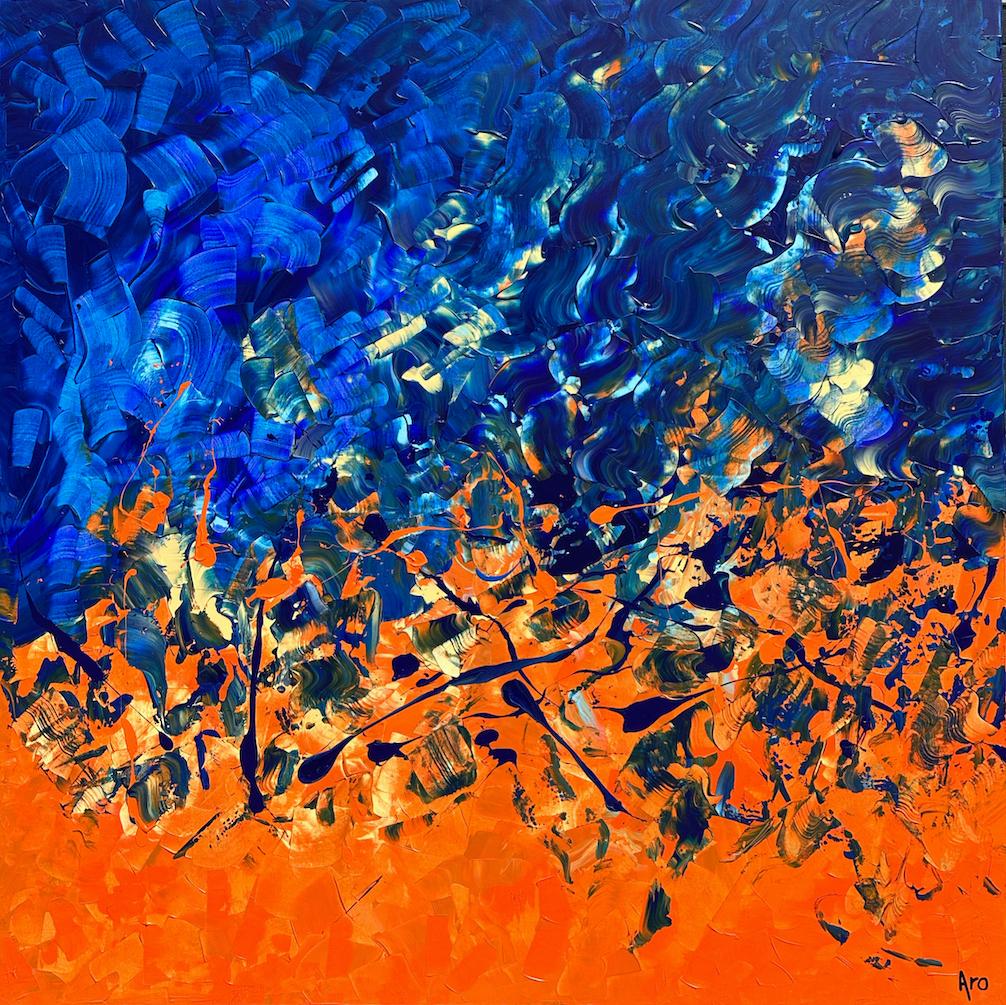
I often describe this as moving from the mind to the heart. Through The Flow of Silence, I hope to invite visitors into this experience: to slow down, contemplate, and allow themselves to be touched by colors, textures, and movement without immediately searching for explanations. I don’t believe we necessarily need to eliminate all the noise from our lives. Instead, we need to rediscover moments when we can truly hear our own inner voice.
In a world that constantly asks us to do more, art can remind us of the beauty and importance of simply being.
How do you know when a painting is finished? Is completion an ending or the beginning of a new dialogue with the viewer?
It is difficult for me to explain precisely how I know when a painting is finished because the process is entirely intuitive.
There comes a moment when I feel that everything is in place, and that even one additional stroke could disturb the balance that has emerged. I step back and spend several minutes observing the painting as a whole. When I experience a sense of harmony, emotional fulfillment, and inner satisfaction, I know it is time to put my tools down.
Sometimes, however, a little doubt remains. In those moments, I let the painting rest for a few days or even several weeks before returning to it. I give it the time it needs to reveal whether something is still missing.
But for me, completing a painting never means the end of its story. Quite the opposite.
I often tell my collectors that an invisible thread connects us for life.
Every painting feels a little like a child leaving home. I have poured part of myself, my emotions, and my personal story into its creation. And when it finds its collector, I let it go with emotion, but also with the joy of knowing it will continue its journey in someone else’s world.
What touches me deeply is imagining someone living with this artwork every day, discovering new emotions, finding comfort, joy, or simply a moment of happiness through its presence.
That is when my artistic journey takes on its deepest meaning. I know when my creative gesture is complete, but I also know that the story of the painting is only just beginning.
The exhibition continues until Dec 5 at M2 Projects.