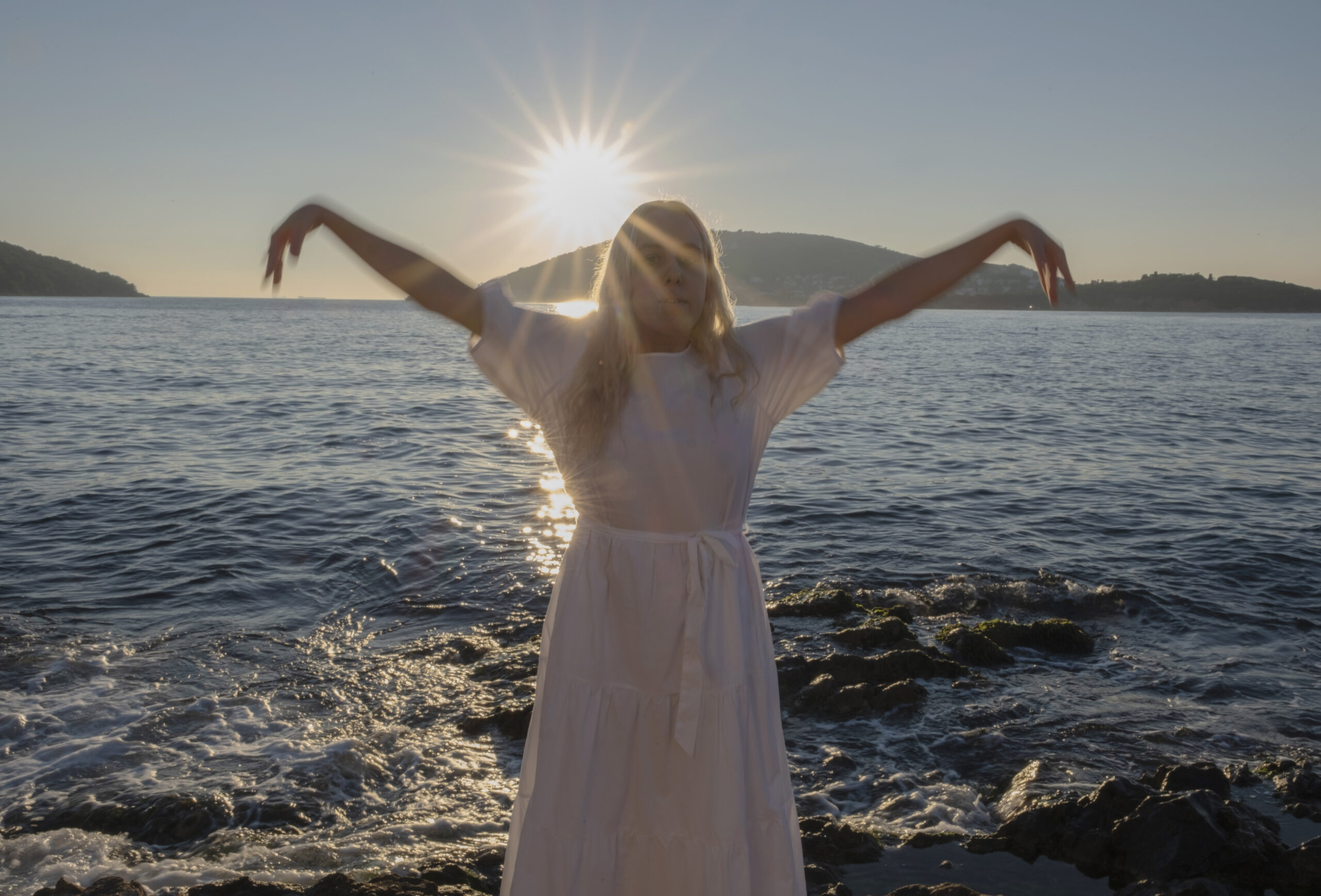



Founded by Chilean collector Alejandra Castro Rioseco, MIA Art Collection is a private, not-for-profit collection focused exclusively on women artists. With bases in Dubai, Antwerp and Madrid, MIA has brought together more than 900 works by artists from more than 33 countries. Over time, the collection has expanded its activities beyond collecting and exhibitions to include initiatives aimed at increasing the visibility of women artists internationally.
For its first participation at the 21st edition of Contemporary Istanbul, MIA presents works by women artists including Rana Begum, Rania Matar, Marina Núñez, Verónica Ruth Frías, Cecilia Avendaño and Pilar Zeta. The presentation brings together different media and artistic approaches, while placing the question of women’s visibility and representation in the art world at the centre of its programme. Contemporary Istanbul‘s 21st edition takes place at Tersane Istanbul from 23 to 27 September 2026.
We spoke with Alejandra Castro Rioseco about the origins of MIA, the structural inequalities women artists continue to encounter, and what private collections can do beyond acquiring and exhibiting artworks.
1. What inspired you to create a collection specifically dedicated to women artists, and how did the idea for MIA Art Collection come about?

I was inspired by seeing hundreds of women artists with tremendous talent, but also facing many restrictions and a lack of opportunities. What inspires me is knowing that if even one of the artists we support is able to succeed, then we can already consider the collection successful.
2. The exhibition design at Contemporary Istanbul was initially conceived around the colour red, but the project eventually took a different direction. Why did you decide to focus instead on information and statistics?
Red was actually the original idea, but as the project developed, we decided to take a different approach. We wanted to centre the exhibition around information, particularly the numbers and facts that support the work we do. We wanted to show the reality women artists face through statistics and facts, because society often understands numbers more clearly than words.
Since this is our first year at the fair, we also wanted to use the opportunity to introduce MIA and explain what we have done and what we are doing today.
The reality that women artists face in the professional world is still difficult. This is why the support of art fairs such as Contemporary Istanbul is important to us. It is also one of the reasons I was motivated to become part of its advisory board.
3. The exhibition brings together women artists from different geographies, generations and cultural backgrounds. When you see their works side by side, do you see shared concerns emerging from their experiences as women? At the same time, what differences stand out to you?
Yes. I think that, regardless of which country we come from, women share many of the same concerns. They are often related to family, displacement and uprooting, lack of opportunities, credibility and recognition in the professional world, and barriers to participating in politics, environmental discussions and many other areas. All of this undoubtedly creates frustration, and that frustration is expressed in different ways through art.
I don’t see that many differences. Generally, the differences are more visible in the techniques and artistic languages, while the themes, as I mentioned, tend to be similar.
In this particular case, the artists are young women with enormous talent, most of whom are not represented by galleries. I think that is one of the things that concerns me most. Although there has been progress in the representation of women artists, significant disparities remain, particularly at the higher-value end of the market. Recent Art Basel and UBS data show that women accounted for 45% of artists represented by dealers in 2025, while their share of sales by value was 37%. Among galleries with annual turnover above $10 million, women represented 35% of artists and accounted for 27% of sales by value.
These are exactly the kinds of numbers and issues that we need to make visible.
4. One of the main goals of MIA Art Collection is to increase the visibility of women artists internationally. Since the collection was founded, have you observed a tangible impact on the artists you support, whether in terms of visibility, opportunities or recognition?
Yes. To be honest, progress has been very slow, but there have been some changes that give us hope. Today, we see other organisations, collectors and individuals supporting women artists. More collections dedicated to women artists have appeared, as well as institutions and initiatives focusing on their work.
It is encouraging to see this and to know that the work we have been doing for many years is part of a wider conversation. Although we have not yet reached where we want to be, I want to remain positive and believe that we are gradually moving in the right direction.
The reality is that, for women, many things still seem to be more difficult.
5. What do you think a private collection can offer an artist beyond simply acquiring and exhibiting their work?
It depends on the collection. I think collections have changed, and they have begun to understand the importance of growing organically. Some collections now have residency programmes and scholarships. Collectors and art collections are increasingly aware of the needs of the art world beyond simply acquiring a work of art.
Of course, acquiring a work is already a form of support for an artist, but today some collections are doing much deeper work. There are collections with which we collaborate, developing ideas together and finding ways to support artists.
Here at the fair, for example, the Sigg Art Foundation is also present. Its programmes include artist residencies and projects supporting emerging artists.
So I believe that collections are going beyond acquisition and increasingly taking on a broader role within the art world.
6. Why was it important for you to create a space for dialogue and participation within the exhibition?
For me, it was important because MIA Art Collection is participating in an international art fair in order to create not only an exhibition, but also a space where people can come together, exchange ideas and engage in conversations about the position of women in the art world.
Through exhibitions, awards, residencies, scholarships, collaborations and cultural initiatives, MIA seeks to increase the visibility of women artists and contribute to a broader discussion about their role in the art world.
Bringing MIA Art Collection to Contemporary Istanbul is another opportunity to make women’s work and perspectives part of that conversation