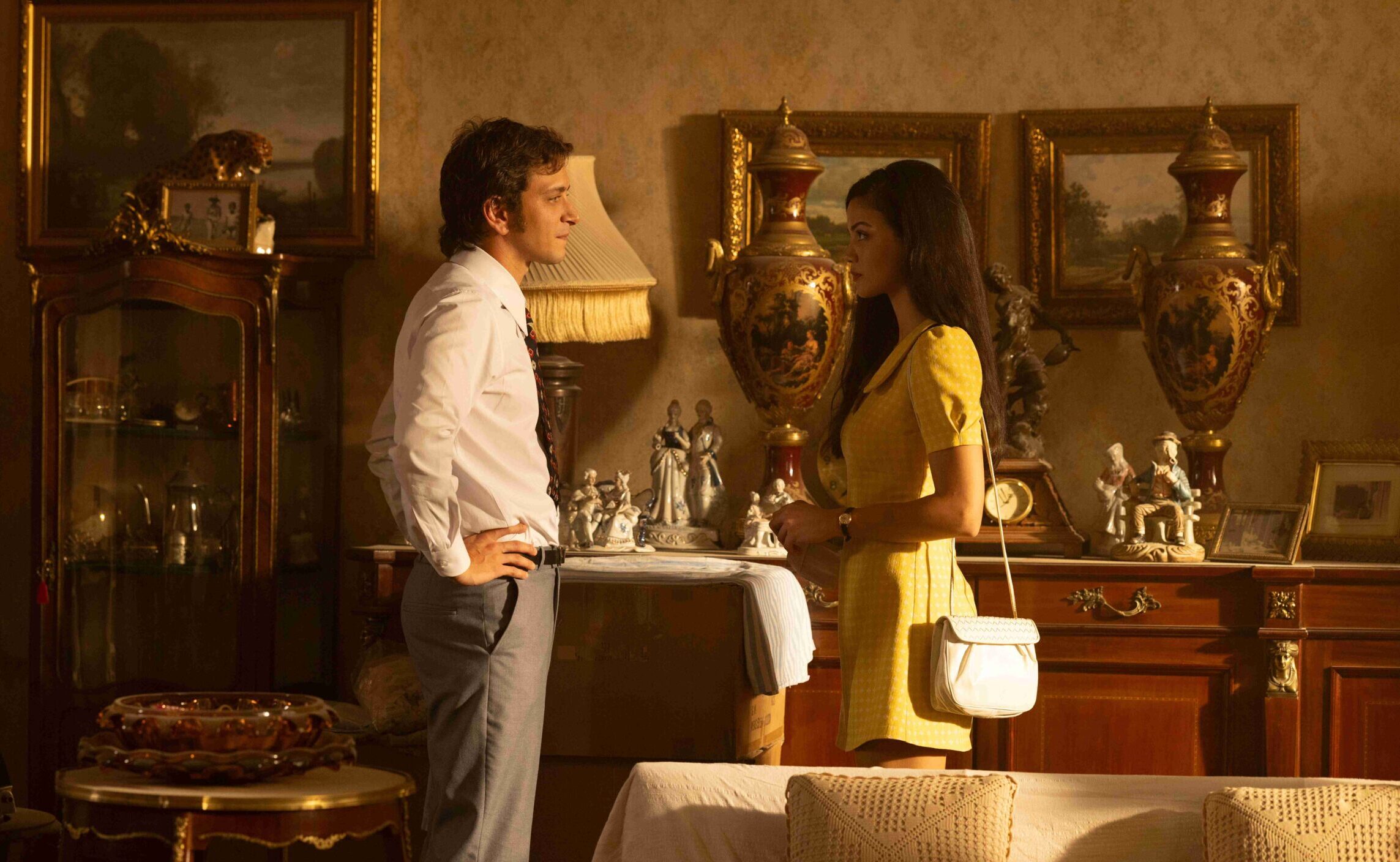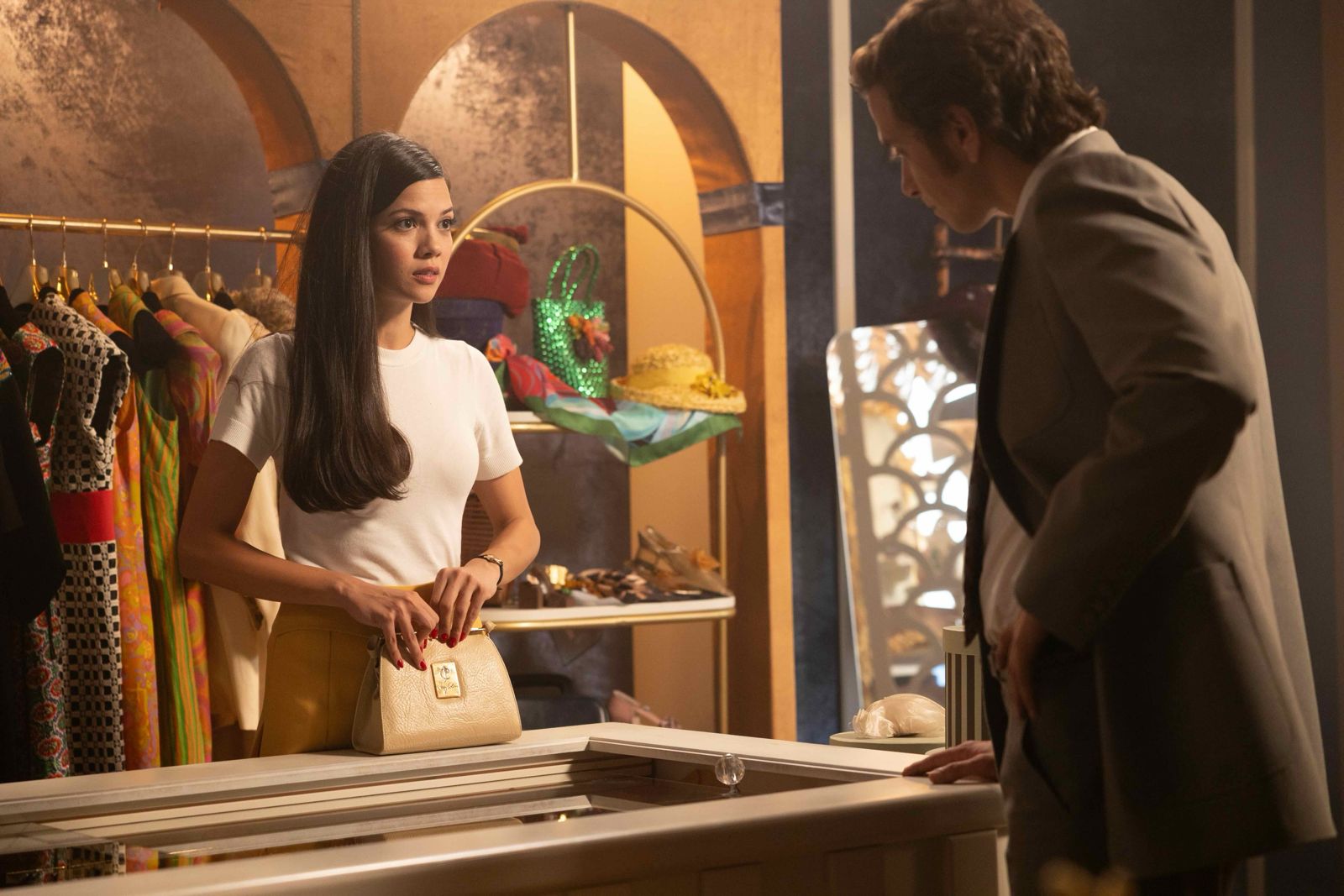


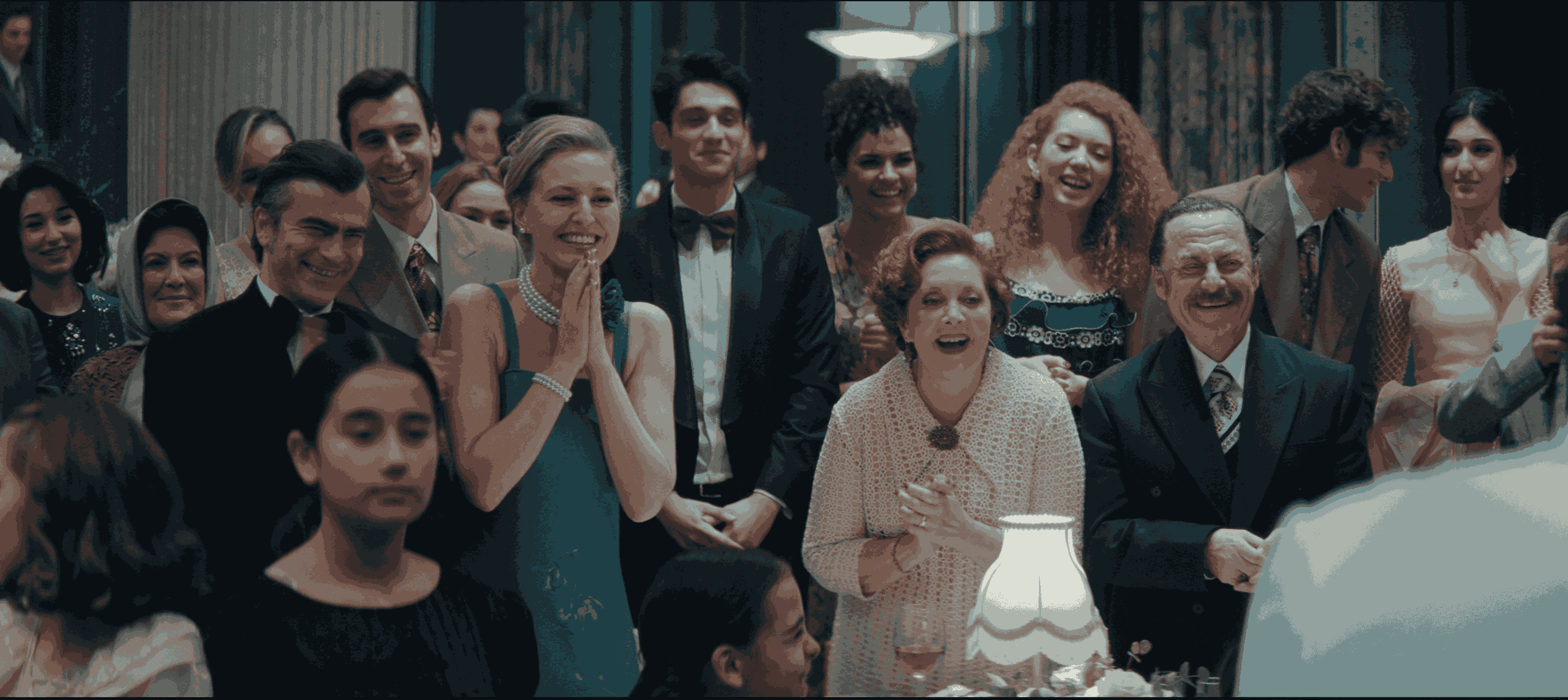
The visual universe of the series The Museum of Innocence is shaped by the highly measured and nuanced cinematographic approach of Ahmet Sesigürgil. In this vision, 1970s Istanbul is presented not as a romanticized, polished past, but as a stretch of time seen from today—still breathing and retaining its weight. The camera consciously avoids producing a nostalgic sheen; instead, it settles into the everyday. Light, color, and framing do not become decorative tools to signal the period; rather, they become ways of drawing closer to the characters’ states of mind, of touching their inner tensions. Thus, the past ceases to be a visual ornament and turns into a living field of memory in which the viewer can move. Sesigürgil’s camera does not anchor itself to spaces; it listens to characters. Even when the same rooms, the same streets, and the same rituals recur, the image is reconstructed each time with a different emotion. In our interview with the series’ director of photography Ahmet Sesigürgil, we talked about the process through which the visual language of The Museum of Innocence took shape, the questions that formed this language, and the risky decisions that were taken. What Sesigürgil recounts is, in fact, the story of how an adaptation transforms when moving from literature to cinema, and of the losses and gains that come with that transition.
In a story with such a strong inner voice as The Museum of Innocence, what was the fundamental concern of the visual language you wanted to establish? Which verbs defined this language: to watch, to wait, to hide, to remember?
The Museum of Innocence, beyond the characters’ social classes, detailed actions, and emotions, challenged us greatly in the design process because it is an extraordinary literary work woven with very powerful depictions of its period and geography. At first glance, the work did not offer us much visual latitude. As a result, while trying to fulfill the “assignments” indicated by the novel—such as the spaces it points to, socio-economic classes, specific color codes, and the period references imposed on us by cinema history—we also decided to “look” at the novel from where we stand today, with a contemporary style, almost like spectators.
How did the shared visual language you developed with director Zeynep Günay take shape in this project?
As a result of the approach I just mentioned, we first decided to film the story as modern viewers of 2025, with our design, color palette, compositions, and the techniques we used. One of the biggest differences, in my opinion, between The Museum of Innocence by Orhan Pamuk and this adaptation is the narrative structure. While the novel proceeds solely through Kemal, in the first person singular, from where I stand this narrative in the series is limited only to the moments when voice-over is used. One could say that Zeynep Günay consciously refused to follow the story solely from Kemal’s perspective. While shooting scenes, we never stopped asking in every scene, “Whose scene is this?” After giving ourselves what we felt was the most objective answer to this question, we preferred to physically position the camera around that character throughout the scene.
The 1970s Istanbul is often reproduced in a romanticized way. When visualizing this period, which aesthetic reflexes did you deliberately avoid? How did you place distance between yourselves and nostalgia?
Rather than using shortcuts of art direction and cinematography—such as separating the period with commonly used color codes, romanticizing it, or developing an orientalist gaze—we preferred to design the scenes and sequences described in the novel in a faithful yet contemporary way. Our aim was not to treat 1970s Istanbul as an image belonging to the past, but to “document” it as if it were being lived in 2025.
This story progresses not through action, but through repetitions and waiting. In a narrative that repeatedly returns to the same spaces and the same rituals, how did you establish a rhythm so that the image would not become “the same”?
Although there is a strong impression that spaces and rituals repeat in this story, I never felt a concern about visual sameness or falling into repetition at any stage. As in almost every project I work on, here too I preferred to establish visual rhythm not through spaces, but through characters. In the novel, too, the characters’ states of mind almost completely change how they look at spaces and how they experience them. The same space can sometimes represent a concept for Füsun or Kemal, and sometimes the very opposite of that concept. This approach led to some spaces in the series changing their overall color palettes, their relationship with light, and their general emotional atmosphere over time. In this process, we became spectators and instruments that follow and accompany the characters.
What do you think the camera follows in this series: desire, memory, or the need for control? Could you talk about the psychological pairing you established between static frames and a moving camera?
In this series, the camera does not actually follow a single emotion. As I mentioned above, we tried to approach scenes from the subjectivity of the characters. The experience we aimed for was to invite the viewer into the perspective of the character to whom the scene belongs at that moment, and to enable them to experience that character’s state of mind and emotional reactions. The contradictions that came with this approach first became our own concern; I hope they will later become the viewer’s burden as well. Because neither Kemal nor Füsun are easily comprehensible, one-dimensional characters. In The Museum of Innocence series, as the novel also suggests, the only exception to this subjective gaze was the effect of spaces, neighborhoods, and cities on the characters. To convey this effect, we preferred to suddenly distance the viewer from the characters with carefully chosen wide shots, allowing them to directly experience the impact of the space.
In your view, what was the hardest part of this adaptation: conveying “love,” “obsession,” or “the violence of remembering”? How did you respond to this through the visual language?
Reading The Museum of Innocence was quite difficult for me, and shooting it was far more challenging than I had anticipated. It is very hard to identify with the characters; they are very confused, at times inconsistent, and often have surprising emotional curves. Even understanding exactly what they want in which “beat” often challenged us. This may sound ambitious, but the conclusion I drew is this: the main aim of the novel, the museum, and now the series, I think, is essentially an exercise in trying to understand human states—indeed, the narrator’s own states. Like a merciless mirror turned toward oneself.
Issue 33 is Now Available!
Get it in both print and digital versions.
Turkish Edition