



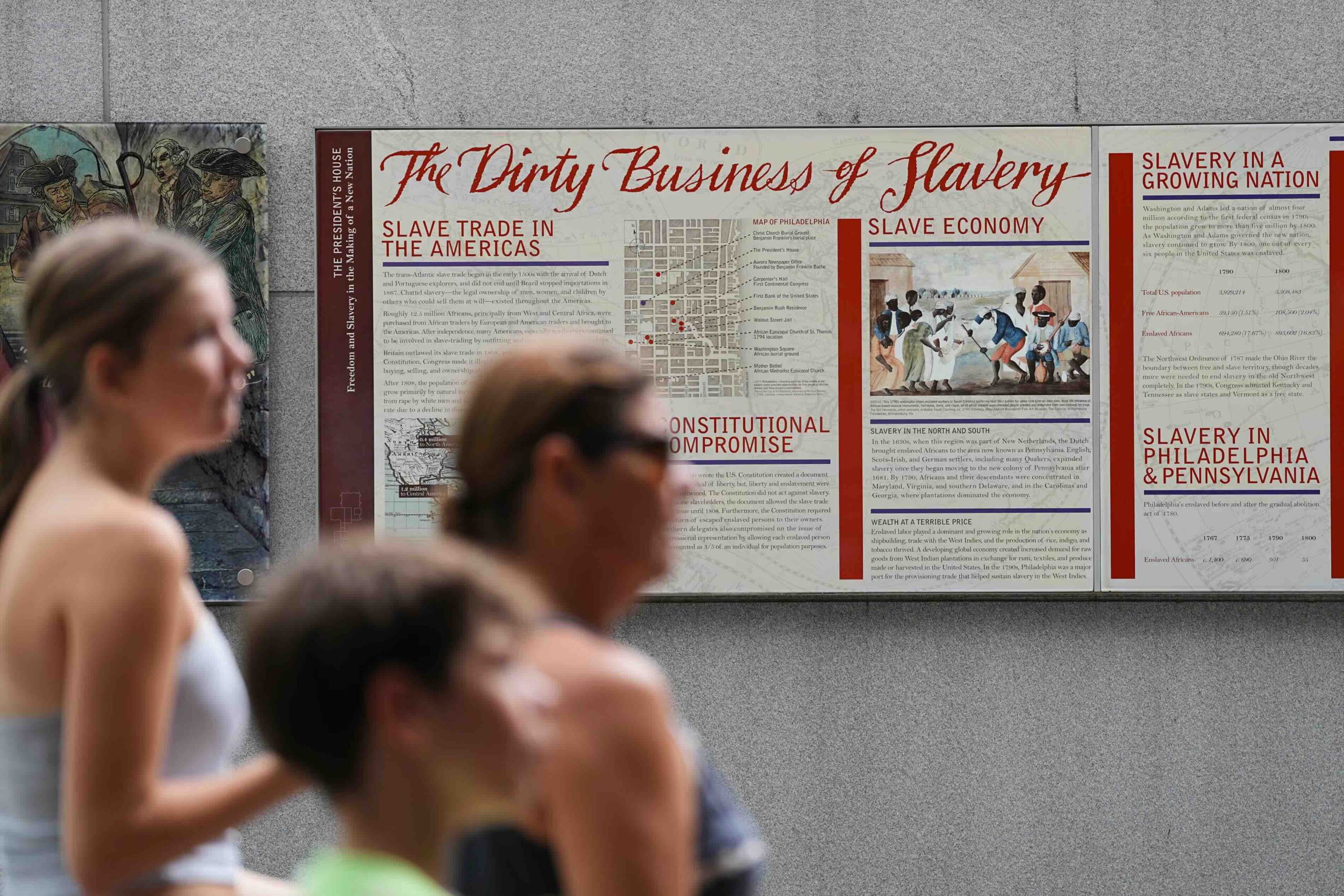
Philadelphia has filed a lawsuit in federal court against the U.S. government after park authorities removed an exhibition at President George Washington’s former residence that addressed the history of slavery among African Americans.
Following the removal of panels and artworks related to slavery at Independence National Historical Park—central to the narrative of the founding of the United States—the city has initiated legal action against the Trump administration. Municipal officials argue that the intervention constitutes both an overreach of authority and an act of censorship that damages historical memory.
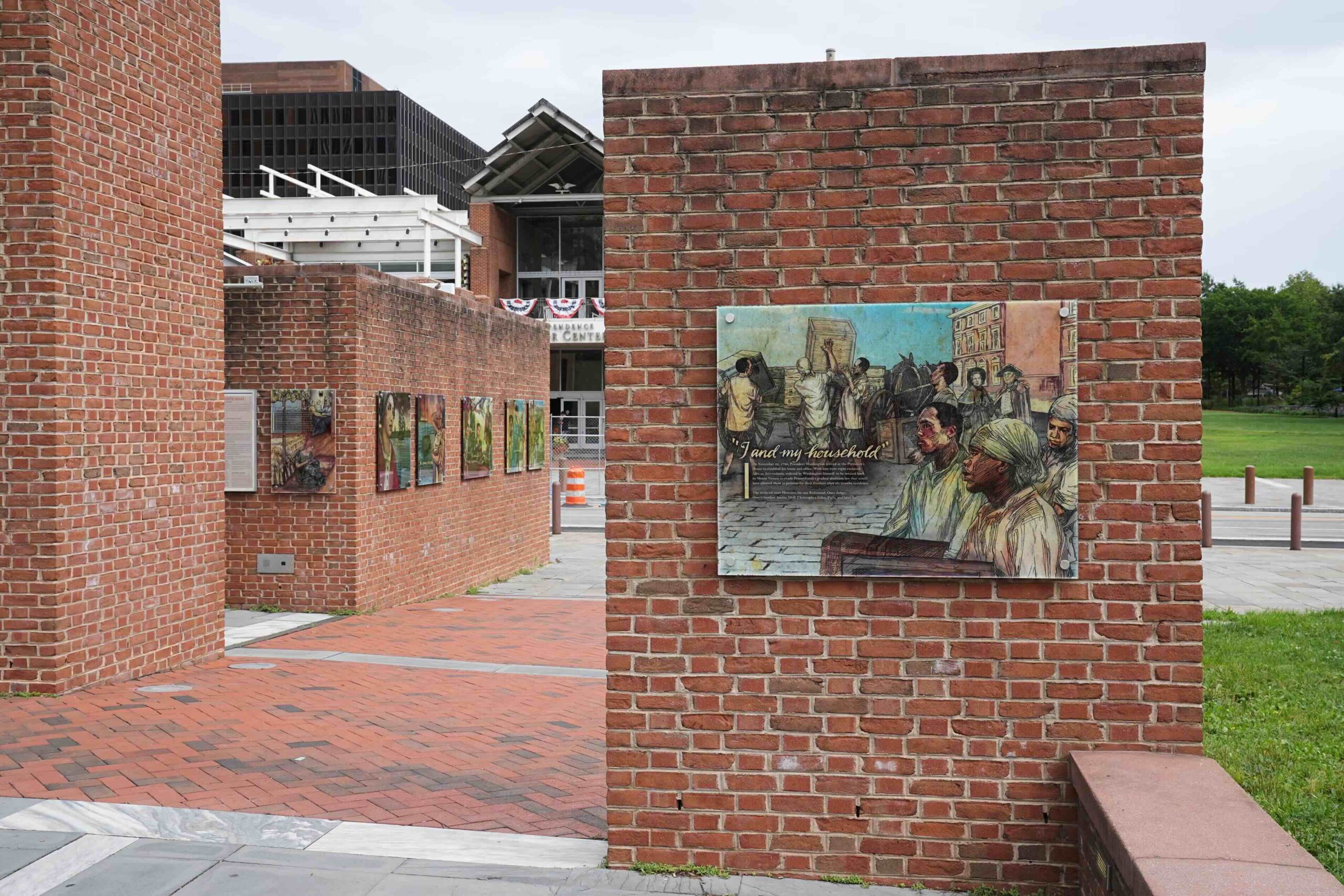
In its federal lawsuit against the U.S. Department of the Interior and the National Park Service, the City of Philadelphia is seeking to halt the removal of the slavery-themed exhibition at the President’s House site and to ensure the preservation of dismantled elements. The park encompasses the area where the Liberty Bell and the residences of the nation’s first presidents are located.
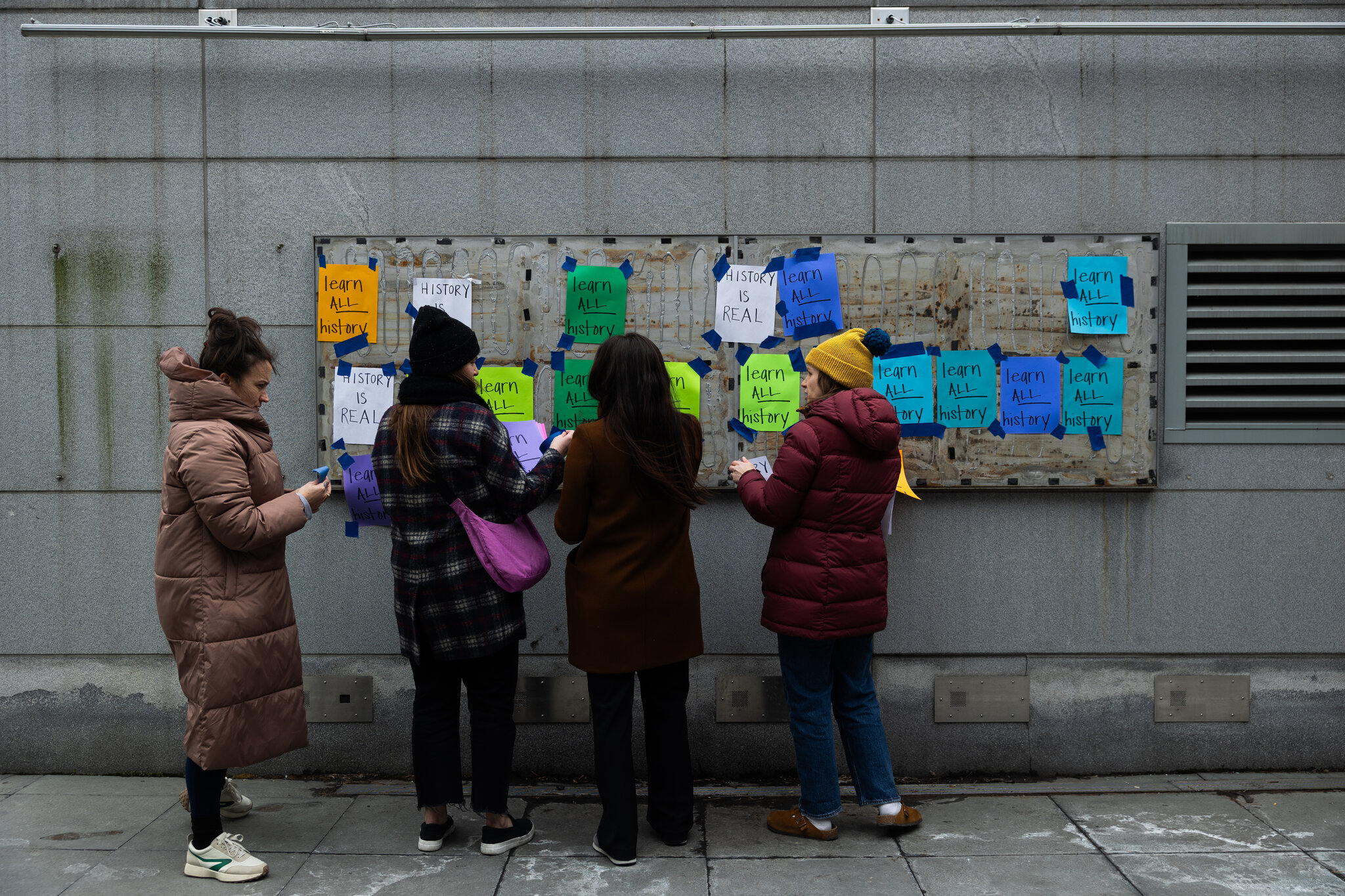
Intervention in Public Memory
The exhibition consisted of panels explaining the Constitution’s failure to prohibit slavery and the Three-Fifths Compromise, which counted enslaved people as three-fifths of a person in the census, as well as video narratives illustrating the consequences of the transatlantic slave trade. It was reported that video sections prepared by documentary filmmaker Louis Massiah were blacked out and that exhibition panels were dismantled by park staff. Massiah stated that during his visit, he observed that the exhibition had been rendered largely inoperative.
The National Park Service said the intervention was carried out in accordance with a presidential order signed by Trump in March 2025, which called for a review of content in federal cultural institutions deemed to “demean Americans, past or present.” The Department of the Interior, meanwhile, described Philadelphia’s lawsuit as “baseless.”
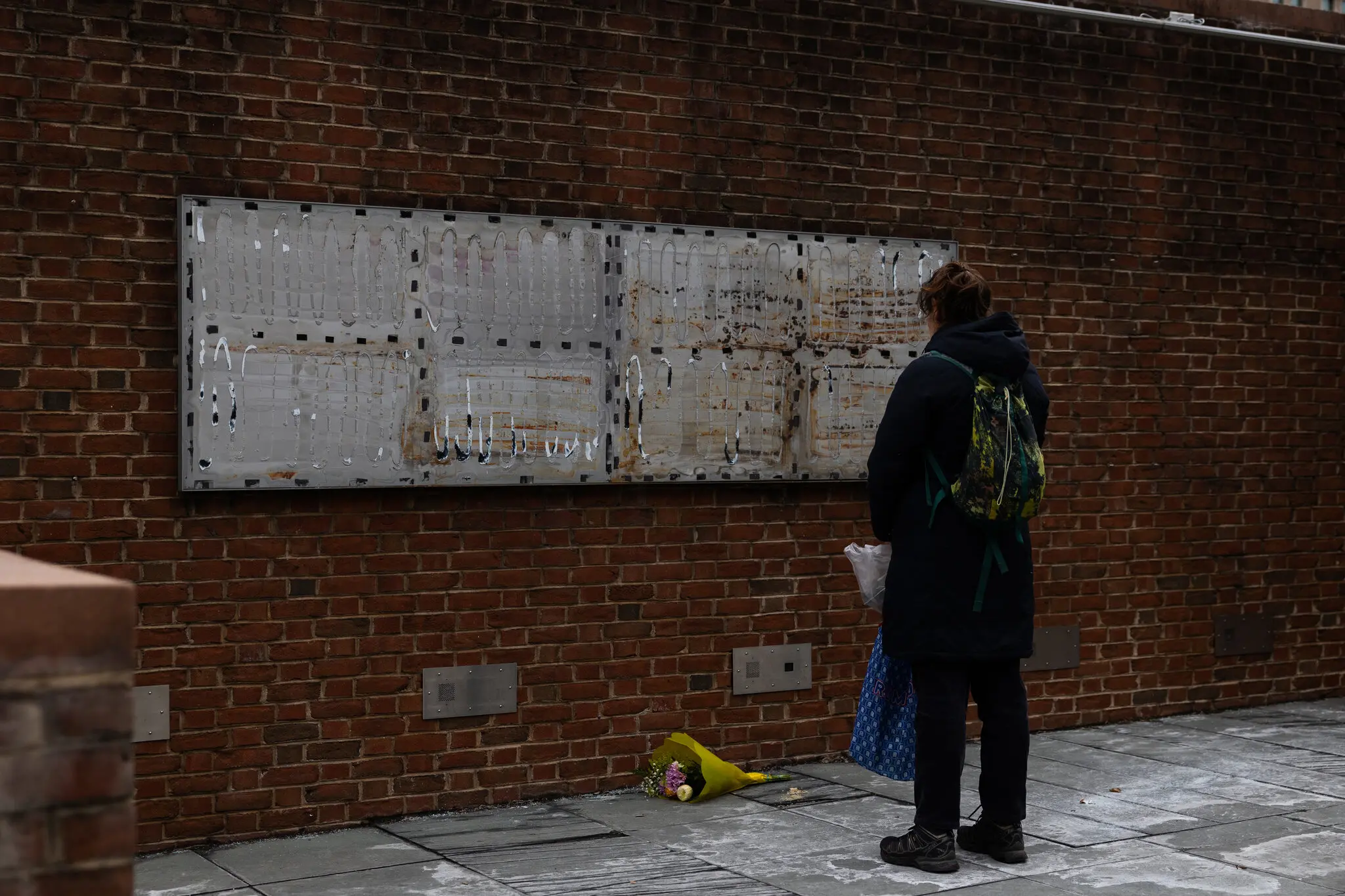
City officials argue that the exhibition was created under a formal agreement with the federal government in 2006 and that the National Park Service does not have the authority to make unilateral changes to its content. The court filing emphasizes that the exhibition was developed through years of civil society activism, academic contribution, and public dialogue.
Reacting to the situation, Pennsylvania Governor Josh Shapiro described the decision as an attempt to “whitewash” American history, while Philadelphia City Council President Kenyatta Johnson stated that ignoring slavery would not change historical reality.
Meanwhile, an initiative called Save Our Signs documented all panels and visual materials on site before their removal, creating a publicly accessible archive. One of the initiative’s founders, librarian Molly Blake, said that while the photographs help preserve memory, they cannot replace the exhibition itself.
The first hearing in the case is expected to take place in the coming days. The court is being asked to order the National Park Service to halt all interventions related to the exhibition and to ensure the security of the removed elements.