



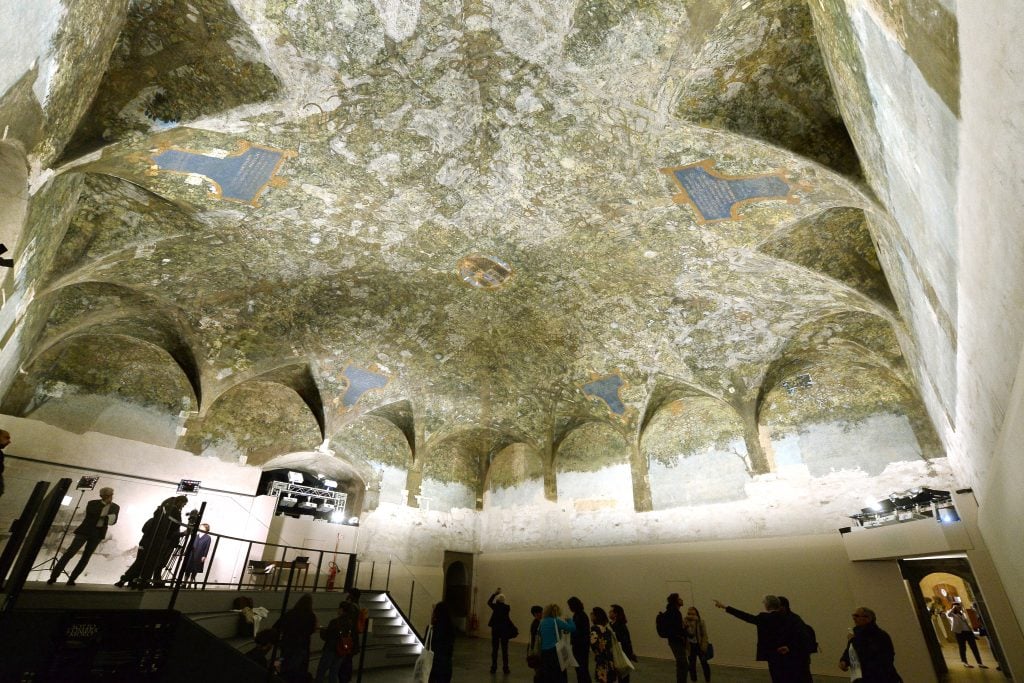
Ahead of the 2026 Winter Olympics, Milan is temporarily opening to the public one of the Renaissance’s most mysterious works—the Sala delle Asse frescoes attributed to Leonardo da Vinci—alongside the ongoing restoration process. Located in Sforza Castle, the monumental wall and ceiling painting offers visitors the opportunity both to view the work up close and to observe the meticulously conducted conservation efforts on site.
In the lead-up to the 2026 Winter Olympics, Milan is granting public access, for a limited time, to one of the Renaissance’s most enigmatic works. The wall and ceiling painting attributed to Leonardo da Vinci, which remained hidden for centuries, is being presented to visitors at Sforza Castle while restoration continues.
The monumental painting in the Sala delle Asse, believed to have been begun in 1498 by Leonardo da Vinci and his workshop, will be viewable at close range for the first time between February 7 and March 14. Visitors will be able to climb scaffolding approximately six meters high installed inside the castle to observe the restoration work firsthand. After this period, the room will be closed again to visitors, and the restoration is expected to continue for approximately another eighteen months.
A Lost Story from Palace to Barracks
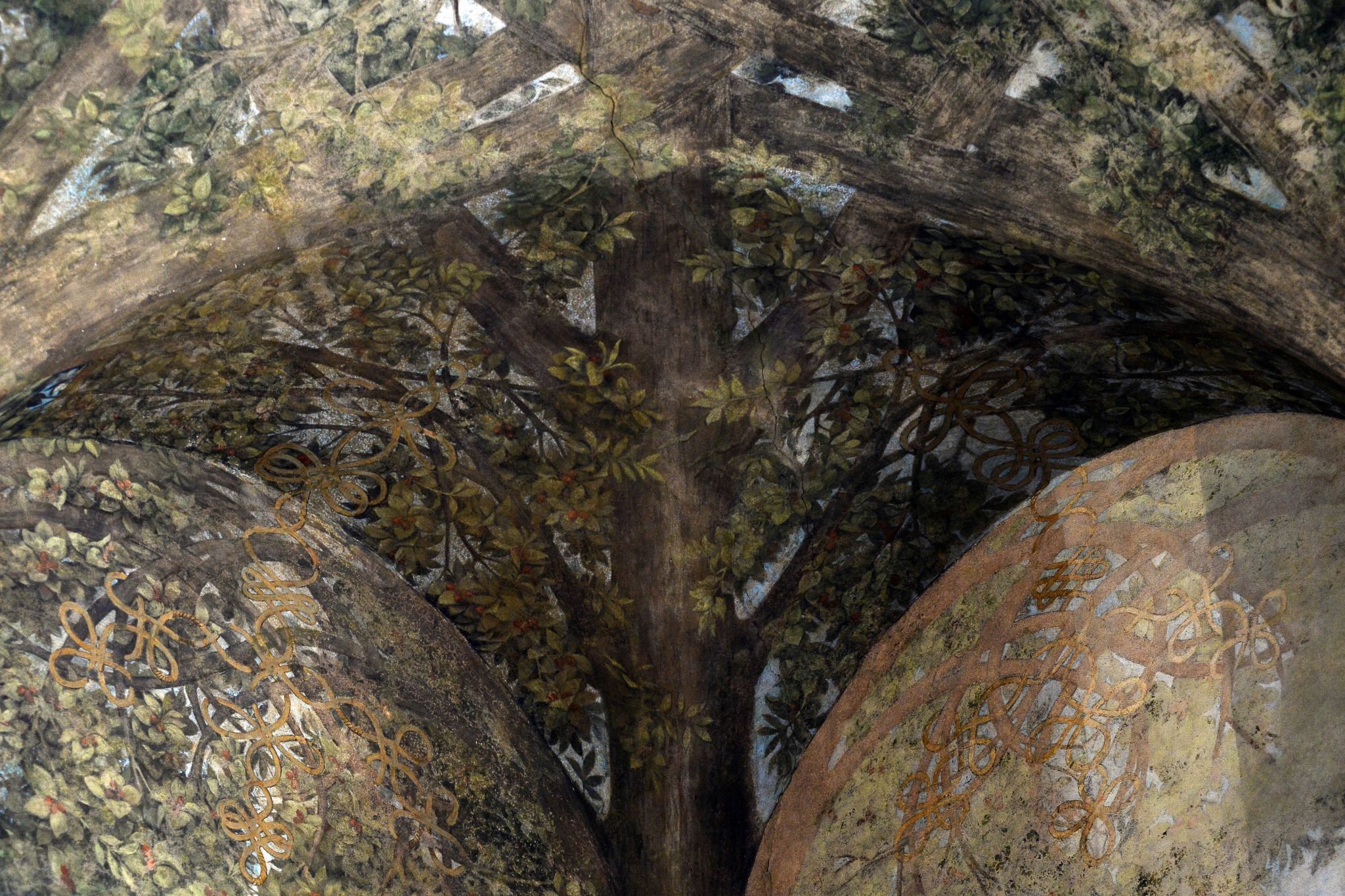
Historical documents indicate that this room, decorated at the request of the Duke of Milan, Ludovico Sforza, was undertaken by Leonardo da Vinci and his workshop. The walls and ceiling were conceived as a unified composition inspired by nature. Botanical forms, roots, and rock motifs reflect Leonardo’s observational approach to the natural world.
Following the French army’s capture of Milan in 1499, Duke Ludovico Sforza left the city. Leonardo da Vinci was also forced to depart during this period, and the work in the Sala delle Asse remained unfinished.
In subsequent centuries, the castle was used for military purposes. The walls of the Sala delle Asse were covered with plaster, and the existence of the painting was almost entirely forgotten. Traces of the work were rediscovered only in the late nineteenth century. Although restoration campaigns throughout the twentieth century made the painting visible again, the extreme fragility of the tempera technique has required the process to continue with great care to this day.
In the current phase of restoration, conservators are using Japanese rice paper and demineralized water to remove salts embedded in the walls. The work is progressing millimeter by millimeter. Tommaso Sacchi, Milan’s Councillor for Culture, emphasizes that this temporary opening is significant in recalling the city’s long and intense relationship with Leonardo.
During the Olympic period, a new multimedia installation focusing on the history of the Sala delle Asse and Leonardo’s role at the Sforza Court will also be presented in the castle’s Panoramic Rooms. In addition, Gallery XXI at the Pinacoteca will reopen with a new display dedicated to artists trained in Leonardo’s workshop and influenced by his legacy.