
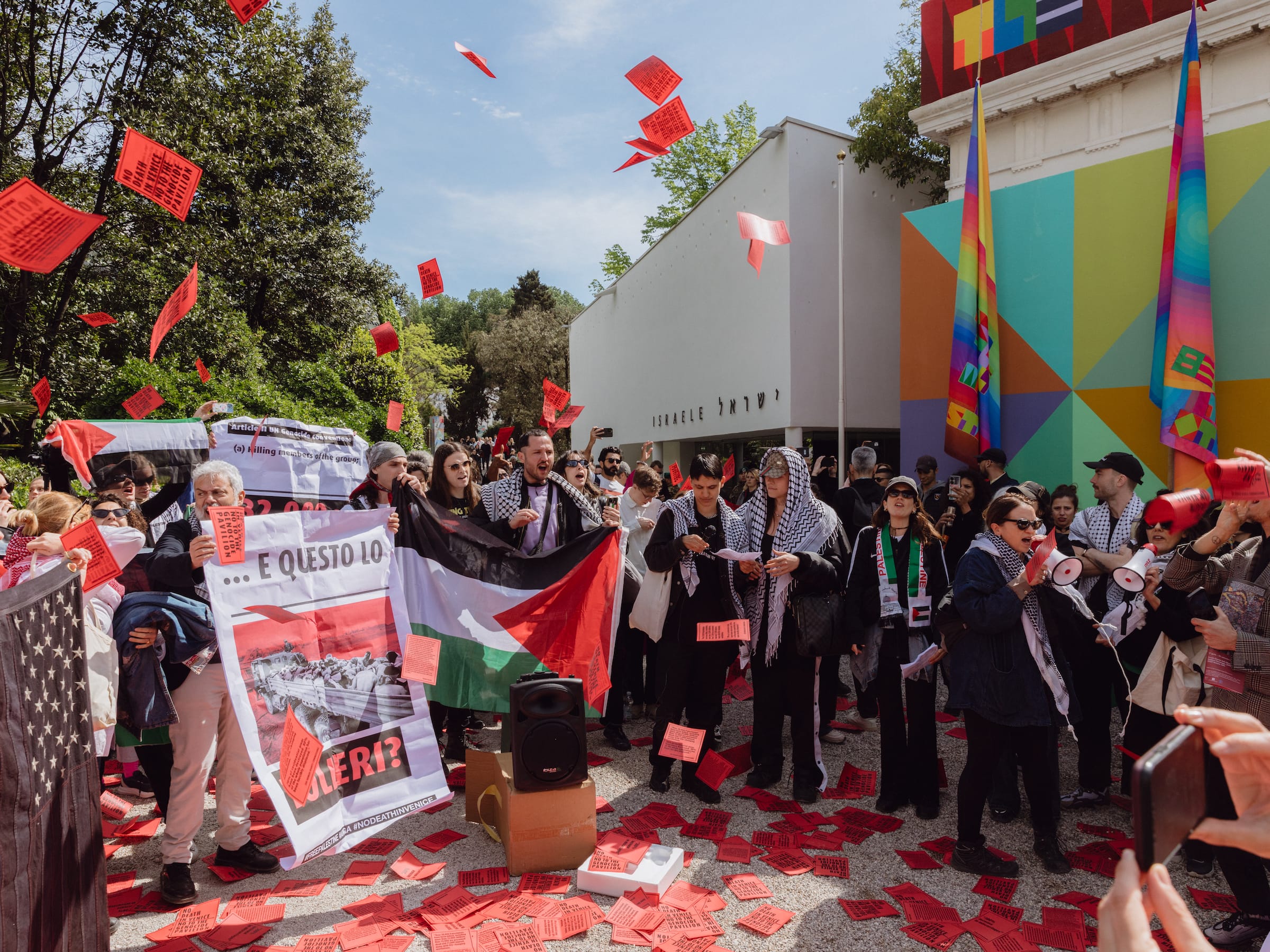
News that Israel will participate in the 2026 Venice Biennale has sparked a new crisis following the closure of the pavilion during the 2024 edition due to protests. While artist Belu Simion Fainaru announced that his work will be exhibited at the Arsenale, the Art Not Genocide Alliance has issued an international call for boycott.
Reports regarding Israel’s participation in the 2026 Venice Biennale have once again brought one of the most heated debates in the international art world to the fore. Although the Israeli Ministry of Culture has not issued an official statement regarding the pavilion, it has been confirmed that the country will be represented by Romania-born sculptor Belu Simion Fainaru, who lives in Haifa. This decision, following the Israeli pavilion’s complete closure during the 2024 edition due to protests, has further sharpened the ongoing debate around the political responsibility of art institutions and the limits of cultural representation.
Fainaru has announced that his work will not be shown in the traditional Israeli pavilion in the Giardini this year, but rather at the Arsenale. Taken due to renovations at the Giardini pavilion, this decision represents more than a simple spatial relocation, according to the artist. Being situated at the Arsenale—alongside countries such as the United Arab Emirates, Saudi Arabia, and Türkiye—will create, in Fainaru’s words, a “more historical and permeable” field of encounter. The artist describes the change as a positive opportunity, stating: “The idea of standing side by side with different voices in an old structure rather than a modern national showcase excites me.”
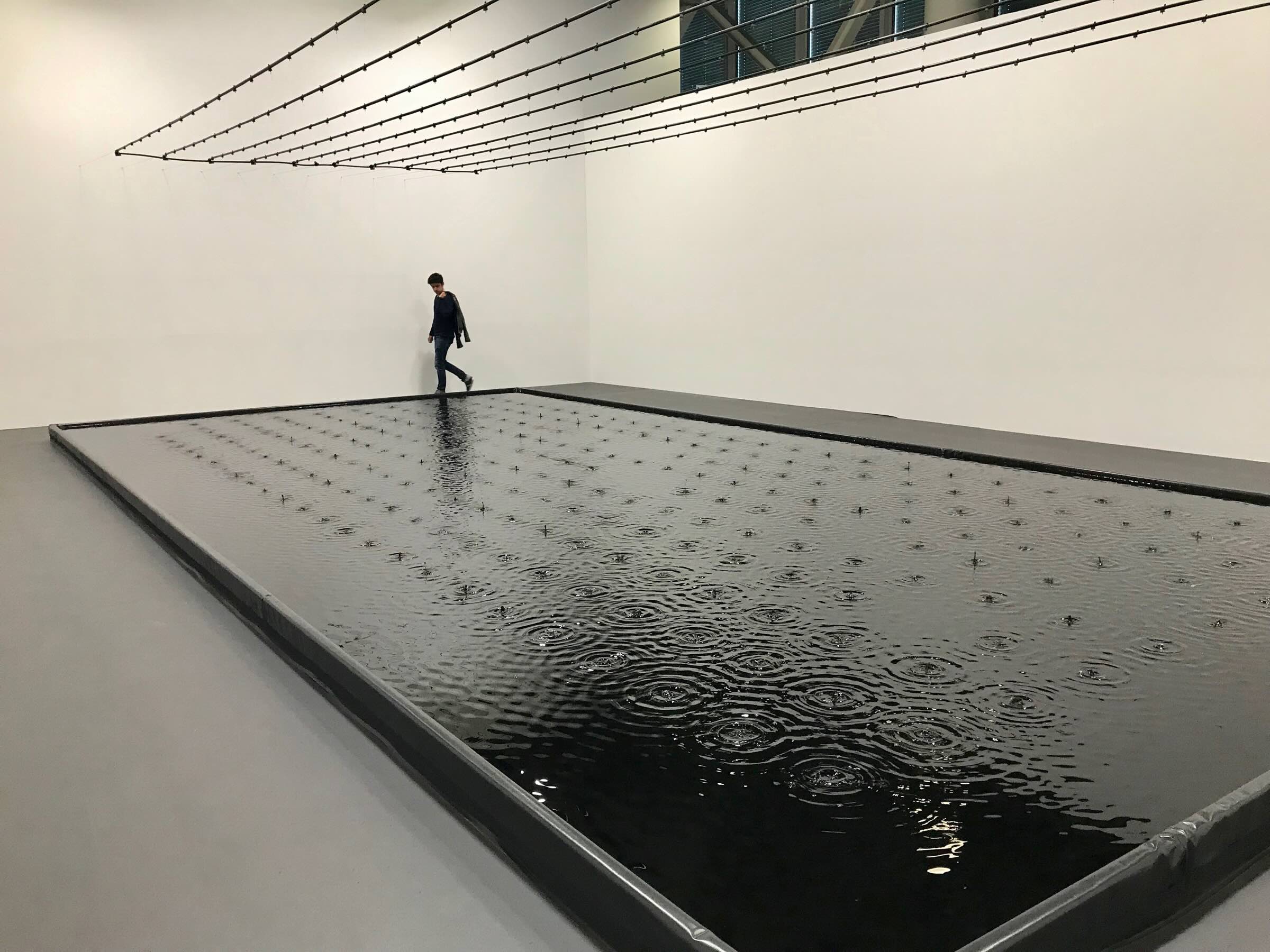
The main work to be presented in the pavilion will be the artist’s large-scale installation titled Rose of Nothingness. The project is structured around sixteen pipes suspended from the ceiling, from which black-colored water drips into a shallow pool on the floor. Inspired by the image of “black milk” in the poetry of Paul Celan, the installation also references notions of transformation found in the Kabbalistic tradition. The number sixteen is interpreted within this mystical framework as one of the symbolic representations of change.
Call for Boycott from Art Not Genocide Alliance
Following the announcement of the Israeli pavilion, the decision was met with strong opposition from the Art Not Genocide Alliance, one of the organizers of the protests during the 2024 Biennale. In a statement shared via social media, the artist collective demanded Israel’s complete exclusion from the Biennale and announced that otherwise they would initiate an international boycott involving both artists and audiences. The group argues that cultural platforms should not become “tools of normalization while state violence continues,” and claims that the national pavilion model lacks an ethical foundation under such conditions.
In response to the criticism, Fainaru addressed the controversy directly in an interview with ARTnews, stating: “Dialogue is the best way to express ourselves.” He added, “I am opposed to boycotts in general, not only in Venice.” He further emphasized that his installation would represent “a vision of hope and human feeling that is the complete opposite of boycott and exclusion, one that opens space for everyone.”
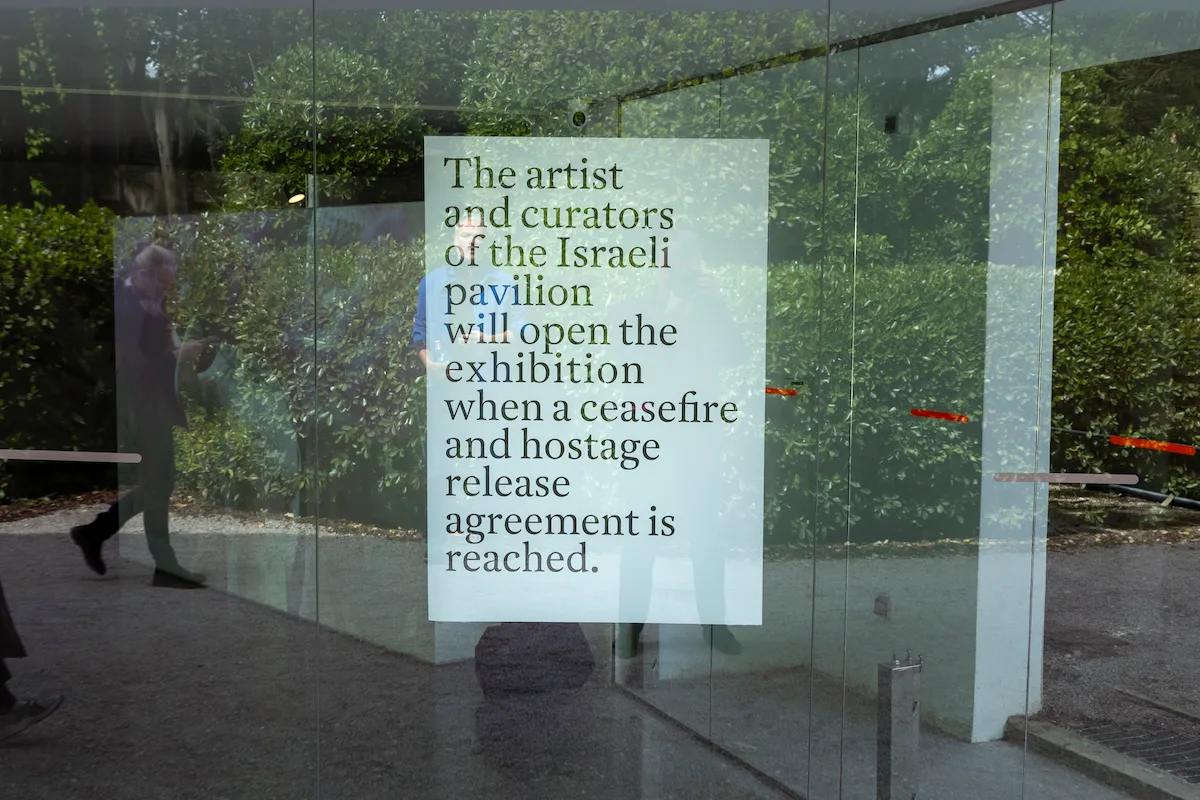
The Biennale administration, meanwhile, maintains the position it has expressed in previous editions. The institution emphasizes that it does not have the authority to exclude countries officially recognized by Italy, underlining that the Biennale is a cultural, not a diplomatic, entity. In 2024, Italy’s then Minister of Culture, Gennaro Sangiuliano, described boycott calls as “shameful,” and the institution did not shut its doors. That same year, Israel officially participated; however, the selected artist Ruth Patir chose to keep the pavilion closed until the hostage crisis was resolved and a ceasefire achieved, rendering the space inaccessible throughout the Biennale.
A Broadening Debate Around the Biennale
Preparations for 2026 extend beyond the Israeli pavilion. South Africa announced that it had withdrawn artist Gabrielle Goliath, who had planned to produce a work commemorating Palestinian women and children killed in Gaza—a decision that sparked international criticism over censorship. Australia, meanwhile, has reinstated Khaled Sabsabi as its representative after previously dismissing him due to political pressure.
At the same time, the Biennale map continues to expand. El Salvador is preparing to open its first national pavilion, while Qatar is moving forward with plans to construct the first new permanent structure in the Giardini since 1995.
The 61st Venice Biennale, curated under the theme In Minor Keys as determined by the late curator Koyo Kouoh, will run from May 9 to November 22.