
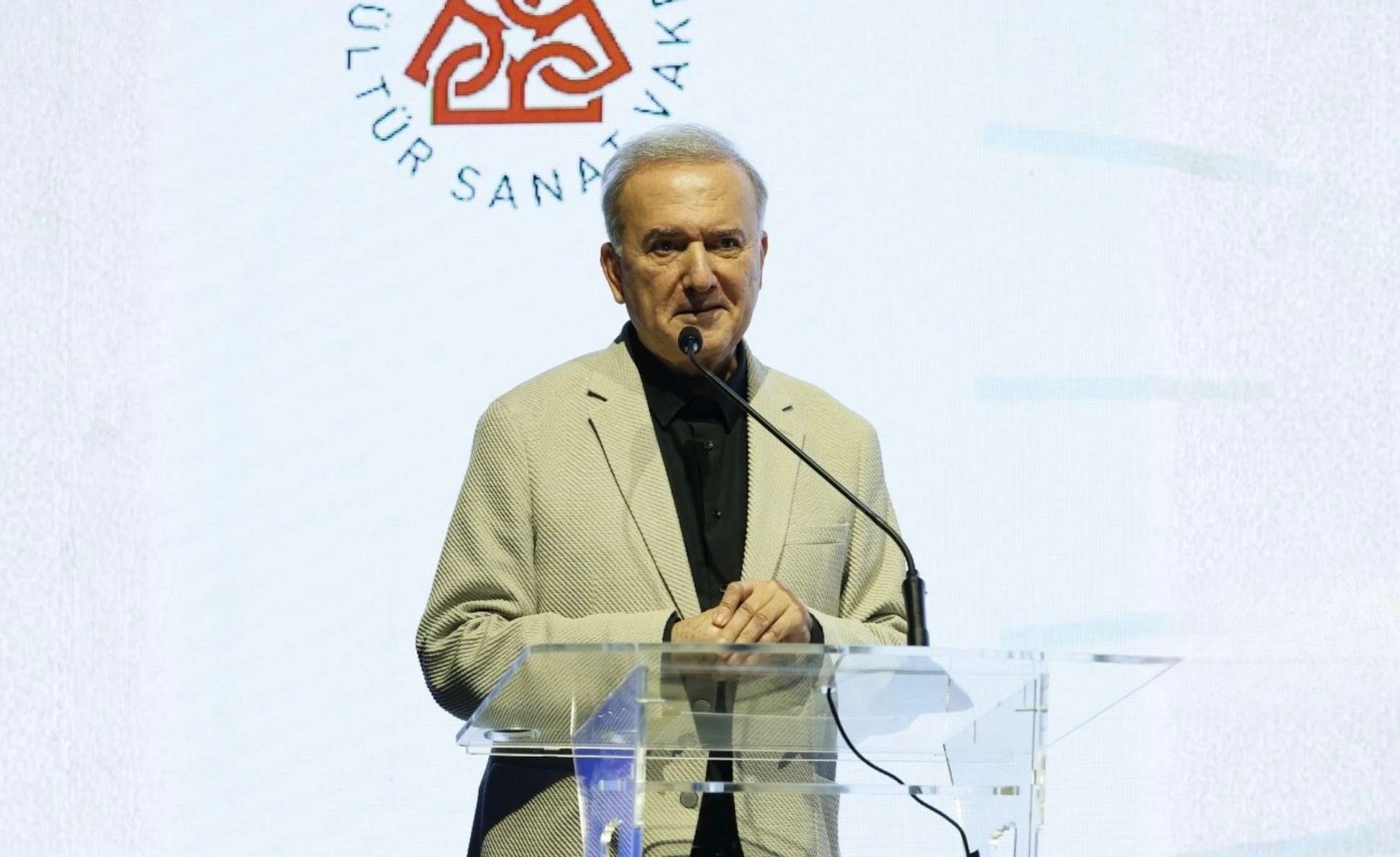
The sixth edition of the Baksı Culture and Arts Foundation Anatolian Awards was presented this year under the theme Beyond the Shore. The evening applauded figures such as Murathan Mungan, Ali Kazma, Osman Dinç, Selva Gürdoğan, Tuncel Kurtiz, Erkan Oğur, and Murat Morova. The event was particularly marked by the award acceptance speeches of Murathan Mungan and Murat Morova.
Organized by the Baksı Culture and Arts Foundation (Baksı KSV), the “Anatolian Awards 2025” ceremony took place on Wednesday evening, December 17, 2025, at the Connie Ballroom of the Hilton Istanbul Bosphorus Exhibition Center in Harbiye, Istanbul.
This year, the Anatolian Awards were selected by various jury members under the title Beyond the Shore, with the Chair of the Awards Executive Board assumed by AICA TR member, art historian, and critic Nazlı Pektaş. Awards were presented with applause in categories such as Literature, Music, Architecture, Visual Arts, Cinema, Doğan Value, and the Honor Award. The evening was enriched by a retrospective video documentary summarizing the activities, civil society participation projects, and awards achieved by Baksı KSV since its establishment in 2005, under the presidency of Oya Koçan. Baksı KSV Founder and artist Hüsamettin Koçan delivered the opening speech of the ceremony. In his address, Koçan praised the richness and interpretive capacity of the ancient Anatolian people and culture, drawing on the history of Bayburt and his personal testimonies, and emphasized the impact that the foundation, museum, and its affiliated projects have brought to the region.

“The People of Anatolia Possess Wisdom”
Among the many guests from the cultural and artistic sphere—such as Doğan Hızlan, Melih Fereli, Melkan Gürsel, Ali Güreli, Tülay Güngen, Gülşen Işık, Yeşim Turanlı, Bülent Ortaçgil, Genco Gülan, Tamer Levent, Esra Ekmekçi, İbrahim Cansızoğlu, Bülent Vardar, and Cem Erciyes—the microphone was later taken by Chair Oya Koçan and Bayburt Mayor Mesut Memiş. In his speech, interwoven with various sayings, Memiş voiced the following meaningful words:
“As the people of Anatolia, we may not have been formally educated, we may not have attended university, but the people of Anatolia possess wisdom. We must get to know one another. We must make an effort to do so. Regardless of one’s thoughts, language, race, or belief, it is possible for people who feel they belong to these lands to live together with mutual respect.”
The awards were presented to the winners accompanied by a selected group of guests of the evening.
The Literature Award of the ceremony went to Murathan Mungan, a multifaceted writer who has left half a century of work behind him. Mungan received his award—designed by sculptor Osman Dinç to symbolize “Humankind and the Universe: the Wheel, Civilization, and the Story of Existence”—from veteran journalist and critic Doğan Hızlan. Speaking at the ceremony, Hızlan noted that Mungan had also been selected as TÜYAP’s Honorary Writer of the Year and expressed his wish to give him yet another award next year, joking that he could not keep up with Mungan’s pace, adding: “My fear is that from now on he will expect the awards from me.”
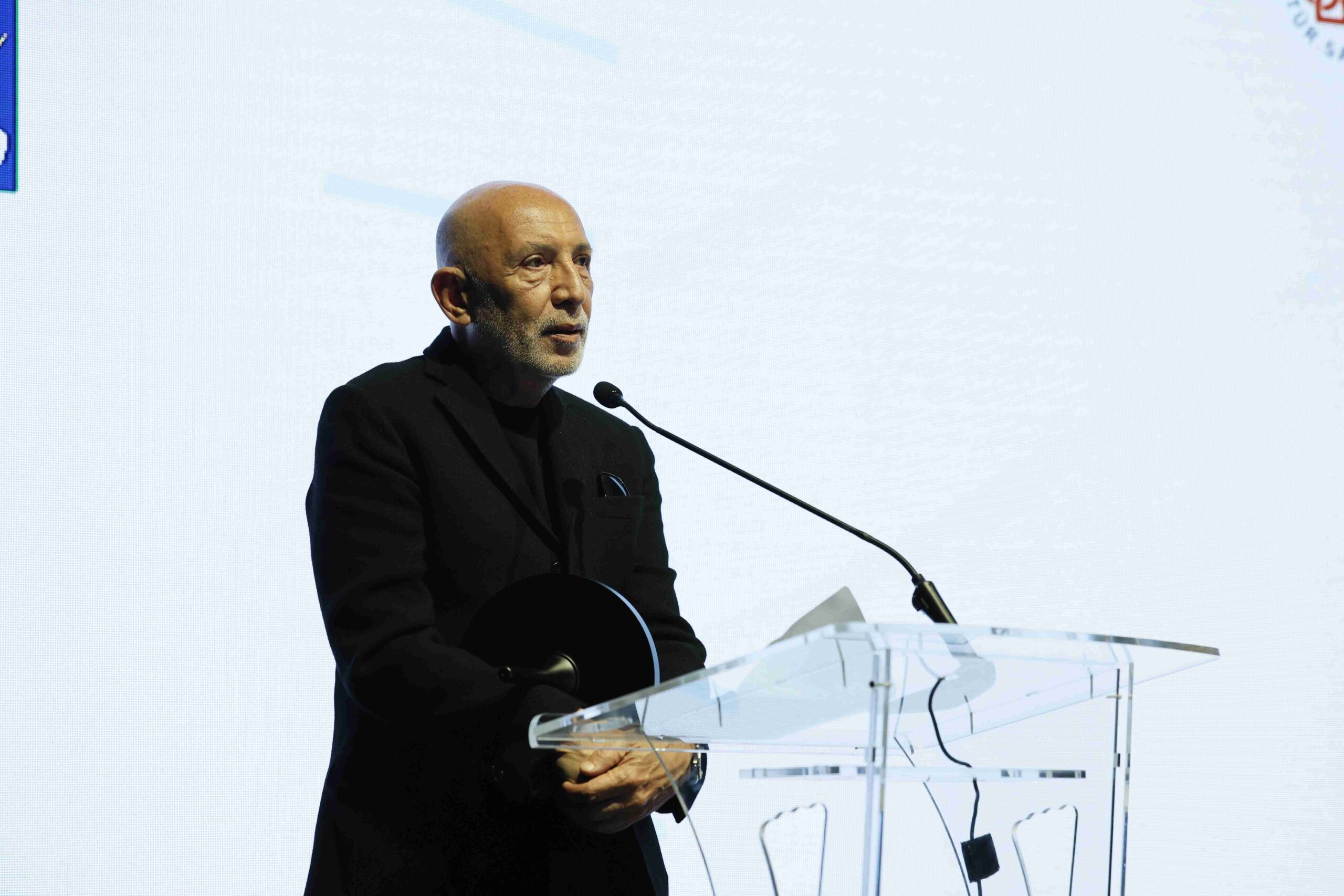
The Honor Award of this year’s event, organized with the support of Kurukahveci Mehmed Efendi and Doğan Holding, was also presented to Osman Dinç—once again with a sculpture of his own design. In his acceptance speech, Dinç referred to the relationship between humankind, the wheel, and civilization, beginning from the Middle East that inspired the award, while also drawing attention to the cyclical nature of existence in the universe.
At the Anatolian Awards, the name recognized Beyond the Shore in the field of Music this year was Erkan Oğur, who has built a unique career in both Turkey and internationally through contemporary jazz, interpretations of Turkish folk music, research, recordings, and solo performances. Oğur received the Anatolian Award from his longtime friend and companion Bülent Ortaçgil, with whom he had shared the stage for decades.
At the 2025 Baksı KSV Anatolian Awards, the Visual Arts Award was presented to artist and director Ali Kazma. The Architecture Award went to Selva Gürdoğan, a contemporary figure shaping the agenda with her social and experimental projects. The Cinema Award, meanwhile, was presented in honor of Tuncel Kurtiz—whom we lost on September 27, 2013—to his wife Menend Kurtiz. In her speech, Kurtiz summarized her thoughts as follows: “If Tuncel were here, he would be very happy. He was deeply connected to Anatolia. He always existed as a face from Anatolia.”
“If I Speak, It Has No Effect; If I Remain Silent, My Heart Will Not Consent”
At the event, where messages were also sent by Minister of National Defense Yaşar Güler and Ankara Governor Vasip Şahin, the name that received sustained applause afterward was Murat Morova, who was presented with the Doğan Value Award. Morova’s acceptance speech—opening with the words “If I speak, it has no effect; if I remain silent, my heart will not consent”—also contained significant remarks. The artist summarized his thoughts as follows:
“Anatolia naturally has a rebellious side as well. Thus, all these Dengbej stories, hagiographies, bozlak songs, laments, and uprisings carry injustices and pains along with them. Awards are not something given to me at the end of my own journey. They are a trust. A trust entrusted to me at this moment by those who amplify these voices along the way. Therefore, I would like to quote one of our very valuable minstrels, Kul Nesimi: ‘I do not owe gratitude to the path instructed by the oppressor.’”
Murathan Mungan’s Critique of Cultural Policy
Murathan Mungan, who received this year’s Literature Award under the theme Beyond the Shore at the 2025 Baksı KSV Anatolian Awards, once again left a strong mark on the evening and the public agenda with his striking acceptance speech. Emphasizing his loyalty to his pen and his readers since his early youth, the veteran writer shared with heartfelt sincerity the estrangement he once experienced with his father over this path, and the reconciliation that followed.
However, it was Mungan’s sharp analyses and critiques of Turkey’s cultural and artistic climate that drew successive rounds of applause immediately after this intimate introduction. In his speech, Mungan criticized cultural and arts policies in Turkey and around the world, lamenting the linguistic drought and the steadily shrinking cultural atlas to which people in Turkey are exposed. In his approximately 15-minute acceptance speech, Mungan stated:
“…Unfortunately, Turkey is undergoing a severe and systematic degeneration aimed at erasing all the markers of social memory, at erasing its memories. Not only conscience, morality, sensitivity, and human values are being lost—memory itself is being lost. The markers of the city are being erased. The traces of our shared memories, the streets, roads, and buildings that raised us are being wiped away. In terms of memory, one of the conservative Ministers of Culture of the period—one from the Nationalist Front governments—once made the following proposal: ‘Let us send all Greek, Latin, and Christian works in these lands back to their countries, and let them send us Islamic works.’
These mindsets governed Turkey for years, and they are still governing Turkey. Today, things are far more dire. As someone who has seen all this, I say: Turkey, in the hands of this power and administration, is experiencing the darkest 30 years of its republican history. We are being erased. All this cultural material has so far been squeezed between nationalism and ummah-oriented policies. It has tried to carve out a path for itself from there. I believe that on this path, it has mostly been leftists who have taken ownership—both of the traditional material and of the values of these lands, of the brotherhood of the soil.
In this country, the fact that the current government writhes and says, ‘We cannot establish a presence in the cultural sphere,’ stems from the reality that they have no culture in which to establish such a presence.
The segment that built this country and this culture, and that never forgot, was a progressive one. Because it moved forward with the awareness that it was the heir not only of the Ottoman Empire but also of the Eastern Roman Empire, of Byzantium—embracing cultural values produced regardless of language, religion, or ethnicity, with a sense of brotherhood of the land.
That is why I see myself as a continuer of a tradition that begins with Nâzım Hikmet. Yes, Sabahattin Ali was killed at the borders; if we can speak a little more freely, write a little more freely today, it is because we were able to take a small breath thanks to the legacy of the writers, poets, and artists whom this country sacrificed in the past. I feel indebted to them. I feel indebted not only to my talent, but also to the land and to the culture of this land, and I believe that this must be carried forward.
I am generally known for being very comfortable when I stand before crowds. But frankly, in a period in which intellectual conscience and intellectual ethics have suffered such losses and degeneration, persisting stubbornly, continuing stubbornly, knowing ourselves to be indebted to truth, beauty, and reality, and emphasizing the importance of building—this is something we must pass on to the generations after us.”
“This Country Has Lost Its Language”
“Turkey has many problems at the moment. But one of its most important problems is the losses I just mentioned—first and foremost the loss of justice, and alongside it, the loss of language.
This country is a country that has lost its language. In a country where language is spoken with 300 words a day, where the entire vocabulary is limited to between 300 and 400 words, there has been for years a generation of writers who have tried to work and produce under the honor of their pen. To lose our language is to lose our thought; to lose our communication rights; to lose the ground of all debate.
This is not merely related to the degeneration of what I call this ‘Digital Middle Ages.’ It is related to policies, to countries’ cultural policies. Newspapers no longer have culture and arts pages. Magazines have been shut down. None of the television channels can properly produce culture and arts programs. Because this country is governed by a power that is afraid of its writers and artists. If I do not say this to you here, then where should I say it?”
“I Believe Not Only in Hope, but Also in Stubbornness”
“But it must always be emphasized that without losing our vision of the future, without losing our utopias, without losing above all our intellectual conscience, ethics, and diligence, it is possible to produce something together, to sustain something, through solidarity.
I believe not only in hope, but also in stubbornness. I believe in continuing. That is why one of my essay books is titled The Tree of Continuation. I will continue. I hope we will all continue together. I thank you once again for this award. I wish success to the other friends receiving awards. And to those who love me, I say: please continue reading me.”
Murathan Mungan and “Every State of Literature”